


Louis XV Provincial Furniture
Louis xv provincial furniture brings rustic French charm and fluid serpentine lines into a room, offering practical storage with distinct period character.
Louis XV Provincial Furniture
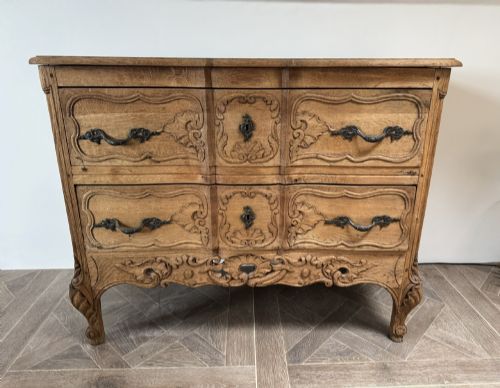
When searching for louis xv provincial furniture, buyers encounter regional pieces created outside Paris that adapt courtly Parisian aesthetics into sturdier domestic forms. These items balance decorative carved details with regional practicality, often taking the shape of chests of drawers, cupboards, and bedside tables.
The pieces appearing on this page span the eighteenth century as well as later revival periods up to the mid twentieth century. Eighteenth-century examples display authentic period construction and timber patination, whilst later nineteenth- and twentieth-century interpretations utilise traditional forms and local woods.
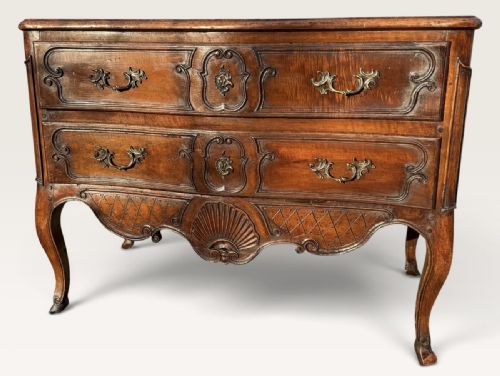
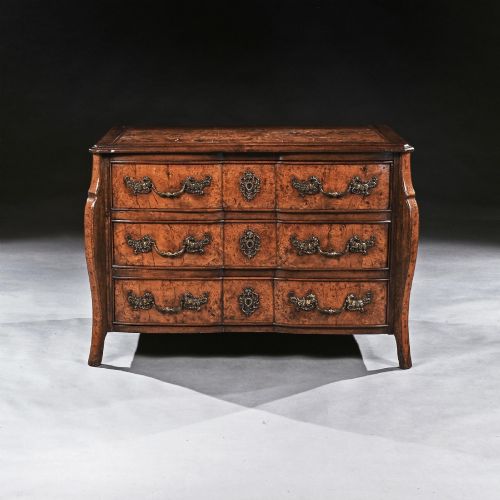
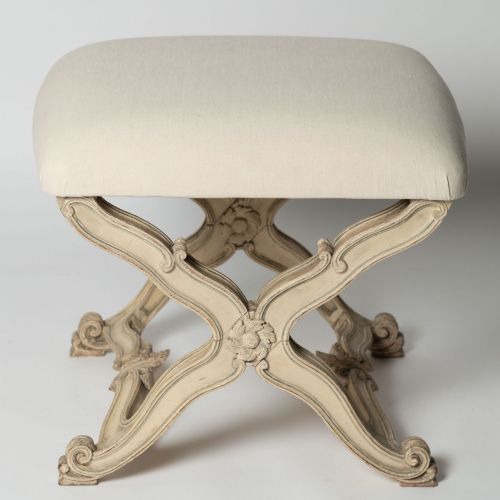
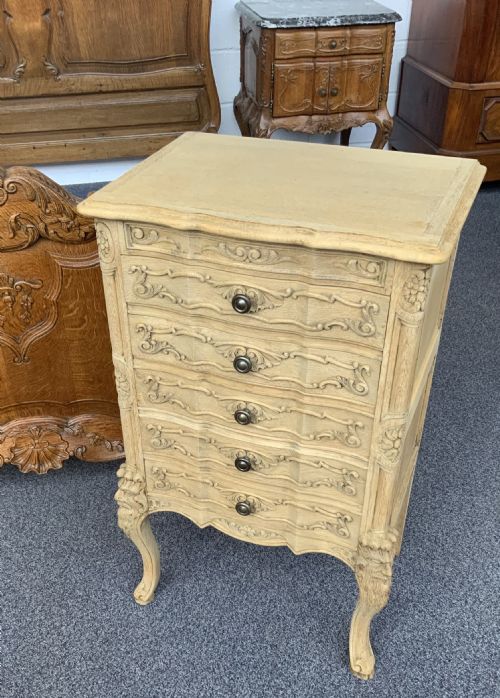
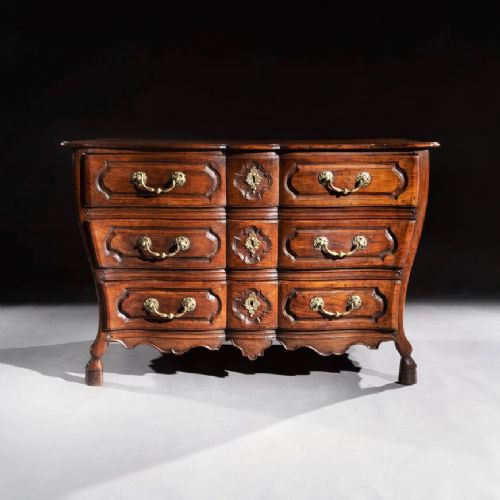
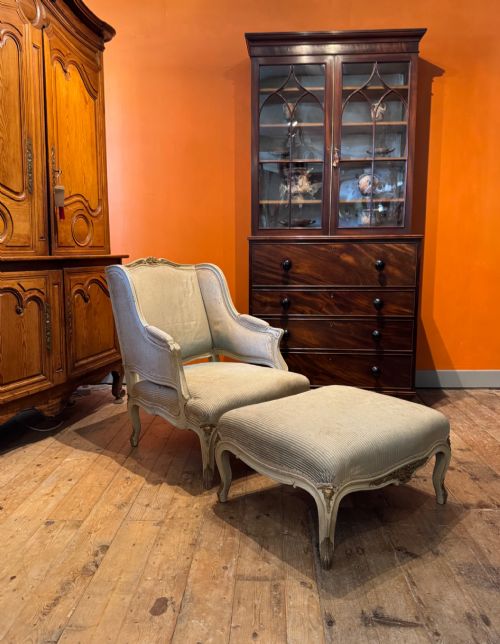
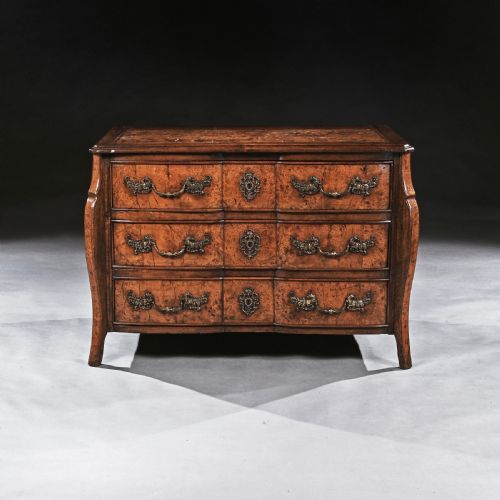
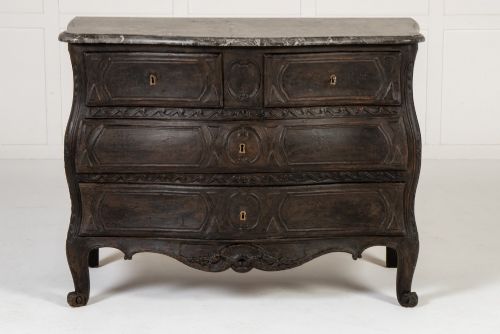
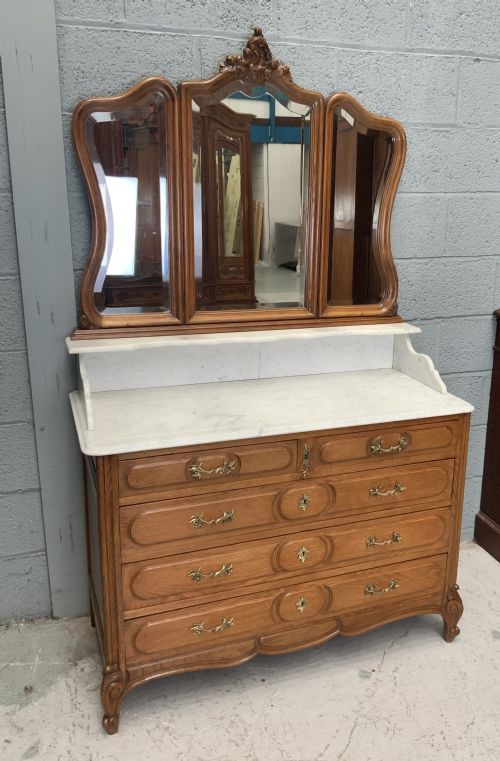
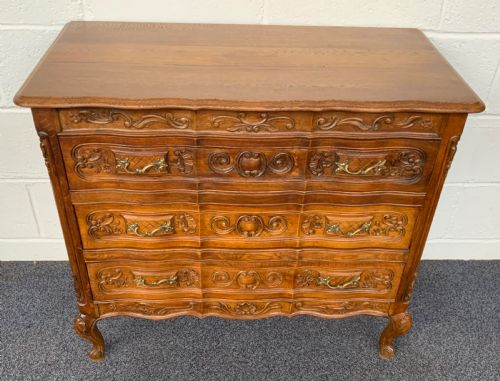
Chest of drawers and commode variants dominate the selection, frequently featuring serpentine or bombe silhouettes. Buyers also find sideboards, cabinets, and occasional seating reflecting French provincial and rococo revival styles.
Materials and construction methods
Cabinetmakers utilised regional hardwoods such as oak, walnut, cherrywood, and chestnut, selected for durability and local availability. Burr elm and fruitwoods also appear in select commodes, providing rich grain patterns across curved drawer fronts.
Joinery techniques combined pegged mortise and tenon frames with hand-cut dovetails on drawer construction. Iron and brass hardware, including decorative handles and escutcheons, secured operational doors and drawers whilst accentuating the timber grain.
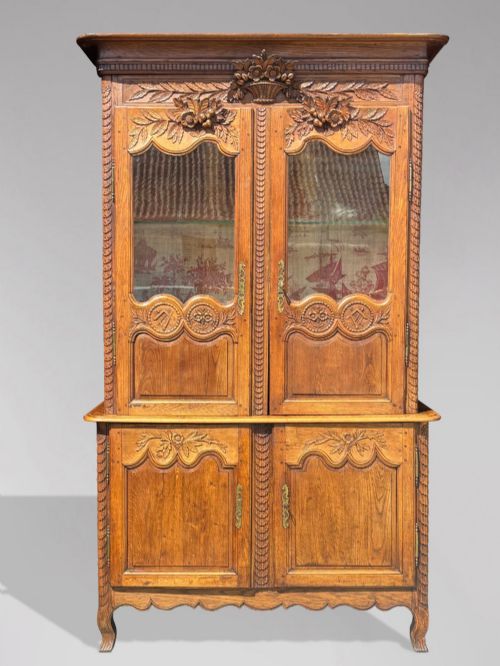
Some provincial housekeepers clearly demanded exceptionally tall cupboards, resulting in towering oak pieces that require high ceilings.
Distinctions in quality
Superior examples exhibit crisp, hand-carved ornamentation integrated directly into the structural timber rather than applied superficially. The fluidity of the serpentine or bombe shaping demonstrates the cabinetmaker's skill in handling challenging wood grain.
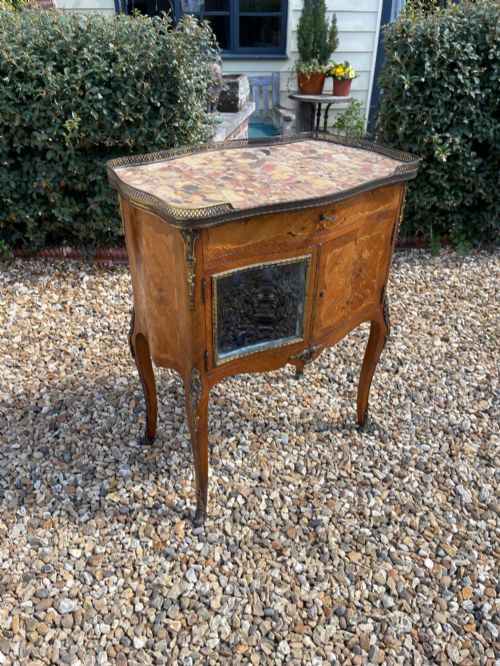
Surface patination and original finish integrity significantly influence the character of each piece. Untouched timber surfaces, early painted finishes, and intact marble tops distinguish primary period works from later replacements.
The Louis XV Provincial Furniture Glossary
- Commode
- A low chest of drawers or cabinet designed for domestic storage. These pieces frequently feature shaped fronts and cabriole legs.
- Bombe
- A swollen, convex curving profile on the front and sides of a cabinet or chest of drawers. This shape requires advanced woodworking skill to execute properly.
- Serpentine
- A wave-like curved furniture front that curves outward in the centre and inward at the sides. It creates dynamic movement across the piece.
- Parquetry
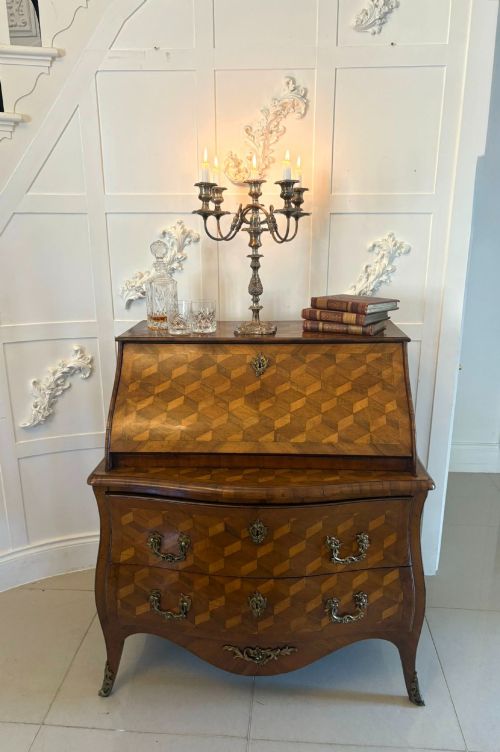
- Geometric patterns of inlaid wood veneer arranged across a surface. Cabinetmakers used contrasting timbers to create decorative geometric motifs.
- Duchesse brisée
- A long upholstered chaise longue accompanied by a separate footstool or chair component. It allows for reclining with integrated leg support.
Louis XV Provincial Furniture: Frequently Asked Questions
What is louis xv provincial furniture?
Louis xv provincial furniture comprises regional French furnishings inspired by court styles but built for provincial chateaus and homes. These items interpret grand rococo designs through local cabinetmaking traditions.
Craftsmen utilised regional timbers and simplified ornamentation to create durable domestic pieces such as commodes, buffets, and side tables.
How do I identify an 18th century piece?
Eighteenth-century items show authentic hand-cut joinery, period timber shrinkage, and traditional patination built up over generations of use. Construction details like hand-beveled drawer linings and forged iron hardware help confirm age.
Later revival pieces from the nineteenth and twentieth centuries often employ machine assistance or lack the deep surface wear characteristic of genuine eighteenth-century usage.
Where were these pieces made?
Regional workshops across France produced these furnishings outside the strict guild control of Paris. Provincial cabinetmakers adapted metropolitan styles to suit local domestic needs and available regional woods.
Provinces such as Normandy, Provence, and the Loire Valley developed distinct local interpretations of rococo design using native oak, cherrywood, and walnut.
How do I clean and maintain wooden surfaces?
Maintain timber surfaces by dusting regularly with a soft, dry cloth to prevent particulate accumulation. Avoid silicone sprays or harsh chemical polishes that can degrade historic wax finishes.
Apply a microcrystalline wax occasionally to nourish the wood and protect the aged patination from moisture and environmental wear.
What woods were commonly used?
Cabinetmakers relied heavily on native European oak, walnut, and cherrywood for structural stability and cabinet frames. Softer fruitwoods and burr elm were selected for decorative veneers and prominent drawer fronts.
Marble tops also appear on select commodes and side cabinets, offering a durable and decorative surface for everyday use.