

Large Oriental Vases
Large oriental vases bring scale and heavy narrative ornament to a room, drawn from the kilns and foundries of the nineteenth and early twentieth centuries.
Large Oriental Vases
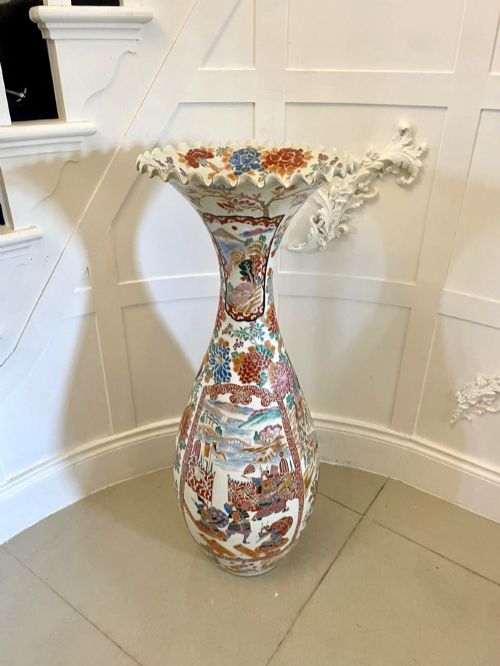
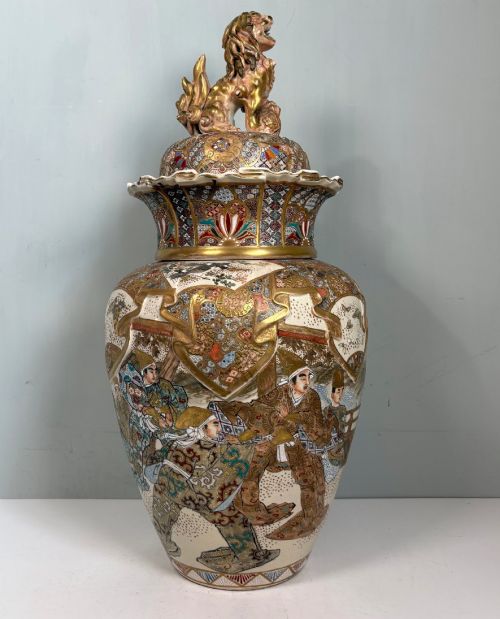
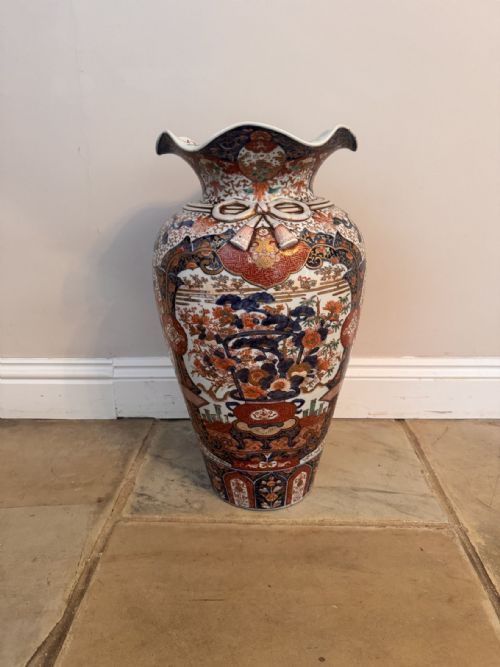
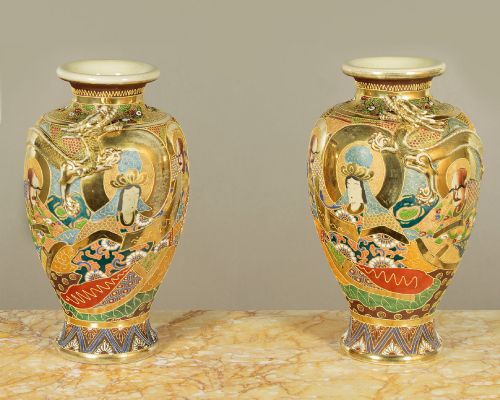
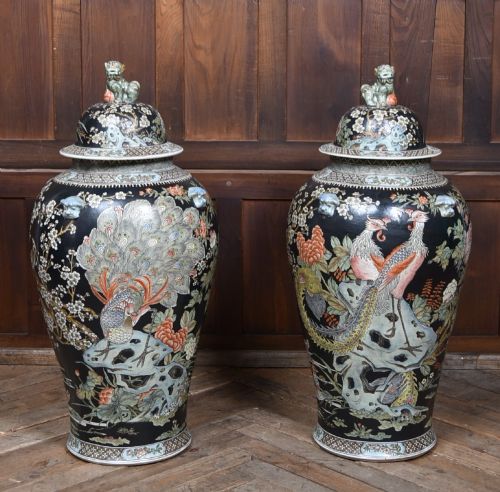
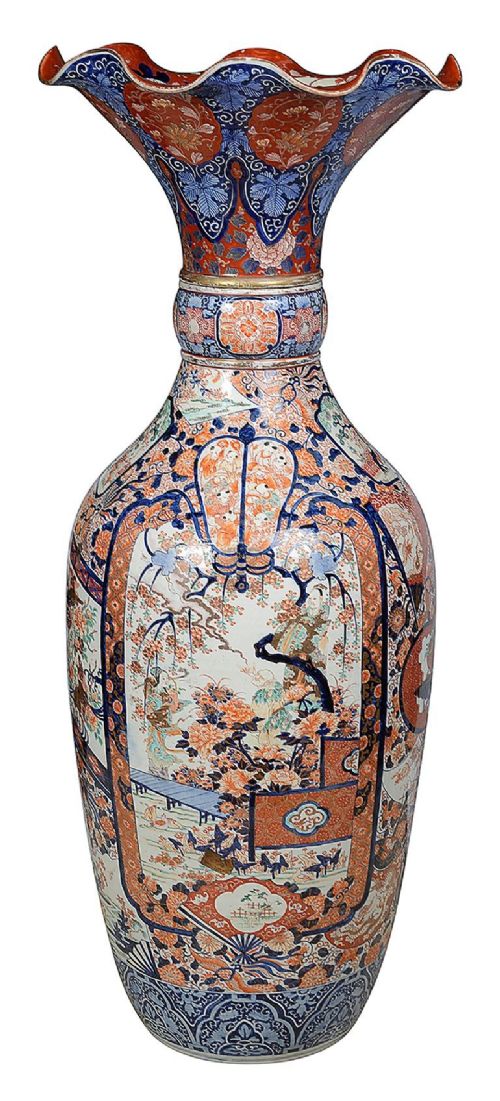
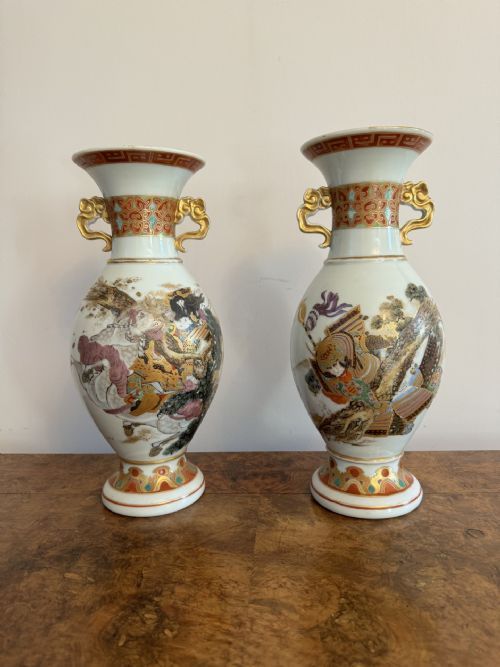
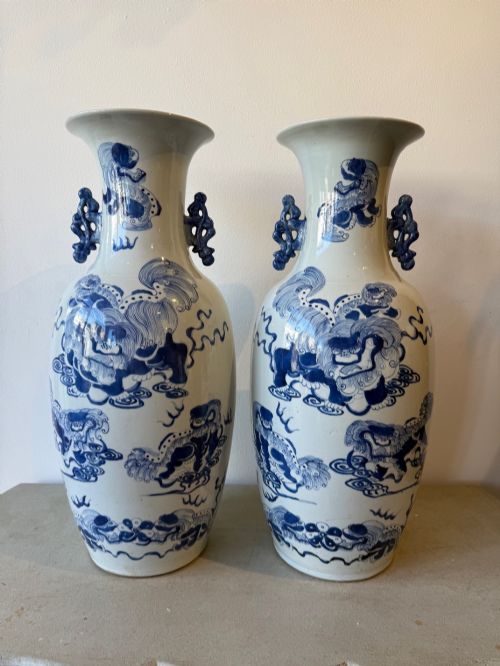
Large oriental vases cover substantial floor-standing vessels, heavy mantel jars, and baluster forms produced across China and Japan during the nineteenth century and the early decades of the twentieth. You will frequently encounter Japanese Imari and Satsuma wares alongside Chinese famille rose and blue and white ceramics.
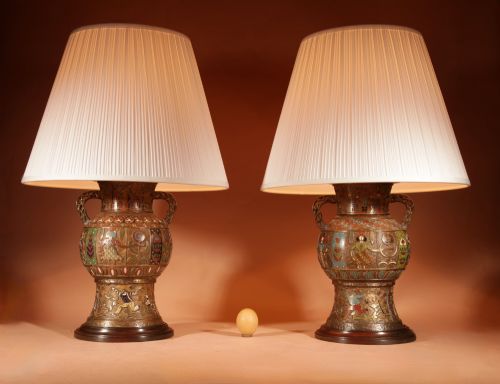
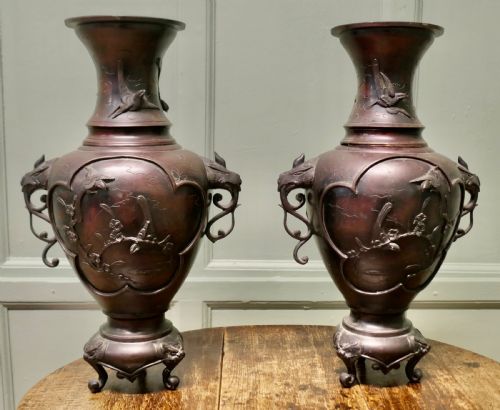
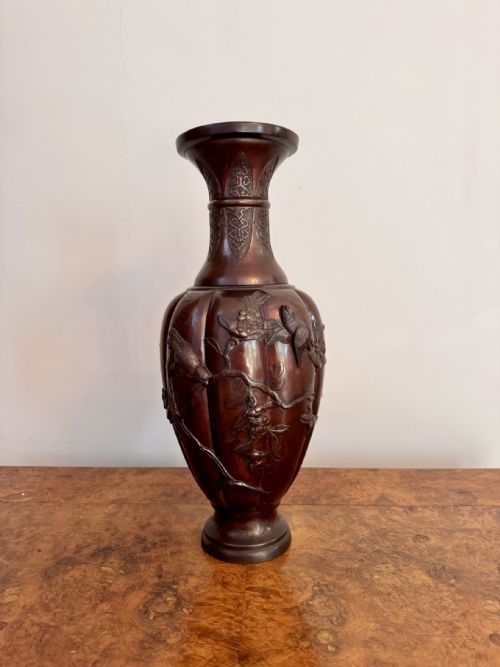
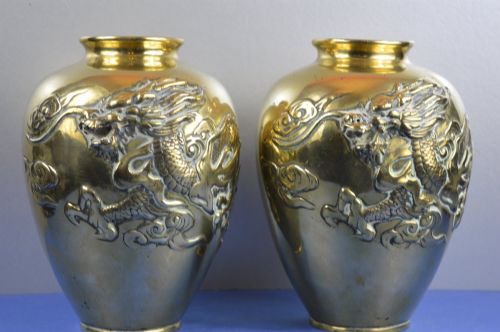
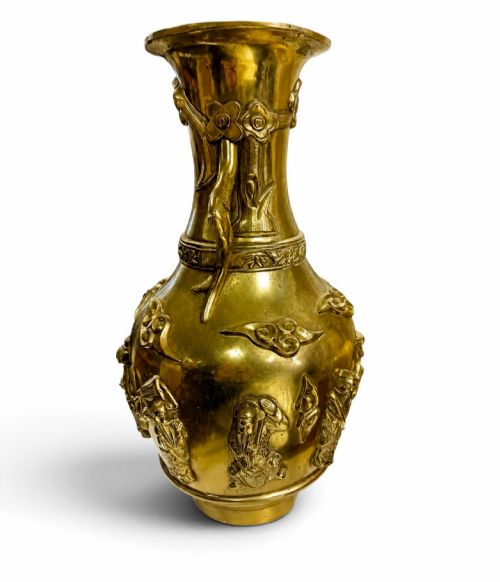
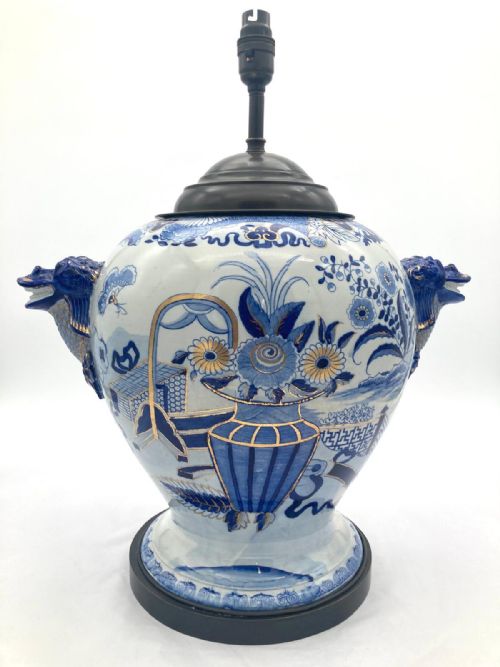
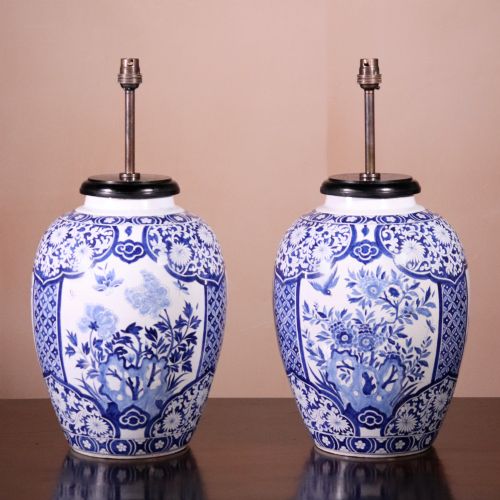
The selection includes heavy bronze and copper-alloy vessels decorated with high-relief dragons, alongside tall porcelain jars and floor vases that sometimes incorporate wooden stands or later electrical fittings.
How they were made
Potters shaped high-fired porcelain and earthenware bodies before applying complex enamel palettes, underglaze blue, and gold leaf highlights. Bronze and copper-alloy examples utilised detailed casting, high-relief chasing, and silver wire cloisonné work.
Many ceramic pieces combined painted panels with gilt bronze mounts or intricate crackle glazes, while specialised workshops added intricate hand-painted figures such as arhats and immortals.
Listings feature extensive nineteenth-century production, spanning porcelain, bronze, and cloisonné across various Chinese and Japanese styles.
What varies in quality
Quality rests upon the precision of the hand-painted detail, the crispness of the bronze casting, and the depth of the enamel work. Superior examples display disciplined brushwork, balanced composition across large surfaces, and well-preserved gilding.
The presence of identifiable maker marks or original matching stands often separates standard decorative production from the finest workshop output.
Hotoda·Makuzu Kozan·Kato Sanhei·Ando Jubei·Hicks and Meigh
The Large Oriental Vases Glossary
- Imari
- A Japanese style of porcelain decorated in underglaze blue, iron red, and gold. It originated in Arita and became widely exported to Europe.
- Satsuma
- An earthenware pottery from Japan featuring a crackled creamy glaze and dense polychrome enamel painting heightened with gold.
- Cloisonné
- A metalwork technique where enamel paste is applied within compartments formed by soldered silver or bronze wires.
- Famille Rose
- A Chinese porcelain palette distinguished by opaque pink or rose enamel, introduced during the Qing dynasty.
Large Oriental Vases: Frequently Asked Questions
Where should I place a floor vase?
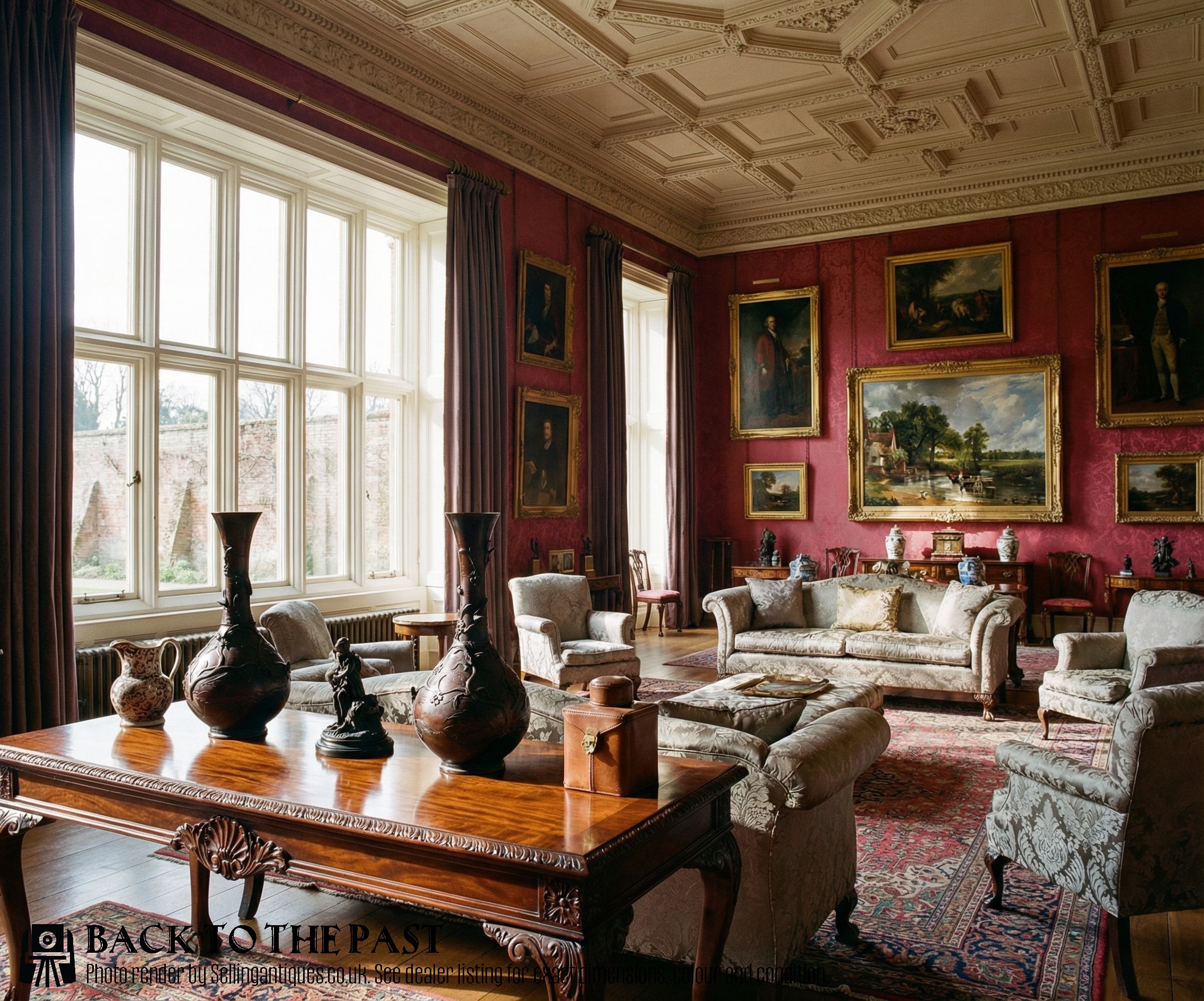
These tall vessels command attention in entrance halls, wide landings, or quiet corners where their scale can be appreciated without obstruction. They provide vertical emphasis against plain walls.
Keep them away from high-traffic household paths to protect the handles, rims, and delicate enamel surfaces from accidental impacts.
Can I display these vases outdoors?
Historic porcelain, earthenware, and fine bronze pieces are designed exclusively for interior display. Frost and damp weather will damage the glazes and weaken the ceramic bodies.
Garden urns explicitly made for exterior use are distinct from the interior decorative floor jars found in this collection.
How do I clean large antique vases?
Dust the surfaces gently with a dry, soft feather duster or a clean microfibre cloth. Avoid using water, chemical sprays, or abrasive cleaners on painted enamels and gold leaf.
Take particular care around fragile bronze mounts and wire cloisonné work where moisture can become trapped in the crevices.
Were these pieces made for export?
Many large nineteenth-century vases from China and Japan were specifically manufactured for Western markets following the opening of international trade routes. They frequently combined traditional local motifs with grand proportions suited to European drawing rooms.
Export pieces often bear reign marks or studio signatures that help identify their period of manufacture.