


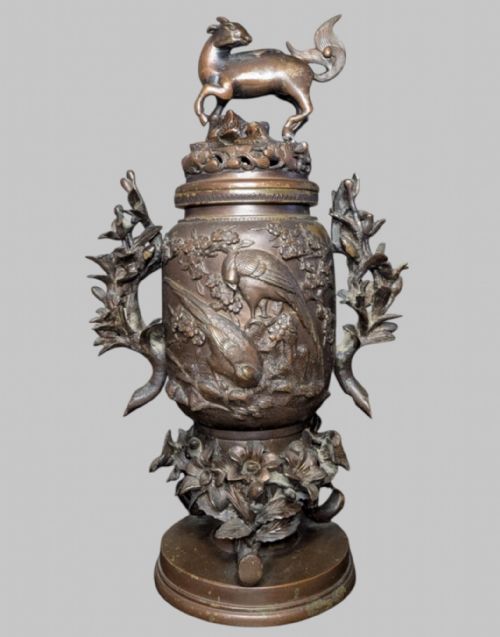


Japanese Cast Bronze Urn
These heavy Japanese cast bronze urns bring substantial metalwork into a room, spanning the Meiji period and Victorian eras.
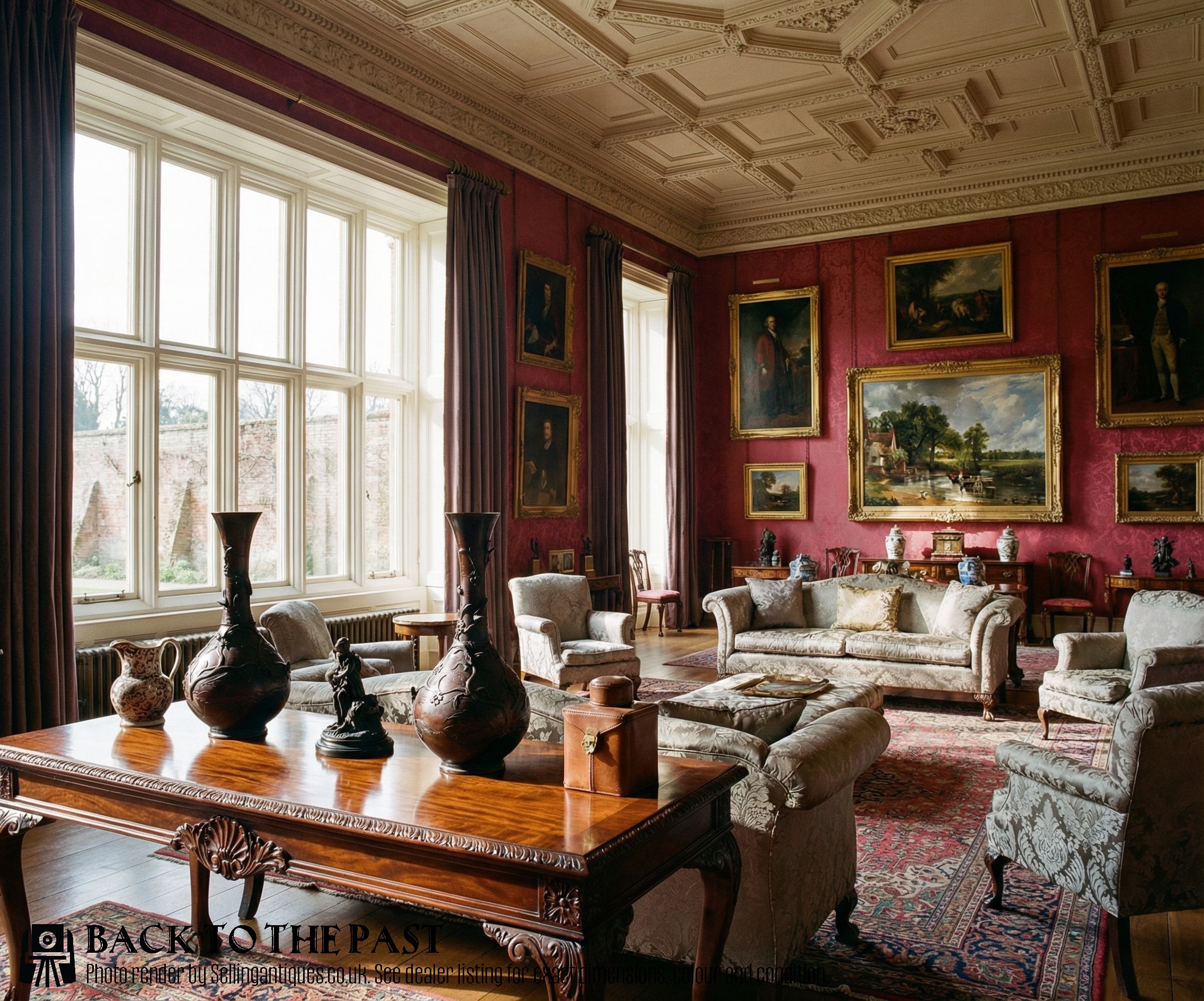
Japanese Cast Bronze Urn
A Japanese cast bronze urn is a heavy vessel designed for display, incense burning, or holding plants, frequently appearing from the nineteenth century and the Meiji period.
Buyers encounter these objects styled as lidded urns, incense burners, and garden planters, often originating from Japanese workshops intended for Western export.
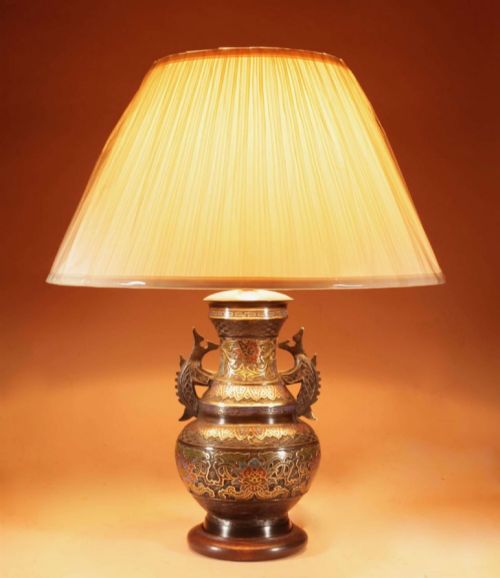
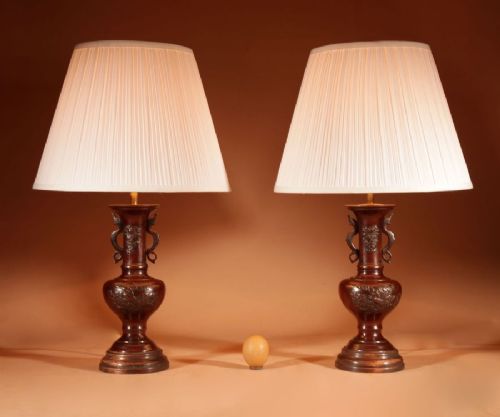
The selection ranges from large monumental temple vases to smaller decorative vases and table lamps adapted from earlier bronze forms.
Methods and materials of manufacture
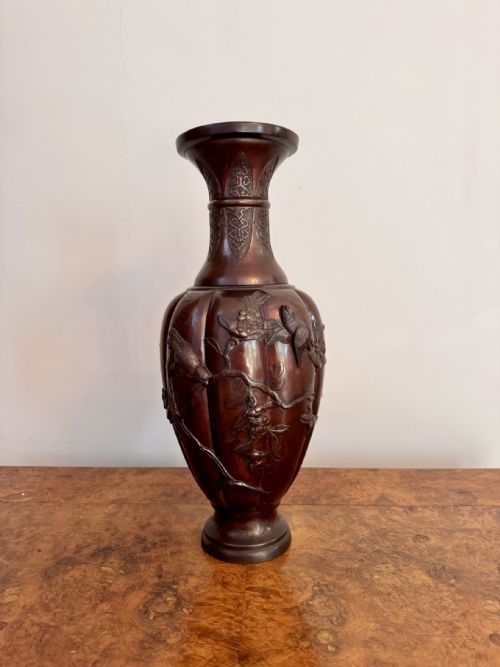
Metalworkers utilised bronze, patinated metal, and brass, often applying chemical patination to achieve dark, rich surface tones on the metal.
Certain pieces incorporate champlevé enamel decoration, where coloured enamel fills recessed channels cut directly into the bronze surface.
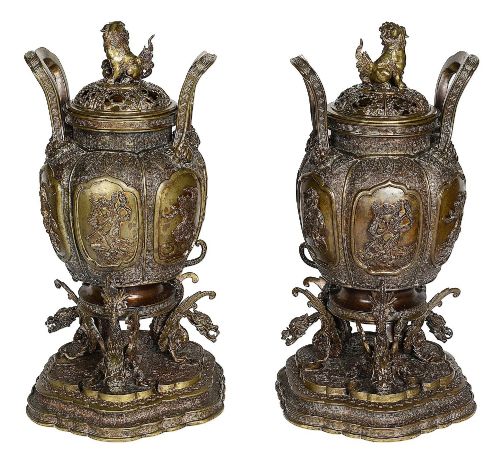
The casting process creates heavy vessels, sometimes weighing several kilograms, finished with fine hand-tooled details such as handles, animal finials, and relief motifs.
Listings span the Victorian era, the Meiji period, and the early twentieth century, utilising bronze, brass, enamel, and wood.
Distinctions in quality and execution
Quality rests in the crispness of the casting and the depth of the hand-chased surface detail, where superior examples exhibit sharp definition in dragons, foliage, and geometric patterns.
The weight of the bronze and the finish of the original patina distinguish finer vessels from standard production pieces.
Makers working within specific traditions, such as the Takaoka school, demonstrate precise control over archaic forms and surface patination.
The Japanese Cast Bronze Urn Glossary
- Meiji Period
- The era in Japanese history spanning from 1868 to 1912, corresponding with a massive output of bronze metalwork for international markets.
- Champlevé
- An enamelling technique where troughs are dug into the bronze surface and filled with enamel paste before firing.
- Koro
- A traditional Japanese incense burner, often featuring three legs and a pierced cover.
- Usubata
- A specific form of bronze vase utilised in traditional flower arrangement, featuring a broad flat rim atop a columnar body.
- Patinated Bronze
- Bronze treated with chemicals to alter the surface colour, ranging from deep browns to greenish hues.
Japanese Cast Bronze Urn: Frequently Asked Questions
How are Japanese bronze urns dated?
Dating relies on stylistic markers, manufacturing techniques, and historical periods such as the Meiji era or the Victorian period. Many pieces align with late nineteenth-century export production.
Makers often utilised traditional motifs that reflect specific stylistic revivals, helping to narrow the decade of production.
Were these urns made for export?
A large proportion of the bronze urns, vases, and jardinières produced during the late nineteenth century were specifically intended for Western collectors and the home decor market.
This accounts for the frequent adaptation of these vessels into table lamps during subsequent decades.
What is the difference between an urn and a jardinière?
An urn is typically a closed or lidded decorative vessel with a narrow neck, whereas a jardinière is an open bowl designed to hold plants and floral arrangements.
Both forms utilise the same heavy bronze casting methods and surface patination techniques.
How do I care for antique bronze?
Antique bronze requires minimal intervention, needing only gentle dusting with a soft, dry cloth to protect the original patinated surface.
Avoiding harsh chemical cleaners ensures the historical finish remains undisturbed over time.