
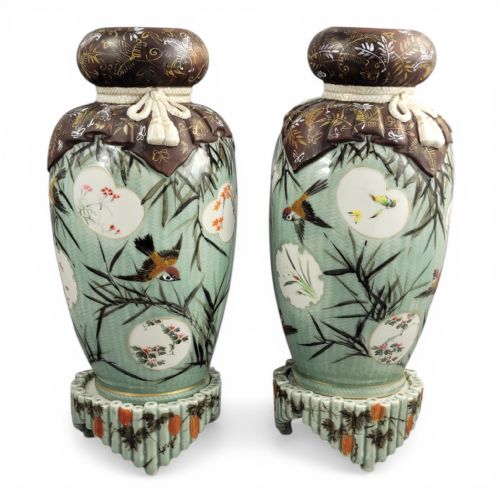


Large Floor Standing Vases
Large floor standing vases command attention in a room, offering height and presence through historic porcelain, bronze, glass, and stoneware.
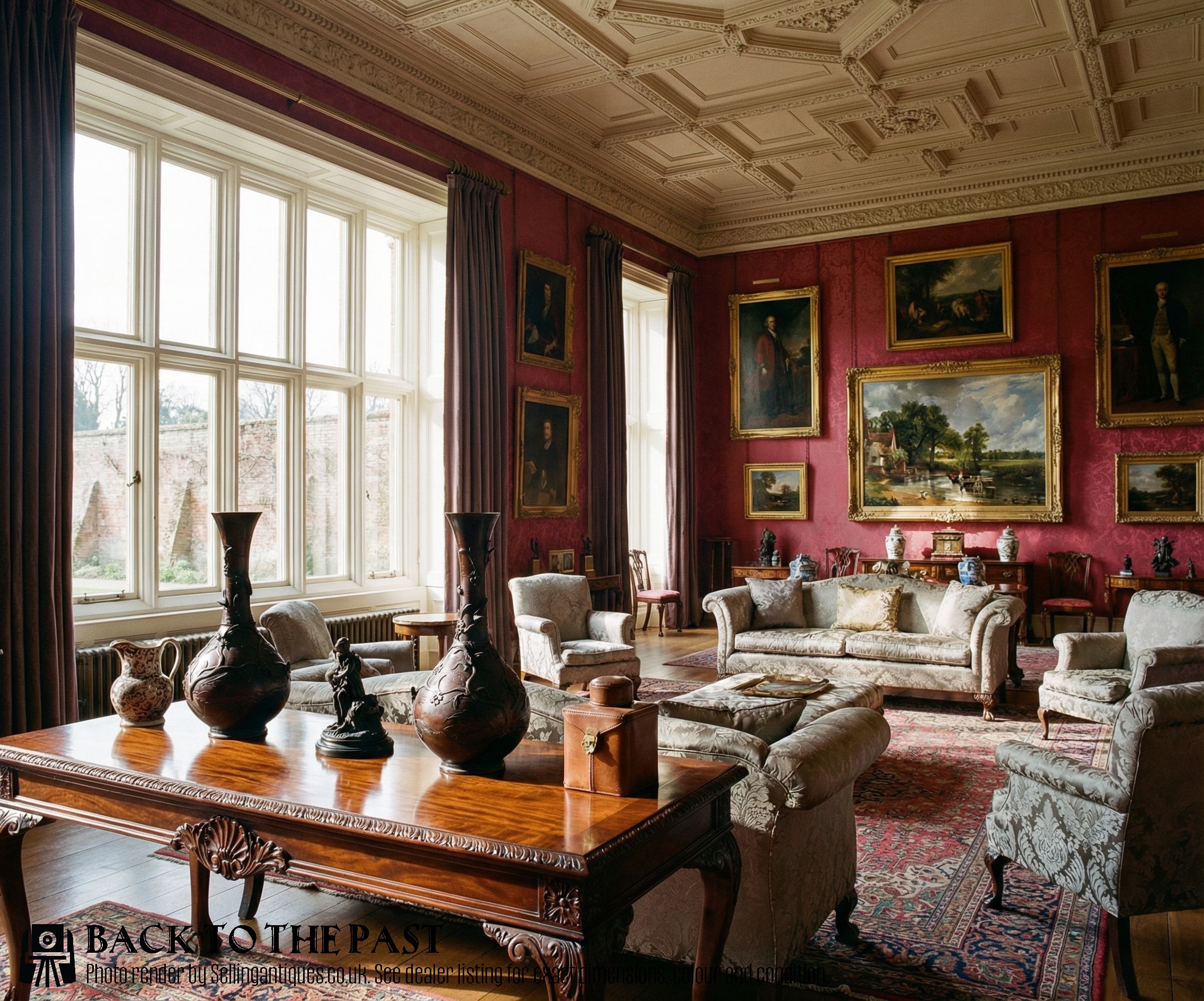
Large Floor Standing Vases
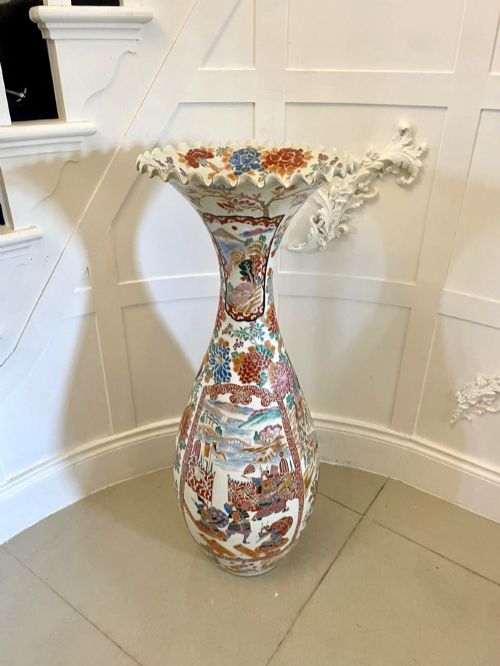
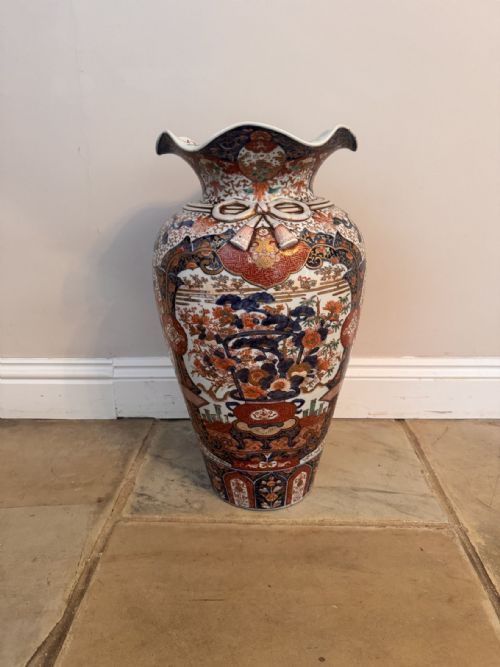
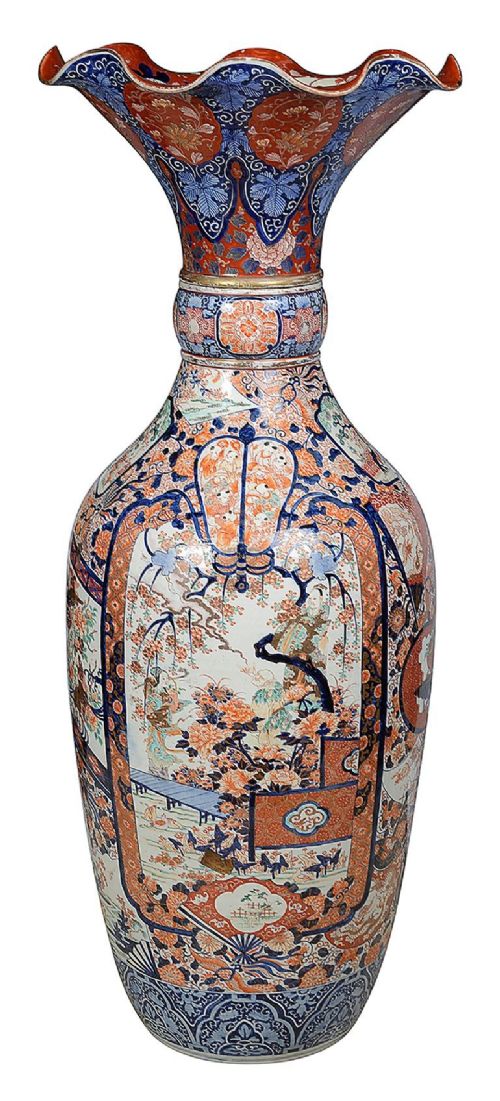
Large floor standing vases span the nineteenth and twentieth centuries, originating from Japanese, Chinese, Italian, and British workshops. When you search for large floor standing vases, you encounter monumental pairs and single vessels made to stand directly upon the floor rather than on furniture.
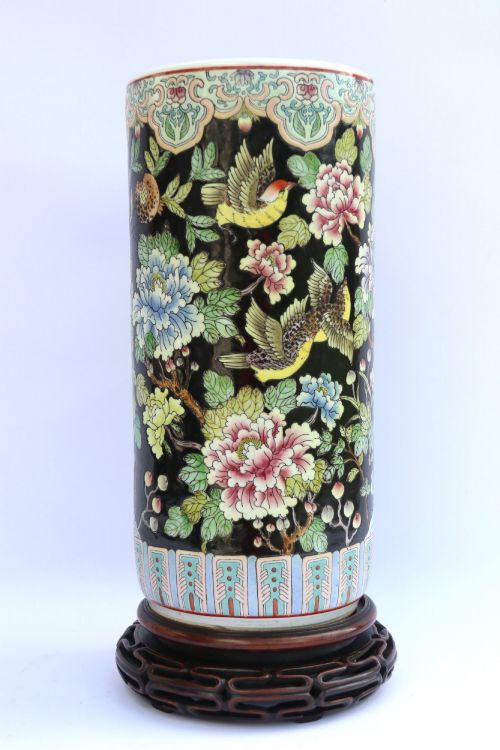
The pieces appearing here include Japanese Imari and Fukagawa porcelain, Chinese export and Qing dynasty vessels, alongside Italian Majolica, cranberry glass, and bronze. Many examples rest upon their original hardwood or porcelain stands, adding further elevation and stability to the composition.
Forms range from traditional trumpet shapes and temple jars to massive jugs and pedestals. These grand vessels represent periods such as the Meiji era and Victorian times, finished with enamel, gold leaf, and intricate glazes.
How They Were Made
Makers shaped these large floor standing vases using high-fired porcelain, stoneware, bronze, and glass, often employing specialised throwing or casting techniques to support the immense weight of the clay or metal. Salt glazing, overglaze enamelling, and cloisonné work demand precise temperature control in kilns to prevent warping during production.
Surface decoration frequently combines hand-painted pigments, gold leaf accents, and lacquer, applied across extensive curved surfaces. Many ceramic vessels incorporate matching stands fashioned from turned hardwood or fired porcelain to bear the substantial load.
What Varies in Quality
The standard of a large floor standing vase depends upon the crispness of the hand-painted detailing and the depth of the glaze or enamel work. Finer examples display meticulous brushwork and balanced proportions that maintain visual harmony across a monumental scale.
The survival of original components, such as custom hardwood stands or matching companion pairs, elevates the integrity of the piece. Superior craftsmanship shows in the evenness of the body and the stability of the structure despite the challenges of firing large ceramic forms.
Kato Sanhei
The Large Floor Standing Vases Glossary
- Imari
- A style of Japanese porcelain featuring a distinct palette of underglaze blue, iron red, and gold. This decorative tradition gained immense popularity in European export markets during the nineteenth century.
- Cloisonné
- A metalwork technique where thin wire strips create compartments on a vessel surface, which are subsequently filled with enamel paste and fired. The resulting cells form intricate patterns in bold colours.
- Majolica
- Tin-glazed earthenware associated with Italian pottery traditions. It provides an opaque white background for vibrant painted decoration.
- Medallion
- A distinct decorative panel or reserve set within a busier background pattern on ceramics. These panels typically frame figurative or floral scenes.
- Salt glazed
- A stoneware finish achieved by throwing common salt into the kiln during high-temperature firing, producing a textured orange-peel surface. This durable glaze resists moisture and wear.
Large Floor Standing Vases: Frequently Asked Questions
Where should I place a floor vase?
These tall vessels suit empty corners, entrance halls, or wide landings where their height draws the eye upward.
Because of their substantial size and weight, they sit safely on solid flooring away from heavy household traffic.
Do these vases need special stands?
Many historic floor vases are designed to sit upon dedicated wooden or porcelain bases that distribute weight evenly.
Using the original stand ensures the vessel rests securely and maintains the correct historic height.
How do I clean a large ceramic vase?
Dust the surface regularly with a soft, dry cloth to prevent grime accumulation within recessed enamel or glaze details.
Avoid chemical cleaners or excess water, particularly on pieces featuring gold leaf or delicate overglaze enamel.
How can I tell the period of a vase?
Examine the glazing techniques, potting style, and decorative motifs against known historical periods like the Meiji era or Qing dynasty.
Material composition and the presence of workshop signatures or original stands also help narrow down the date.