






Large Oriental Lidded Jar
A large oriental lidded jar brings heavy hand-painted porcelain and bronze into a room, offering both sculptural presence and enclosed storage.
Large Oriental Lidded Jar
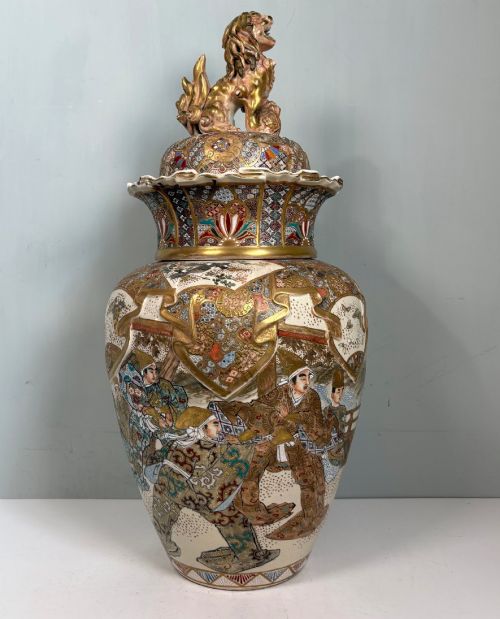
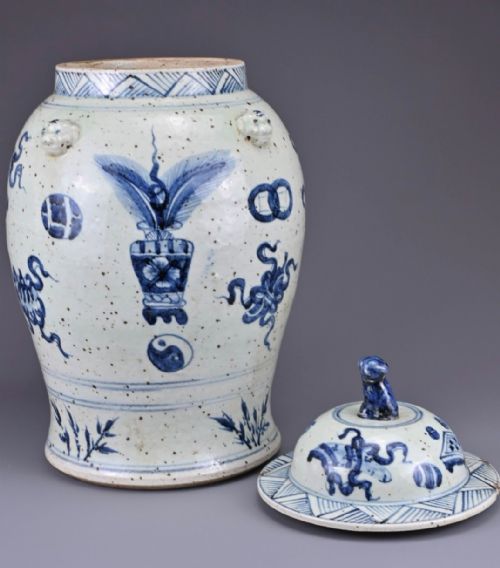
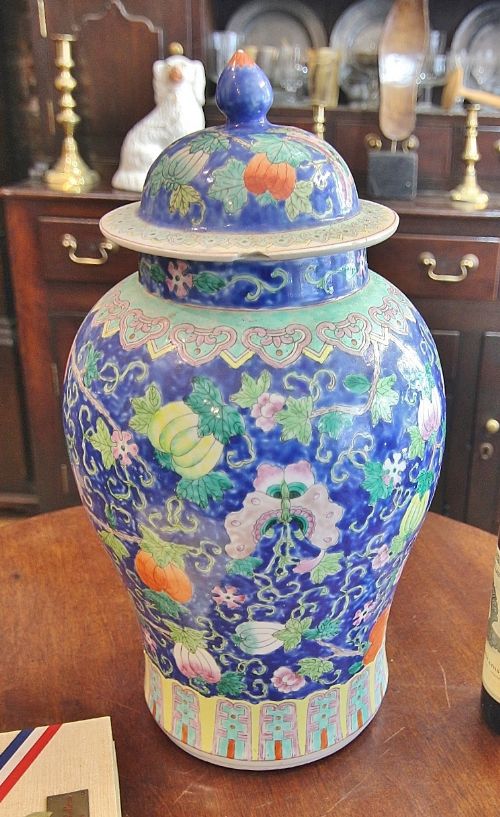
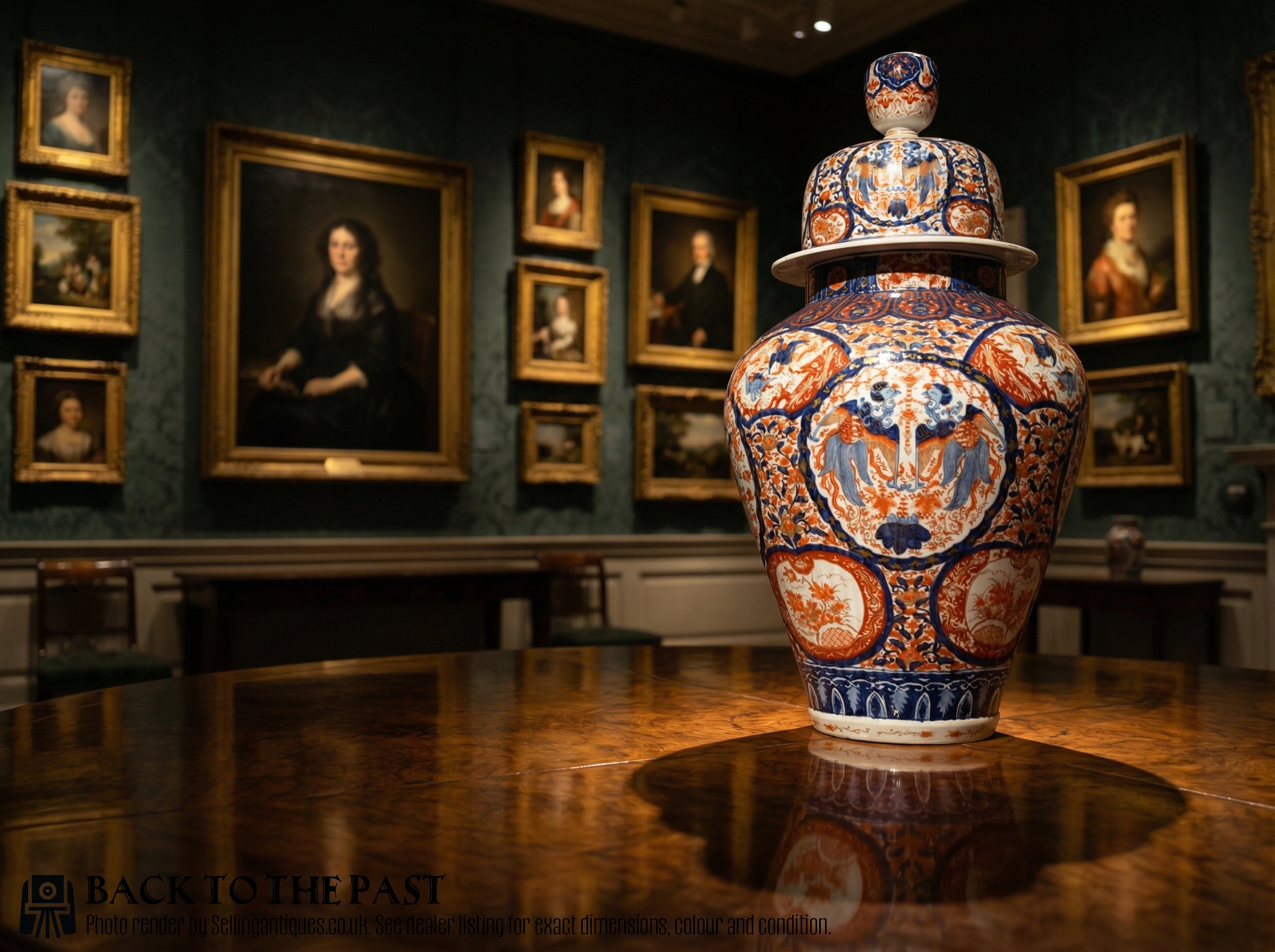
When searching for a large oriental lidded jar, collectors encounter substantial ceramic vessels originating from Chinese and Japanese kilns. These pieces span the nineteenth and early twentieth centuries, encompassing diverse aesthetic traditions from Qing Dynasty porcelain to Meiji period Satsuma and Imari ware.
The objects appearing on this page take specific functional forms, including baluster vases with matching covers, temple jars, and lidded incense burners known as koro. Most examples serve as decorative centrepieces rather than utilitarian containers, built on a monumental scale that dominates a mantelpiece or side table.
Japanese Imari and Satsuma dominate the selection, alongside Chinese blue and white porcelain and cloisonné work. Buyers find both individual lidded urns and matched pairs, showcasing the distinct regional palettes of cobalt pigment, rich enamel, and applied gold leaf.
How they were made
Potters built these substantial bodies from high-fired porcelain and earthenware, shaping them on the wheel or forming them within moulds to achieve thick, stable walls capable of supporting heavy covers. Artisans then applied underglaze cobalt pigment or intricate overglaze enamels by hand, building up complex pictorial scenes before a secondary firing fixed the colours.
Gilding and gold leaf frequently highlight the painted surface, catching the light across raised enamel details and borders. For cloisonné pieces, craftsmen soldered thin metal wires to a bronze or copper base to create cellular partitions, filling each tiny compartment with coloured paste before firing and polishing the finished metal skin.
Large Oriental Lidded Jar Retail Price Guide 2026
Typical asking prices for large oriental lidded jar among the pieces listed under this phrase on Sellingantiques today, from the lower quarter to the upper quarter. They describe what is for sale here now, not the wider market.
One towering jar stands taller than a sturdy toddler, demanding careful navigation through narrow hallways.
What varies in quality
The precision and density of the hand-painted decoration set the finer pieces apart from simpler production ware. Superior examples display meticulous brushwork in the cobalt pigment or enamel, where fine facial expressions, detailed foliage, and precise geometric borders remain crisp and controlled across a large surface area.
The weight and stability of the porcelain body, combined with the exact fit of the lid, indicate the standard of original craftsmanship. Furthermore, the richness of the gilding and the depth of the glaze determine the visual impact of the vessel when placed in daylight.
Samson
The Large Oriental Lidded Jar Glossary
- Imari
- A traditional Japanese style of porcelain featuring a distinctive palette of underglaze blue, iron red, and abundant gold leaf. Pieces often display dense floral and brocade patterns.
- Satsuma
- A type of Japanese earthenware characterised by a crackled ivory glaze decorated with intricate polychrome enamels and raised gilding. It gained immense popularity for export during the Meiji period.
- Koro
- A traditional East Asian incense burner featuring a perforated lid that allows scented smoke to escape. These lidded vessels appear in both porcelain and metalwork.
- Cloisonné
- An enamelwork technique where metal wires form small compartments on a vessel body, which are then filled with coloured paste and fired. The surface is subsequently ground flat and polished.
- Baluster
- A vase shape with a rounded body that tapers toward a narrow neck and flares at the base. This classic architectural form provides stability for large lidded containers.
Large Oriental Lidded Jar: Frequently Asked Questions
What were large lidded jars used for?
Historically, these substantial vessels stored dry goods, spices, or ceremonial incense within elite households. Over time, their decorative utility overtook practical storage.
Today, collectors use them as standalone architectural accents on tables, pedestals, or mantels.
How do I date a Japanese Imari jar?
Dating relies on examining the weight of the porcelain, the hue of the cobalt pigment, and the style of the overglaze enamels. Nineteenth-century examples often display heavier bodies and brighter gilding than earlier wares.
Comparing the decorative motifs against documented periods provides further chronological context.
Are lids usually original to the jar?
Most surviving lidded vessels retain their matching original covers, which share the exact clay body, glaze characteristics, and decorative border patterns of the base.
Checking the interior rim of both pieces ensures the lid sits flush and originates from the same kiln firing.
How do I display a large lidded jar safely?
Due to their considerable weight and height, these jars require stable, level surfaces away from heavy foot traffic or vibration. Placing them on sturdy wooden furniture prevents accidental tipping.
Keeping the vessels out of direct, prolonged sunlight protects the stability of the overglaze enamels and gold leaf.