

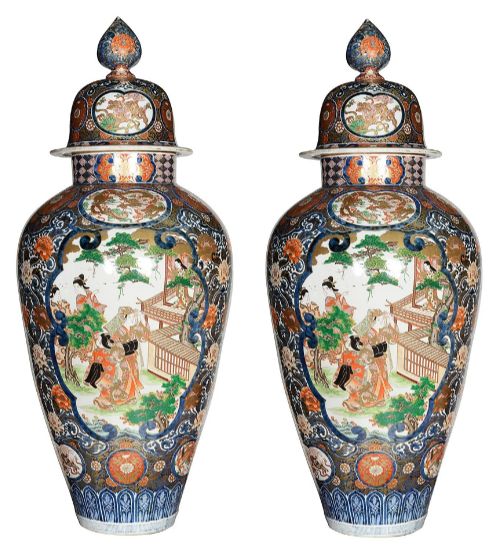


Large Imari Lidded Urn
A large imari lidded urn brings together vibrant palette work and generous scale, making it a striking focal point for any room.
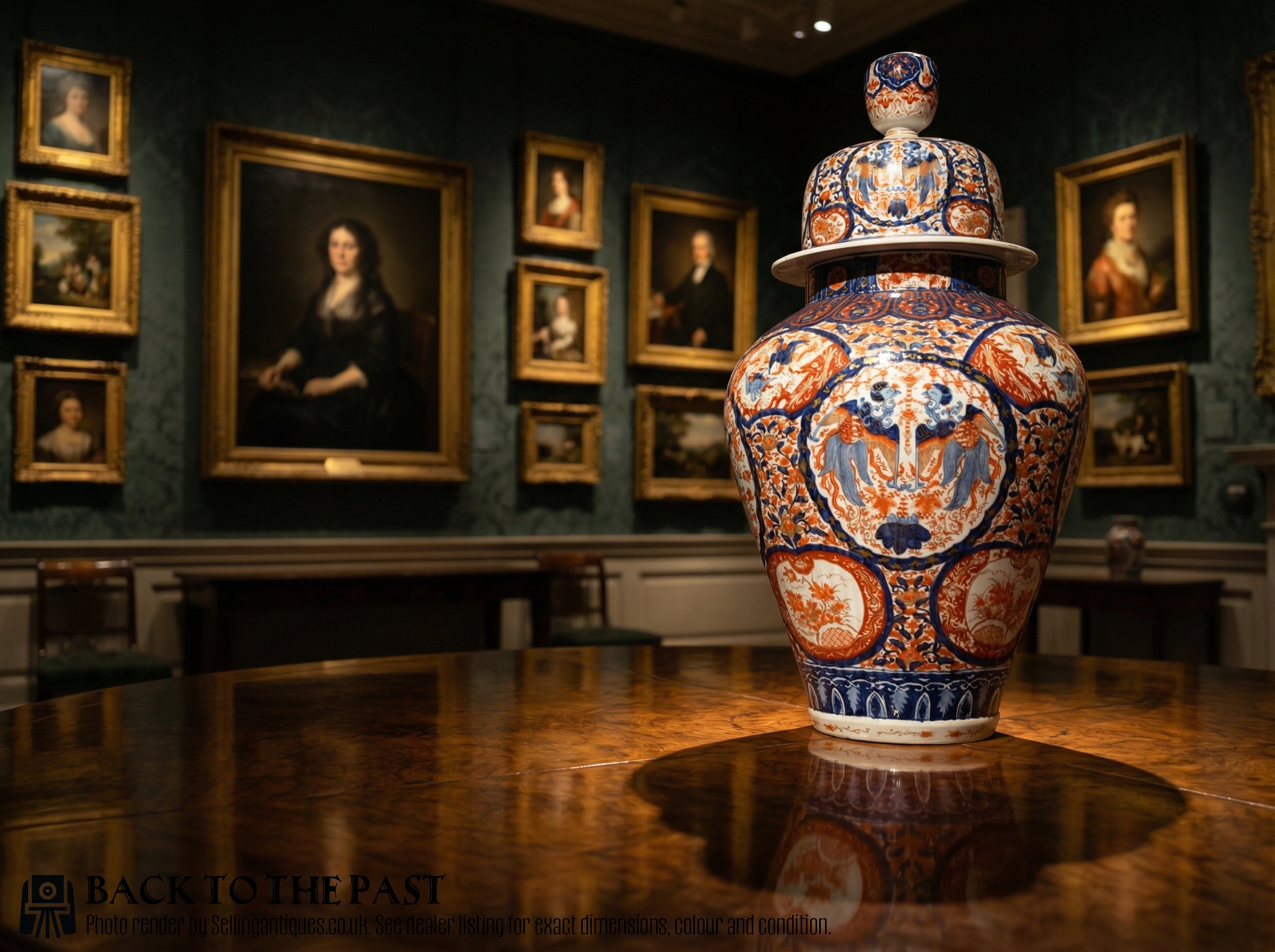
Large Imari Lidded Urn
A large imari lidded urn sits among the most visually commanding decorative objects from the nineteenth century, combining substantial ceramic forms with intricate surface decoration. When you search for a large imari lidded urn, you encounter vessels that function primarily as decorative showpieces rather than utilitarian containers.
The versions most commonly met on this page date from the nineteenth century, including pieces associated with Japanese Meiji production alongside nineteenth-century European interpretations in the Imari style. These objects frequently appear as matched pairs or as single monumental vases complete with their original fitted covers.
Makers working within these traditions utilised distinct forms ranging from classic baluster vases to tall vessels designed for display on dedicated stands. Their substantial presence makes them ideal for positioning on large tables, pedestals, or within grand architectural spaces.
How they were made
The construction of a large imari lidded urn relies upon high-fired ceramic bodies, including porcelain and ironstone, shaped to support considerable weight and height. Potters threw or moulded these large vessels in sections before joining them securely prior to glazing and firing.
Surface decoration defines the medium, utilising enamel and gold leaf or gilt highlights applied over or under the glaze in the characteristic Imari palette. Certain examples incorporate ormolu mounts to enhance the rims and bases, uniting ceramic craft with metalwork.
Large Imari Lidded Urn Retail Price Guide 2026
Typical asking prices for large imari lidded urn among the pieces listed under this phrase on Sellingantiques today, from the lower quarter to the upper quarter. They describe what is for sale here now, not the wider market.
Listings demonstrate a strong concentration of nineteenth-century Japanese Meiji production alongside European Imari style interpretations.
What varies in quality
Quality in a large imari lidded urn rests upon the crispness of the porcelain body and the precision of the hand-painted palette. Superior examples display deeply saturated iron reds and cobalt blues executed with immense confidence and control.
The richness of the gilding and the integration of gold leaf separate standard production from exceptional work. Furthermore, the harmonious proportion between the main body of the vase and its matching cover dictates the visual success of the piece.
Samson
The Large Imari Lidded Urn Glossary
- Imari palette
- A traditional colour scheme dominated by underglaze cobalt blue, iron red, and supplementary gilding. This distinctive combination originated in Japanese kilns before inspiring European makers.
- Ormolu
- Gilded bronze mounts applied to decorative objects to enrich their appearance. Makers utilised these metal additions to frame ceramic edges and elevate the status of the vessel.
- Meiji period
- The era in Japanese history spanning from eighteen sixty-eight to nineteen twelve. Pieces from this time often exhibit exceptional technical ambition and detailed surface work.
- Ironstone
- A heavy, durable type of ceramic developed in the nineteenth century. It provides the structural strength required for very large decorative vessels.
- Baluster
- A vertical architectural form characterised by a swollen lower portion tapering towards the top. Many lidded urns adopt this classic silhouette for visual balance.
Large Imari Lidded Urn: Frequently Asked Questions
Are these urns suitable for holding water or flowers?
Most antique examples serve strictly as decorative display pieces rather than functional vases for water and fresh stems. The delicate enamel work and historic ceramic bodies are best preserved by keeping them dry.
Using them for floral arrangements risks moisture damage to the interior and potential staining of antique surfaces. Dry botanical displays or simply leaving the vessels empty remains the standard approach for collectors.
How do I care for a porcelain urn with gilt highlights?
Maintenance requires gentle dusting using a soft, dry brush to prevent accumulation around intricate painted areas and crevices. Avoid commercial cleaning agents, abrasive cloths, and liquid polishes which can strip delicate gold leaf.
Positioning the piece away from direct sunlight and areas of high humidity protects both the enamel colours and the ceramic body from degradation over time.
How can I distinguish nineteenth-century pieces from earlier examples?
Nineteenth-century production often exhibits heavier potting techniques and specific kiln marks associated with the Meiji era or European revival potteries. The intensity of the enamel colours and the formulation of the underlying porcelain provide important clues.
Examining the foot rim and the interior of the vessel reveals manufacturing methods characteristic of later nineteenth-century industrial and traditional studio practices.