
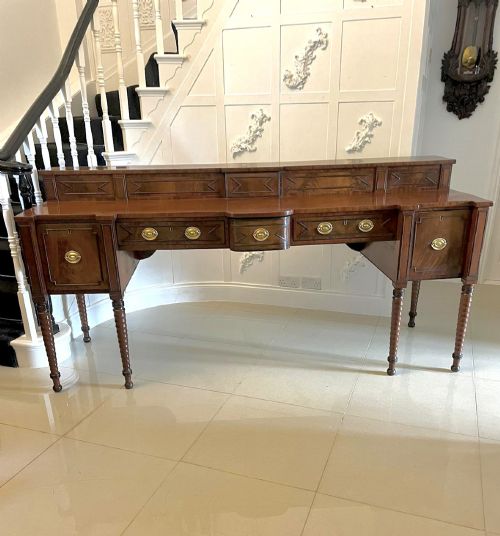
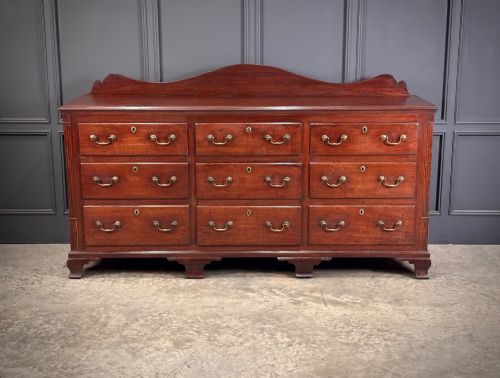
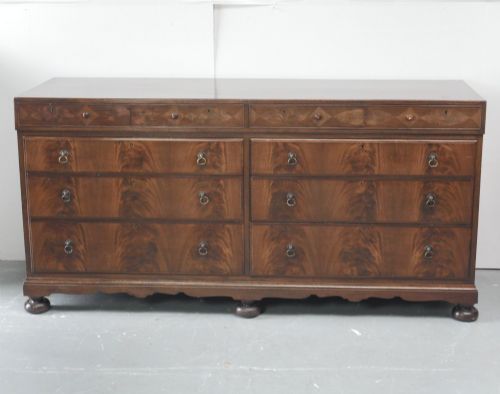
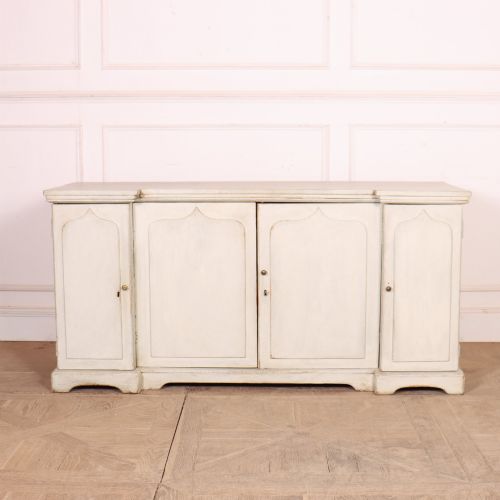
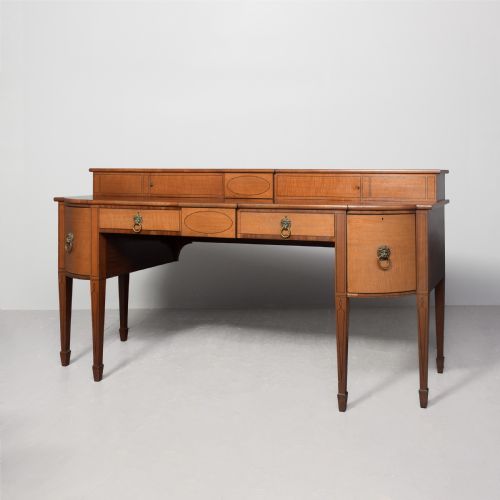
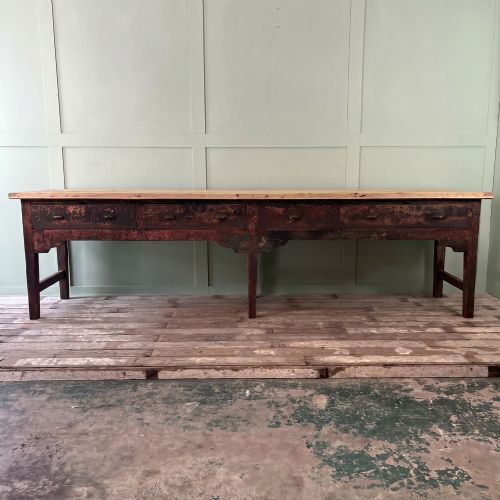
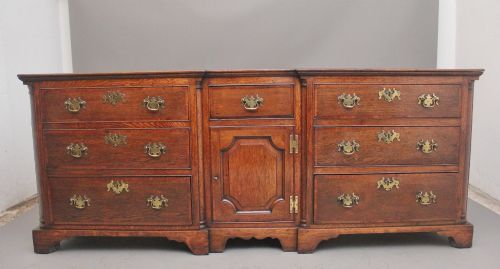


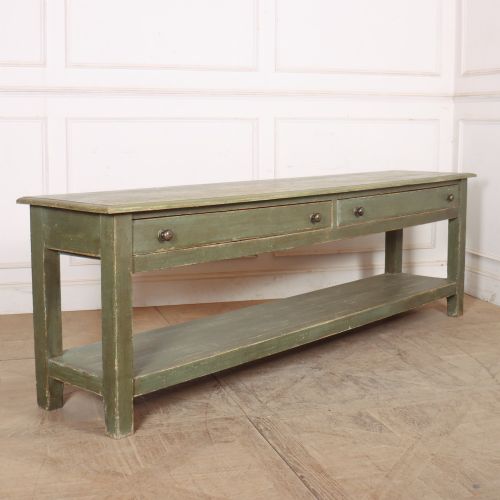
Large Georgian Sideboard
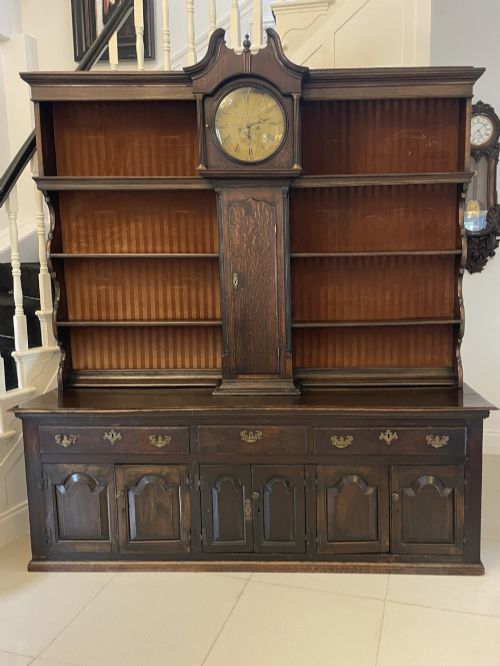
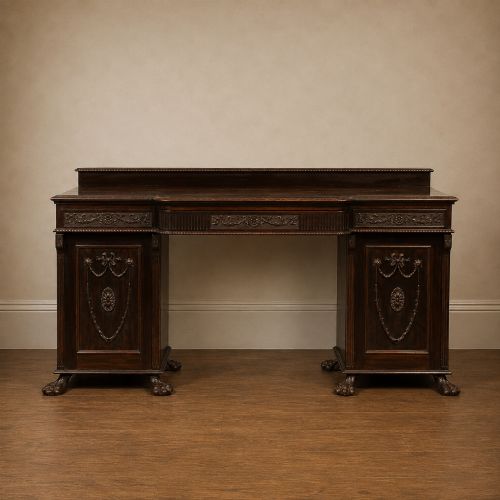
A large georgian sideboard anchors a room with timber weight and deep drawers, built to manage dining service with presence.
Large Georgian Sideboard
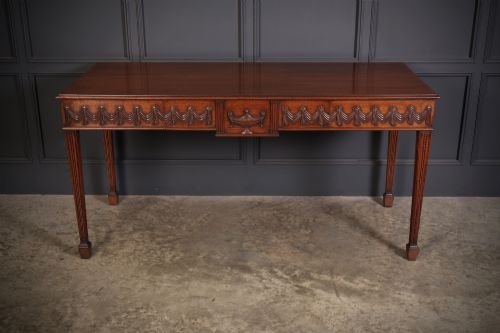
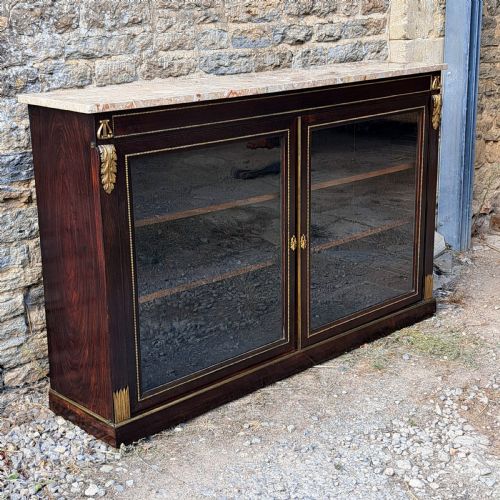
When you search for a large georgian sideboard, you meet substantial timber furniture built to stand against dining room walls and hold silver, linen, or serving vessels.
The pieces appearing here span the eighteenth century and the regency period, taking shapes from straight-fronted serving tables to bow-fronted and serpentine carcases.
Alongside standard sideboards, you encounter dresser bases, serving tables, and potboard designs shaped by regional English and Scottish makers.
Materials and Construction
Cabinetmakers built these carcases primarily in mahogany, oak, and pine, often selecting flame veneers and satinwood or boxwood stringing for decorative contrast.
Brass fittings provide original handles and escutcheons, while interior timber construction relies on joined pine and oak framing.
Lord Leverhulme once owned one of these serving tables, proving that grand dining requires considerable timber support.
Gradations in Quality
The distinction between ordinary and exceptional pieces rests on the choice of timber figure, such as richly matched flame mahogany or well-figured oak boards.
Refinement in edge-banding, crispness of inlay, and the retention of original brass hardware elevate the standing of a piece.
Whytock & Reid·Maple & Co.·Thomas Alderson
The Large Georgian Sideboard Glossary
- Bow-front
- A cabinet front that curves outward in a convex arc. This shape softens the room and creates deeper central drawer capacity.
- Serpentine
- A front profile curving inward centrally and outward at the ends. It demands precise cabinetmaking to fit the drawers.
- Potboard
- An open slatted lower shelf integrated into dresser bases. It served historically for storing heavy earthenware dishes.
- Stringing
- Thin inlaid lines of contrasting wood set flush into the surface. It outlines drawer fronts and borders panels.
- Breakfront
- A piece where the central section projects forward from the flanking wings. This architectural arrangement creates depth across the facade.
Large Georgian Sideboard: Frequently Asked Questions
What rooms suit a large sideboard?
These pieces require generous wall space and high ceilings to balance their heavy proportions and deep timber carcases.
Dining rooms and large hallways provide the natural setting where their surface area and storage function effectively.
How do I distinguish regional styles?
Scottish examples often display robust proportions and distinctive stage-backs, while Lancashire pieces frequently utilise oak with panelled construction.
English country workshops favoured native pine and plain oak over the imported mahogany found in metropolitan pieces.
How do I care for antique mahogany?
Keep timber pieces away from direct heat sources and sudden humidity shifts to prevent veneer lifting and wood splitting.
Apply traditional wax polish sparingly and buff with a soft brush to maintain the natural surface sheen.