
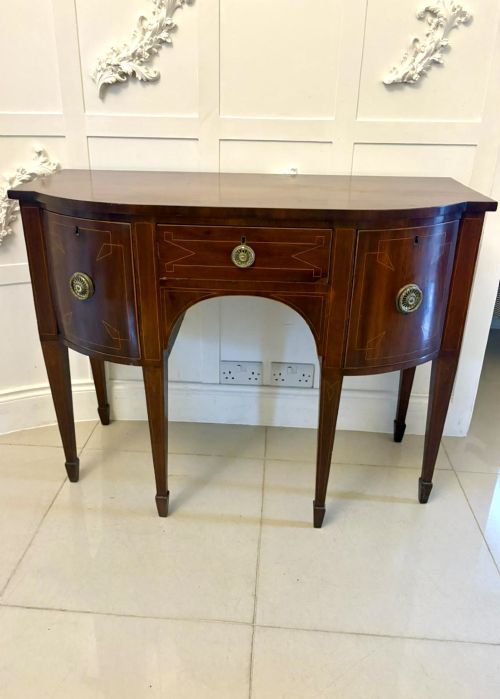
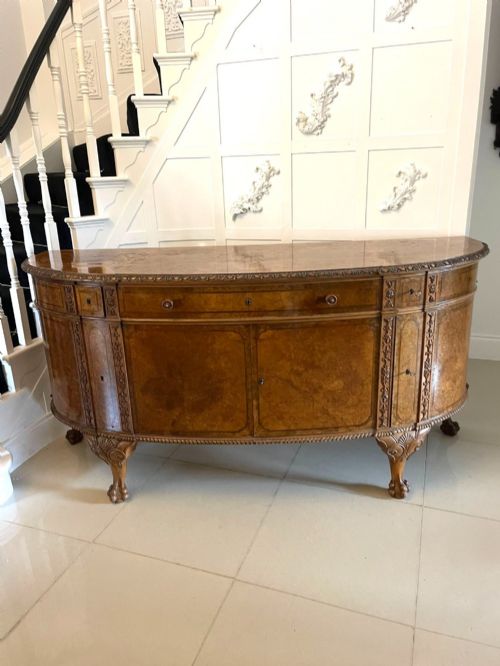
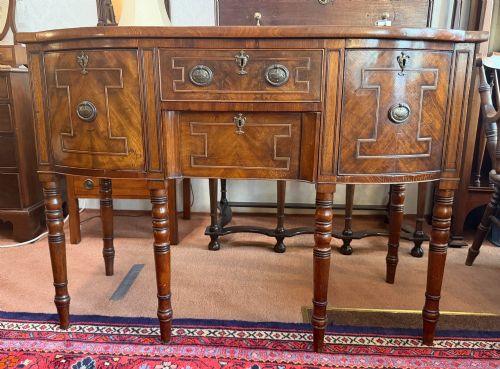
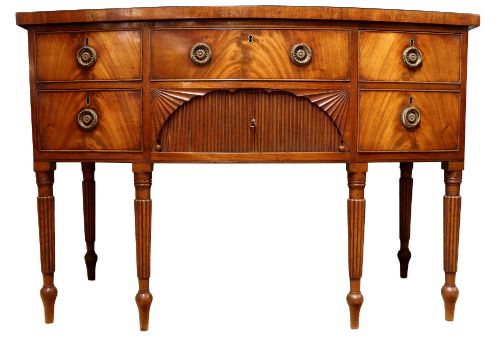
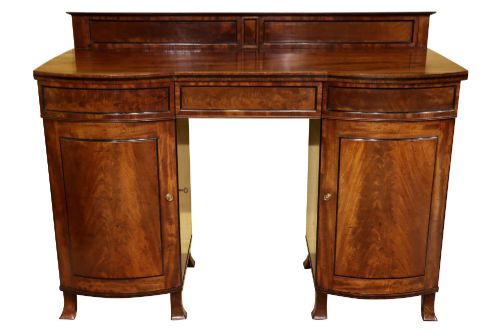
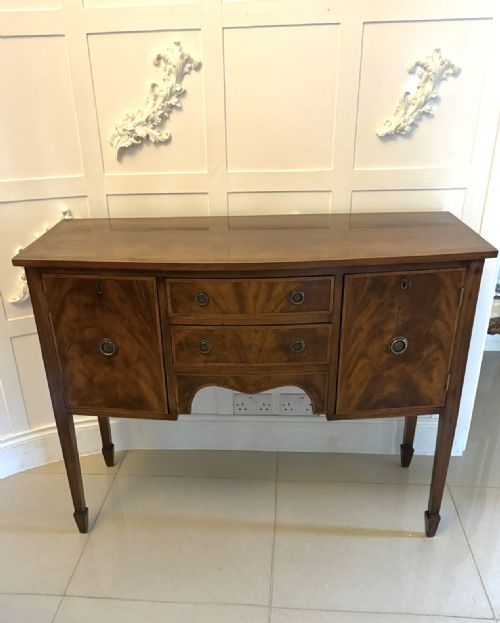
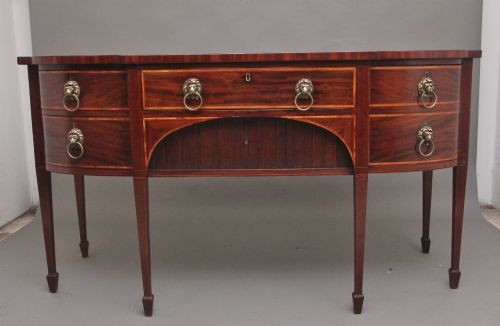
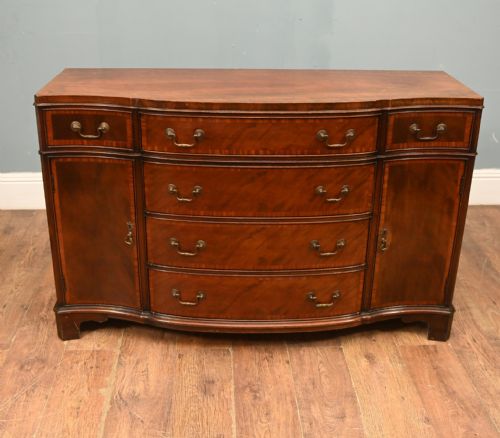


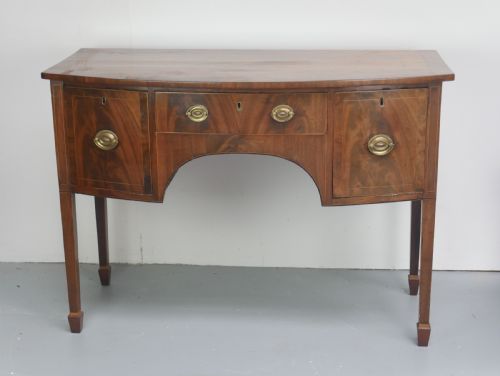
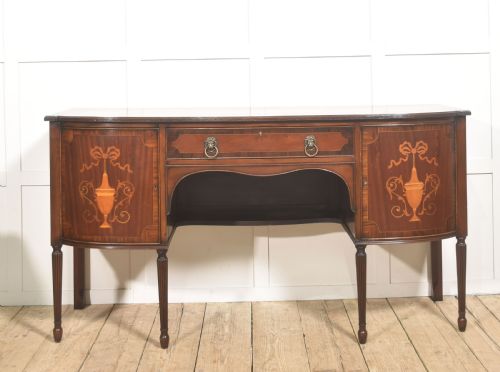


Bowfront Dining Room Server
A bowfront dining room server provides ample storage and a graceful curved profile, making it a functional centrepiece for a traditional dining space.
Bowfront Dining Room Server
A bowfront dining room server brings together the practical storage of a sideboard with a curved front profile designed to soften linear room layouts. These pieces surface most frequently in Georgian, Regency, and Edwardian periods, reflecting centuries of dining room evolution.
The selections available here range from compact eighteenth-century examples to larger twentieth-century revivals. Sideboards, serving tables, and cupboards dominate the forms, offering deep drawers and cupboards suited to storing dining linen and silverware.
Originating as utilitarian serving surfaces, these servers developed sophisticated cabinetwork over successive eras. Makers adapted the curved silhouette through the nineteenth and twentieth centuries, maintaining the classic proportions demanded by formal dining rooms.
Materials and Construction
Cabinetmakers relied heavily on mahogany as the primary timber, often selecting flame mahogany veneer to create rich, figured surfaces across the curved drawer fronts. Solid mahogany provided the structural integrity required for heavy six-legged frames and pedestal bases.
Inlay work added decorative contrast using boxwood, satinwood, and stringing to define the borders of panels and drawers. These delicate botanical details required precise hand-cutting to fit flush into the dense primary woods.
Listings feature mahogany, satinwood, and burr walnut across Georgian, Regency, and Edwardian periods.
Distinctions in Execution
Superior execution shows in the continuity of wood grain across curved drawer fronts and the precision of the boxwood inlay. Lesser examples rely on simple painted lines or mismatched veneer sections that interrupt the visual flow of the bow.
The choice of secondary timbers inside the drawers and the integration of original brass hardware signal the level of care taken during manufacture. Robust carcase construction ensures the heavy doors and drawers operate smoothly despite seasonal changes in humidity.
The Bowfront Dining Room Server Glossary
- Bowfront
- A convex curved cabinet front that projects outward in the centre. This shape softens the profile of large dining room furniture.
- Inlay
- Pieces of contrasting timber set into a recess in the primary wood surface. It creates decorative borders and geometric patterns.
- Stringing
- Thin strips of contrasting wood embedded in linear channels. This technique outlines drawer edges and cabinet doors.
- Veneer
- Thin slices of figured wood applied over a stable secondary timber base. Flame mahogany veneers provide dramatic grain patterns on large surfaces.
- Pedestal
- A structural support column positioned beneath the ends of a sideboard. These elements often carry cabinet enclosures or decorative carved details.
Bowfront Dining Room Server: Frequently Asked Questions
What is a bowfront dining room server used for?
These pieces function as storage cabinets and serving surfaces in dining spaces. They hold table linen, cutlery, and serving dishes while providing a top surface for food presentation.
The enclosed cupboards and deep drawers keep dining room accessories organised and out of sight. Their generous proportions make them practical for everyday household use.
How do I date a mahogany bowfront server?
Dating relies on examining the secondary timbers, construction methods, and decorative motifs present in the piece. Georgian and Regency examples exhibit hand-cut dovetails and specific cabinetmaking habits.
Later Edwardian and twentieth-century revivals often incorporate machine-cut elements and different internal woods. Comparing the hardware and inlay styles against known period standards helps narrow the decade of manufacture.
Where should I place a sideboard in my room?
A server requires a substantial wall space where its curved front can be fully appreciated without obstructing pathways. Dining rooms and large hallways offer the appropriate scale for these items.
Positioning the piece away from direct heat sources protects the mahogany timbers and delicate veneers from drying out. Adequate clearance ensures the deep drawers and cupboard doors open fully.
What is the difference between a sideboard and a server?
The terms often overlap in antique furniture, though servers typically emphasise surface area for food distribution. Sideboards frequently include more extensive cupboard and drawer combinations.
Both forms utilise the same mahogany construction methods and bowfront profiles found in formal dining furniture. The distinction usually rests on the specific internal configuration of shelves and drawers.