


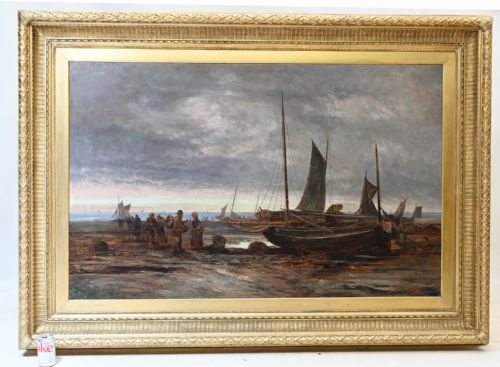

Large Framed Oil Landscape
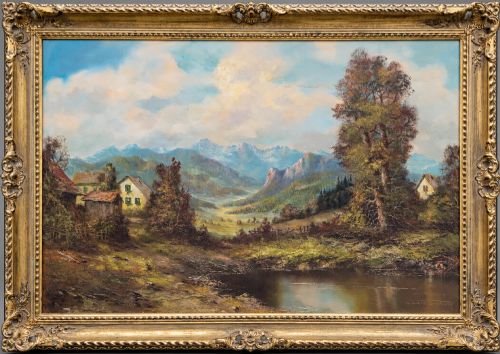
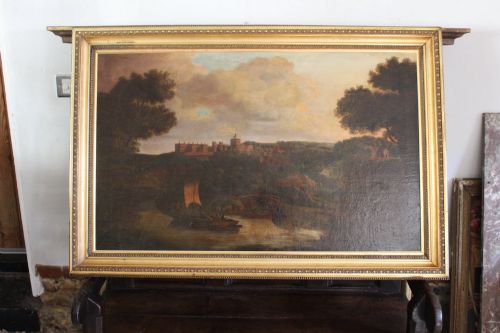
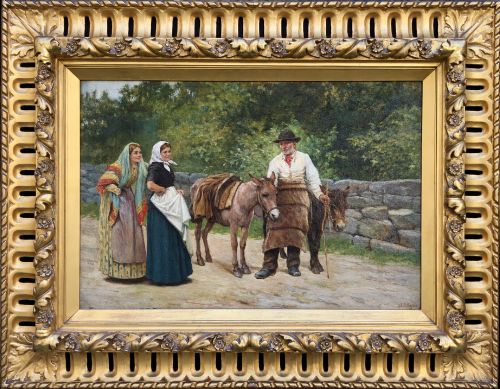
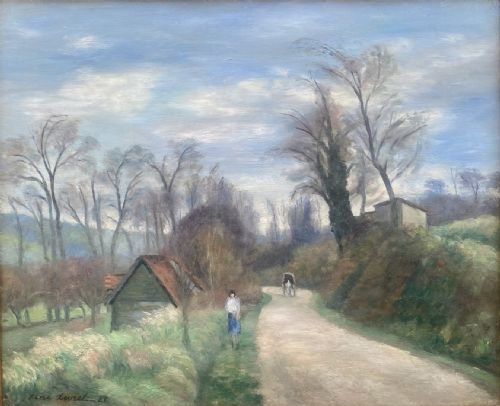
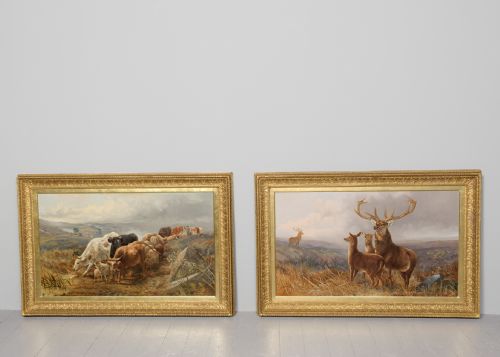
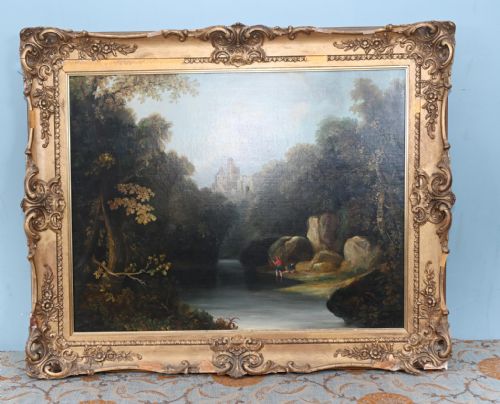
When you want a large framed oil landscape, you are looking for substantial canvas works depicting natural scenery housed in wood or gilt surrounds.
Large Framed Oil Landscape
A large framed oil landscape brings expansive scenery onto a wall, drawing the eye across rivers, mountains, and rural fields. These works dominate a room through sheer scale and the rich texture of oil paint.
You will frequently encounter pieces spanning the Victorian era, the nineteenth century, and mid-century modern periods. Landscapes range from British countryside views and Highland scenes to French chateaux and alpine vistas.
Makers and schools from various European traditions contribute to the diversity found here. Canvas supports predominate, though boards also appear alongside original giltwood and ebonised frames.
Materials and technique
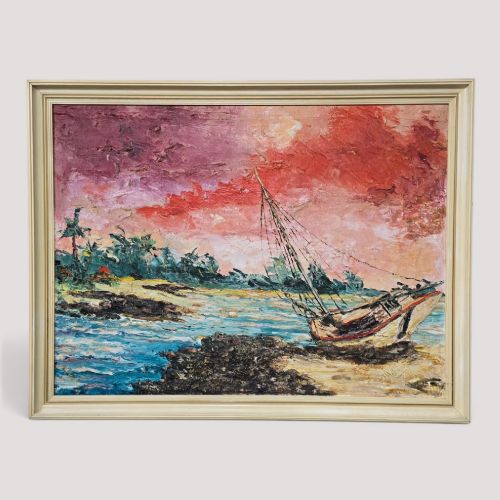
Artists applied oil paint directly onto stretched canvas or wooden board using brushes and sometimes heavier impasto techniques. This medium allowed for deep colour saturation and gradual blending of light and shadow across expansive horizons.
Surrounds were constructed from wood, often finished with gesso and heavy gilding to frame the painted view. These frames were integral to the presentation, providing structural support and visual definition to the composition.
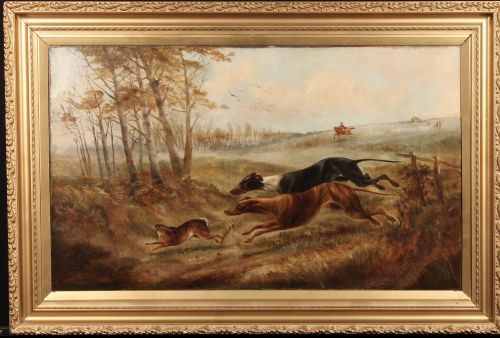
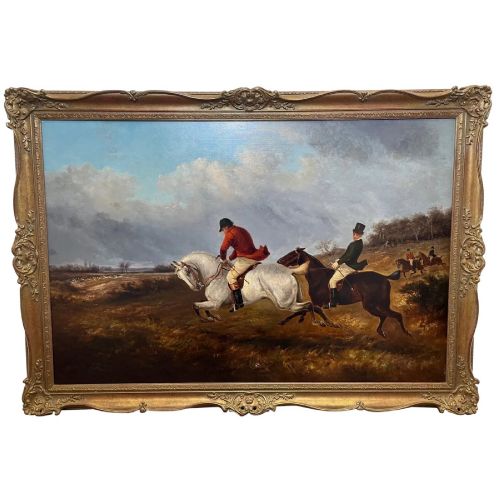
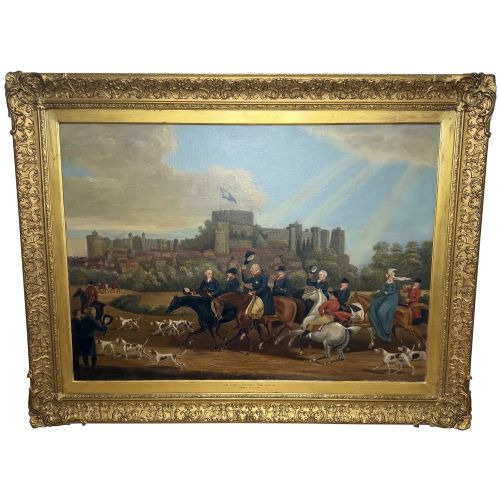
Galloping horses, hunting parties, and distant church spires occasionally share the canvas with grazing sheep.
Factors that distinguish works
The precision of brushwork and the artist's handling of light and perspective dictate the depth of the scene. Stronger compositions draw the viewer into the landscape with naturalistic proportions and atmospheric tension.
The integrity and age of the original frame add significant character and context to the painting. Hand-carved or deeply embossed giltwood surrounds complement masterworks better than plain or later replacements.
Richard Sebastian Bond·Thomas Smythe·Rene Levrel·Erich Mercker·Robert Cleminson·Alexandre Le Bihan·William Henry Mander·Thomas Sidney Cooper·Gabriel Dauchot·Thomas Bromley Blacklock·Herbert Royle·William Sydney Cooper·William Mellor·George Morland·Hendricus Joseph Dillens·Pieter Bout·Adriaen Frans Boudewyns·John Wright Oakes·Kevin Platt
The Large Framed Oil Landscape Glossary
- Oil on Canvas
- Pigment mixed with drying oil applied to a woven fabric support. This combination offers flexibility and longevity for substantial works.
- Giltwood
- Timber that has been coated with a thin layer of gold leaf or gilt paint. It provides a reflective, ornate border common in period framing.
- Impasto
- Paint applied thickly to a canvas, leaving visible brush or palette knife marks. This technique adds tactile three-dimensional texture to elements like foliage or water.
- Gesso
- A plaster-like mixture applied to wood before gilding or painting. It creates a smooth, durable surface for decorative details on frames.
Large Framed Oil Landscape: Frequently Asked Questions
How do I hang a heavy framed landscape?
Heavy works require secure wall anchors fixed directly into wall studs or masonry to support the combined weight of the canvas and wood frame. Using professional picture-hanging wire rated above the weight of the piece ensures stability.
Position the centre of the painting at eye level for optimal viewing. Ensure the hanging location avoids direct sunlight and moisture to protect the oil paint and canvas over time.
How are these landscapes dated?
Dating relies on stylistic clues, artist signatures, framing techniques, and the type of canvas or stretcher used. Nineteenth-century works often feature specific canvas stamps and distinct stretcher construction methods.
Subject matter and clothing styles in incidental figures also help narrow down the decade. Comparing signatures with documented artist records confirms the period of execution.
What subjects are most common?
Rural river valleys, coastal shipping scenes, and mountainous alpine views dominate the pastoral subjects found in these selections. Artists frequently documented specific regions such as the Scottish Highlands, Welsh valleys, and French riversides.
Agricultural farming landscapes and pastoral animal portraits also appear regularly. These scenes reflect the nineteenth-century appreciation for untouched natural beauty and rural industry.