





Dark Timber Framed Artwork
Dark timber framed artwork brings substantial character to a room, centring on framed paintings, silhouettes, and prints enclosed in robust wooden surrounds.
Dark Timber Framed Artwork
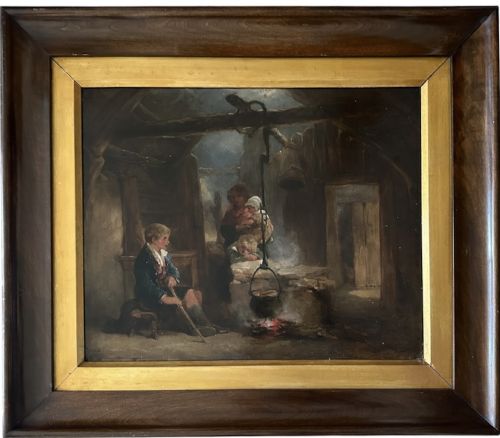
When you search for dark timber framed artwork, you encounter pieces that rely on heavy wooden enclosures to anchor oil paintings, watercolours, and silhouettes. These items range from nineteenth-century portraits and scenes of daily life to earlier religious panels.
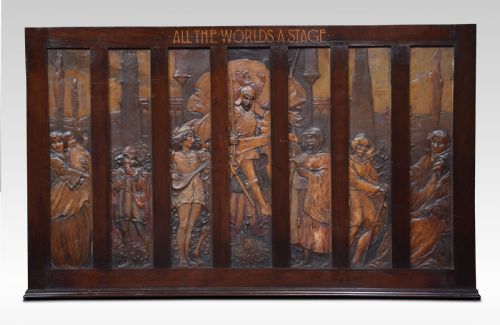
The versions you are most likely to meet on this page date primarily from the nineteenth century, alongside examples from the Georgian period and the early twentieth century. They manifest as oil paintings, reverse prints on glass, and wall plaques mounted in timber.
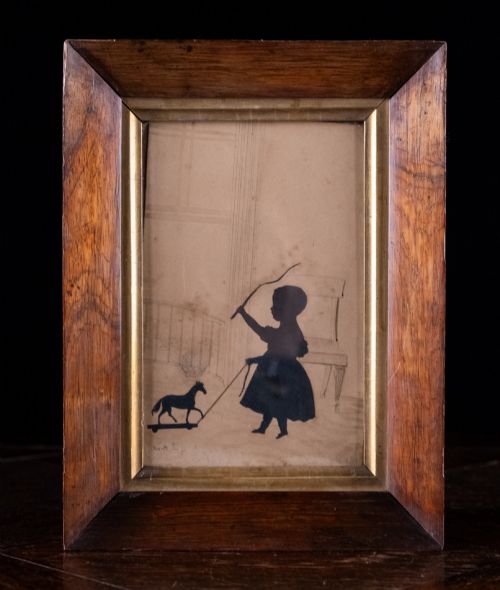
Makers and artists represented across the listings include painters such as George Whitton Johnstone and Frank Moss Bennett, as well as silhouette artists like Augustin Edouart. Their work preserves historical subjects, domestic animals, and narrative scenes within robust frames.
How they were made
The construction of these pieces relies upon traditional painting materials applied to canvas, board, and paper, often protected beneath glass. Artists utilised oil paint and watercolour to build detailed scenes of landscapes, figures, and historical subjects.
The frames and structural surrounds employ timber, walnut, and wood mouldings constructed to support and display the artwork securely. Reverse prints on glass required specialised techniques to apply pigment directly to the glass plate before framing.
Listings feature works spanning the seventeenth century through to the 1920s, utilising canvas, wood, glass, and oil paint.
What varies in quality
Quality in these framed works rests upon the fidelity of the brushwork and the harmony between the art and its wooden surround. Finer pieces demonstrate assured handling of light and form by established painters, while simpler items reflect provincial craftsmanship.
The selection of timber and the depth of the framing contribute significantly to the overall presence of the object. Heavier, well-proportioned wooden surrounds maintain structural integrity and enhance the visual weight of the composition within.
George Whitton Johnstone·Augustin Edouart·Christoffel Bisschop·Annie L. Lee·Frank Moss Bennett·William Woodhouse·Joseph Paul
The Dark Timber Framed Artwork Glossary
- Silhouette
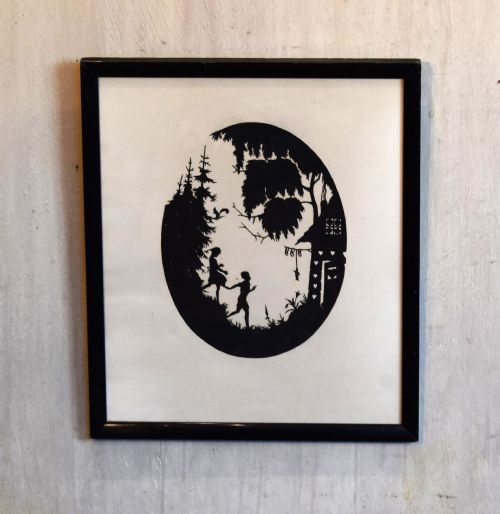
- A portrait or scene cut from dark paper or painted as a solid dark shape, often capturing profiles with precision. Augustin Edouart practiced this art form extensively during the nineteenth century.
- Reverse print on glass
- An image painted or printed directly onto the rear surface of a glass panel so that it is viewed through the transparent material. This technique protects the pigments from dust and atmosphere.
- Oil on board
- A painting executed on a rigid wooden board or panel rather than a stretched canvas. This medium provides a firm support favoured by many nineteenth-century landscape and genre artists.
- Wall plaque
- A decorative panel designed for suspension on a wall rather than standard framing. These items often feature carved timber or mounted text and imagery.
- Genre realism
- A style of painting that depicts aspects of everyday life by portraying ordinary people engaged in common activities. This approach gained prominence during the nineteenth century.
Dark Timber Framed Artwork: Frequently Asked Questions
How do I hang heavy timber framed art?
Heavy framed works require secure fixings anchored directly into wall studs or appropriate masonry plugs to support the combined weight of the timber and glass. Using picture wire rated well above the actual weight ensures the piece remains stable over time.
Position the artwork at eye level so the centre of the composition sits comfortably in the line of sight. Ensure the wall space receives balanced lighting without direct, harsh sunlight that might fade the pigments.
What periods do these framed artworks span?
The pieces span several centuries, with a strong representation from the nineteenth century alongside Georgian examples and early twentieth-century works. Earlier items include seventeenth-century panels.
Each period brings distinct stylistic conventions, from Georgian print techniques to Victorian genre realism and Arts and Crafts sensibilities. Examining the framing style alongside the medium helps contextualise the date of manufacture.
How should I clean dark timber frames?
Dust the timber gently with a soft, dry cloth to remove surface particles without disturbing the finish. Avoid using wet or chemical cleaners that might penetrate the wood or damage adjacent glass and canvas.
Maintain a stable indoor environment away from excessive moisture and direct heat sources to prevent the timber from warping. Regular, gentle dusting preserves the natural patina of the wood over the years.
What subjects appear in these paintings?
The subjects encompass portraits of individuals, rural landscapes, sporting scenes involving horses and dogs, and narrative illustrations. Many pieces reflect historical themes or literary scenes such as traditional fairy tales.
Artists frequently documented domestic life, architecture, and local scenery, providing a visual record of past eras. These diverse subjects allow collectors to focus on specific themes like British sporting art or regional topography.