




Framed Cow Portrait
A framed cow portrait brings the quiet character of the pasture straight into the room through oil paint and gilt.
Framed Cow Portrait
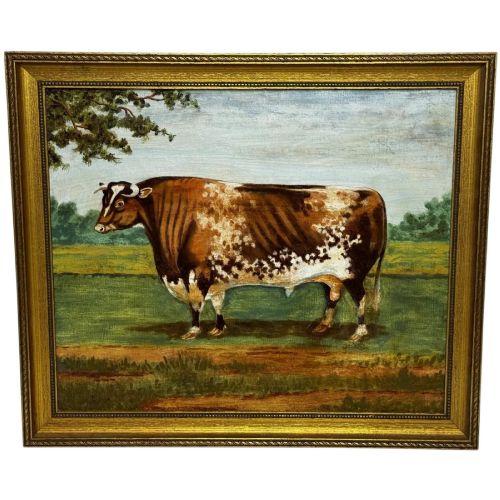
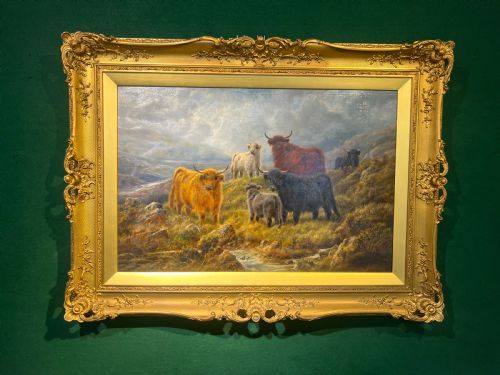
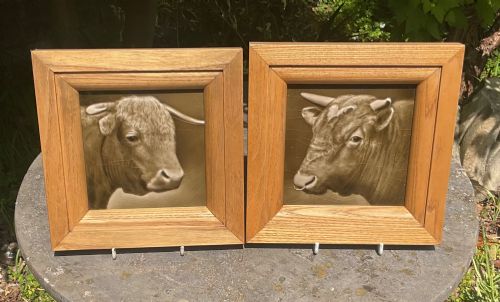
A framed cow portrait captures the heft and calm of cattle in oils, ranging from the structured studies of the Victorian British School to rustic English folk art. When searching for a framed cow portrait, a buyer encounters canvas works and tile pairs depicting prized shorthorns, Highland cattle, and dairy cows in pastoral settings.
Most examples originate from the nineteenth century into the Edwardian era, spanning the Victorian period up to the nineteen-twenties. These works vary from naive stable scenes to skilled realism signed by noted artists such as Robert Watson and George Smith.
How they were made
These portraits rely primarily on oil paint applied to canvas, capturing the texture of hides and the light of pastures through layered brushwork. Ceramic tiles also appear, painted with cattle imagery and set into surrounds.
Frames are constructed from wood, often featuring gilt or giltwood finishes alongside plaster ornamentation to complement the pastoral subjects within.
Framed Cow Portrait Retail Price Guide 2026
Typical asking prices for framed cow portrait among the pieces listed under this phrase on Sellingantiques today, from the lower quarter to the upper quarter. They describe what is for sale here now, not the wider market.
Listings feature oil paintings on canvas and ceramic tiles, framed in wood, giltwood, and plaster across Victorian and Edwardian periods.
What varies in quality
The distinction between standard decorative pieces and superior works lies in the handling of anatomy and light, where artists achieve a convincing sense of weight and presence in the animal. Accomplished brushwork in the rendering of cattle coats and landscape backgrounds elevates the composition well above naive or rigid studio efforts.
The supporting frame contributes significantly to the overall integrity of the piece, with original giltwood and plaster mouldings holding more character than later replacements.
Sherwin and Cotton·Robert Watson·A M Gauci·Thomas Sidney Cooper·John W Morris·W A Clark·George Smith RSA
The Framed Cow Portrait Glossary
- Giltwood
- Wood carved and coated with gold leaf or a gold-coloured finish. This material creates the ornate frames typical of nineteenth-century oil paintings.
- Naive art
- Artwork produced by an artist without formal academic training, often characterised by a charming simplicity of perspective and form. These pieces lean towards folk art traditions.
- British School
- A designation for works produced by artists working in Britain within a shared period or tradition. It covers academic painters as well as regional practitioners.
Framed Cow Portrait: Frequently Asked Questions
What periods do these cow portraits come from?
The listings span from the nineteenth century through the Edwardian era, with strong representation from the Victorian period and the early twentieth century.
Dates cluster around eighteen-eighty to nineteen-twenty, reflecting both academic realism and folk art traditions of those decades.
What materials were used for these artworks?
Paintings are executed in oil on canvas, capturing the rich tones of cattle and pastoral landscapes. Frames are built from wood, frequently embellished with gilt and plaster.
In addition to canvas works, ceramic tiles featuring painted cattle appear set within frames.
How do I choose between different regional styles?
Scottish scenes often highlight Highland cattle in rugged moorland settings, while English works frequently portray shorthorns and dairy cows in greener pastures. Choosing depends on whether the preference leans towards dramatic landscapes or gentle pastoral scenes.
Naive folk art pieces offer a simpler, more rustic charm compared to academic Victorian realism.
Where should I hang a framed cow portrait?
These pieces suit living rooms, studies, or kitchens where their rustic warmth and traditional framing can anchor a room's decor. Their subject matter brings a touch of the countryside indoors.
Ensure they are placed away from direct sunlight to protect the oil paint and gilt frames.