

Country House Wall Art
Country house wall art brings the traditional sporting scenes, intimate interiors, and rustic animal portraits of past centuries directly into modern rooms.

Country House Wall Art
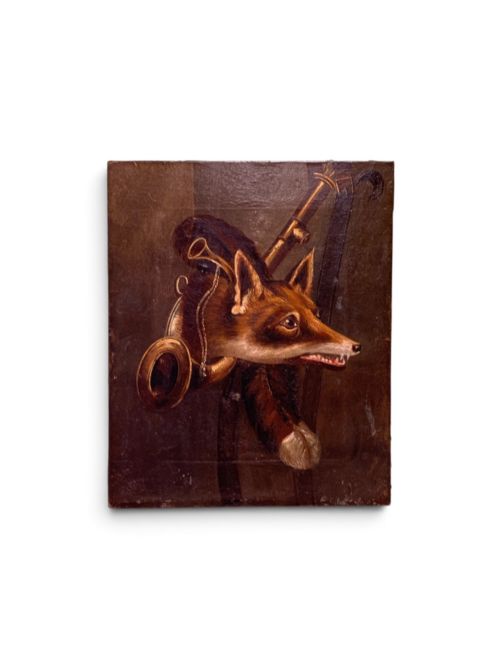
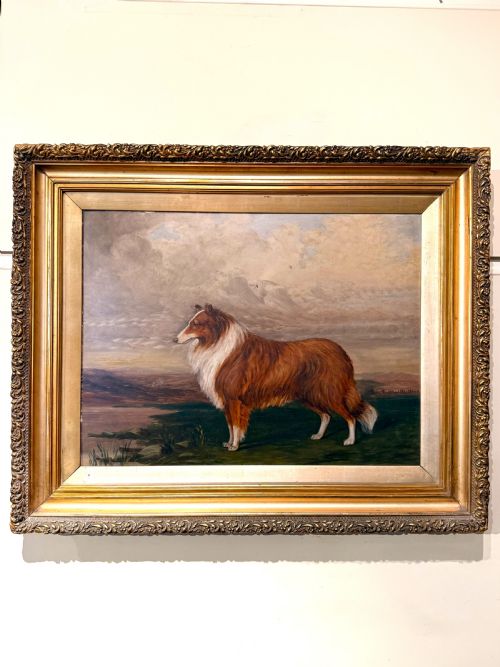
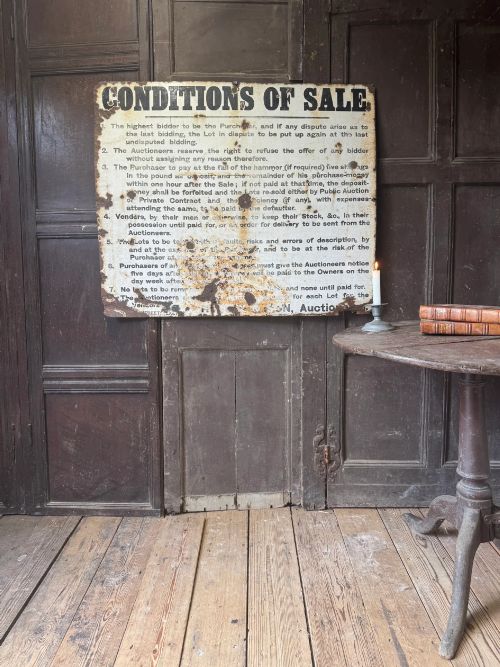
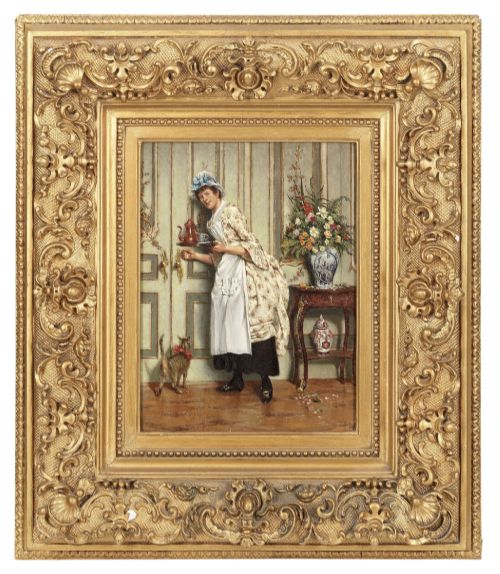
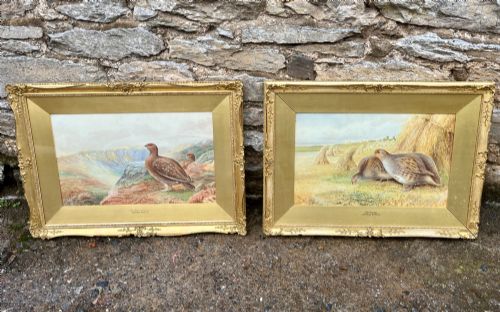
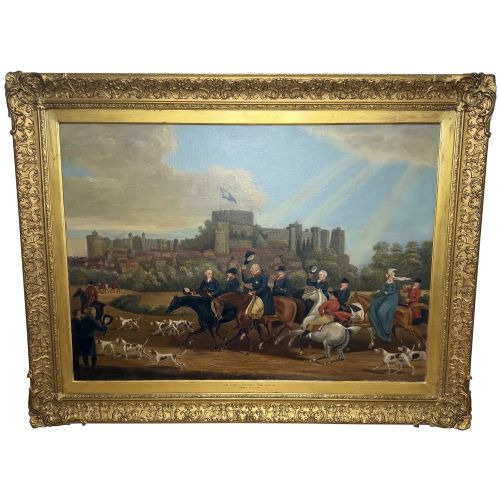
Country house wall art encompasses original oil paintings, framed prints, watercolours, and metal signs spanning from the Georgian period through the mid-twentieth century. Buyers searching for country house wall art generally encounter nineteenth-century canvas works and early twentieth-century depictions of rural life, sporting dogs, and estate animals.
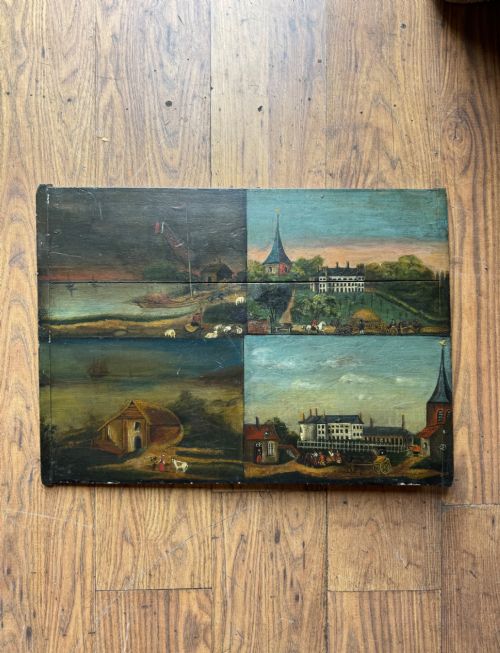
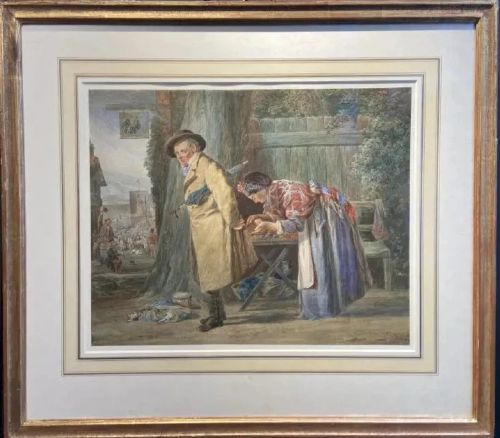
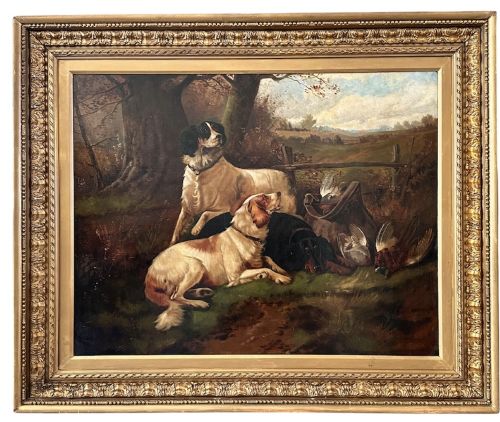
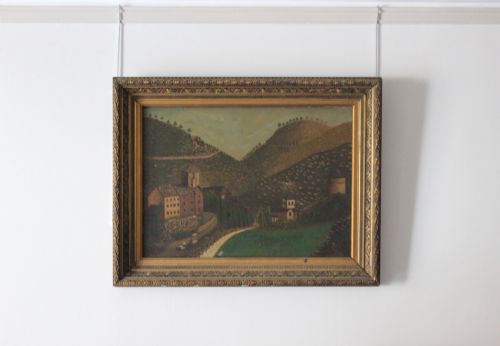
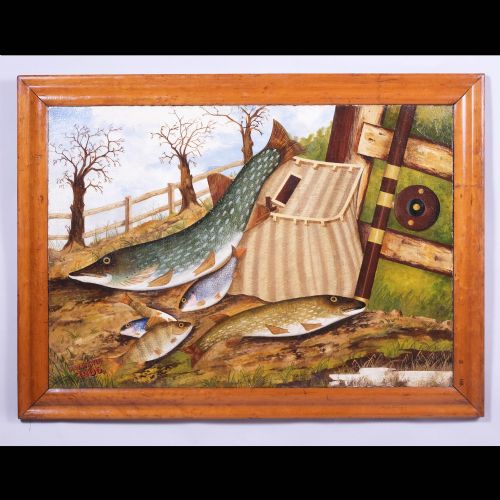
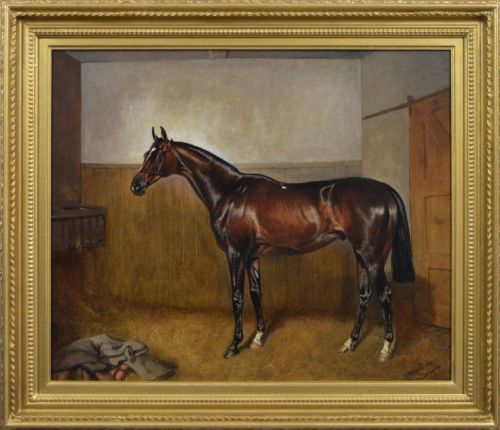
The subjects heavily reflect domestic and rural pursuits, featuring gun dogs, racehorses, farmyard scenes, landscapes, and quiet interior domestic moments. Provincial naive folk art sits alongside more formal Victorian equestrian and sporting pieces within this category.
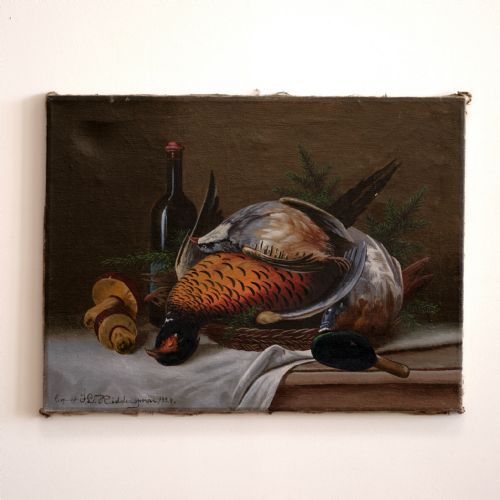
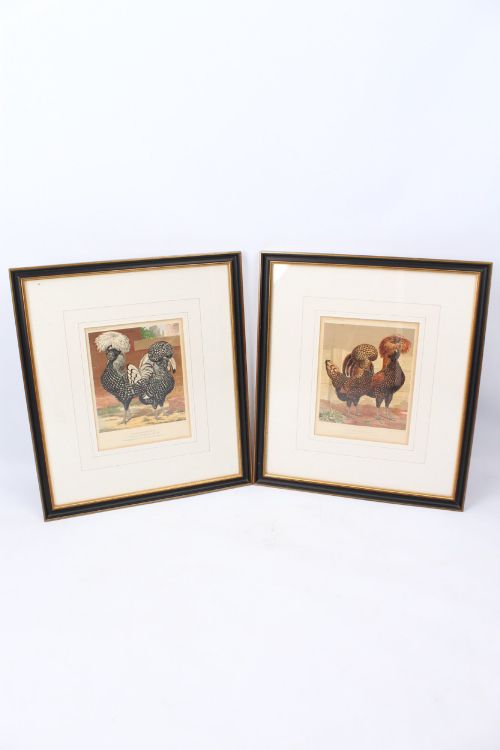
Works on this page range from large Devon moorland landscapes to intimate still lifes and pairs of game bird watercolours. This variety allows collectors to curate displays that mirror the eclectic hanging styles of historic English country houses.
Materials and Techniques
Artists of these periods primarily utilised oil paint on canvas or board, applying pigment to capture the rich textures of horse coats, sporting dogs, and foliage. Watercolours, pastels, and gouache on paper also appear frequently, particularly for detailed animal portraits and expansive regional landscapes.
Framing often involves period wood mouldings finished with gold leaf or giltwood, which complement the darker palettes typical of nineteenth-century interiors. Printed works utilise lithography, mezzotint, and hand-coloured engraving techniques popular across the Victorian and Edwardian eras.
Country House Wall Art Retail Price Guide 2026
Typical asking prices for country house wall art among the pieces listed under this phrase on Sellingantiques today, from the lower quarter to the upper quarter. They describe what is for sale here now, not the wider market.
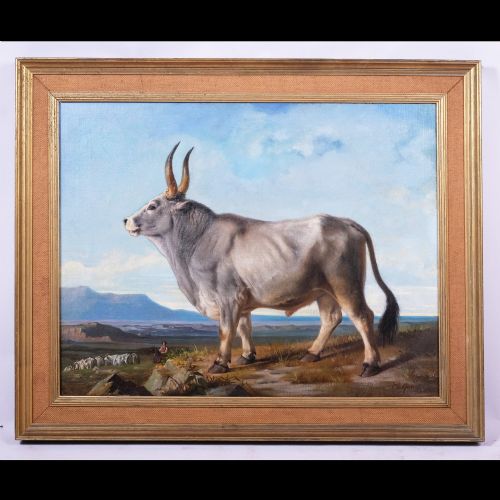
Several canvas subjects feature earnest spaniels and prize bulls gazing steadfastly across the centuries.
Assessing Quality and Execution
Quality in these works rests upon the artist's anatomical accuracy, particularly in equine and canine portraiture, where bone structure and muscle tone demand skilled handling. Superior pieces demonstrate confident brushwork and atmospheric depth, moving beyond stiff provincial rendering to capture genuine movement and light.
The preservation of the original canvas, board, or paper surface alongside period framing heavily influences the standing of a piece. Works retaining signed attribution or documented provenance from established nineteenth and twentieth-century painters command greater interest among collectors.
Stephen Samuel Lewin·Joseph H Barnes·John Sargent Noble·George Rankin·John Alfred Wheeler·Edwin Henry Landseer·John Frederick Herring Snr·Joseph Knight·Edgar Woollatt·John Arthur Lomax·Charles Haigh Wood·Thomas Sidney Cooper·John Frederick Herring Jnr·Eugene Verboeckhoven·Philip Henry Rideout·George E Sharpe
The Country House Wall Art Glossary
- Lithography
- A printing method utilising a flat stone or metal plate on which image areas are greasy and non-image areas ink-repellent. This technique produced affordable Victorian prints for domestic interiors.
- Mezzotint
- A printmaking process where the copper plate is roughened to achieve rich dark tones and subtle tonal gradations. It was frequently used to reproduce popular portraits and sporting subjects.
- Giltwood
- Wood carved and coated with gold leaf or metallic paint to create a reflective gilded surface. Frames finished this way were standard for formal nineteenth-century oil paintings.
- Gouache
- An opaque water-based paint mixed with gum arabic, producing bright matte colour fields. It often appears combined with watercolour in nineteenth-century landscapes and animal studies.
- Provenance
- The documented history of ownership of an antique piece. Clear provenance establishes authenticity and traces the lineage of a painting back through previous collections.
Country House Wall Art: Frequently Asked Questions
What subjects define country house wall art?
These collections focus on rural and domestic life, featuring prominent equestrian portraits, gun dogs, farmyard animals, and rolling countryside landscapes. Interior scenes and sporting moments also form a core part of this aesthetic.
Such subjects reflect the traditional tastes of historic estates, bringing a distinct sense of heritage and pastoral activity into living spaces.
How should I hang these pieces together?
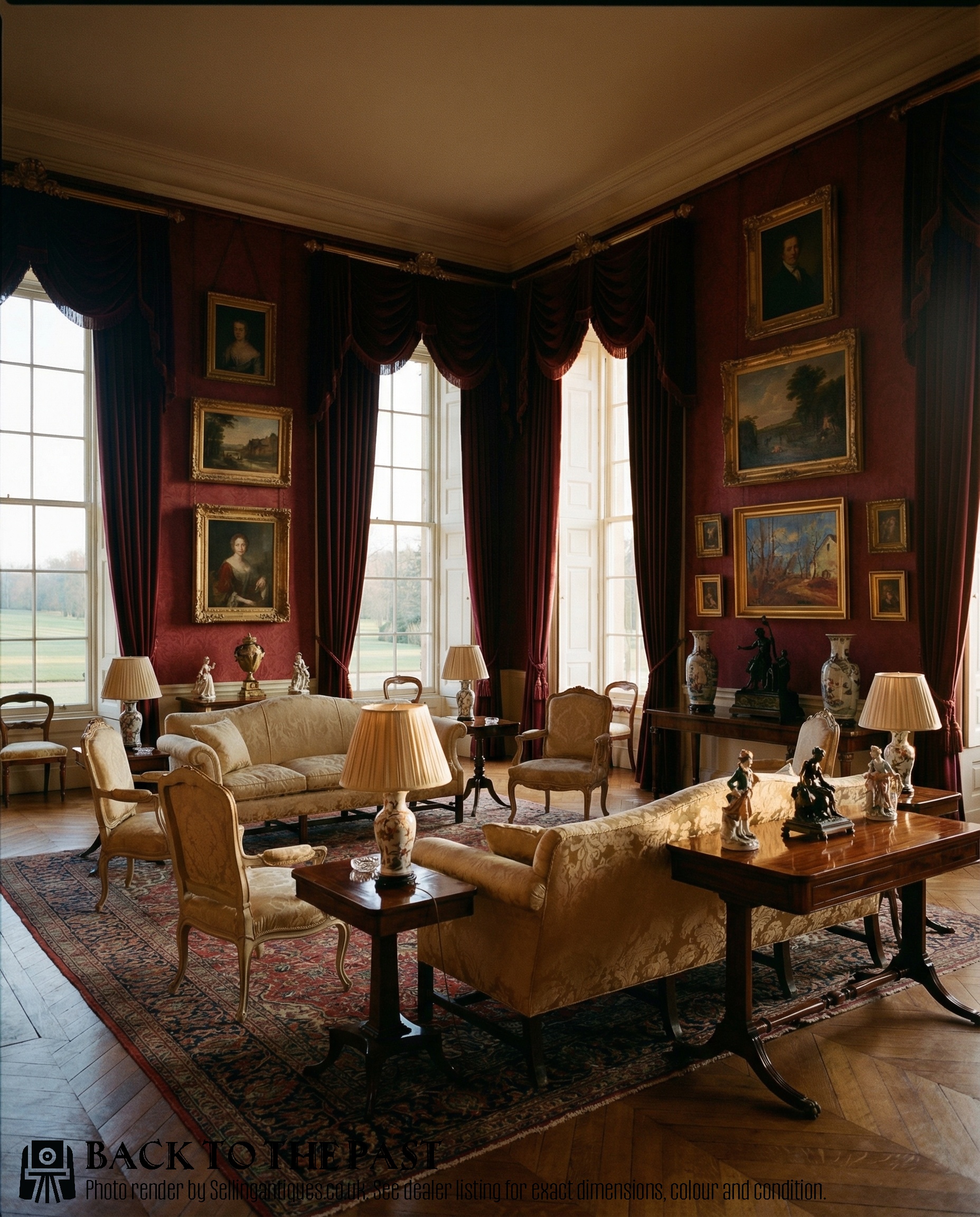
Achieving an authentic look involves grouping varied sizes, from small framed oil studies to expansive landscapes, in a dense salon-style arrangement. Mixing mediums like oil on canvas with watercolours and framed prints adds visual depth.
Spacing works closely together mirrors the historic placement traditions seen in traditional English country homes, where walls were filled floor to ceiling.
How do I identify a Victorian oil painting?
Victorian paintings typically exhibit deep, rich colour palettes, naturalistic lighting, and subject matter ranging from sentimental domestic scenes to precise animal portraits. Canvas textures and older stretcher frames offer physical clues to the nineteenth-century origin.
Signatures, artist ciphers, and framing materials also help narrow down the exact decade of creation within the Victorian era.
Are these works original antique pieces?
The selection includes original nineteenth and early twentieth-century oil paintings, watercolours, and period prints created by listed artists and provincial makers. Each piece originates from the era it represents rather than being a modern reproduction.
Examining the backing boards, paper ageing, and pigment consistency confirms the period manufacture of these decorative works.