



Framed Agricultural Art
Framed agricultural art brings rural life, working animals and harvest scenes from the nineteenth and early twentieth centuries directly onto your walls.
Framed Agricultural Art
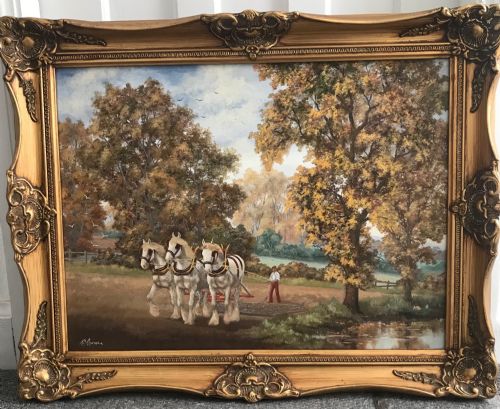
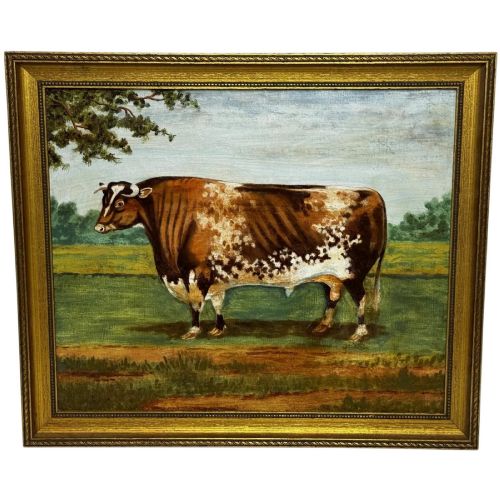
When you search for framed agricultural art, you are looking at works that depict rural scenes, farmyards, livestock, and field labour from periods such as the Victorian era, the Edwardian period, and the mid-twentieth century. The pieces available range from detailed depictions of heavy horses and prized shorthorn bulls to watercolour landscapes of haymaking and harvest time.
You are most likely to meet original oil paintings on canvas and watercolours on paper, frequently housed in period wooden or gesso frames. These works span British realism, pastoral scenes, and continental European interpretations of rural vocations.
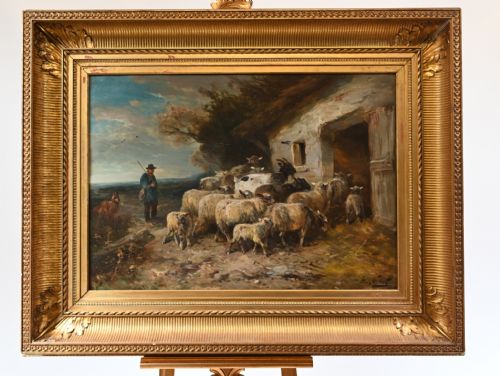
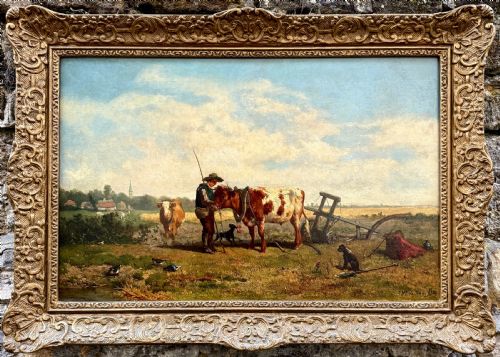
The subjects reflect a profound engagement with agrarian industry, showing farmers, shepherds, and farm hands alongside working animals like shire horses and oxen. They capture a vanished rhythm of rural existence through the eyes of artists working across the nineteenth and twentieth centuries.
Materials and Technique
Artists working within this genre relied primarily on oil paint applied to canvas or wood panels, alongside watercolours executed on paper. Oil pigments allowed for rich textures in depicting the coats of heavy horses, the hides of cattle, and the shifting light over hayfields.
Watercolour paintings utilised washes on paper to capture the softer atmospheres of rural landscapes, farmyards, and rural genre scenes. Etchings also appear, using inked metal plates to transfer fine line work onto paper.
Frames form an integral part of these pieces, constructed from wood, ebonised timber, and moulded gesso. These housings often reflect the aesthetic of the period in which the art was produced, providing structural support and visual definition.
Listings feature works spanning the nineteenth century, the Victorian era, the Edwardian period, and up through the 1950s.
Assessing Quality
The distinction between standard works and exceptional pieces rests upon the artist's command of anatomy, light, and composition. Master painters captured the precise muscle structure of working horses and cattle, whereas lesser works rely on stiff or formulaic representations of livestock.
Brushwork and medium handling also define the upper tier of these works. Confident, expressive application of oil paint or delicate, controlled watercolour washes demonstrate a higher level of technical proficiency than flat, uniform colour application.
The integration of the artwork with its original or period frame contributes significantly to the integrity of the piece. Frames that complement the tonal qualities of the painting without overwhelming the subject matter elevate the overall presence of the object.
Henry Schouten·Johannes de Haas·Herbert Dicksee·Oswald Garside·Raimond Louis Lecourt·James Kyd·James William Booth·Herbert Royle·Percival Glenfern·John Atkinson·George Soper·Thomas Sidney Cooper·Arthur Charles Dodd·Vernon Stokes·Rowland Henry Hill·Joseph Kirkpatrick·W.A. Clark·Joseph Paulman·J L Van Leemputten·John Percy Cooke·W E Millner·Arthur Claude Strachan·Walter Duncan·George Cole·Sonia Lawson
The Framed Agricultural Art Glossary
- Canvas
- A heavy woven fabric used as a surface for oil painting. It is typically stretched over a wooden frame before being painted.
- Gesso
- A plaster-like mixture applied to wood frames to create a smooth surface for moulding decorative details. It is often gilded or painted.
- Etchings
- Prints produced by scratching a design through a wax coating on a metal plate, which is then acid-bitten and inked for printing.
- Pastoral
- A style of art that idealises rural life, shepherds, and farm settings. These works emphasise tranquil or harmonious connections to the land.
- Realism
- An artistic movement focused on depicting subjects truthfully and without idealisation. In this context, it shows farm work and animals as they appeared.
Framed Agricultural Art: Frequently Asked Questions
What subjects appear in agricultural art?
These works primarily depict rural labour, farmyard animals, horses ploughing fields, and harvest scenes. Common subjects include heavy shire horses, shorthorn bulls, shepherds with flocks, and farm hands at work.
Artists focused heavily on the daily routines of nineteenth and twentieth-century farming life, capturing both the animals and the people who tended the land.
Are these paintings original works?
The selection includes original oil paintings on canvas and wood panels, alongside original watercolours and etchings. Each piece represents a distinct hand-painted or hand-printed work rather than a modern reproduction.
Signatures from period artists frequently accompany these pieces, linking them directly to nineteenth and twentieth-century schools of realism and pastoral art.
How do I care for framed oil paintings?
Keep oil paintings and watercolours away from direct sunlight and damp environments to protect the canvas, paper, and pigments from fading or degradation. Dust frames and glass gently with a dry, soft cloth.
Avoid using liquid cleaners on the painted surfaces or the gesso frames, as moisture can damage historical materials and finishes.
How can I tell the period of a piece?
Stylistic cues, framing materials, and artist signatures help determine the era of execution. Works from the Victorian and Edwardian periods often display specific approaches to realism and pastoral themes.
Construction methods of the backing boards and frames also provide physical evidence of the decade in which the artwork was assembled.