



Antique Livestock Art
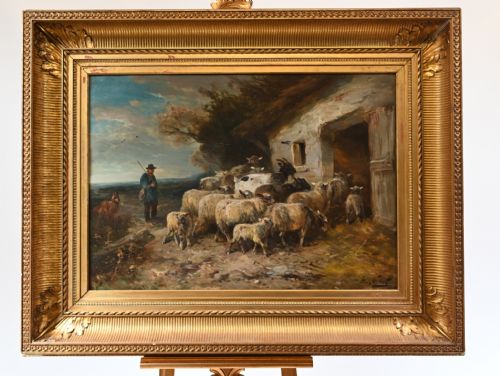
Antique livestock art captures the agricultural wealth and rural charm of past centuries through oil paintings and watercolours depicting cattle, sheep and farmyard scenes.
Antique Livestock Art
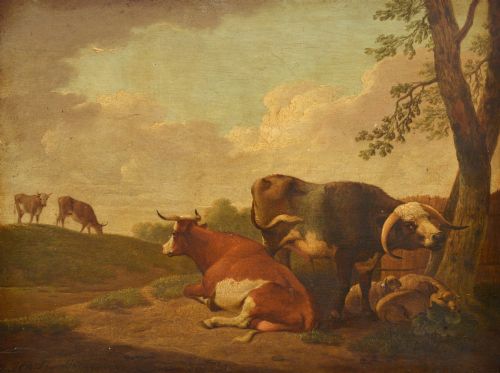
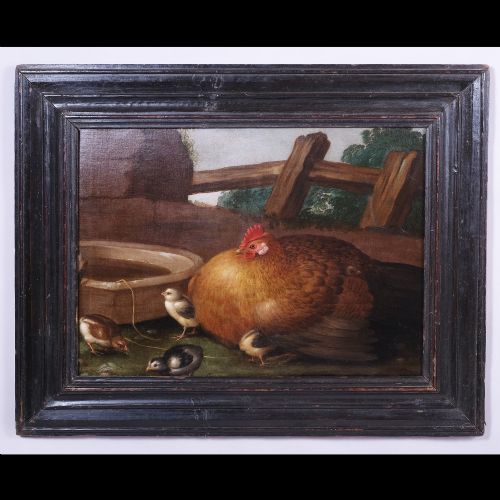
Antique livestock art centres on framed paintings and watercolours portraying cattle, sheep, horses and farmyard animals within pastoral or rural landscapes. These works span from the eighteenth century through the Victorian era and into the early twentieth century, reflecting a sustained cultural interest in agriculture and rural life.
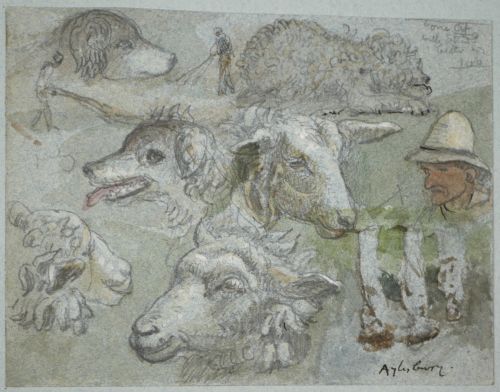
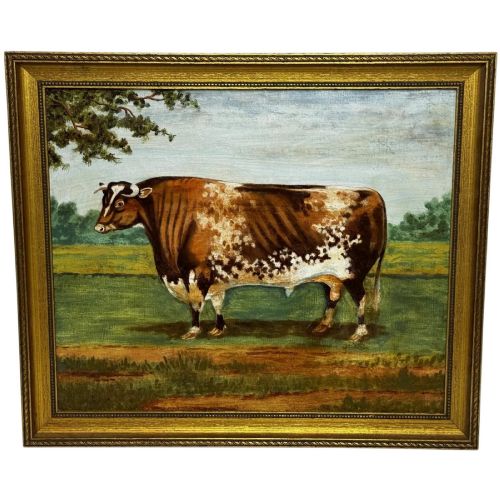
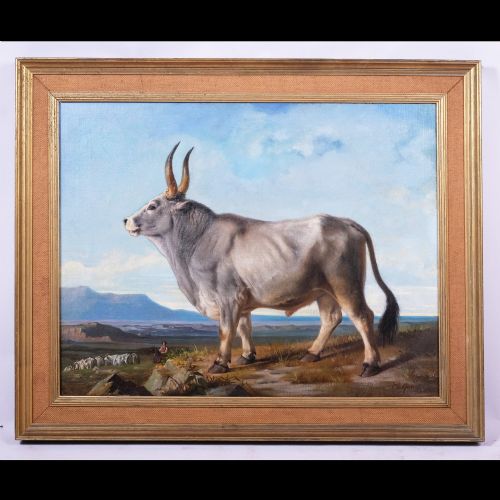
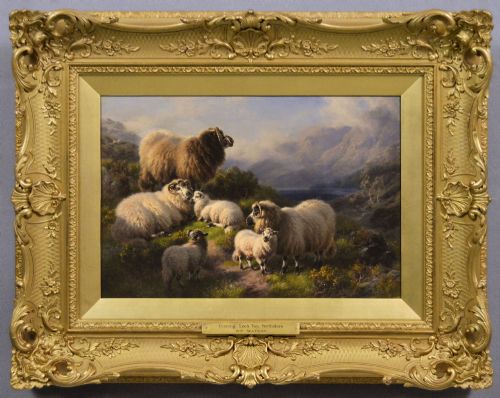
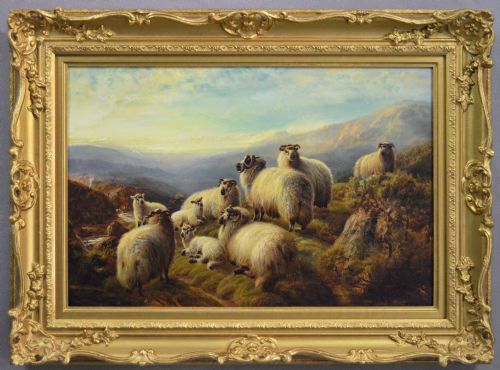
Buyers most frequently encounter nineteenth-century oil paintings on canvas, alongside watercolours on paper. Subjects range from individual portraits of prized shorthorn bulls to sweeping Scottish landscapes featuring highland cattle and sheep resting in the glen.
Materials and technique
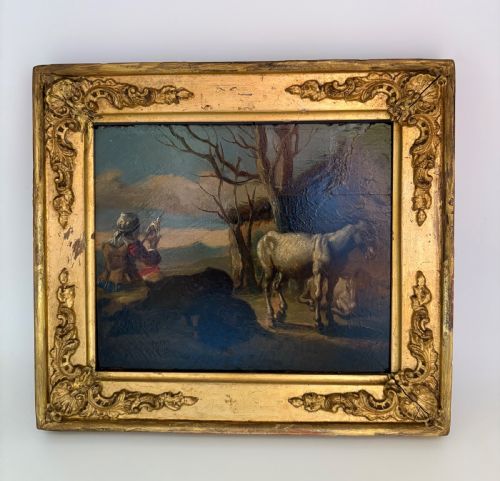
The works recorded here utilise oil paint on canvas or oak panel, alongside mixed-media and watercolour on paper. Painters applied pigments to build depth in animal coats and atmospheric skies, often mounting finished canvases in decorative giltwood and gesso frames.
Several sheep manage to look surprisingly judgmental about the weather.
Judging quality
Quality rests upon the artist's command of anatomy, light and texture within the depiction of the animals and their surrounding landscape. Superior examples display precise observation in the rendering of bone structure, fleece and muscle, whereas lesser pieces rely on formulaic repetition and stiff composition.
The preservation of the original canvas, paint surface and period frame influences the standing of a piece. Subtle handling of brushwork distinguishes accomplished academic or regional painters from generic studio production.
Eugène Verboeckhoven·James Smetham·Hendrik Willem Schweickhardt·William Watson Jnr·Johann Friedrich Voltz·Robert Watson·Henry Schouten·A M Gauci·William Henry Mander·Thomas Sidney Cooper·Franz van Severdonck·Frederick Septimus Lewis·Ernest Pile Bucknall·Andre de Moller·Eugene Joseph Verboeckhoven·Heinrich Harder·James de Rijk·C. Lainé·Julius Caesar Ibbetson·Basil Bradley·Charles Jones·Arthur Charles Dodd·Claude Cardon·John W Morris
The Antique Livestock Art Glossary
- Oil on Canvas
- A painting medium where pigments bound in drying oil are applied to stretched fabric. This combination allows for rich blending and textured brushwork.
- Giltwood
- Wood carved and coated with gold leaf or a gold-coloured finish. It provides traditional framing for many nineteenth-century paintings.
- Pastoral
- A genre of art depicting rural life, shepherds and livestock in idealized natural settings. These scenes emphasise a peaceful connection to the land.
- Gesso
- A plaster-like mixture applied to wood panels or frames as a base for painting or gilding. It creates a smooth surface for detailed ornamentation.
- Watercolour Painting
- Artworks created using water-soluble pigments on paper. This technique yields translucent washes and delicate tonal shifts.
Antique Livestock Art: Frequently Asked Questions
What subjects appear in antique livestock art?
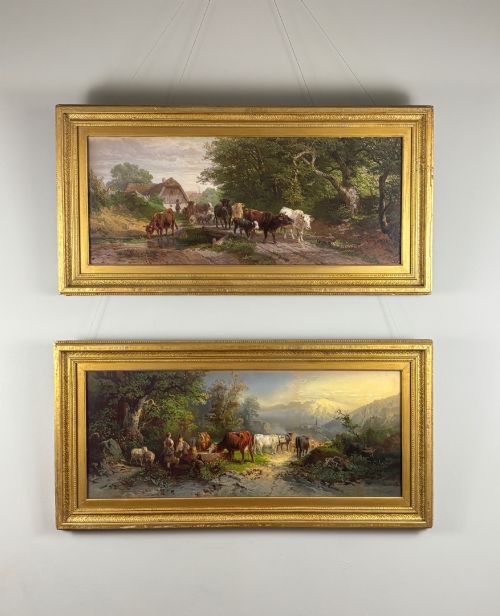
These works focus primarily on domesticated farm animals, including cattle, sheep, horses and poultry, set within agricultural or pastoral landscapes. Scenes range from detailed portraits of prized bulls to expansive Highland valleys filled with grazing flocks.
Human figures such as shepherds, farmers and milkmaids also feature frequently, attending to daily rural tasks or resting beside their animals.
How do I date an antique livestock painting?
Dating relies on stylistic clues, framing techniques, and the stretcher construction of the canvas or panel. Eighteenth-century and Georgian works often display different canvas weights and pigment compositions compared to Victorian or Edwardian pieces.
Signatures, inscriptions on the reverse, and artist biographical records provide the most accurate chronological markers for individual works.
Are these works painted on canvas or wood?
The physical support varies according to the period and the artist's preference. Oil on canvas represents the most common format, while earlier works occasionally utilise oak panels.
Watercolours on paper mounted behind glass also appear across the nineteenth and early twentieth centuries.
How should I display livestock art at home?
These traditional paintings pair well with classic interiors, timber furniture, and neutral wall colours that complement the earthy tones of oil paint and gilt frames. Adequate wall space allows larger landscapes with cattle to serve as a natural focal point in a room.
Protection from direct sunlight and excessive humidity preserves both the canvas and the original gesso frame over time.