

19th Century Equestrian Art
19th century equestrian art captures horses, hounds and rural life through oil paintings, prints and sculptures from the Victorian era.

19th Century Equestrian Art
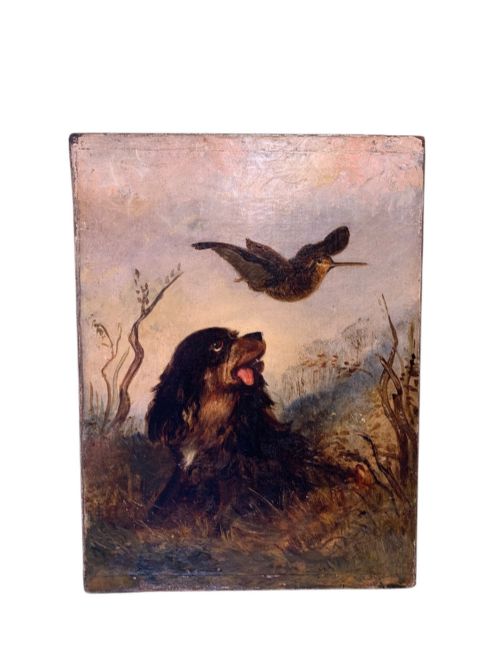
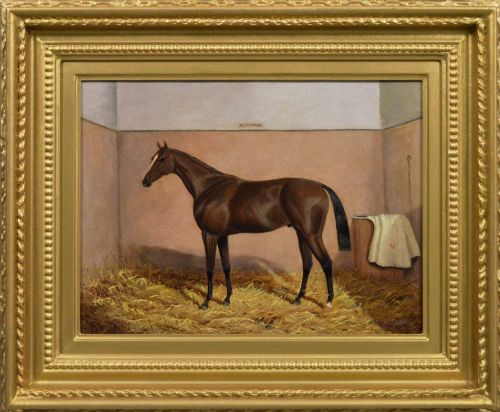
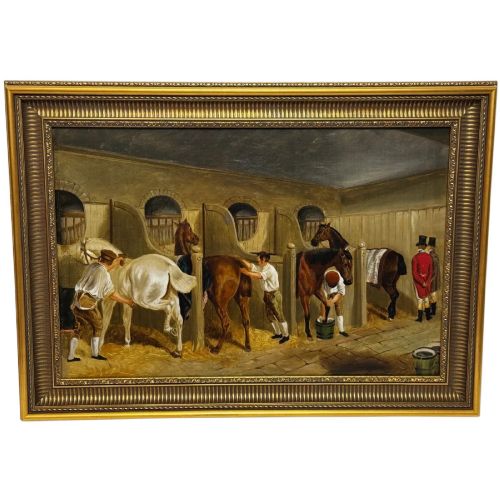
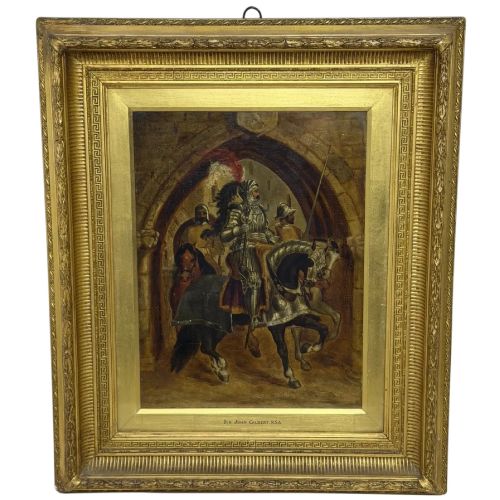
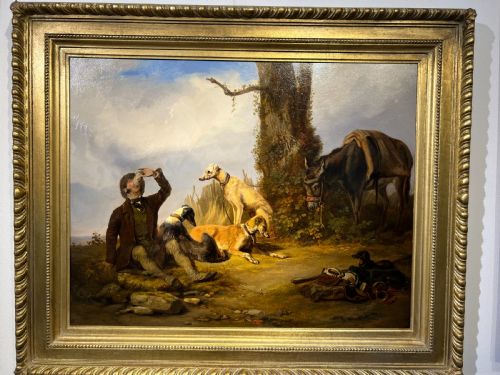
When you search for 19th century equestrian art, you meet oil paintings, watercolours, prints and sculptures centred on horses, racing, hunting and rural life.
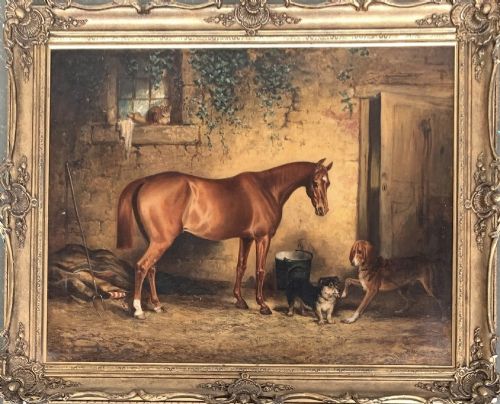
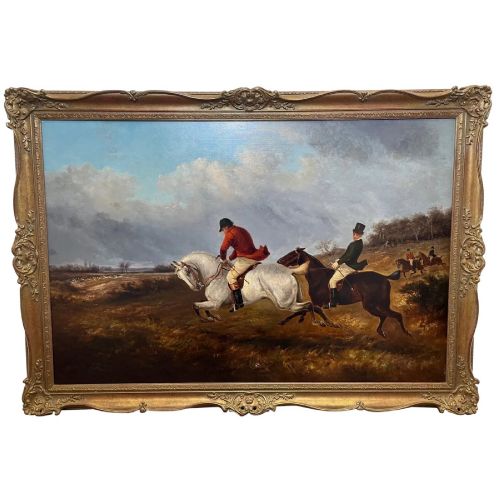
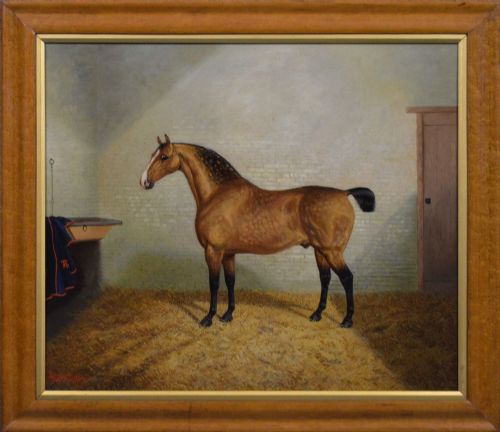
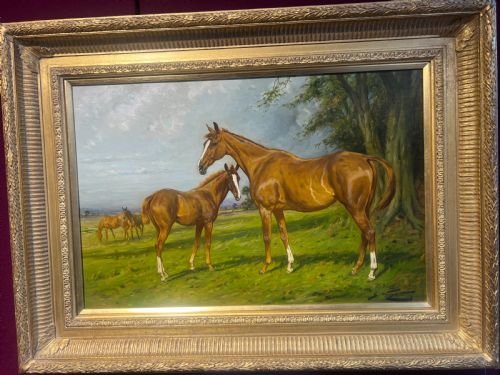
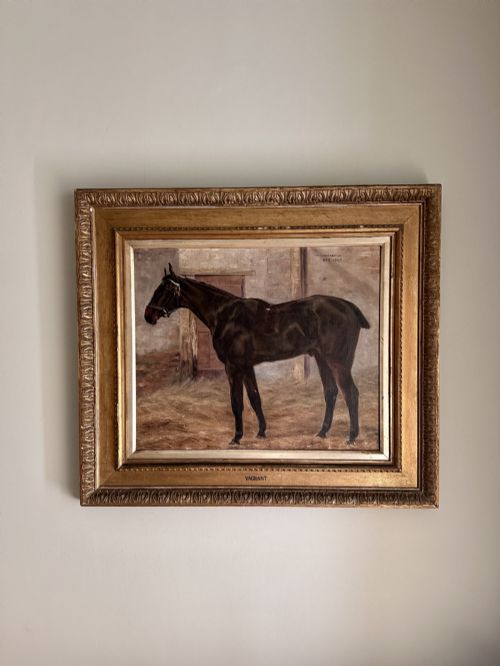
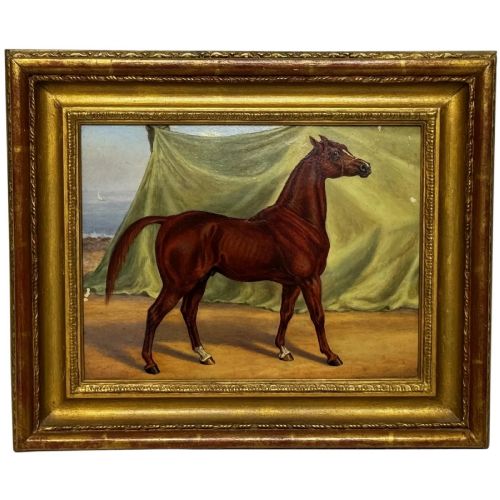
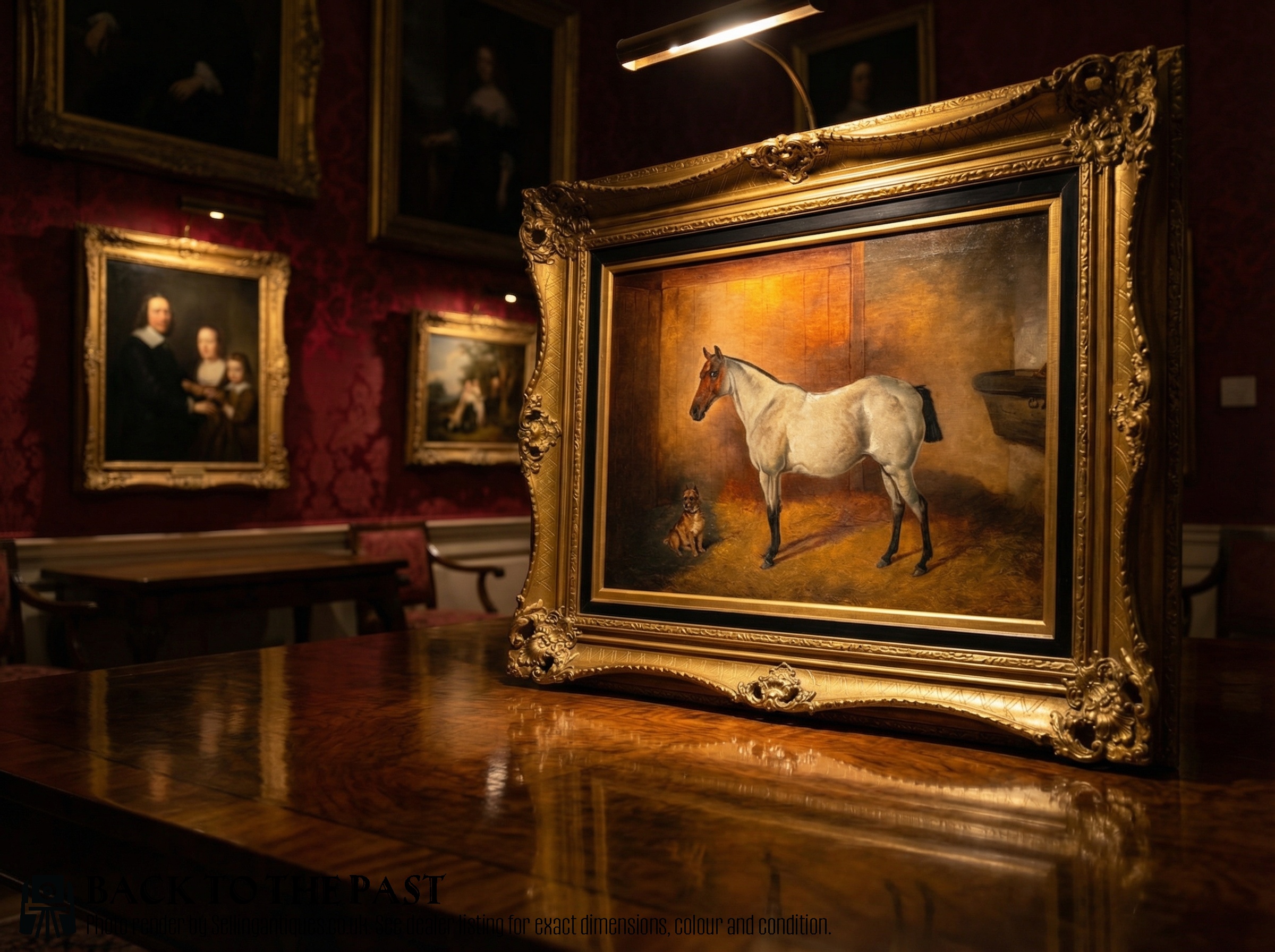
The most common pieces on this page are oil paintings on canvas depicting horse portraits, stable scenes and hunting subjects from the Victorian period.
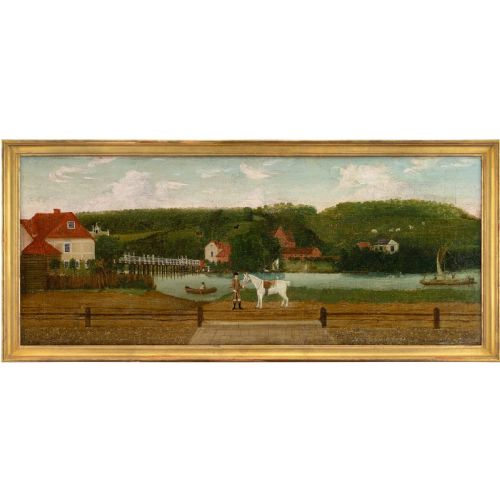
Works range from detailed depictions of named racehorses and hunters to broader rural and sporting scenes framed in giltwood.
Materials and construction
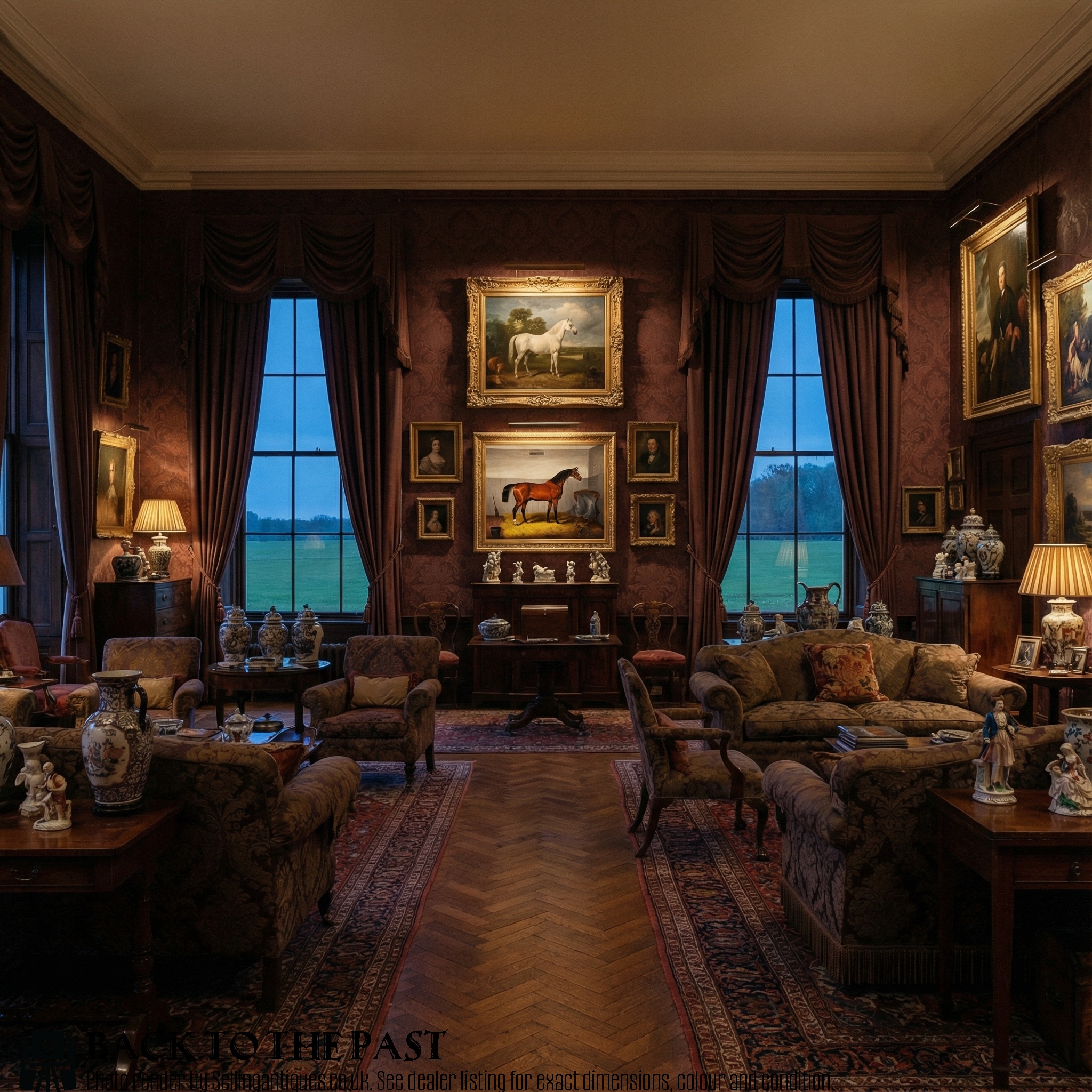
Artworks in this category rely primarily on oil paint applied to canvas, often supported by wooden stretchers and housed in gilt wood frames.
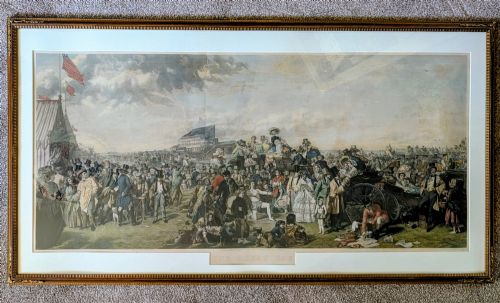
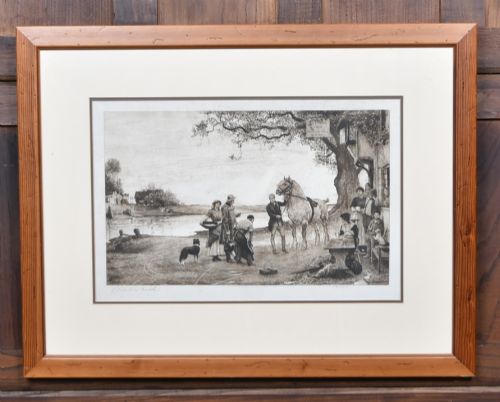
Works on paper utilise watercolour, etching, lithography and engraving techniques, while sculptural pieces employ cast bronze or carved wood.
19th Century Equestrian Art Retail Price Guide 2026
Typical asking prices for 19th century equestrian art among the pieces listed under this phrase on Sellingantiques today, from the lower quarter to the upper quarter. They describe what is for sale here now, not the wider market.
A carved carousel horse brings the noise and motion of the nineteenth-century fairground directly into a quiet room.
Factors of quality
Quality in these pieces rests upon the anatomical accuracy of the horse, the handling of light in the landscape and the expressiveness of the brushwork.
Works by named artists with recorded exhibition histories or specific provenance carry stronger artistic authority than anonymous studio productions.
William Joseph Shayer Senior·Thomas Smythe·Albert Clark·Robert W. Macbeth·Sir John Gilbert RA·Sir Edwin Henry Landseer RA·George Wright·Henry Barraud·Fred Fitzpatrick·Edward Priestley·Thomas Walker Bretland·Herman S Melville·Luigi Secchi·Muñoz·John Ferneley Senior·Edward Lloyd of Ellesmere·George E Sharpe·Léon Joseph Voirin
The 19th Century Equestrian Art Glossary
- Oil on Canvas
- Pigment mixed with drying oil applied to a woven fabric stretched across a wooden frame. This surface is standard for many Victorian animal portraits.
- Giltwood
- Wood carved and coated with gold leaf or a gold-coloured metallic finish. Frames of this material frequently accompany nineteenth-century paintings.
- Lithography
- A printing method based on the repulsion of oil and water on a flat stone or metal plate. This technique allowed the reproduction of sporting scenes.
- Etching
- A printmaking process where acid cuts into unprotected parts of a metal plate to hold ink. Artists used this method for rural and animal subjects.
- Provenance
- The documented history of ownership of an artwork. This record establishes authenticity and traces the piece back through past collections.
19th Century Equestrian Art: Frequently Asked Questions
What subjects appear in nineteenth-century horse paintings?
These artworks commonly show individual portraiture of named racehorses, hunters and farm animals set within stables or rural landscapes.
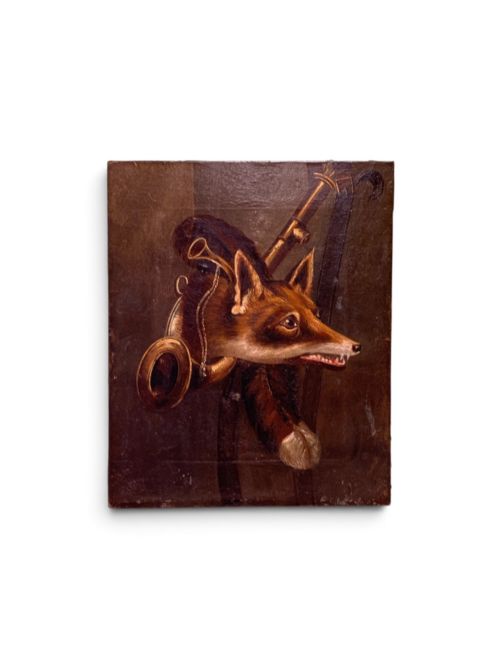
Other compositions feature fox hunting scenes, coaching events and racing gatherings from the Victorian period.
How do you identify a Victorian equestrian painting?
Identification relies on examining the painting style, clothing of any figures, stretcher construction and framing materials typical of the nineteenth century.
Signatures, dates and artist attribution written on the canvas or stretcher provide further confirmation of the period.
Were these artworks created as prints or paintings?
The selection includes both unique handmade items and multiples.
Original oil paintings and watercolours exist alongside etchings, lithographs and engraved prints published to satisfy Victorian demand for sporting imagery.
How should I care for antique oil paintings?
Keep oil paintings away from direct sunlight and steady fluctuations in room temperature and humidity to protect the canvas and paint layers.
Dust the surface gently with a soft, dry brush and avoid using water or chemical cleaners on the paint or gilt frame.