

Vintage Equestrian Wall Art
Vintage equestrian wall art captures horses, riders, and rural sport through centuries of painting and printmaking.
Vintage Equestrian Wall Art
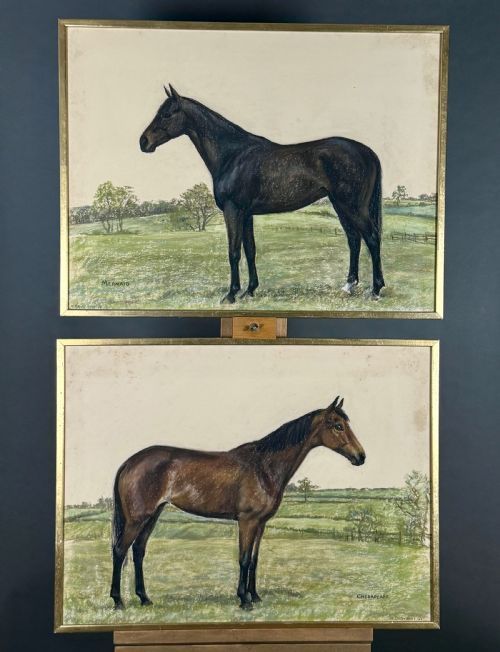
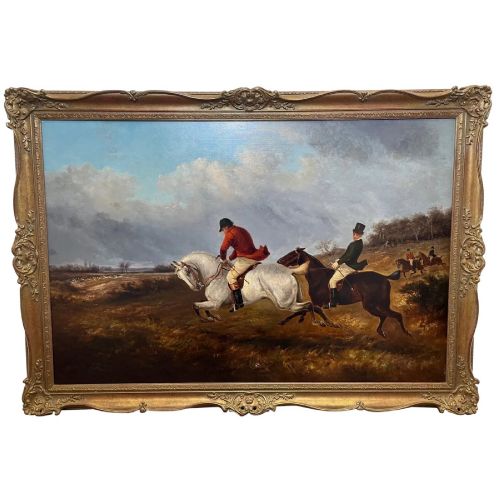
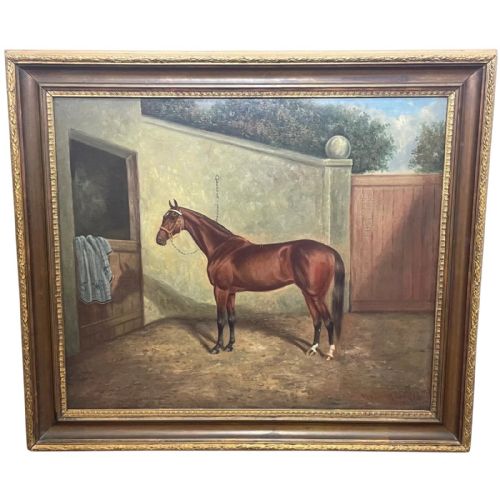
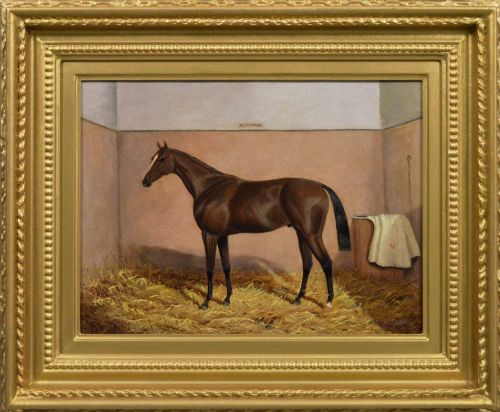
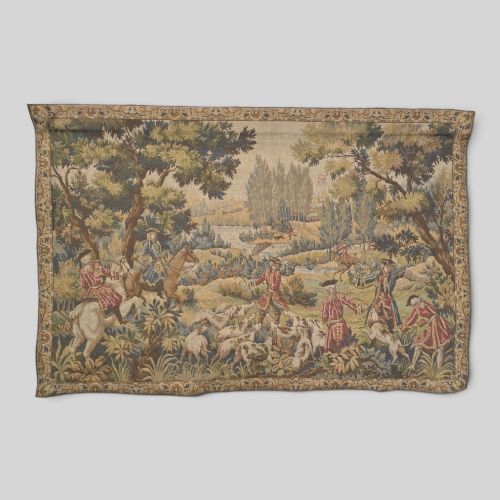
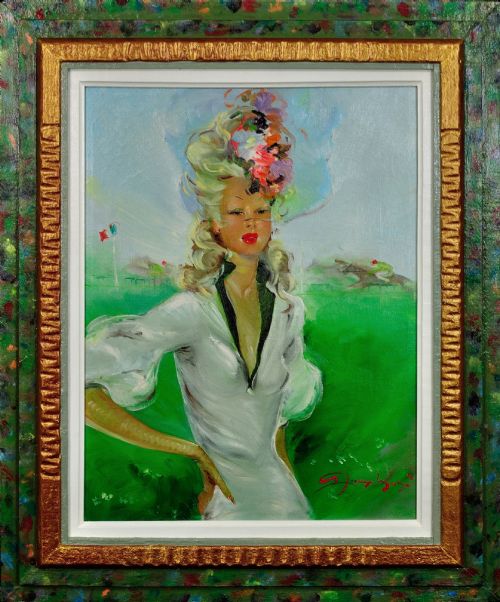
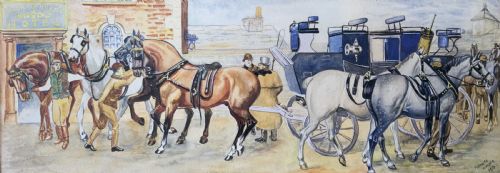
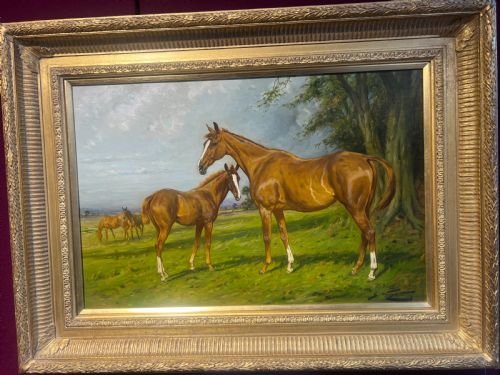
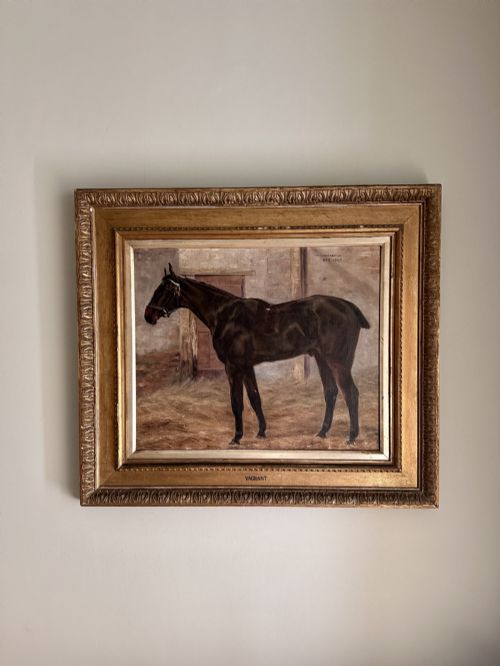
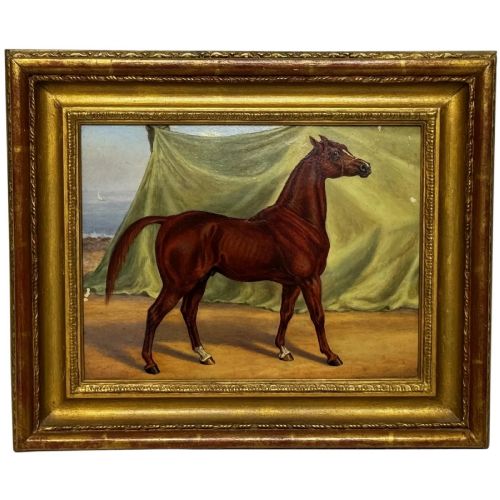
Vintage equestrian wall art encompasses framed oil paintings, watercolours, pastels, and historic prints depicting horses, racing scenes, hunting parties, and stable portraits. These works span from nineteenth-century British realism to mid-century expressions, reflecting changing tastes in animal portraiture and sporting culture. Buyers looking for vintage equestrian wall art will find both intimate pencil studies and large oil canvases suited for country houses and town interiors alike.
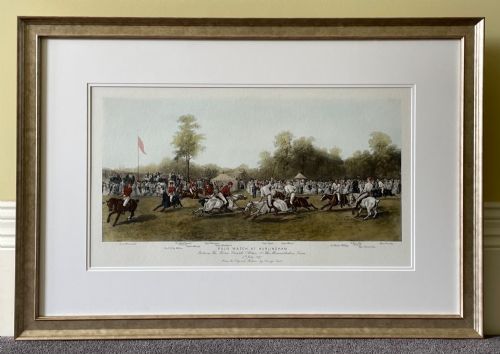
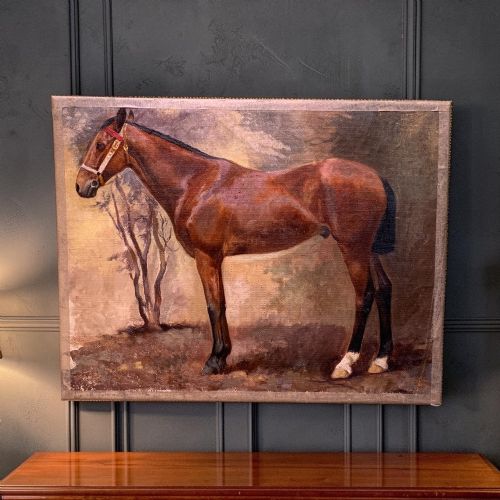
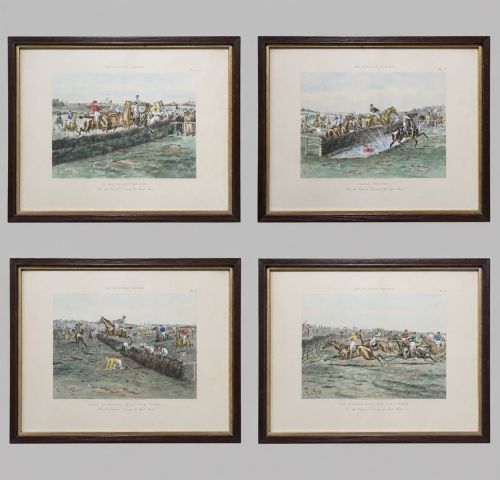
The selection on this page relies heavily on Victorian and early twentieth-century depictions, alongside mid-century works in oil and pastel. Formats range from single portraits of named racehorses to multi-part sets of aquatints and copper engravings. Works capture specific subjects, such as derby winners and polo matches, executed by named artists and anonymous hands.
How they were made
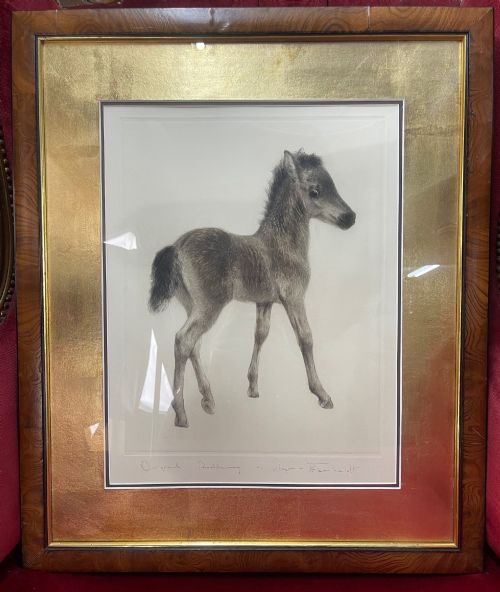
Pieces utilise traditional media including oil paint on canvas or panel, watercolour, pastel on paper, and various printmaking methods like lithography, drypoint, and aquatint. Canvases are frequently housed within period wooden frames, occasionally featuring giltwood or oak constructions that match the era of the artwork. Paper works employ protective glass and are mounted with hand-finished framing to preserve delicate pigments.
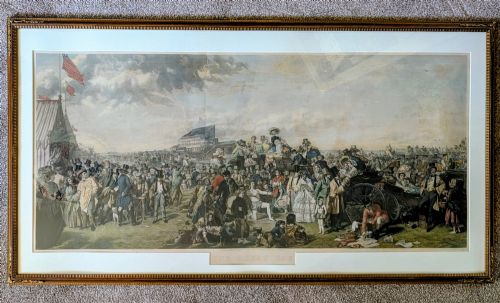
Print techniques involve copper plate engraving, hand-coloured copperplate printing, and lithographic reproduction after renowned painters like John Frederick Herring Snr and William Powell Frith. Artists building oil portraits layered pigments to render the musculature, coats, and lighting of horses within stables or open landscapes.
Vintage Equestrian Wall Art Retail Price Guide 2026
Typical asking prices for vintage equestrian wall art among the pieces listed under this phrase on Sellingantiques today, from the lower quarter to the upper quarter. They describe what is for sale here now, not the wider market.
Subject matter ranges from named racehorse portraits and hunting scenes to polo matches and stable studies.
What varies in quality
Quality rests upon the artist's command of equine anatomy, movement, and proportion, distinguishing lifelike studies from rigid or generic renderings. Stronger works demonstrate precise brushwork in the depiction of a horse's coat, expression, and muscular tension, whereas lesser pieces rely on formulaic compositions.
The integrity of the medium also defines the tier of the piece, with original oil paintings and drypoint prints commanding greater artistic weight than mass-produced decorative prints. Furthermore, period framing appropriate to the date of the artwork adds to the overall cohesion and preservation of the piece.
Kurt Meyer-Eberhardt·Thomas Smythe·Frederick Albert Clark·George Finch Mason·Henry Barraud·Fred Fitzpatrick·Ernest Payne·John Frederick Herring Snr
The Vintage Equestrian Wall Art Glossary
- Aquatint
- A printmaking technique that produces tonal areas resembling watercolour washes, frequently utilised for historic sporting and hunting prints.
- Drypoint
- A printmaking process where an image is scratched directly onto a metal plate with a sharp needle, creating a rich, velvety burr in the printed lines.
- Giltwood
- Wood carved and coated with gold leaf or a gold-coloured finish, commonly found on traditional antique picture frames.
- Grisette
- A term applied in equine titles to describe specific grey mares, often recorded alongside their stable location or portraitist.
- Lithography
- A planographic printing method using stone or metal plates, widely employed for reproducing nineteenth-century sporting scenes and matches.
Vintage Equestrian Wall Art: Frequently Asked Questions
How do I identify a Victorian horse painting?
Victorian horse paintings typically display realistic proportions, detailed tack, and specific landscape backgrounds associated with fox hunting or racing. Artists of this era focused heavily on accurate equine anatomy and named subjects.
Signatures, framing styles, and canvas stamps from period lining firms often provide additional chronological markers for dating these works.
What is an aquatint print?
An aquatint is a type of etching that uses acid to create tonal areas on a metal plate, resulting in soft areas of shade that mimic watercolour. Publishers often hand-coloured these prints after printing.
Sporting artists utilised this method to reproduce dynamic racing and hunting scenes for collectors.
How should I hang vintage horse art?
Hang these works away from direct sunlight to protect vulnerable watercolours, pastels, and nineteenth-century pigments from fading. Secure heavy oil paintings on canvas using appropriate wall fixings suited to the weight of the wooden frame.
Pairing pieces with similar tonal palettes or thematic subjects creates a balanced gallery wall in studies or hallways.
Are these paintings original artworks?
The selection includes both original hand-painted works in oil, watercolour, and pastel, as well as period prints and engravings published after known artists. Each listing specifies the primary medium used to create the piece.
Original oil studies feature visible brushwork and texture on canvas, whereas prints display ink transfer patterns under close inspection.