



Horse Racing Oil Painting
A horse racing oil painting captures the speed and tension of the turf, bringing the atmosphere of the paddock and the grandstand straight to your wall.
Horse Racing Oil Painting
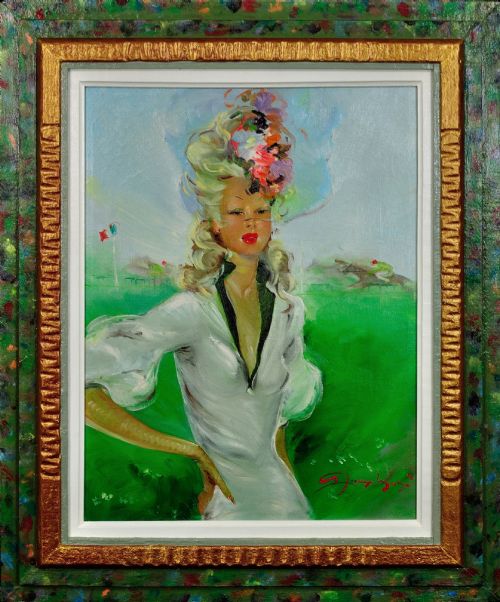
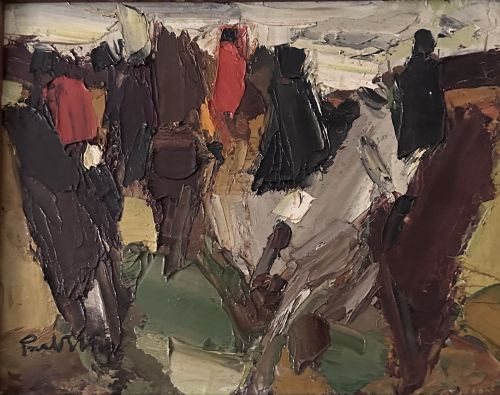
A horse racing oil painting brings the drama of the turf into an interior, depicting legendary mounts, historic course victories, and fashionable racegoers. These works range from tightly detailed nineteenth-century portraits of named thoroughbreds and jockeys to mid-century French expressionist scenes capturing the colour and movement of the crowd.
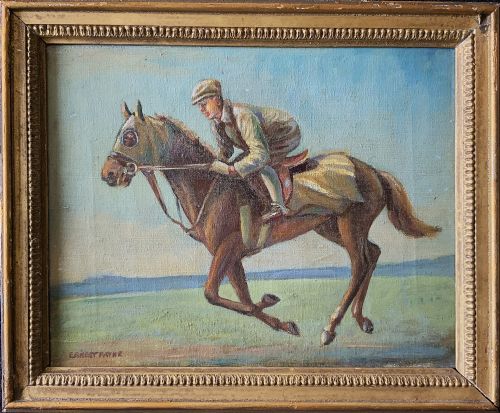
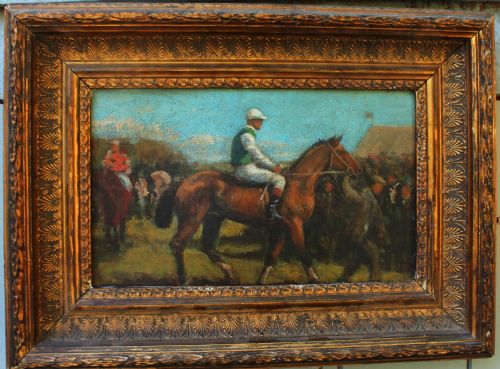
The version most likely to meet you on this page is the Victorian or Edwardian sporting portrait, often celebrating a celebrated winner with its jockey up in silk colours. Alternatively, you will find early twentieth-century paddock studies and atmospheric continental views from locations such as Longchamp.
These pieces encompass various formats, from intimate studies on wood panel to larger framed canvases. They serve as historical records of notable events, famous owners, and legendary riders like Fred Archer across British and international courses.
Materials and methods
The works on this page are executed in oil paint applied to canvas or wood panels, allowing artists to build rich textures and deep tones. Painters built up compositions using layered brushwork to render the sheen of a thoroughbred's coat and the vivid hues of jockey silks.
Many of these paintings retain their original or period framing, frequently constructed from wood, gilt, or plaster. Gilt wood frames provide the traditional heavy ornamentation typical of Victorian and Edwardian sporting art.
The listings span the Victorian and Edwardian eras through to mid-century French expressionism, utilising oil on canvas and wood panel.
Judging the work
Quality in these works rests upon the anatomical accuracy of the horse and the dynamism of the composition. A superior hand captures the tension in the muscle, the alert set of the ear, and the authentic motion of the gallop rather than relying on stiff convention.
The handling of light and atmosphere also distinguishes the pieces. Stronger examples integrate horse, jockey, and landscape seamlessly, conveying the damp air of a morning gallop or the bright spectacle of race day.
Ernest Payne·Alfred Munnings·Gabriel Dauchot·Alfred Wheeler·Isaac Cullin·Walter Herbert Wheeler·John Parker Davis·Frank Giggs
The Horse Racing Oil Painting Glossary
- Oil on Canvas
- A traditional painting medium where oil-based pigments are applied to a stretched woven fabric support. This combination allows for rich blending and enduring depth of colour.
- Jockey Up
- A sporting art phrase indicating that the rider is mounted on the horse, ready for the race. It often denotes a portrait commemorating a specific historic victory.
- Wood Panel
- A rigid support surface used by artists before canvas became dominant, offering a smooth ground for detailed brushwork. Surviving examples from the nineteenth century are valued for their stability.
- Gilt Wood
- Timber framing coated with a thin layer of gold leaf or metallic gilt gesso. It is commonly found on traditional nineteenth-century sporting art.
- Sporting Art
- A genre dedicated to the depiction of equestrian subjects, racing, hunting, and rural sports. It holds a distinct place in British collecting traditions.
Horse Racing Oil Painting: Frequently Asked Questions
How do I identify a Victorian horse racing oil painting?
Victorian examples typically feature detailed anatomical studies of named racehorses and jockeys wearing specific owner silks, often accompanied by nineteenth-century framing.
The palette and signature styles of the period lean towards realistic portraiture of the animal and its connections.
What is the difference between a portrait and a race scene?
A horse portrait focuses squarely on the thoroughbred and its jockey, often standing formally or depicted in a side profile. These were commissioned to celebrate notable winners and studs.
In contrast, a race scene captures action on the track, such as a steeplechase taking a ditch or the crowded atmosphere of the paddock.
Where should I hang a sporting oil painting?
These works suit traditional studies, libraries, or living rooms with classic architectural details. Pairing them with period wood furniture complements their heritage.
Keep them away from direct sunlight and excessive moisture to protect the oil paint and gilt frames.
How do I care for an antique oil on canvas?
Dust the canvas and frame gently with a soft, dry brush without applying pressure to the painted surface. Avoid using liquid cleaners or household sprays.
Consult a professional conservator if the canvas sags or if the varnish yellows over time.