
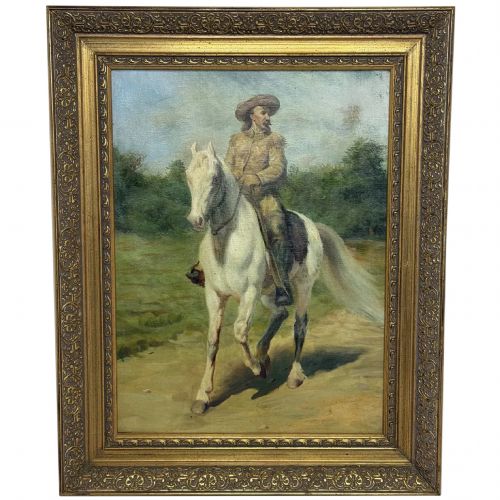


Mid Century Horse Painting
A mid century horse painting captures the enduring power and grace of the animal through mid-century modern, equestrian realism, and expressionist lenses.
Mid Century Horse Painting
A mid century horse painting brings together diverse interpretations of equines across the twentieth century, ranging from dynamic racing scenes to quiet stable portraits. Buyers searching for a mid century horse painting will encounter works executed in oil on canvas, gouache, and watercolour, framed and ready for display.
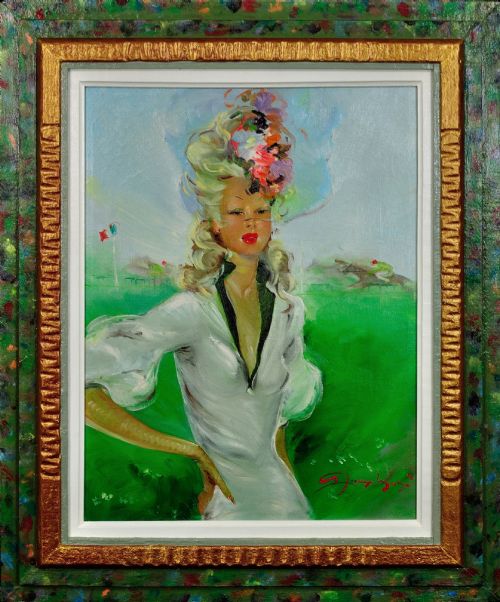
The pieces on this page span the 1930s, 1940s, 1950s, and 1960s, alongside select 19th-century works that anchor the tradition. Mid-century British and French expressionist styles dominate the current offering, reflecting both local countryside scenes and bustling racecourses like Longchamp.
Materials and execution
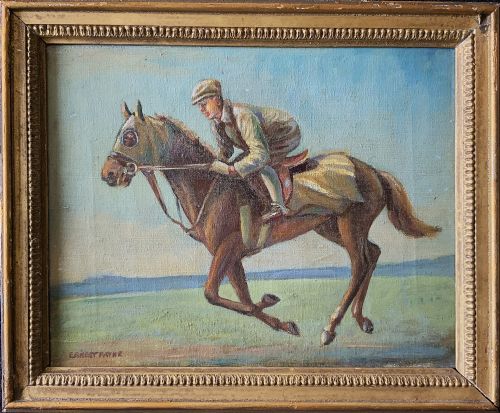
Artists relied primarily on oil paint applied to canvas, wood panels, or board, building texture and depth through layered brushwork. Gouache and watercolour on paper also appear frequently, offering a lighter, more fluid medium for capturing movement in racing and rodeo scenes.
Support materials include traditional wood frames, glass, and gilt accents that complement the period aesthetic. Sand pictures from the nineteenth century represent a more unusual technique found within the broader equestrian grouping.
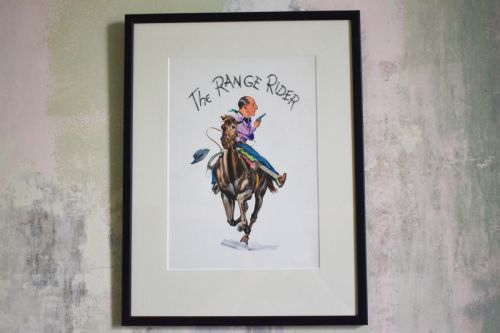
A mid-century cowboy on a bucking horse shares gallery space with fashionable ladies at the Longchamp races.
Assessing quality
Quality rests on the confidence of the line and the artist's ability to render the anatomy and kinetic energy of the horse. Works by listed artists with established exhibition histories demonstrate superior draftsmanship compared to anonymous decorative pieces.
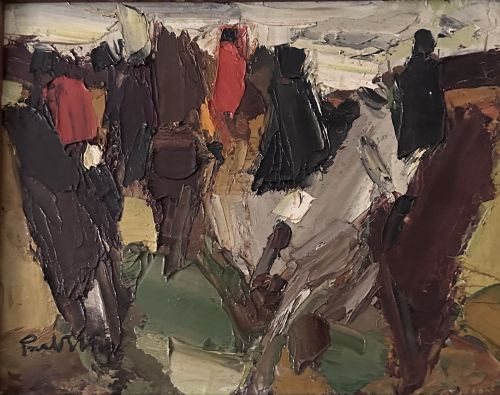
The synergy between the chosen medium and the subject matter dictates visual success, such as the expressive urgency found in French expressionist racing oils versus tighter traditional portraiture.
Ernest Payne·John Rattenbury Skeaping·Harry Freckleton·Hazel M Barnett·Gabriel Dauchot·Molly Maurice Latham·Reginald Mills·Jack Cross·Georgina Lara·George Bryant Campion
The Mid Century Horse Painting Glossary
- Gouache
- An opaque watercolour paint that dries to a matte finish, allowing for bold colour blocks and fine detail.
- Equestrian realism
- An artistic style dedicated to the accurate, lifelike depiction of horses and riders.
- Expressionism
- A modernist movement where artists prioritized emotional experience over physical reality, using distorted forms and vigorous brushwork.
- Oil on canvas
- Pigments suspended in a drying oil medium applied to a stretched fabric surface, standard for durable paintings.
Mid Century Horse Painting: Frequently Asked Questions
What periods do these paintings cover?
The selection spans primarily from the 1930s through the 1960s, capturing the mid-century modern era alongside select 19th-century antiques.
This range allows collectors to trace how equine art evolved from traditional realism into more expressive, modernist interpretations.
How should I display a framed painting?
Hang your artwork away from direct sunlight and excessive moisture to protect the canvas, paper, and gilt frames.
Ensure the wall space supports the scale of the piece, allowing the framed artwork to become a natural focal point in the room.
What is the difference between oil and gouache?
Oil paint utilises a slow-drying oil medium that builds rich textures and depth on canvas or wood panels.
Gouache is water-based and opaque, offering a flat, matte surface typically executed on paper.
Are these works signed by the artists?
Many pieces feature artist signatures, attribution notes, or documented provenance linking them to mid-century British and French schools.
Unsigned works rely on stylistic evidence, materials, and framing to indicate their period and origin.