
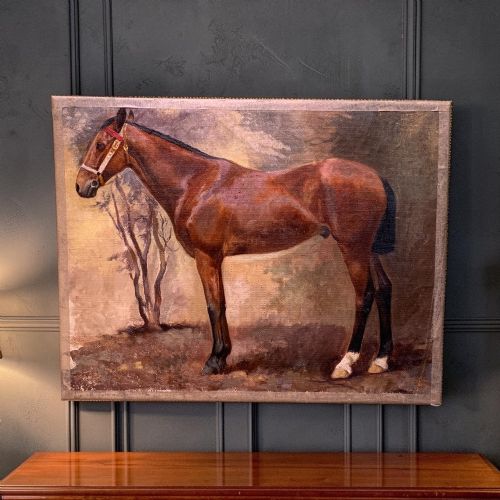
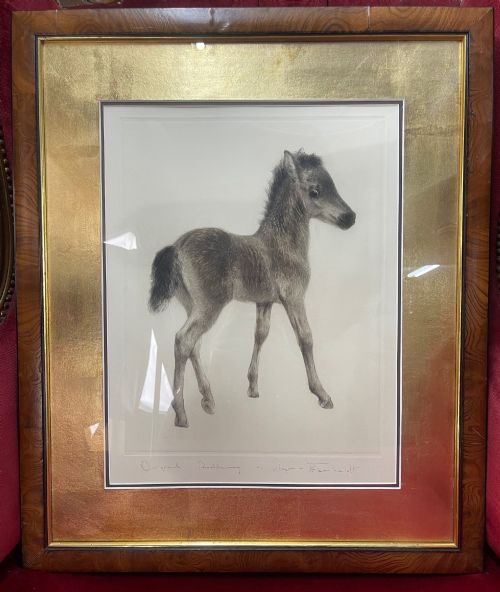
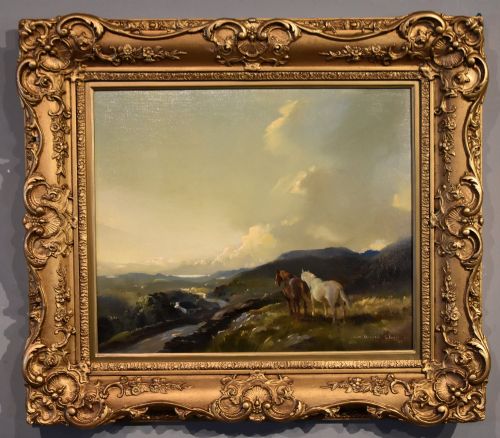
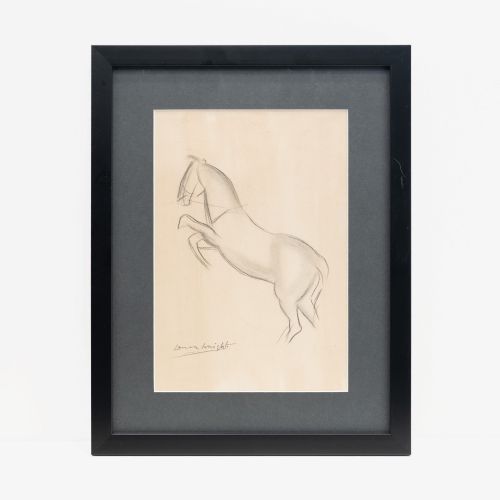
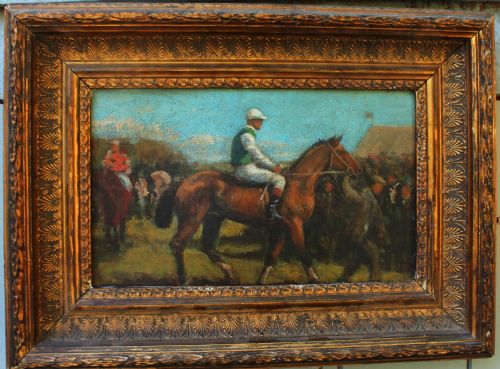


20th Century Equestrian Art
20th century equestrian art captures the vitality of horses through diverse mediums spanning Edwardian elegance to mid-century modernism.
20th Century Equestrian Art
When someone searches for 20th century equestrian art, they encounter a rich variety of paintings, watercolours, prints, and decorative objects celebrating horses in sport, work, and landscape. The selection ranges from Edwardian hunting scenes to mid-century modernist interpretations.
Oil paintings and delicate watercolours on paper dominate the works available, alongside pencil studies and bronze sculptures. These pieces reflect shifting artistic movements across the decades, from British sporting art traditions to continental realism.
How They Were Made
Artists utilised oil paint on canvas or board to achieve depth and texture in depictions of horses, while others preferred the fluid transparency of watercolour and gouache on paper. Graphic techniques like drypoint etching allowed for precise linear detail in prints.
Sculptural and decorative items required entirely different handling, encompassing cast bronze, sheet metal work, and porcelain wall plaques. Each medium dictated the level of movement and anatomical fidelity the maker could capture.
Several horses captured in these artworks enjoy specific names, including Minstrel, Milly, and a nimble pony at Penlan.
What Varies in Quality
Anatomical precision and the convincing rendering of equine movement separate exceptional works from routine studio pieces. A skilled hand captures the dynamic tension of muscle and the distinct posture of a horse at rest or gallop.
The strength of composition and the handling of light within the surrounding landscape or stableyard determine the artistic merit. Works by recognised painters exhibit a confident brushwork that elevates the subject beyond mere illustration.
Kurt Meyer Eberhardt·Vernon DeBeauvoir Ward·Dame Laura Knight·John Rattenbury Skeaping·Edith Alice Simkins·Charles Clifford Turner·Michael Lyne·Thomas Ivester Lloyd·Geoffrey Mortimer·Maurice Wagermans·Allan Gwynne Jones·Frank Giggs·George Soper
The 20th Century Equestrian Art Glossary
- Drypoint
- A printmaking technique where an image is scratched directly onto a metal plate with a sharp needle. This process creates a characteristic velvety burr along the lines when printed.
- Gouache
- An opaque water-based paint that produces flat, vibrant areas of colour. It is frequently combined with watercolour in equestrian works to add highlights.
- Sporting Art
- A genre of painting and illustration dedicated to equestrian subjects, hunting, racing, and field sports. It demands precise knowledge of animal anatomy and rural pursuits.
- Brass Rubbing
- An image transferred to paper by placing it over an engraved brass and rubbing pigment across the surface. This technique records historical motifs with graphic clarity.
20th Century Equestrian Art: Frequently Asked Questions
What defines 20th century equestrian art?
These pieces encompass paintings, watercolours, and sculptures depicting horses through various twentieth-century artistic movements. They record horses in racing, hunting, and agricultural labour.
The category bridges traditional sporting art and modern British or continental realism. Artists interpreted the subject through changing lenses from the Edwardian era to the 1960s.
How do I care for works on paper?
Watercolours and drawings require protection from direct sunlight to prevent fading of the pigments. Acid-free mounting preserves the integrity of the paper over time.
Keep these artworks in stable humidity conditions behind appropriate glazing. Proper framing prevents moisture damage and preserves the delicate mediums.
How are different periods distinguished?
Edwardian and early works often favour detailed realism in hunting and sporting contexts. Mid-century pieces introduce bolder brushwork and modernist interpretations of form.
Signatures, dates, and stylistic shifts provide clear markers for dating. Clothing styles of riders and handlers also help place an artwork within a specific decade.
Where were these pieces displayed?
Original paintings and bronzes typically hung in country houses, estate offices, and suburban homes. They reflected the owner's personal connection to rural pursuits and riding.
Smaller watercolours and prints suited domestic drawing rooms and studies. Larger oils often commanded central positions above mantelpieces.