


Framed Horse Sketch
A framed horse sketch captures equine energy on paper, offering character and history for walls.
Framed Horse Sketch
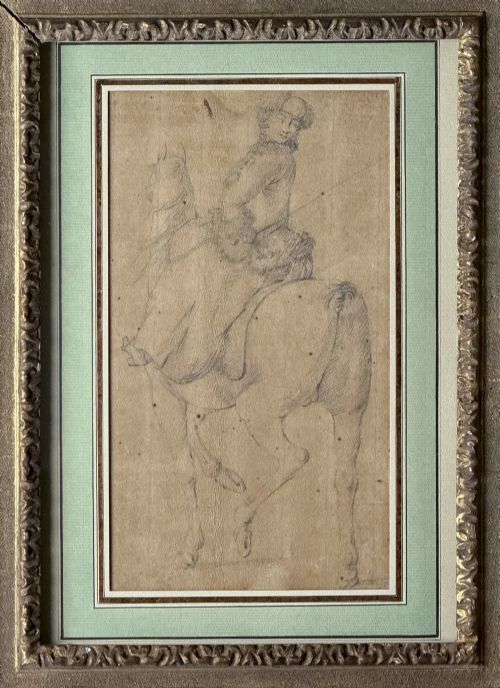
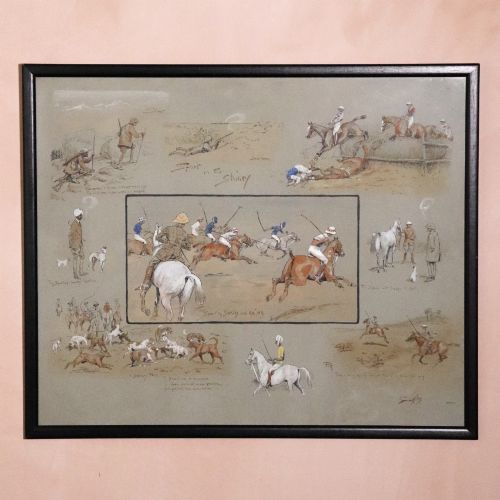
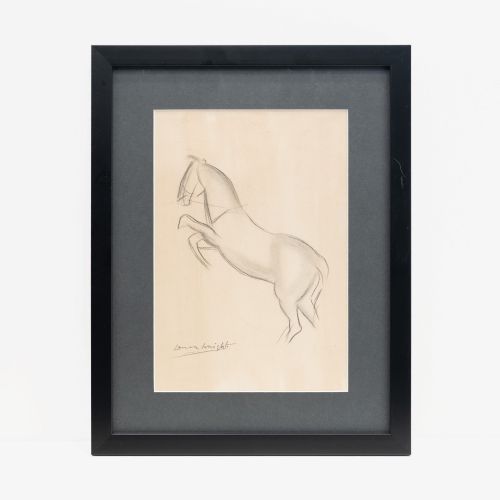
A framed horse sketch encompasses works on paper ranging from early eighteenth-century Northern European equestrian studies to mid-century British pastels and watercolours. These pieces capture horses in action, from trotting traps to racing finishes, presented ready for hanging behind glass in wooden frames.
The selections span traditional equestrian subjects, 19th century Orientalism, British Colonial scenes, and 20th century Modern British approaches. Buyers encounter everything from rapid pencil and chalk drawings to finished watercolours and original signed prints.
Dating stretches from the 18th century through the Edwardian era into the 1950s and 1960s, offering varied portrayals of horses, grooms, and hounds executed on paper.
How they were made
Artists utilised media such as graphite, chalk, pastel, ink, and watercolour applied directly to paper. Some pieces feature heightened charcoal or tinted paper to build depth and contrast within the equine subject.
Mounting and framing protect these fragile works on paper, typically employing wooden frames and glass to preserve the delicate pigments and drawing materials over centuries.
The periods represented span from the early eighteenth century through the Edwardian era into the mid-twentieth century.
What varies in quality
Quality rests upon the sureness of the hand and the vitality of the line, separating confident anatomical observation from stiff replication. A skilled draughtsman captures the tension of muscle and movement with minimal strokes.
The condition of the paper and the preservation of the medium under glass dictate desirability. Works that retain vibrant chalk or watercolour without excessive fading or paper degradation command greater attention.
Dame Laura Knight·John Rattenbury Skeaping·Cecil Charles Windsor Aldin·Michael Lyne·Fred Lawson
The Framed Horse Sketch Glossary
- Equestrian study
- A drawing or sketch focusing specifically on the anatomy, movement, or portrayal of horses. These studies often serve as preparatory work for larger paintings or standalone observations.
- Watercolour
- A paint consisting of pigment suspended in a water-based solution, applied to paper to achieve translucent washes of colour. It allows for rapid sketching of atmospheric scenes.
- Pastel
- A dry drawing medium composed of powdered pigment and a binder, resulting in rich, velvety colour blocks. It is frequently blended directly on tinted paper.
- Chalk
- A soft, opaque drawing material derived from mineral matter, useful for rapid gesture drawing and tonal shading. Artists often combine it with pencil or charcoal.
- Orientalism
- An artistic style drawing upon subjects from the Middle East and North Africa, popular during the nineteenth century. It frequently incorporates exotic narratives and desert settings.
Framed Horse Sketch: Frequently Asked Questions
How should I hang a framed horse sketch?
Keep works on paper away from direct sunlight to prevent the watercolour, pastel, or chalk from fading over time.
Position them at eye level in rooms with stable humidity to protect both the paper and the wooden frame.
Are these sketches original artworks?
The selection includes hand-drawn pieces in pencil, chalk, pastel, and watercolour, alongside original period prints.
Each listing specifies the exact medium used by the artist to create the image on paper.
What periods do these pieces represent?
The works span multiple centuries, beginning with early eighteenth-century Northern European sheets and moving through Edwardian scenes.
Later pieces reach into the mid-twentieth century, including modern British and sporting art from the nineteen-fifties and sixties.
How do I identify the medium on paper?
Close inspection behind the glass reveals the texture of the marks, such as the powdery grain of pastel or the fluid washes of watercolour.
Pencil and chalk leave distinct linear traces that differ from ink or printed ink patterns.