


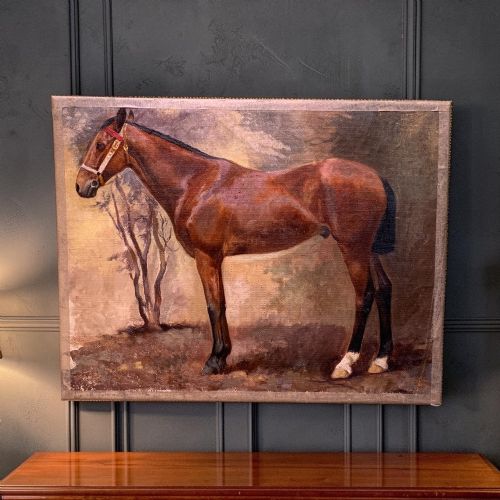
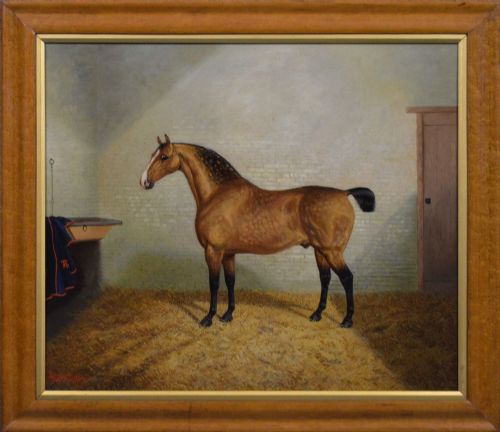
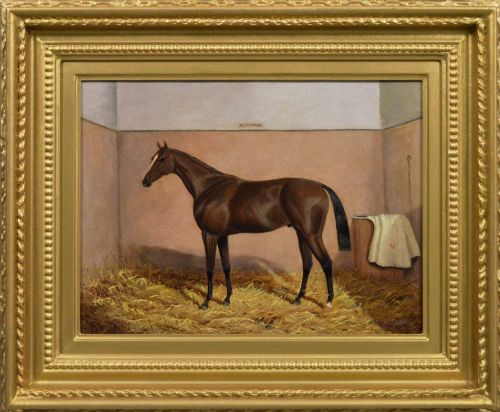
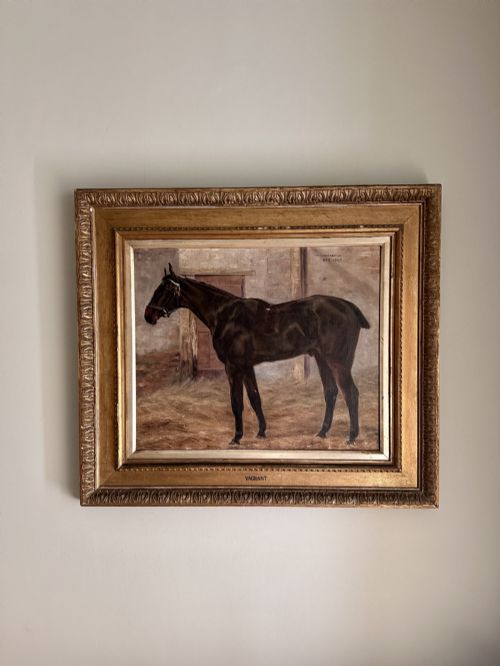



Equine Canvas Painting
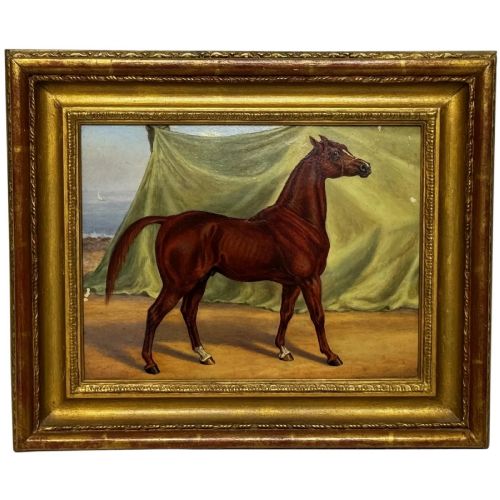
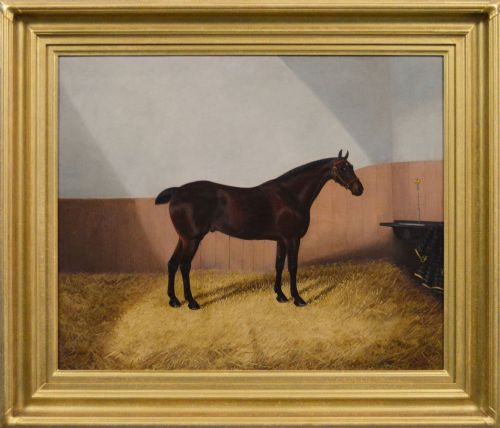
An equine canvas painting captures the strength and character of horses through traditional oil paint on stretched canvas.
Equine Canvas Painting
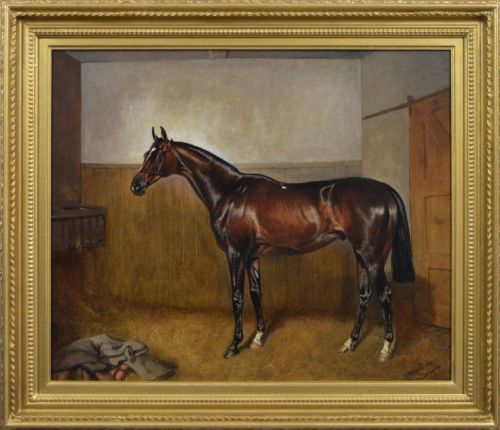
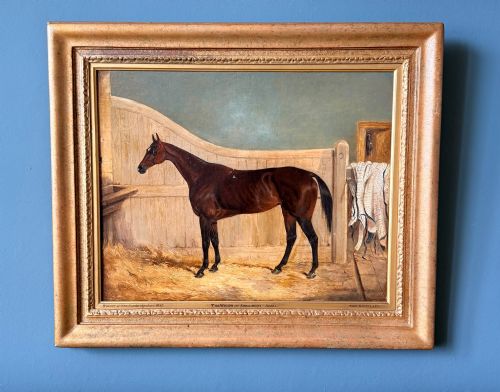
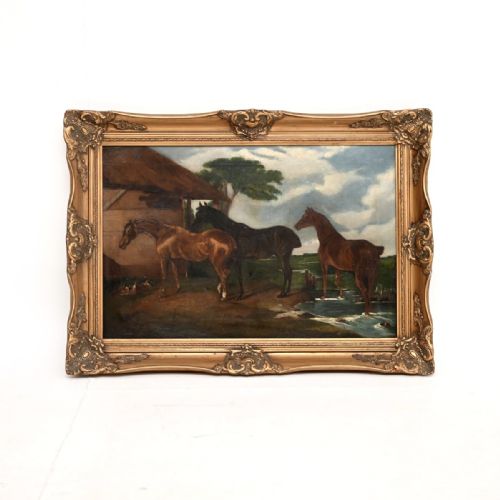
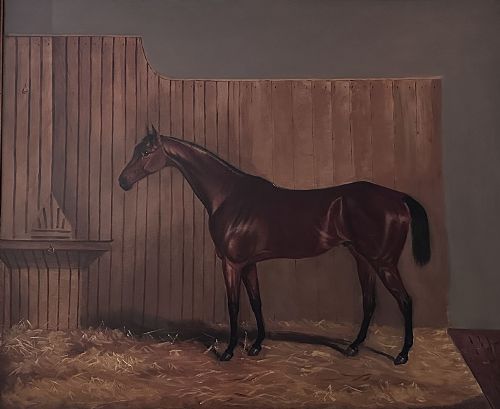
An equine canvas painting portrays horses in varied settings, ranging from formal portraits of champion racehorses to scenes of rural farm life and hunting landscapes. These works record the physical presence of specific animals, historical racers, and working horses across stables, fields, and tracks.
The selections span the Georgian, Victorian, and Edwardian eras, moving from early nineteenth-century sporting commissions to twentieth-century rustic village scenes. Buyers encounter individual studies of hunters and stallions alongside wider landscape compositions featuring ponies, carts, and rural handlers.
Originating predominantly from British and Irish artistic traditions, these canvases often reflect the social prominence of equestrian sports, racing, and agriculture. The subjects include named thoroughbreds with notable owners alongside uncredited working horses captured in everyday environments.
Materials and technique
Artists built these works using oil paint applied to woven canvas stretched over wooden frames, occasionally incorporating underlying wood panels for structural support. Pigments were layered to render the sheen of coats, muscle definition, and atmospheric details in landscapes or stables.
Framing forms an integral component of the physical object, with many pieces housed in original giltwood frames or decorative gold leaf mouldings that complement the period aesthetic of the painting.
Among the canvas portraits, a nineteenth-century artist recorded the equine equivalent of a celebrity sighting: a royal thoroughbred posed alongside his jockey.
Judging quality
Quality rests upon the anatomical precision of the horse, the artist's ability to capture light on muscle and coat, and the clarity of the surrounding landscape or stable interior. Works by documented sporting painters display superior handling of perspective and equine conformation compared to anonymous commercial pieces.
The historical significance of the subject, such as named winners of documented races or commissions from recognised estates, elevates the standing of an individual canvas within the tradition of sporting art.
Henry Barraud·Albert Clark·Fred Fitzpatrick·John Alfred Wheeler·Thomas Walker Bretland·John Ferneley Senior·George E Sharpe·John Frederick Herring·Benjamin Cam Norton·Clifton Tomson·Alfred Moginie Bryant·Arthur Winter Shaw·Abraham Cooper·Charles Bilger Spalding·George Goodwin Kilburne·Ernest Higgins Rigg·John Nost Sartorius·William F Perrin
The Equine Canvas Painting Glossary
- Canvas
- A heavy woven fabric used as a surface for painting, typically stretched taut over a wooden frame before application of oil colours.
- Giltwood
- Wood that has been coated with a thin layer of gold leaf or gilt powder, commonly found on period frames enclosing nineteenth-century oil paintings.
- Equine art
- Depictions of horses across artistic genres, encompassing portraiture of specific animals, racing scenes, hunting subjects, and rural working compositions.
- Sporting art
- A category of fine art dedicated to traditional rural pursuits, predominantly featuring horses, hounds, racing, and shooting from the eighteenth century onward.
- Provenance
- The documented history of ownership of an artwork, tracing its descent from the original commission through galleries and private collections.
Equine Canvas Painting: Frequently Asked Questions
What is an equine canvas painting?
An equine canvas painting is a fine art work executed in oil paint upon a stretched canvas support, focusing primarily on horses in portraits, racing scenes, or pastoral landscapes.
These pieces document the historical importance of horses in transport, sport, and agriculture, primarily originating from the nineteenth and early twentieth centuries.
How were these paintings displayed?
These paintings were traditionally hung in country houses, estate offices, and sporting clubs to celebrate prized thoroughbreds, hunting mounts, and rural achievements.
They are almost universally housed within decorative wooden frames, often finished in giltwood to complement period domestic interiors.
How do I care for an old oil painting?
Maintenance requires keeping the canvas away from direct sunlight, high humidity, and rapid temperature fluctuations that can cause the oil paint or wooden stretcher to warp.
Dust should be removed gently from the surface and frame using a soft, dry brush without applying liquid cleaners or pressure to the paint layer.
How do I identify the period?
Dating relies on stylistic clues in the clothing of figures, the construction of the canvas and stretcher, and the framing methods typical of Victorian or Edwardian craftsmanship.
Many works include artist signatures, dates, or inscriptions on the canvas reverse that link the portrait to specific historical races or estates.