53,432  PAGES BROWSED TODAY PAGES TODAY 103  ANTIQUES UPLOADED TODAY NEW ARRIVALS
ID #SA1204397
FOR SALE
£14,000
Email
Save
19th Century Oil Painting of a Chestnut Horse in a River Landscape by John Ferneley Senior
Isherwood Fine Art
for sale €16,380     $17,780
£14,000
Isherwood Fine Art

Isherwood Fine Art

Sellingantiques Verified Since Oct 2023
View Dealers Stock Page
  • About Us
    16th to 19th century old master, british and european paintings and sculpture, specialising in period portraiture. Member BADA, LAPADA.
  • Trade Associations
    Isherwood Fine Art is a registered member of LAPADA  BADA 
Id #SA1204397
PDF SHARE
SAVE

19th Century Oil Painting of a Chestnut Horse in a River Landscape by John Ferneley Senior

19th century
Description

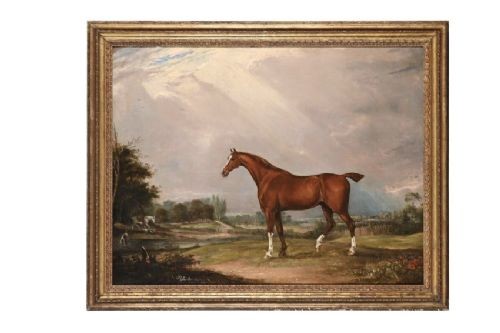
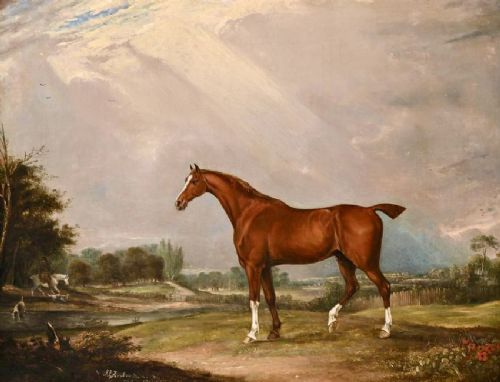
A painting of a chestnut hunter in a landscape with a horse and rider accompanied by two hounds by a woodland river in the distance.

Signed and inscribed 'Melton Mowbray', lower left.

Oil on canvas in a giltwood frame.
Canvas size: 69 x 90cm

In frame: 85 x 95cm

John Ferneley Sr (1782-1860) was born the son of a Leicestershire wheelwright, the youngest of six children. He is known as one of the great British equine artists, perhaps only second to Stubbs in terms of raw ability.

Ferneley originally worked with his father, until by chance the Duke of Rutland saw some of his work on the side of a cart on which Ferneley and his father had been working. The Duke was so impressed with Ferneley that he persuaded John's father to allow him to become the pupil of Benjamin Marshall. Ferneley was so talented that apparently he produced almost perfect copies of his tutor's paintings and they were said to have been indistinguishable from the master’s. Marshall also enrolled him as a student of the Royal Academy Schools.

In 1804 Ferneley paid a man named Thomas Harrison to undertake his compulsory army service - a practice that was commonplace at the time. It was ironic that his first commission then came from the Leicestershire militia.

From then on he received widespread commissions and his reputation grew. Between 1808 and 1811 he made frequent trips to Ireland , where he painted pictures for the gentry. He established himself in Melton Mowbray where he built a studio and later a house, Elgin Lodge, on the Sleaford Road , where he remained for the rest of his life.

His work became very fashionable, and his patrons included many dukes and earls as well as some of the most famous personalities of the time such as Beau Brummel and the Count D’Orsay. It must have been a credit to his personality and intelligence that from such humble beginnings he was accepted as a friend of the Meltonians and his house was the Sunday afternoon meeting place for many of them. Ferneley would hunt, shoot and fish as a guest of many of his titled patrons.

Ferneley’s best work was painted in the period of 1810 to 1850, when he displayed his full repertoire of hunting, racing and horse scenes. His painting of horses was superb, his figures were at first less good, but he became a close friend of Sir Francis Grant who gave his some help with the painting of figures while Ferneley gave Grant lessons in horse painting. They combined on several procures, one painting figures and the other horses. Ferneley had a fine use of colour and his pictures are comparable to Marshall and second only to Stubbs. He signed very delicately, often with a pin head in the wet paint and often on the bar of a fence, stable door or other obscure part of the painting. His signature is always very distinguishable from his son John Junior who normally signed heavily in black in the corner of the painting.

Ferneley painted his last picture in 1860 at the age of seventy-eight.

Physical Dimensions
Height
85cm (33.46")
Width
95cm (37.40")
Declaration

Isherwood Fine Art has dated this Equestrian Oil Painting Portrait to the 19th Century.

Reference Numbers
Sellingantiques Reference
SA1204397
Dealers Notes

Isherwood fine art

Description
A painting of a chestnut hunter in a landscape with a horse and rider accompanied by two hounds by a woodland river in the distance.

Signed and inscribed 'Melton Mowbray', lower left.

Oil on canvas in a giltwood frame.

fig 1. A nineteenth-century oil painting on canvas depicting a chestnut horse standing in profile within a rural river landscape, housed in a moulded gilt frame.
fig 1. 19th Century Oil Painting of a Chestnut Horse in a River Landscape by John Ferneley Senior

Canvas size: 69 x 90cm

In frame: 85 x 95cm

John Ferneley Sr (1782-1860) was born the son of a Leicestershire wheelwright, the youngest of six children.
Isherwood Fine Art

He is known as one of the great British equine artists, perhaps only second to Stubbs in terms of raw ability.

Ferneley originally worked with his father, until by chance the Duke of Rutland saw some of his work on the side of a cart on which Ferneley and his father had been working. The Duke was so impressed with Ferneley that he persuaded John's father to allow him to become the pupil of Benjamin Marshall. Ferneley was so talented that apparently he produced almost perfect copies of his tutor's paintings and they were said to have been indistinguishable from the master’s. Marshall also enrolled him as a student of the Royal Academy Schools.

In 1804 Ferneley paid a man named Thomas Harrison to undertake his compulsory army service - a practice that was commonplace at the time. It was ironic that his first commission then came from the Leicestershire militia.

From then on he received widespread commissions and his reputation grew. Between 1808 and 1811 he made frequent trips to Ireland , where he painted pictures for the gentry. He established himself in Melton Mowbray where he built a studio and later a house, Elgin Lodge, on the Sleaford Road , where he remained for the rest of his life.

His work became very fashionable, and his patrons included many dukes and earls as well as some of the most famous personalities of the time such as Beau Brummel and the Count D’Orsay. It must have been a credit to his personality and intelligence that from such humble beginnings he was accepted as a friend of the Meltonians and his house was the Sunday afternoon meeting place for many of them. Ferneley would hunt, shoot and fish as a guest of many of his titled patrons.

Ferneley’s best work was painted in the period of 1810 to 1850, when he displayed his full repertoire of hunting, racing and horse scenes. His painting of horses was superb, his figures were at first less good, but he became a close friend of Sir Francis Grant who gave his some help with the painting of figures while Ferneley gave Grant lessons in horse painting. They combined on several procures, one painting figures and the other horses. Ferneley had a fine use of colour and his pictures are comparable to Marshall and second only to Stubbs. He signed very delicately, often with a pin head in the wet paint and often on the bar of a fence, stable door or other obscure part of the painting. His signature is always very distinguishable from his son John Junior who normally signed heavily in black in the corner of the painting.

Ferneley painted his last picture in 1860 at the age of seventy-eight.

Height
85cm (33.46")
Width
95cm (37.40")
Date of Manufacture

Isherwood Fine Art has dated this Equestrian Oil Painting Portrait to the 19th Century.

Reference Numbers
Sellingantiques Ref
SA1204397
Isherwood Fine Art
Isherwood Fine Art
Sellingantiques verified Since Oct 2023

16th to 19th century old master, british and european paintings and sculpture, specialising in period portraiture. Member BADA, LAPADA.

Dealer Profile

You can view the stock and full dealer information on the Isherwood Fine Art Profile Page

Trade Associations

Isherwood Fine Art is a registered member of LAPADA  BADA 
PDF SHARE
SAVE
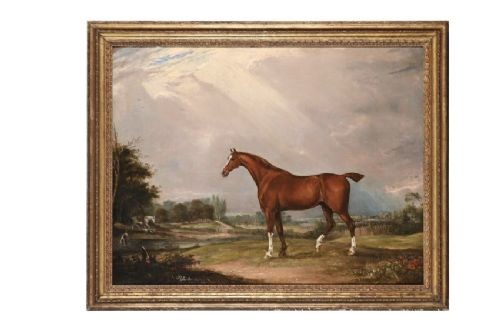
A nineteenth-century oil painting on canvas depicting a chestnut horse standing in profile within a rural river landscape, housed in a moulded gilt frame.
1 / 2
Archive I A nineteenth-century oil painting on canvas depicting a chestnut horse standing in profile within a rural river landscape, housed in a moulded gilt frame.

19th Century Oil Painting of a Chestnut Horse in a River Landscape by John Ferneley Senior
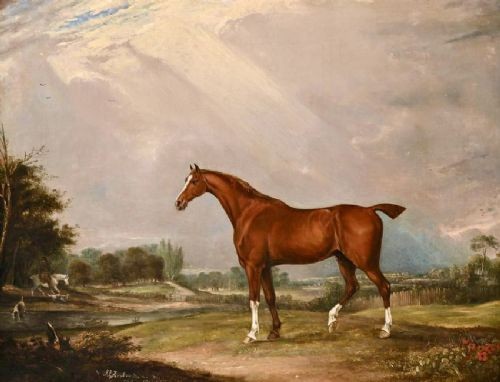
Archive II A nineteenth-century oil painting on canvas depicting a chestnut horse standing in profile within a rural river landscape, housed in a moulded gilt frame. View II
Enlarged Archival View
Telephone 07984 699799
Location
Bath and London
United Kingdom

By appointment only.
Verified Since Oct 2023
Items For Sale 43
Items Sold 32
Isherwood Fine Art
Isherwood Fine Art
Verified Since Oct 2023
View Dealer Info
Location: Bath and London, United Kingdom, , By appointment only.
Verified
Oct 2023
For Sale
43
Sold
32
A nineteenth-century oil painting on canvas depicting a chestnut horse standing in profile within a rural river landscape, housed in a moulded gilt frame.
19th century oil painting of a chestnut horse in a river landscape by John Ferneley Senior
Ref: SA1204397
A nineteenth-century oil painting on canvas depicting a chestnut horse standing in profile within a rural river landscape, housed in a moulded gilt frame.
Detail View 1
Archival Detail
Every single antique dealer on our platform is individually approved by our internal team. We verify their professional trade history, ethical standards, and photographic quality to ensure a secure, high-standard buying environment. Upon joining, every dealer agrees to a strict 9-point code of conduct. While issues can occasionally arise, our dealers typically resolve them swiftly and directly with the buyer. In fact, since our founding in 2002, Sellingantiques has only had to step in to help resolve an issue on roughly five occasions—a true testament to the quality of our dealers and their dedication to your happiness.
Our dealers are highly experienced in packing and shipping fragile, high-value antiques. Because you are in direct contact with the dealer, you will be able to easily go through all available shipping and insurance options together to ensure your item arrives safely.
Antiques are the ultimate green purchase. By choosing historical pieces over newly manufactured goods, you completely eliminate the carbon footprint of modern mass production while preserving exceptional, timeless craftsmanship.

British sporting art from the 19th century primarily depicts equestrian subjects, fox hunting, horse racing, and livestock portraits. These works were popular among aristocracy and rural landowners to document prized animals and country pastimes.

Artists used oil paints composed of natural pigments mixed with drying oils, applied onto stretched linen canvas or timber panels. Paintings were typically fitted into carved timber or gesso-moulded frames finished with gold leaf.

Authentic period canvases usually display natural age-related craquelure, oxidation on the reverse of the canvas, stretcher marks, and timber keys. Inspecting the frame construction and verifying signature techniques helps confirm age.

Hang the artwork as a focal point above a mantelpiece or sideboard, pairing it with dark wood furniture, brass lighting, and neutral stone or painted surfaces to complement the traditional tones.

Dust gently with a soft, dry brush without applying water or chemical cleaners. Display the painting away from direct sunlight, radiator heat sources, and fluctuating humidity levels to prevent cracking or warping.
items
Add keywords to the filter
Price
£100
£250000
Era
Movements
Material
Origin
Stock Location
Freshness
Online Payments
Categories