
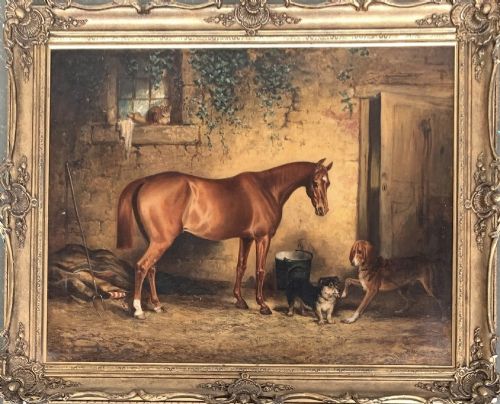
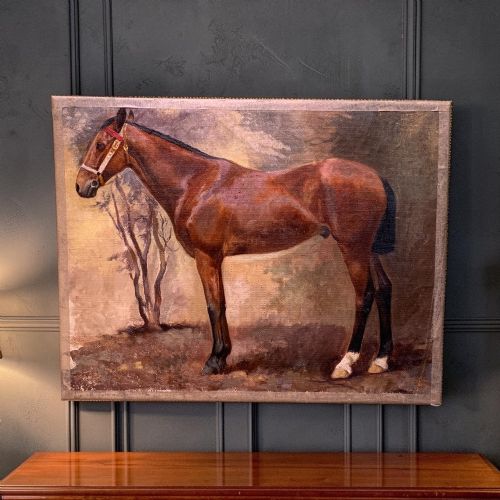
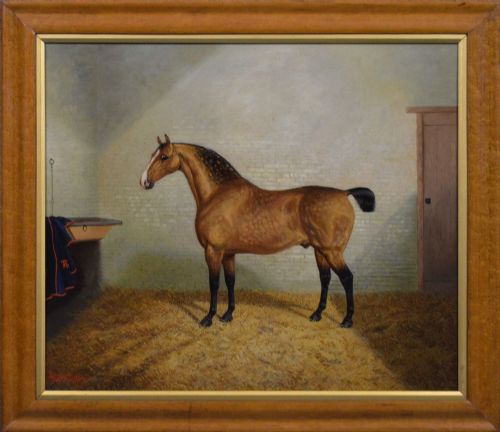
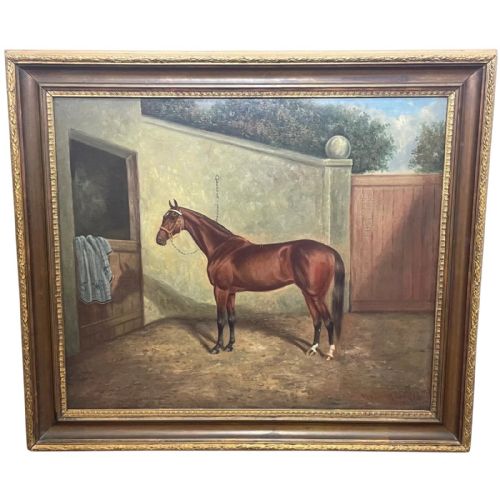
Brown Horse Oil Portrait
A brown horse oil portrait captures the power and character of notable equines through traditional brushwork.
Brown Horse Oil Portrait
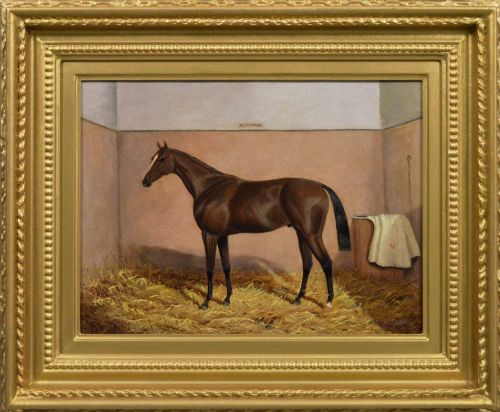
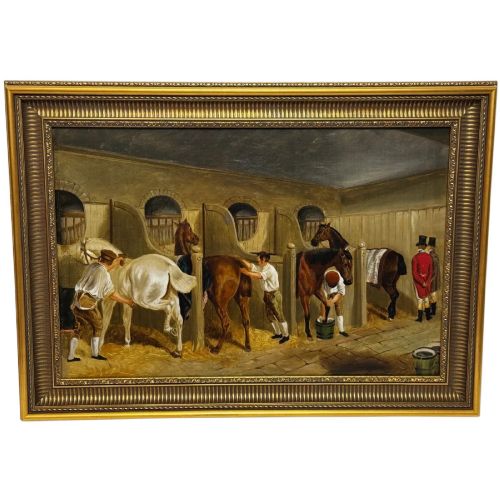
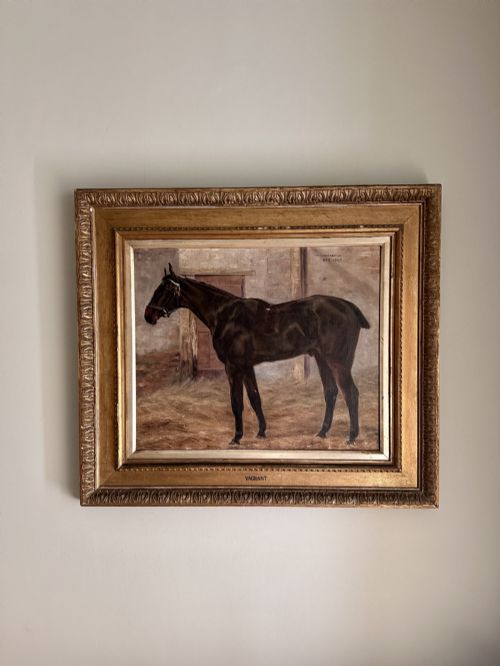
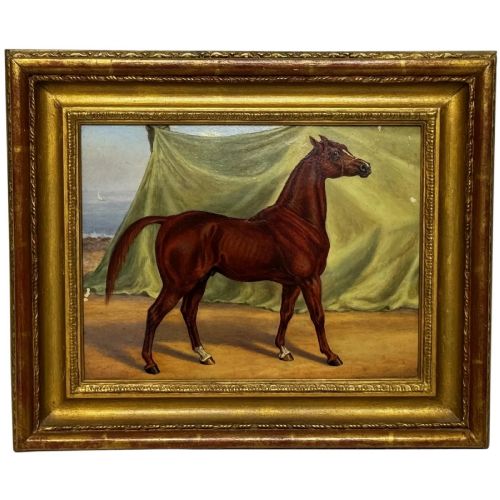
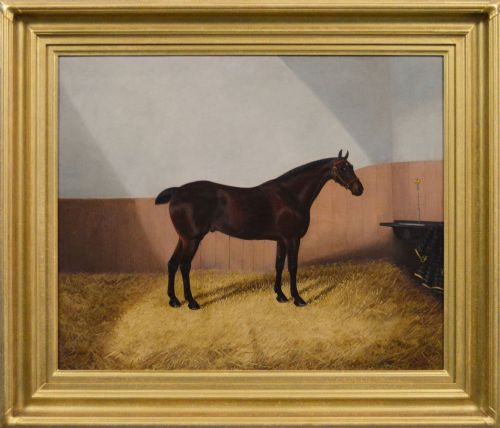
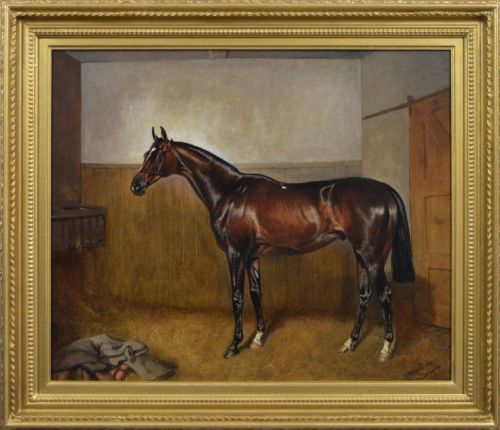
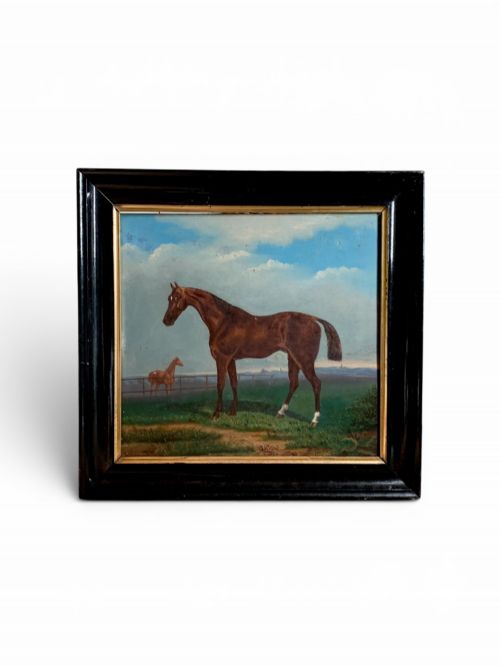
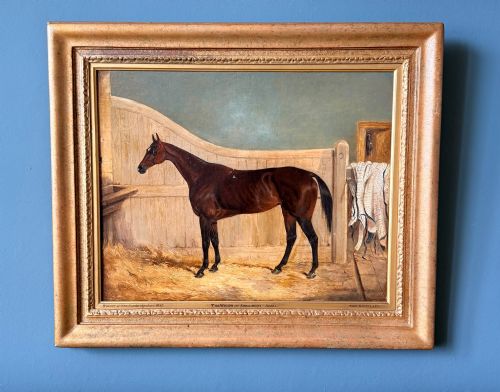
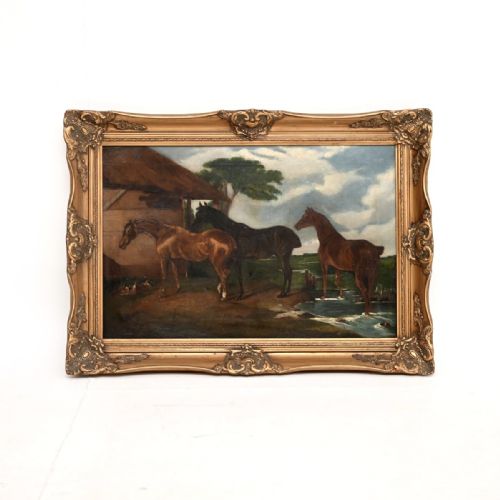
A brown horse oil portrait portrays specific hunters, racehorses, and stable favourites from centuries past. These works record prized animals in stables, paddocks, or open landscapes, capturing the distinct conformation of each subject.
The selections available here span from the Georgian period through the Victorian era and into the early twentieth century. Most pieces depict named thoroughbreds or hunters with individual pedigrees, painted by dedicated equestrian artists.
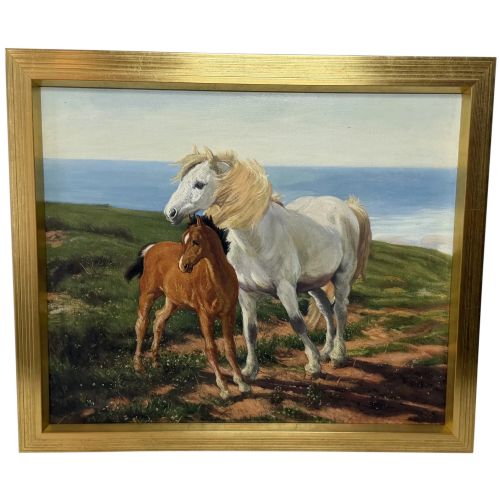
British sporting art forms the core of these listings, alongside works from continental European traditions. Buyers encounter everything from intimate panel paintings to large framed canvases intended for country house libraries and halls.
Materials and construction
Artists painted these works primarily in oil paint upon prepared canvas, though panels of wood or pine also appear. The medium allowed for rich layering to render the sheen of a bay or chestnut coat and the texture of horsehair.
Many surviving pieces retain their original period frames, often constructed from wood and finished with gilt or giltwood. These frames provide structural support and complement the dark tones typically found in equestrian compositions.
The selection includes depictions of notable racehorses such as Spion Kop, Flying Fox, and Diamond Jubilee.
Judging execution and detail
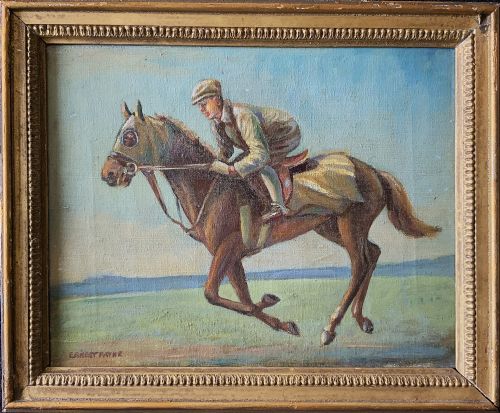
Quality rests upon the artist's anatomical precision and ability to convey the spirit of the animal rather than a mere record. Superior works demonstrate careful handling of light across the musculature and a believable integration of horse, rider, and background landscape.
Provenance and documentation elevate certain pieces significantly, particularly when a painting identifies a celebrated derby winner, specific owner, or renowned stable. The distinction between a competent provincial record and a masterwork by an established sporting painter determines the standing of each piece.
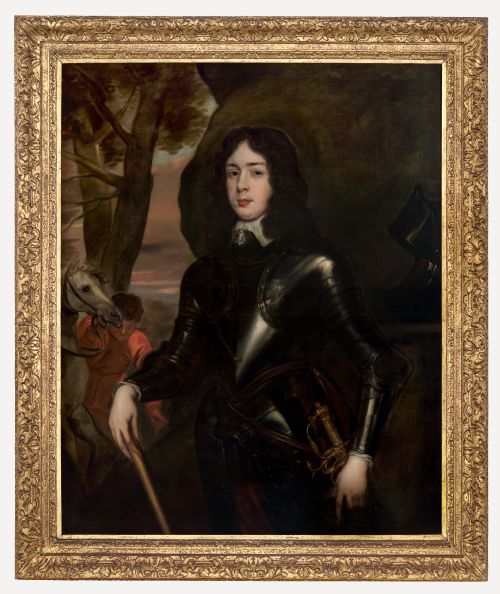
Henry Barraud·Albert Clark·Fred Fitzpatrick·Sir Anthony van Dyck·Ernest Payne·John Alfred Wheeler·Thomas Walker Bretland·John Ferneley Senior·Edward Lloyd of Ellesmere·George E Sharpe·Samuel Spode·Benjamin Cam Norton·Clifton Tomson·Alfred Wheeler·Alfred Grenfell Haigh
The Brown Horse Oil Portrait Glossary
- Bay
- A horse coat colour characterised by a reddish-brown body with a black mane, tail, and lower legs. This shade appears frequently in nineteenth-century equestrian art.
- Giltwood
- Wood carved and covered with a thin layer of gold leaf or metal gilt. This material is standard for traditional nineteenth-century picture frames.
- Equine
- Pertaining to horses. The term describes art focusing specifically on the form and movement of these animals.
- Sporting Art
- A genre of painting dedicated to rural sports, horses, and hounds. Works in this category often record specific race winners and hunting scenes.
Brown Horse Oil Portrait: Frequently Asked Questions
What is a brown horse oil portrait?
These works are traditional paintings executed in oil that focus on individual horses, often hunters or racehorses, rendered with anatomical accuracy.
Created primarily during the eighteenth, nineteenth, and early twentieth centuries, they serve as historical records of notable equines and their owners.
How were these paintings displayed originally?
Owners typically hung these portraits in country houses, estate libraries, and stable offices to commemorate prize-winning animals or favoured riding mounts.
Heavy giltwood frames were standard, designed to complement the formal interior decoration of the period.
How do I date a horse oil painting?
Dating relies on stylistic evidence within the canvas, including the cut of the horse's mane, the rider's attire, and the construction of the wooden stretcher.
Signatures, dates inscribed on the reverse, and artist biographical records provide the most reliable chronological markers.
How should I care for an antique oil painting?
Protect the canvas by keeping it away from direct sunlight, excessive moisture, and rapid temperature fluctuations that can cause the paint layer to crack.
Dust the frame and canvas gently with a soft, dry brush without applying pressure or cleaning solutions to the paint surface.