
19th Century Horse Artwork
These pieces of 19th century horse artwork capture the power and status of the animal through period oil paintings, watercolours, and prints.
19th Century Horse Artwork
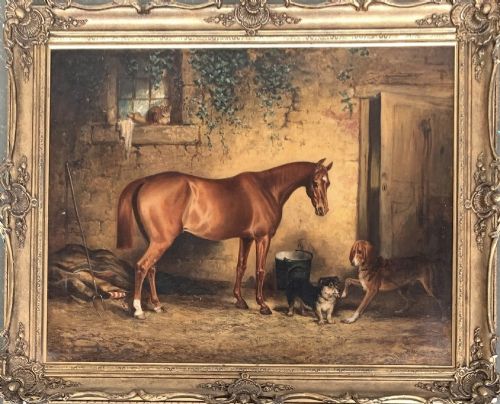
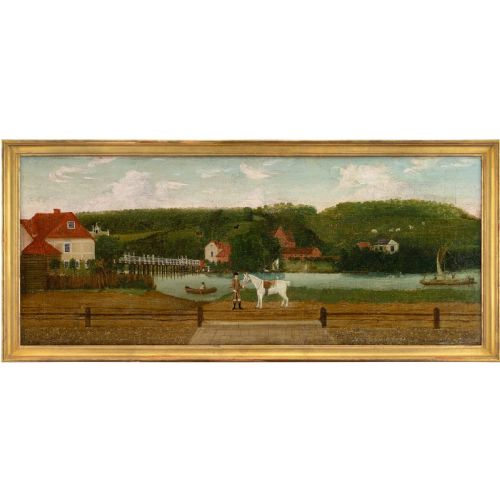
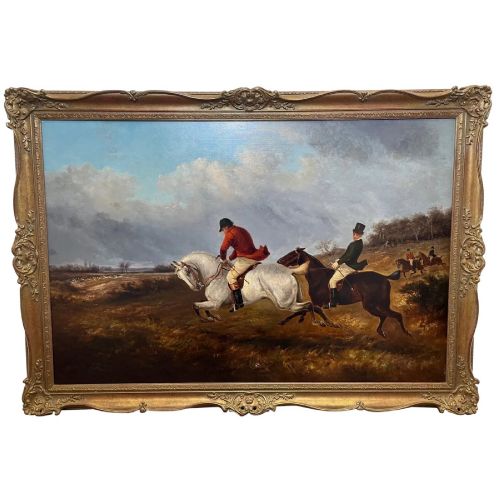
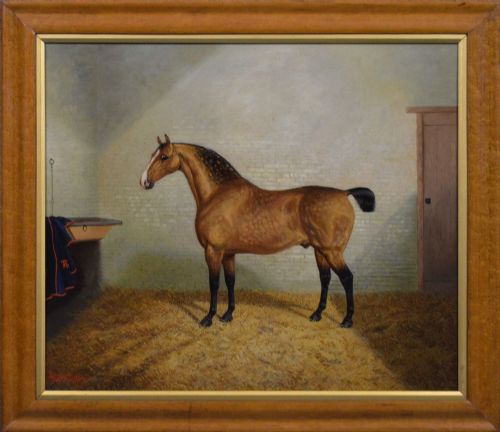
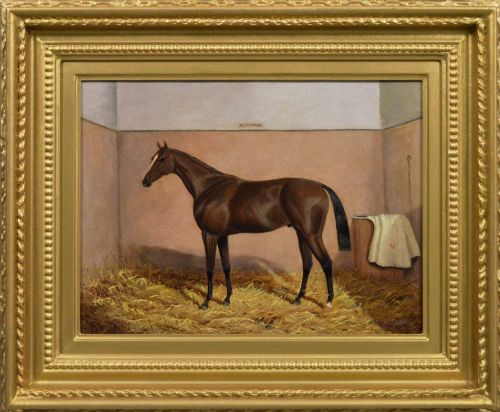
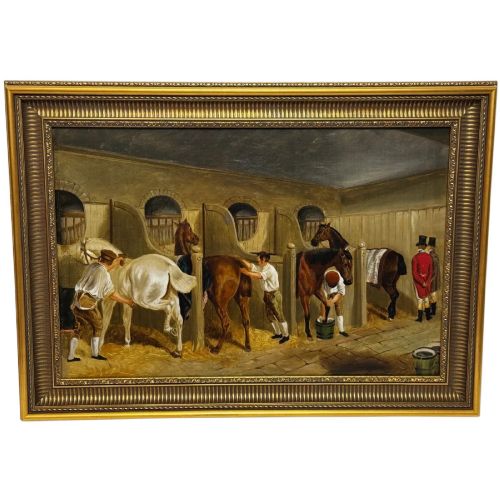
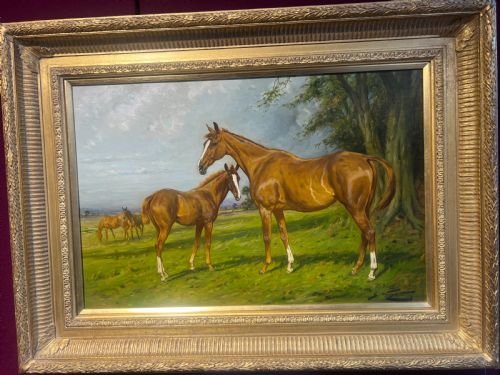
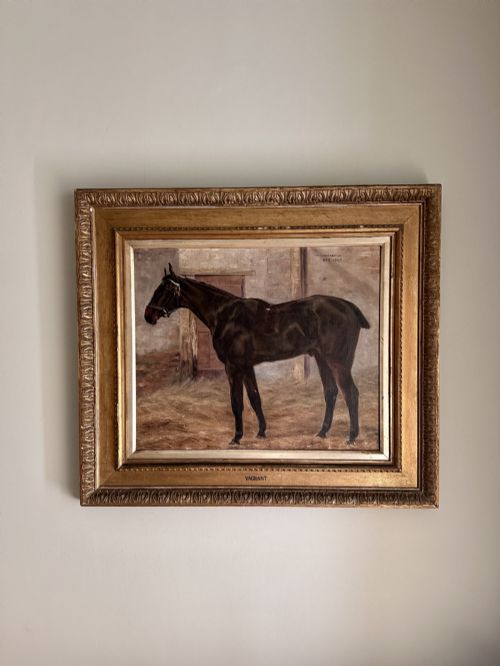
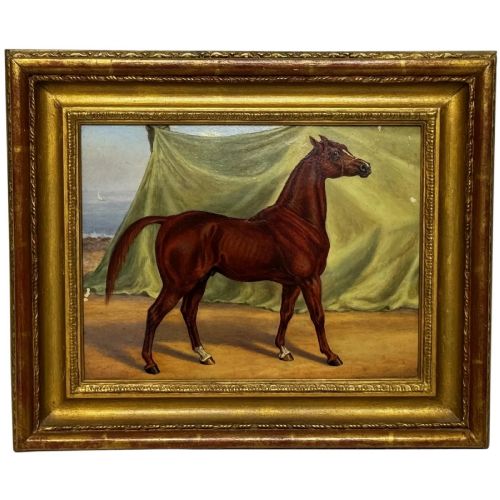
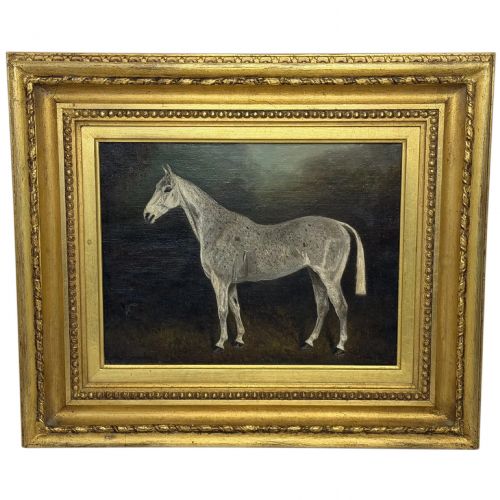
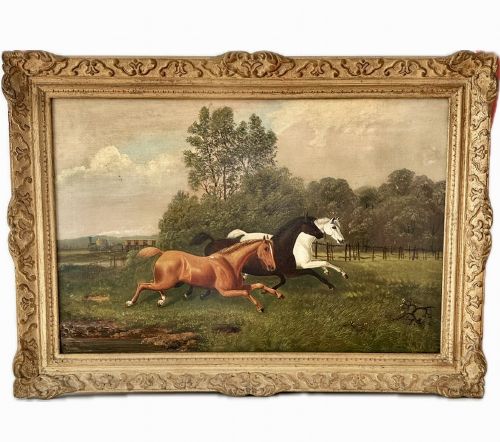
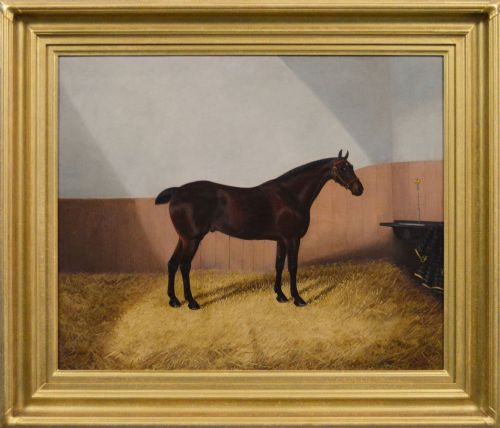
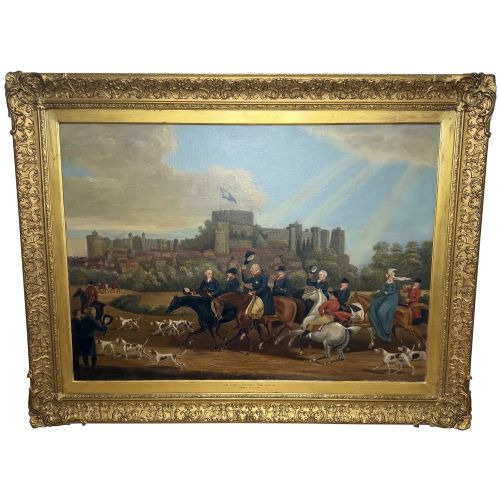
When you search for 19th century horse artwork, you encounter a focused record of equine subjects ranging from thoroughbred racehorses and hunting scenes to working farm animals and intimate stable portraits. The pieces on this page are predominantly oil paintings on canvas and watercolours on paper, often housed in original giltwood frames that complement the period aesthetic. You will frequently meet individual portraits of named animals alongside wider sporting landscapes depicting hounds, riders, and rural estates.
The material spans the Victorian and Georgian eras into the early decades of the twentieth century, reflecting a society deeply connected to the horse for transport, sport, and agriculture. Artists of the time documented these subjects with meticulous attention to anatomy, posture, and setting, whether portraying a champion racehorse on the turf or heavy shires labouring in a farmyard. This visual record offers a direct window into nineteenth-century equestrian culture through the eyes of period painters and draughtsmen.
How They Were Made
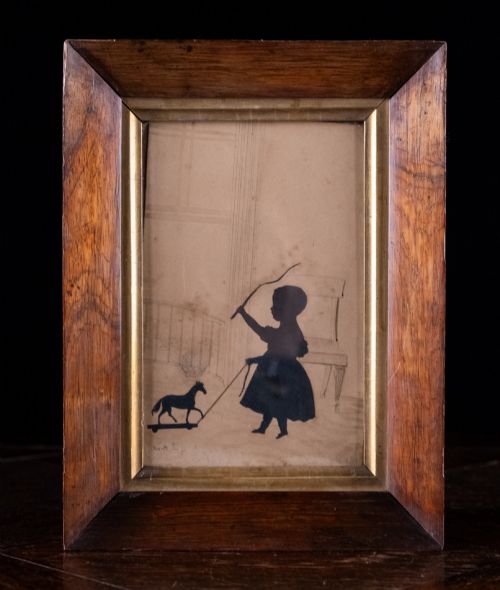
Makers applied oil paint to stretched canvas or watercolour to paper, utilising wooden supports and glass for framed watercolours and reverse silhouette paintings. Giltwood frames frequently complete the presentation, utilising carved and gilded wood to enclose the canvas or paper artwork.
Techniques range from detailed oil glazing on canvas to fluid watercolour washes and graphic print methods like engraving and chromolithography. Artists layered oil pigments to build depth in coats and landscapes, while draughtsmen relied on precise ink and charcoal lines for silhouettes and studies.
19th Century Horse Artwork Retail Price Guide 2026
Typical asking prices for 19th century horse artwork among the pieces listed under this phrase on Sellingantiques today, from the lower quarter to the upper quarter. They describe what is for sale here now, not the wider market.
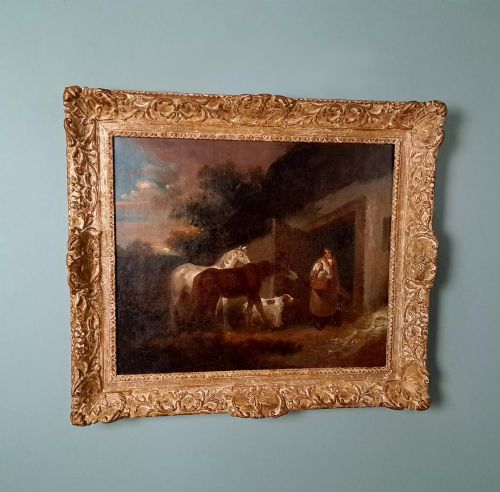
Even fruit baskets in the nineteenth century required vigilance when clever young foals were roaming nearby.
What Varies in Quality
Anatomical accuracy and the rendering of movement separate the finest equine portraits from more formulaic works, as skilled hands capture the tension in a muscle and the alert expression of a hunter. The handling of light across a horse's coat and the depth achieved in the surrounding landscape or stable interior indicate the artist's true proficiency.
The integrity of the original support, the preservation of the pigment, and the quality of the associated giltwood frame influence the overall character of the piece. Works that retain their untouched surface texture and genuine period framing offer a more complete historical presence.
Henry Barraud·William Joseph Shayer Senior·William Powell Frith·Thomas Smythe·Albert Clark·Augustin Edouart·Fred Fitzpatrick·Edward Priestley·Albert Ludovici Jnr·Herman S Melville·John Ferneley Senior·John Frederick Herring Jnr·George E Sharpe·Léon Joseph Voirin·John Frederick Herring·John Linnell·Helena Maguire·Edward Brice Stanley Montefiore·Samuel Spode
The 19th Century Horse Artwork Glossary
- Oil on Canvas
- Pigment mixed with drying oil applied to a woven fabric support stretched over a wooden frame. This was the primary medium for substantial equine portraiture and sporting scenes throughout the period.
- Giltwood
- Wood carved and coated with a thin layer of gold leaf or metal powder. It is commonly found on the ornate frames enclosing Victorian paintings.
- Chromolithography
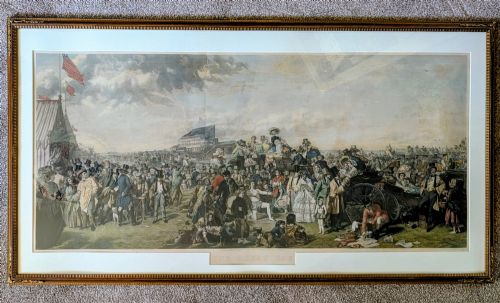
- A colour lithographic printing technique used to produce multi-coloured reproductions of original artworks and periodical illustrations. It allowed mass distribution of popular sporting imagery.
- Watercolour Painting
- Pigments suspended in a water-soluble vehicle applied to paper surfaces. Artists utilised this medium for both rapid field studies and finished cabinet pieces.
- Equine Portrait
- An artwork dedicated specifically to the depiction of a single horse, often recording the name of the animal and its notable racing or breeding lineage.
19th Century Horse Artwork: Frequently Asked Questions
What subjects appear in nineteenth-century equine art?
The subjects encompass named racehorses, hunting studs, working cart horses, and coaching scenes set in rural or estate landscapes.
Artists also recorded genre scenes involving figures with horses at markets, farmyards, and coaching inns.
How do oil paintings differ from watercolours here?
Oil paintings utilise pigments bound in oil on canvas, offering rich textures, deep colour layering, and large display formats.
Watercolours employ water-soluble pigments on paper, yielding lighter, more immediate compositions often kept under glass.
Are these artworks signed by the artists?
Many pieces carry the signature or monogram of the period painter, draughtsman, or printmaker.
Others remain attributed to specific schools or makers based on stylistic evidence and historical records.
How should I display period horse artwork?
These works suit traditional interior settings, particularly when paired with their original giltwood or wooden frames.
They require placement away from direct sunlight to protect sensitive watercolours and oil pigments over time.