31,239  PAGES BROWSED TODAY PAGES TODAY • 74 ANTIQUES UPLOADED TODAYNEW ARRIVALS
GIFTS
74 ITEMS ADDED TODAY
Sort Order
Items Per Page
Browse Categories
Sort order
Relevant Links
Items per page
ID #SA1239917
FOR SALE
£400
Email Phone
Save
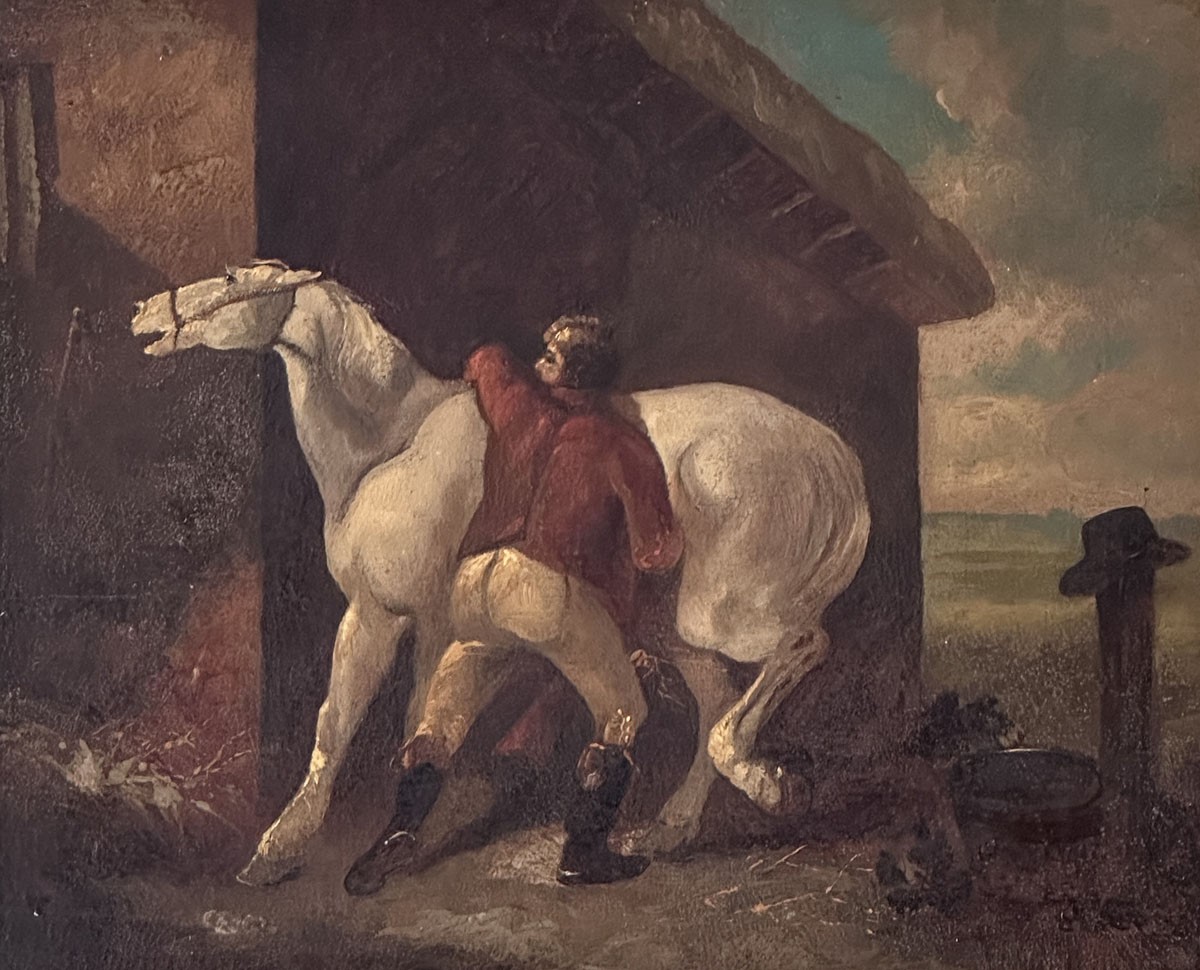
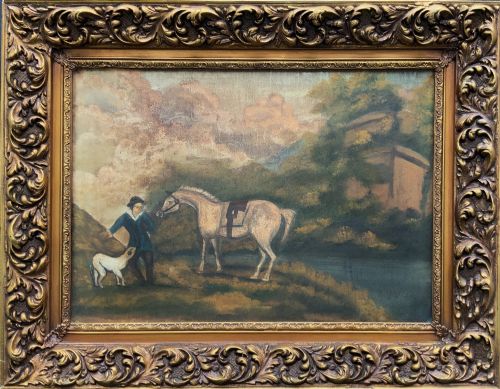
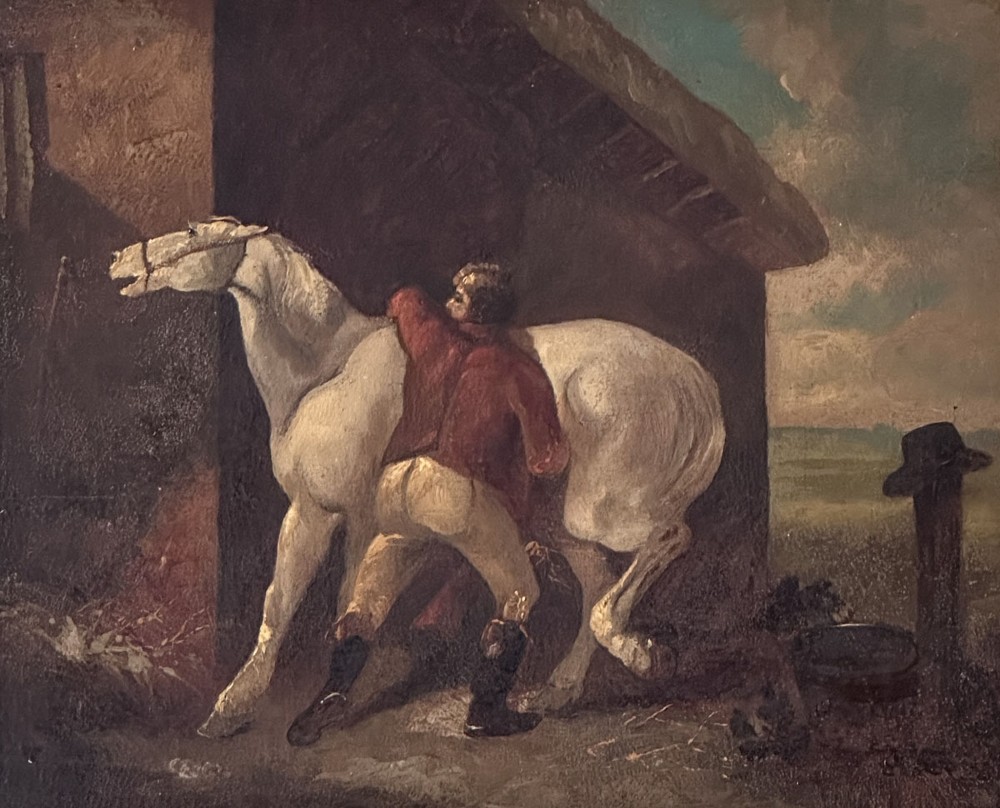
Grooming the Grey Mare - Antique Oil Painting
For sale by Rue des Fontenelles
for sale €468     $508
£400

Rue des Fontenelles

Sellingantiques Verified Since Mar 2015
Browse dealers 147 items
  • About Us
    Specialists in french antiiques, decorative objects and french and european paintings.
Id #SA1239917
PDF SHARE
SAVE

Grooming the Grey Mare - Antique Oil Painting

19th century
Description

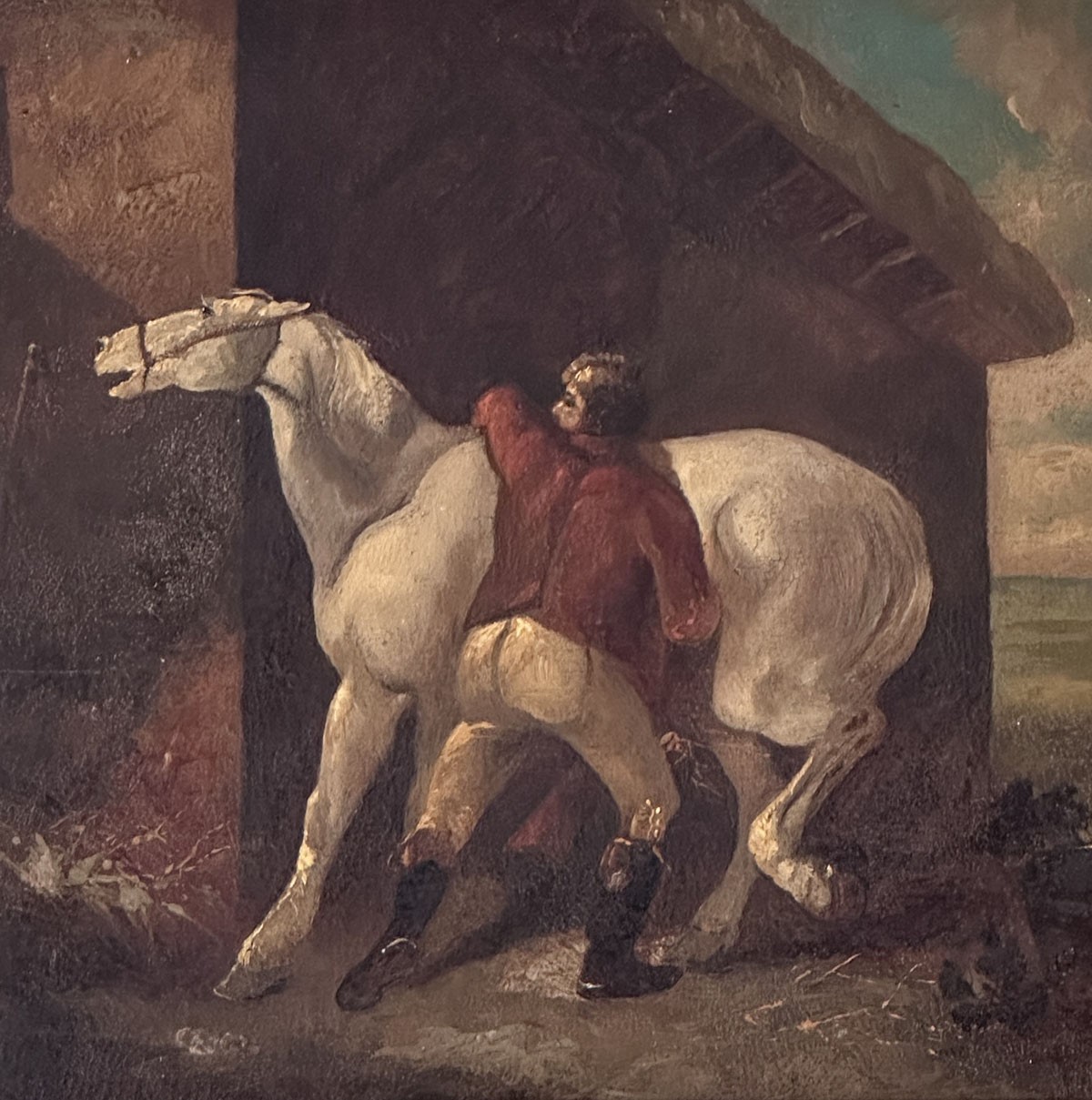
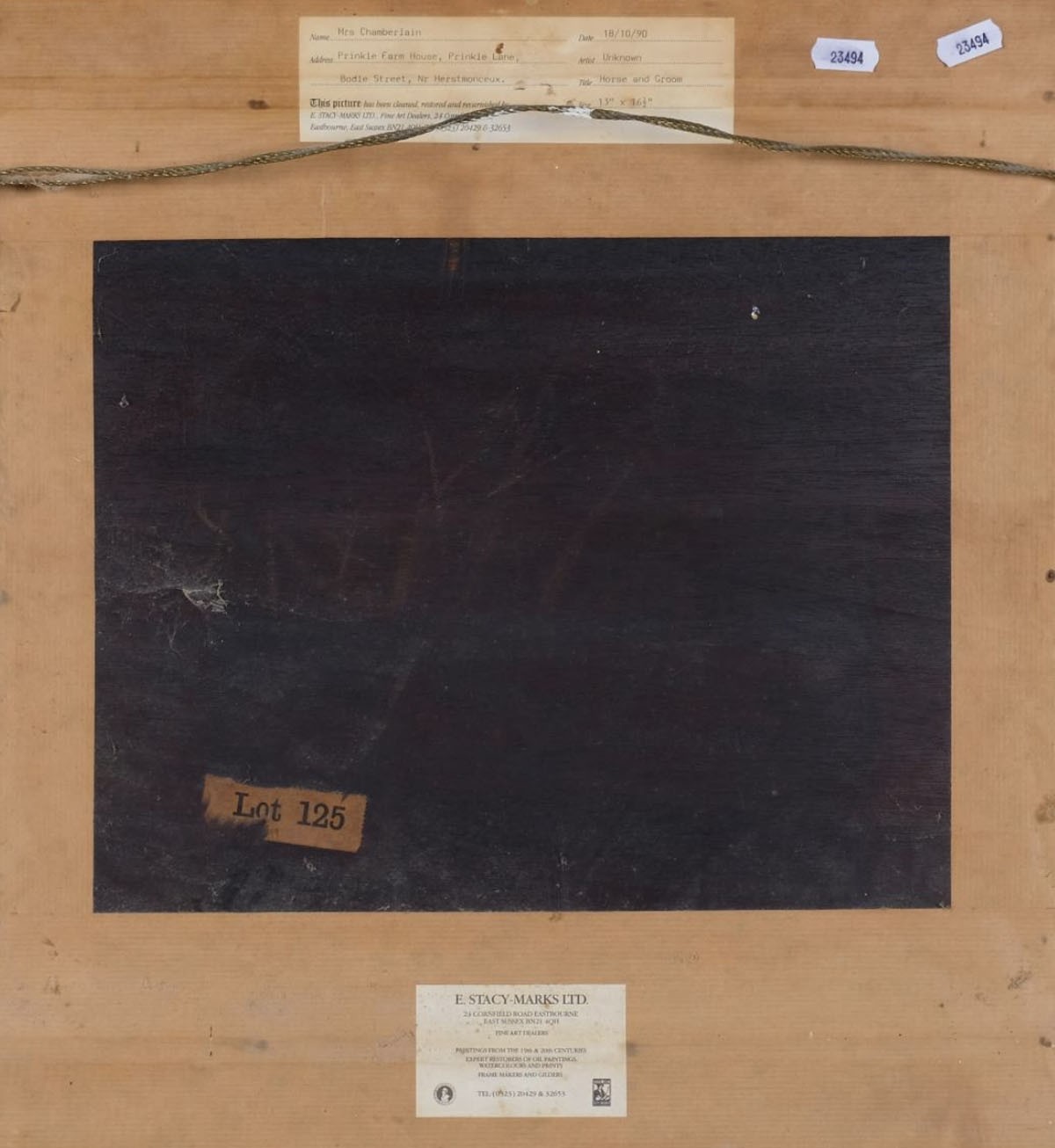
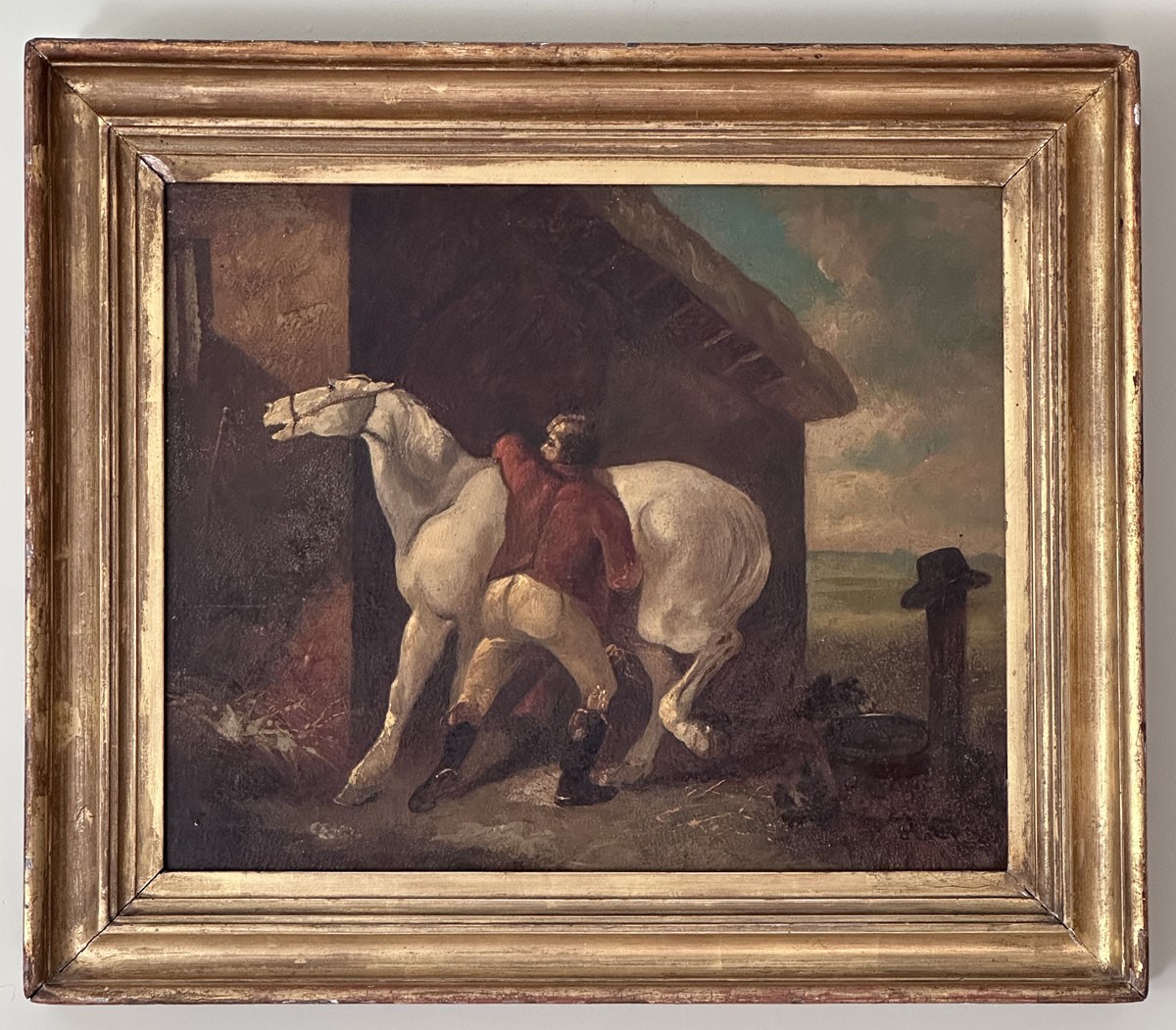
Late 18th/early 19th century oil on wood panel - after George Morland - showing a grey mare being groomed The painting is mounted in a quality gilt frame. Various labels are on the rear including Stacy-Marks Ltd.

George Morland was born in London in 1763 and died in 1804. He was one of the most popular artists of the eighteenth century. He was the son of the artist and art dealer Henry Robert Morland and his wife Jenny Lacam, herself an amateur artist. His father had owned a house at 47 Leicester Fields which he sold to Joshua Reynolds, but by the time of George’s birth had suffered bankruptcy. Precociously talented, ‘Master George Morland’ exhibited sketches at the Royal Academy in 1773, when he was ten. He was apprenticed to his father from 1777 to 1784, studying anatomy and making copies of the work of seventeenth century Dutch masters, some of which his father passed off to clients as originals. Freed from the strict supervision of his father, Morland embarked on the dissolute lifestyle that dogged his career and made him such good copy for early biographers. He never, however, lost his work ethic, and was extremely prolific. In 1785 he travelled to France with a Mrs Hill, who had employed him to paint portraits. Returning to London, the following year Morland married the sister of the engraver William Ward, who was his landlord. Morland collaborated with Ward for most of his career, his compositions reaching a wide public through prints. Between 1786 and 1790 he forged a reputation as a painter of moralizing and domestic genre subjects: his most popular series was Laetitia, or, a harlot’s progress, 1786 (engraved 1789), which has a sentimental, happy ending, in keeping with the sensibility of the late eighteenth century. After 1790 Morland moved to the rural village of Paddington, just north of London, and focussed on rustic genre scenes featuring the drovers who frequented the White Lion Inn opposite his house. His style became less linear, with stronger colours and more painterly handling. In the first half of the 1790s Morland was at the height of his career, exhibiting the monumental Inside of a stable (Tate Britain) to great critical acclaim at the Royal Academy in 1791. He also painted various animals, farmyard and cottage scenes as well as alehouses, but sold most of his output to dealers or print publishers such as John Raphael Smith; over 250 engravings after his work were published in his lifetime. From circa 1795 his work declined in quality, as he sunk into alcoholism and debt, moving constantly to avoid creditors and fleeing temporarily to the Isle of Wight in 1799. George Morland died in a spunging house (a bailiff’s lodging house) in Eyre Street Hill, Clerkenwell, in 1804. The work of George Morland is represented in Tate Britain, London; the Wallace Collection, London; the Fitzwilliam Museum, Cambridge; the Castle Museum, Nottingham; the Metropolitan Museum of Art, New York; Philadelphia Museum of Art; the Art Institute of Chicago and the National Gallery of Art, Washington DC.

Dimensions - 52 x 46 cms

Declaration

Rue des Fontenelles has dated this Antique Equestrian Oil Painting to the 1800s.

Reference Numbers
Sellingantiques Reference
SA1239917
Description
Late 18th/early 19th century oil on wood panel - after George Morland - showing a grey mare being groomed The painting is mounted in a quality gilt frame. Various labels are on the rear including Stacy-Marks Ltd.

George Morland was born in London in 1763 and died in 1804. He was one of the most popular artists of the eighteenth century.

“
He was the son of the artist and art dealer Henry Robert Morland and his wife Jenny Lacam, herself an amateur artist.
Rue des Fontenelles

His father had owned a house at 47 Leicester Fields which he sold to Joshua Reynolds, but by the time of George’s birth had suffered bankruptcy. Precociously talented, ‘Master George Morland’ exhibited sketches at the Royal Academy in 1773, when he was ten. He was apprenticed to his father from 1777 to 1784, studying anatomy and making copies of the work of seventeenth century Dutch masters, some of which his father passed off to clients as originals. Freed from the strict supervision of his father, Morland embarked on the dissolute lifestyle that dogged his career and made him such good copy for early biographers. He never, however, lost his work ethic, and was extremely prolific. In 1785 he travelled to France with a Mrs Hill, who had employed him to paint portraits. Returning to London, the following year Morland married the sister of the engraver William Ward, who was his landlord. Morland collaborated with Ward for most of his career, his compositions reaching a wide public through prints. Between 1786 and 1790 he forged a reputation as a painter of moralizing and domestic genre subjects: his most popular series was Laetitia, or, a harlot’s progress, 1786 (engraved 1789), which has a sentimental, happy ending, in keeping with the sensibility of the late eighteenth century. After 1790 Morland moved to the rural village of Paddington, just north of London, and focussed on rustic genre scenes featuring the drovers who frequented the White Lion Inn opposite his house. His style became less linear, with stronger colours and more painterly handling. In the first half of the 1790s Morland was at the height of his career, exhibiting the monumental Inside of a stable (Tate Britain) to great critical acclaim at the Royal Academy in 1791. He also painted various animals, farmyard and cottage scenes as well as alehouses, but sold most of his output to dealers or print publishers such as John Raphael Smith; over 250 engravings after his work were published in his lifetime. From circa 1795 his work declined in quality, as he sunk into alcoholism and debt, moving constantly to avoid creditors and fleeing temporarily to the Isle of Wight in 1799. George Morland died in a spunging house (a bailiff’s lodging house) in Eyre Street Hill, Clerkenwell, in 1804. The work of George Morland is represented in Tate Britain, London; the Wallace Collection, London; the Fitzwilliam Museum, Cambridge; the Castle Museum, Nottingham; the Metropolitan Museum of Art, New York; Philadelphia Museum of Art; the Art Institute of Chicago and the National Gallery of Art, Washington DC.

Dimensions - 52 x 46 cms

Date of Manufacture

Rue des Fontenelles has dated this Antique Equestrian Oil Painting to the 1800s.

Reference Numbers
Sellingantiques Ref
SA1239917
Rue des Fontenelles
Sellingantiques verified Since Mar 2015

Specialists in french antiiques, decorative objects and french and european paintings.

Dealer Profile

You can view the stock and full dealer information on the Rue des Fontenelles Profile Page
PDF SHARE
SAVE
An antique oil painting depicting a groom in a red jacket attending to a white horse beside a rustic barn exterior.
1 / 5
Archive I An antique oil painting depicting a groom in a red jacket attending to a white horse beside a rustic barn exterior.

Grooming the Grey Mare - Antique Oil Painting
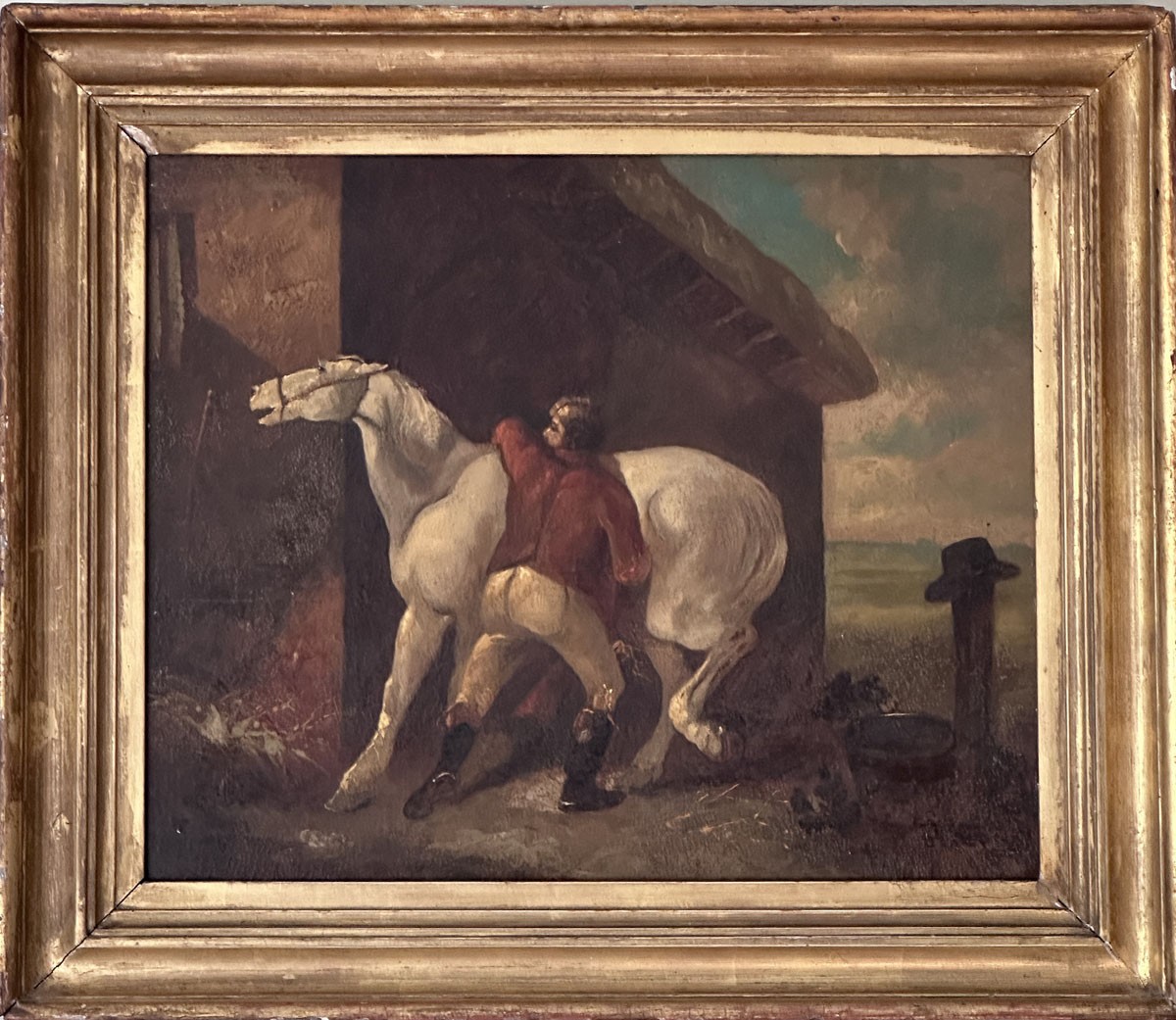
Archive II An antique oil painting depicting a groom in a red jacket attending to a white horse beside a rustic barn exterior. View II
Archive III An antique oil painting depicting a groom in a red jacket attending to a white horse beside a rustic barn exterior. View III
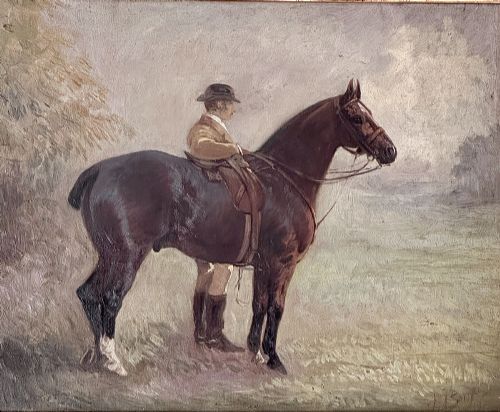
Archive IV An antique oil painting depicting a groom in a red jacket attending to a white horse beside a rustic barn exterior. View IV
Archive V An antique oil painting depicting a groom in a red jacket attending to a white horse beside a rustic barn exterior. View V
FURTHER BROWSING

Visitors also looked at these ⇣

Enlarged Archival View
Location
Chagford
Devon
United Kingdom
Verified Since Mar 2015
Items For Sale 147
Items Sold 1,202
Rue des Fontenelles
Verified Since Mar 2015
View Dealer Info
Location: Chagford, Devon, United Kingdom
Verified
Mar 2015
For Sale
147
Sold
1,202
An antique oil painting depicting a groom in a red jacket attending to a white horse beside a rustic barn exterior.
Grooming the Grey Mare - Antique Oil Painting
Ref: SA1239917
An antique oil painting depicting a groom in a red jacket attending to a white horse beside a rustic barn exterior.
Detail View 1
Detail View 2
Detail View 3
Detail View 4
Archival Detail
Every single antique dealer on our platform is individually approved by our internal team. We verify their professional trade history, ethical standards, and photographic quality to ensure a secure, high-standard buying environment. Upon joining, every dealer agrees to a strict 9-point code of conduct. While issues can occasionally arise, our dealers typically resolve them swiftly and directly with the buyer. In fact, since our founding in 2002, Sellingantiques has only had to step in to help resolve an issue on roughly five occasions—a true testament to the quality of our dealers and their dedication to your happiness.
Our dealers are highly experienced in packing and shipping fragile, high-value antiques. Because you are in direct contact with the dealer, you will be able to easily go through all available shipping and insurance options together to ensure your item arrives safely.
Antiques are the ultimate green purchase. By choosing historical pieces over newly manufactured goods, you completely eliminate the carbon footprint of modern mass production while preserving exceptional, timeless craftsmanship.
Written by Sellingantiques from the dealer’s photographs and listing
  • ObjectOil Paintings
  • Period19th century
  • StyleBritish Sporting
  • MaterialOil, Canvas
  • ColourWarm Brown
  • MotifsEquestrian subject, Impasto brushwork, Figurative groom

This piece is an oil painting on wood panel in the British Sporting style, dating from 1800 and created after George Morland. The artwork employs warm brown and white tones rendered with impasto brushwork, depicting an equestrian and figurative groom subject set against a rustic barn exterior. Visible physical characteristics include visible impasto brushwork, craquelure across the painted surface, and a mounted gilt frame. The painting measures 94 cm by 110 cm. This artwork is suited for placement above a mantel in an English country house interior, bringing a traditional sporting aesthetic to a living room, study, or hallway. The canvas hangs securely on a wall using standard picture-hanging hardware.

British equestrian art from the 19th century typically focuses on sporting scenes, stable portraits, and country life. Artists emphasized anatomical precision, working horses, and countryside settings to record rural traditions.

These works were generally painted using hand-mixed oil pigments applied to stretched linen or cotton canvas, as well as wood or millboard panels, often finished with a natural resin varnish.

Authentic period paintings show age-appropriate craquelure patterns, natural dark oxidisation on the reverse of the canvas or frame, and visible layer construction characteristic of historical pigments.

Equestrian paintings serve as focal points when mounted above a mantelpiece, sideboard, or within a gallery wall, bringing muted natural tones and historical narrative to contemporary schemes.

Display oil paintings away from direct sunlight, dampness, and heat sources. Clean surface dust lightly using a soft, dry brush and avoid chemical detergents or moisture.
items
Add keywords to the filter
Price
£100
£250000
Era
Period
Style
Material
Origin
Stock Location
Recently Added
Online Payments
Categories