
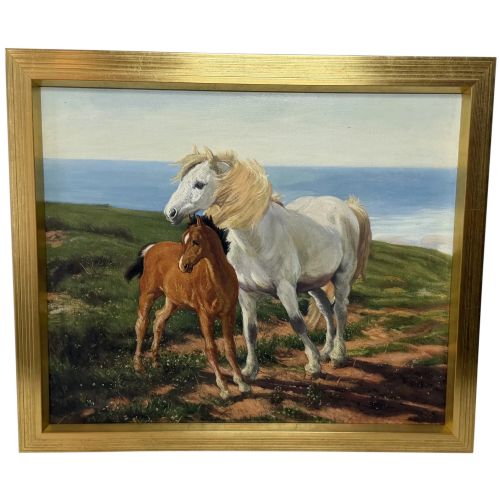
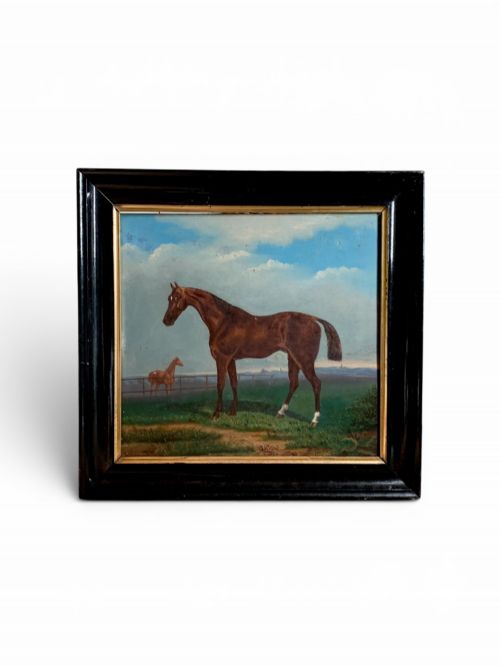

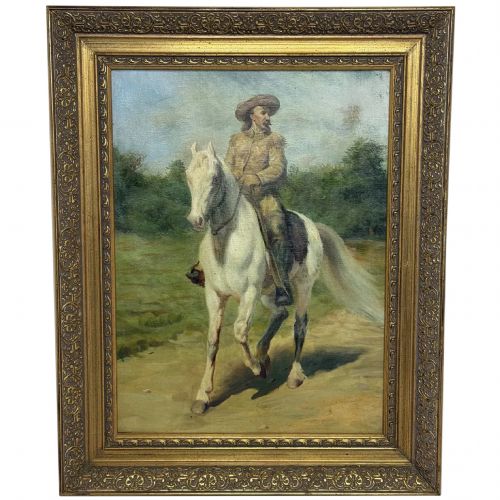
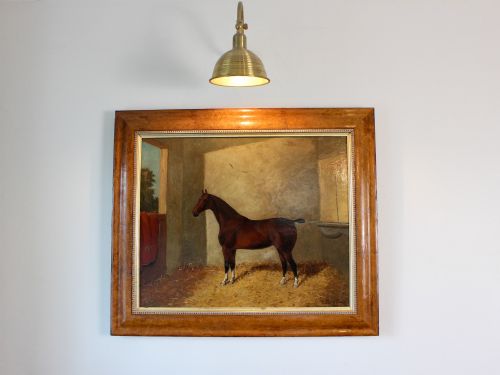


Original Oil Painting Horse
These canvases capture the enduring partnership between humanity and equine strength through original oil painting horse compositions spanning centuries.
Original Oil Painting Horse
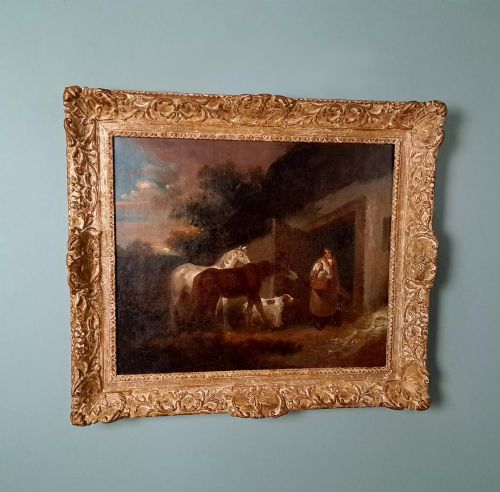
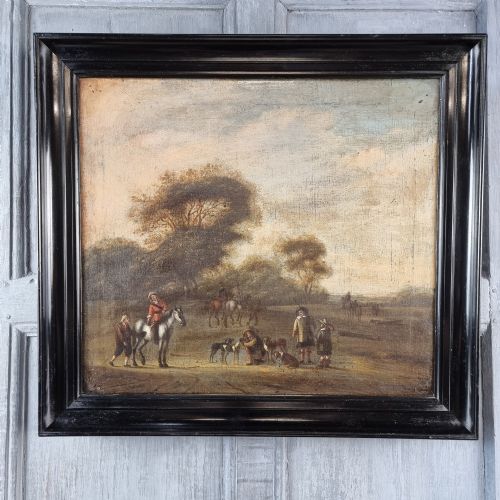
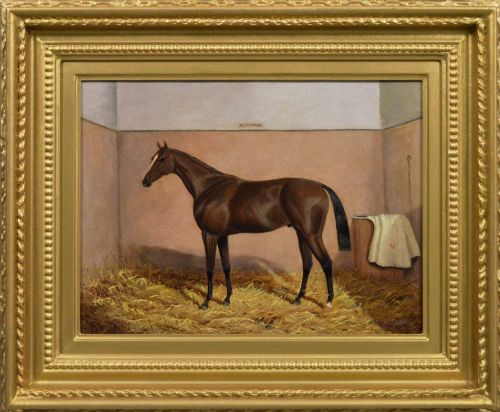
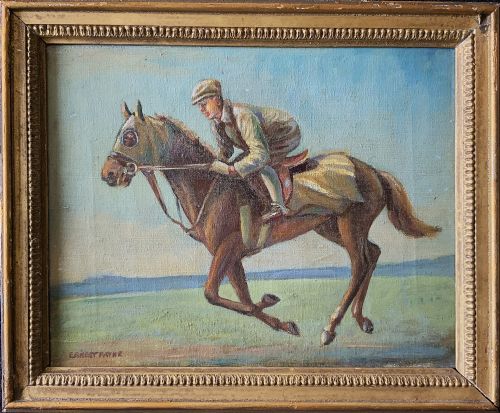
An original oil painting horse artwork captures equine subjects ranging from prized racehorses and working shires to pastoral hunting scenes across canvas and panel. These pieces reflect deep historical ties to agriculture, sport, and portraiture from British and continental schools.
Buyers encounter works stretching from the seventeenth century through the Victorian era into mid-century modern interpretations. Portraiture of specific named animals sits alongside dynamic hunting landscapes and quiet pastoral farmyard views.
How they were made
Artists laid rich pigments using oil on canvas, wood panel, or board, often finished within period gilt or wooden frames. The interplay of oil paint allowed for subtle blending of muscle tone, coat sheen, and atmospheric light.
Techniques varied from meticulous academic portraiture of champions to looser impressionistic brushwork recording rural labour and movement.
Portraits of named racehorses and working shires appear alongside French school pastoral scenes and British sporting art.
What varies in quality
Anatomy and movement distinguish masterwork studies from routine studio output, separating accurate bone structure and muscle tension from stiff representation. The handling of background atmosphere and natural light relative to the central animal elevates the composition.
The pedigree of the subject, whether a celebrated racehorse or a working farm cart horse, combined with the documented hand of a known painter, dictates the standing of the piece within historical sporting art.
William Joseph Shayer Senior·Albert Clark·Ernest Payne·George Morland·John Ferneley Senior·Harry Freckleton·Hazel M. Barnett·Gabriel Dauchot·John Sanderson Wells·John Linnell·Arthur Longley Vernon·Samuel Spode·J.C. Grey·James William Booth·Alfred Grenfell Haigh·Arthur Winter Shaw·Frederick J. Knowles·W.A. Clark·Guillaume Urban Régamey·Frederick William Jackson·Ernest Higgins Rigg·Herbert Royle·Gudrun Sibbons·Donald Wood·Benedict Angell Hyland
The Original Oil Painting Horse Glossary
- Canvas
- A heavy woven fabric stretched across a wooden frame to serve as a foundation for oil painting. It provides a durable and responsive surface for layered brushwork.
- Giltwood
- Wood carved and coated with a thin layer of gold leaf, commonly used for traditional frames. This finish enhances the presentation of period artworks.
- Panel
- A flat piece of wood or board used instead of canvas as a painting support. Panels offer a rigid surface favoured in earlier centuries.
- Pastoral
- A style of artwork depicting rural life, shepherds, and agricultural animals in peaceful countryside settings. These scenes romanticise traditional working landscapes.
- Sporting Art
- A genre dedicated to equestrian subjects, hunting, racing, and hounds. It documents the animals and pastimes central to landed society.
Original Oil Painting Horse: Frequently Asked Questions
How do I date an antique horse painting?
Dating relies upon stylistic cues, costume details of riders, framing materials, and stretcher construction behind the canvas. Archival signatures and exhibition labels also anchor pieces to specific decades.
Comparison with documented works by the same hand or school helps narrow down the active period of production.
Where should I hang an equestrian oil painting?
These works suit traditional studies, living rooms, and hallways where natural light enhances the rich tones of oil paint. Placing them away from direct sunlight and damp walls preserves the canvas and frame.
Pairing a portrait with heritage decor or wood panelling complements the historical character of sporting art.
What is the difference between a portrait and a genre scene?
A portrait focuses on a specific, often named animal such as a champion racehorse or hunter. Genre scenes depict everyday rural life, ploughing teams, or hunting parties in broader landscapes.
Both forms utilise oil paint but serve different documentary purposes within nineteenth and twentieth century art.
How do I care for an oil painting on canvas?
Maintenance involves keeping the canvas free of dust using a soft, dry brush and avoiding extreme changes in room temperature. Environmental stability prevents cracking in both the paint layer and the wooden stretcher.
Professional cleaning should be left to conservators to protect the original varnish and pigment integrity.