
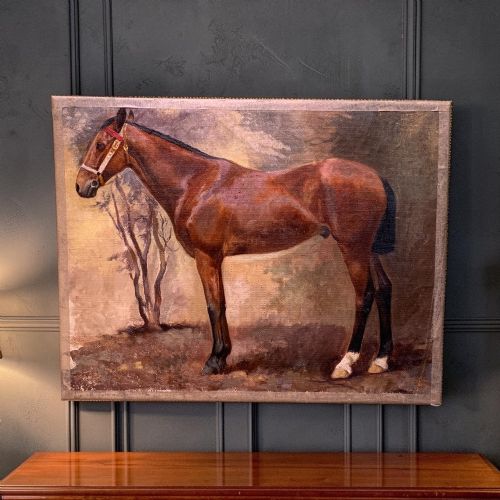
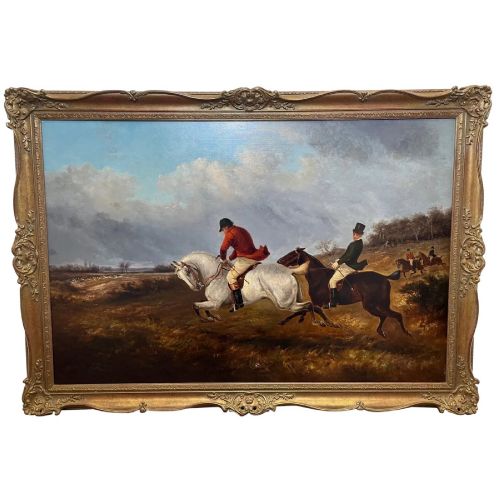
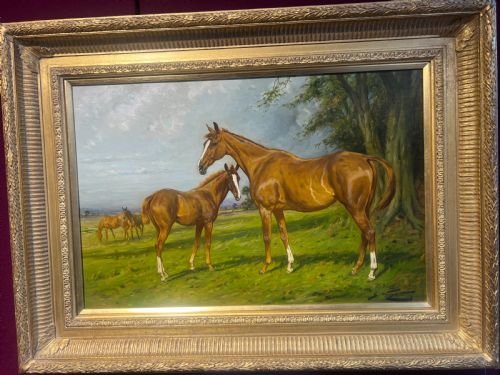
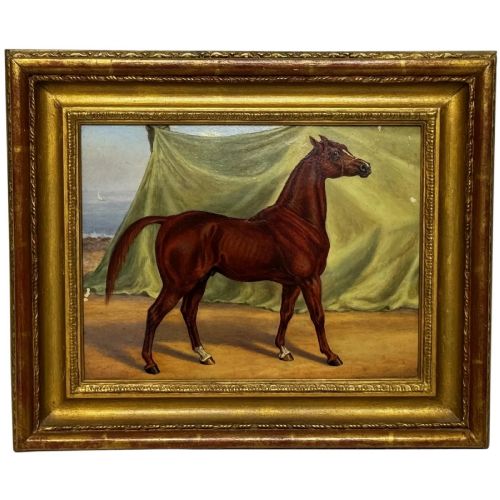
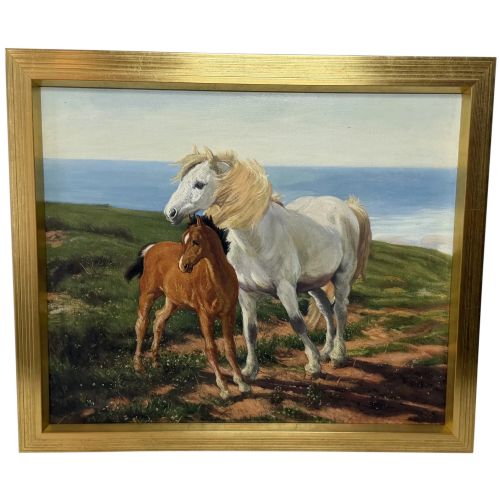


Chestnut Horse Oil Painting
A chestnut horse oil painting captures the power and character of these animals, offering collectors a prized piece of British sporting art.
What They Are
A chestnut horse oil painting portrays equine subjects within distinct settings such as stable interiors, open landscapes, and river scenes. These works capture the animals with individual character, ranging from hunters and racehorses to military mounts and purebreds.
Most pieces encountered on this page belong to the Victorian and Edwardian periods, including works from the nineteenth century. Painters record these subjects with close attention to anatomy, coat colour, and the working relationship between horse and handler.
The category encompasses both signed pieces by listed artists and works attributed to the nineteenth century English School. Buyers find subjects ranging from quiet stable portraits to dynamic depictions of steeplechases and country pursuits.
How They Were Made
Artists apply oil paint directly onto stretched canvas or, in earlier examples, oak panels. The medium allows for rich layering of pigment, building the glossy sheen of a chestnut coat and the deep tones of stable interiors.
Frames frequently complement the artwork using traditional timber construction finished with gesso and gold leaf. These giltwood surrounds enhance the visual depth of the painted canvas through moulded ornamentation and gilded surfaces.
Retail Price Guide 2026
Typical UK retail prices for chestnut horse oil painting, calculated from the Sellingantiques database of over a million retail prices indexed since 2003. This retail price guide relies exclusively on Sellingantiques data; no external sources or auction records are used, so the figures do not describe the wider market.
One recorded painting pairs a chestnut racehorse in a stable with an observant terrier keeping watch.
What Varies In Quality
The success of a painting rests upon the draughtsmanship in the horse's anatomy and the handling of light across the muscular form. Superior examples demonstrate a confident command of proportion, texture, and background atmosphere.
Framing and preservation contribute significantly to the overall integrity of the piece. Original giltwood frames with intact gesso enrich the presentation, while canvases retaining stable tension and minimal restoration hold stronger appeal.
John Sanderson Wells·John Ferneley Senior·Alfred Moginie Bryant·Charles Bilger Spalding·R F Henderson·Karl Georg Arsenius
The Chestnut Horse Oil Painting Glossary
- Canvas
- A woven fabric stretched across a wooden frame to serve as a sturdy support for oil paint. This textile base has remained standard for centuries of portraiture.
- Gesso
- A plaster mixture applied to wooden frames before gilding to create a smooth surface for gold leaf. Painters and framers utilise this foundation to build intricate relief details.
- Giltwood
- Timber carved and coated with a thin layer of gold leaf or metallic powder. This material frames oil paintings with a bright, reflective border.
- Hunter
- A sturdy horse bred and trained for fox hunting or general riding over fences. These animals appear frequently in nineteenth century equestrian portraiture.
- Oak Panel
- A flat wooden board used as a rigid foundation for early paintings. This support predates widespread canvas usage in many smaller portrait formats.
Frequently Asked Questions
How do I identify a Victorian horse painting?
Victorian works often display specific attention to the muscular definition and rich chestnut coats of hunters and racehorses within stable or landscape settings.
Examining the reverse of the canvas or panel can reveal period inscriptions, artist signatures, or framing clues that confirm the nineteenth-century origin.
What is the difference between a hunter and a racehorse in art?
Hunters are typically portrayed with heavier bone structure and calmer expressions, often shown inside stables or resting in country landscapes.
Racehorses and steeplechase subjects appear with leaner frames, dynamic action poses, and jockeys in racing silks.
Where should I hang an equestrian oil painting?
These works suit traditional reception rooms, studies, or hallways where adequate wall space allows the composition to anchor the room.
Direct sunlight should be avoided to protect the oil pigments and the delicate surfaces of the giltwood frames over time.