





Framed Equine Canvas Art
Framed equine canvas art brings nineteenth-century racing portraits, stable scenes and rural landscapes into modern interiors.
Framed Equine Canvas Art
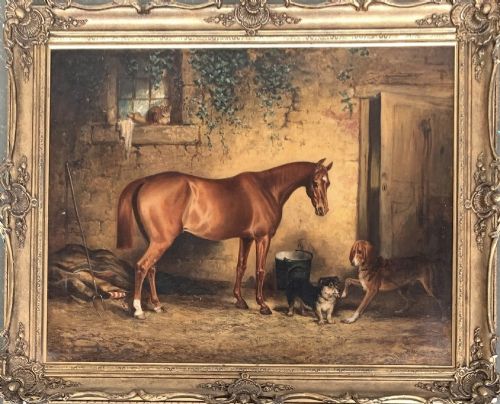
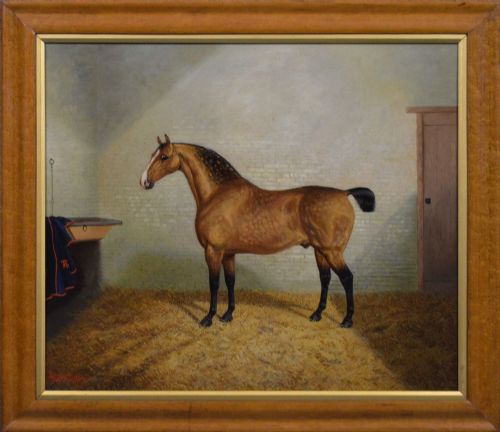
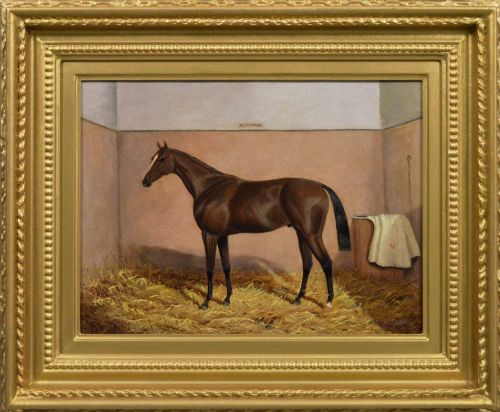
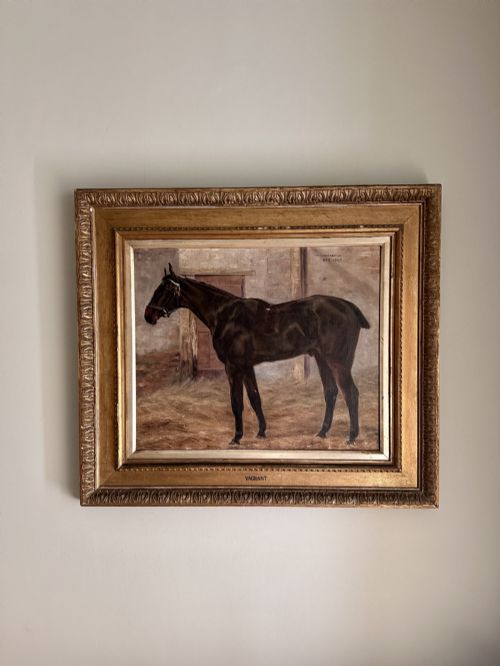
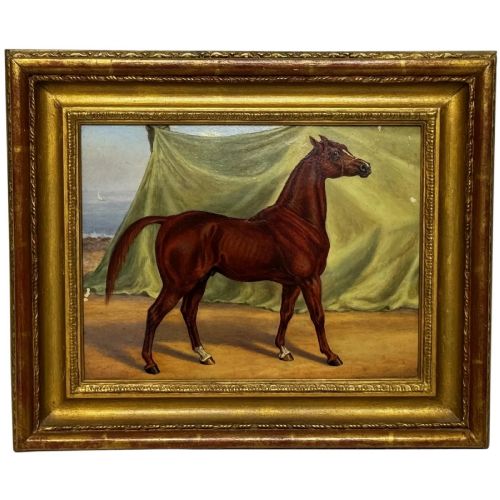
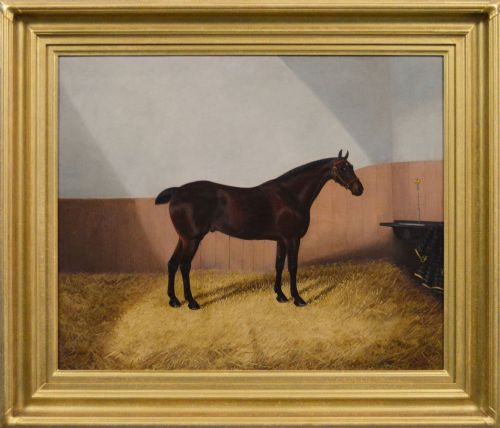
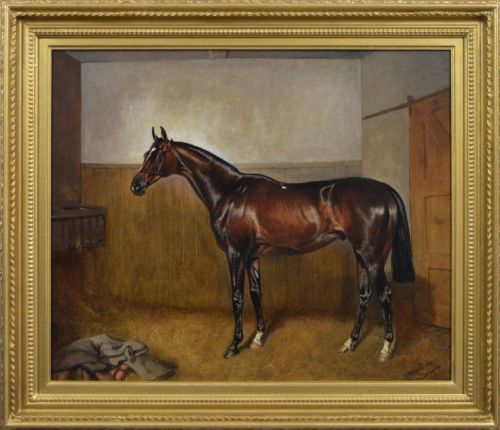
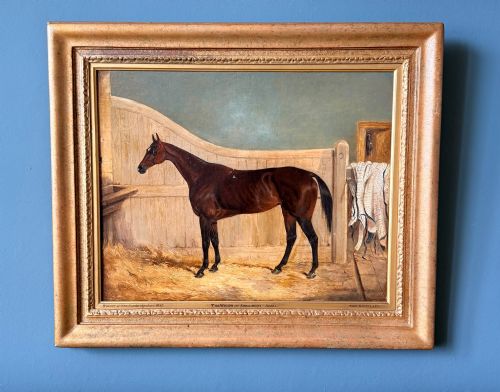
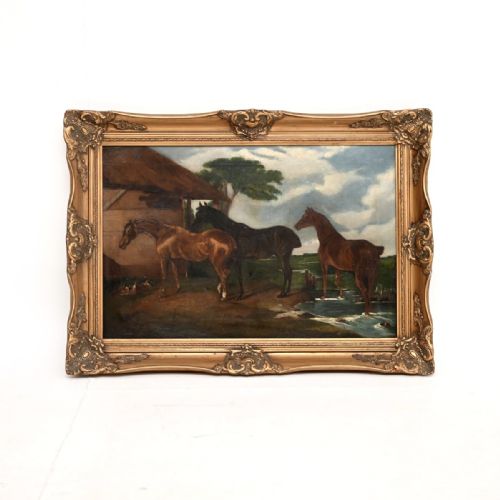
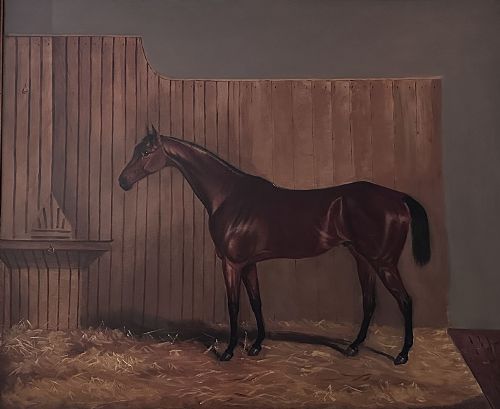
Framed equine canvas art comprises oil paintings depicting horses in stables, rural landscapes and racing environments from the nineteenth century onwards. Buyers frequently encounter Victorian portraits of named hunters, thoroughbreds and working horses housed in original timber mouldings.
The selection ranges from intimate studies of individual animals to expansive hunting scenes involving riders, grooms and agricultural machinery. Victorian sporting art dominates the selection, reflecting a period when equine portraiture commanded significant patronage among estate owners.
Pieces often record specific historical animals, such as race winners and champion stallions, alongside anonymous farm ponies and cart horses. These works bridge fine art and social history, capturing the central role of the horse in nineteenth-century life.
Materials and construction
Artists painted primarily in oil upon woven canvas supports, building up pigment in layers to render the musculature, coats and expressions of the animals. Canvases were stretched over wooden frames and secured within heavier timber outer mouldings, frequently finished in giltwood or gold leaf.
The integration of canvas and frame remains fundamental to these works, with period mouldings often contemporary to the painting itself. Pigments applied to the fabric surface relied on traditional oil binders, preserving rich tones across nineteenth-century and Edwardian examples.
Listings feature oil paintings on canvas spanning the nineteenth and early twentieth centuries, including Victorian sporting art and Edwardian works.
Quality variations in equine art
Quality rests upon the anatomical precision of the horse, the handling of light across the coat and the integration of the animal within its landscape. Master painters captured skeletal structure and muscular tension accurately, whereas lesser hands produced stiff, generic silhouettes.
The surrounding frame contributes substantially to the overall calibre of the piece, with original hand-carved giltwood mouldings elevating the status of the canvas. Condition of the paint layer, minimal retouching and documented provenance linking the animal to a known stable or owner further separate standard decorative works from fine collector pieces.
Henry Barraud·Albert Clark·Fred Fitzpatrick·John Alfred Wheeler·Thomas Walker Bretland·John Ferneley Senior·George E Sharpe·John Frederick Herring·Benjamin Cam Norton·Clifton Tomson·Alfred Moginie Bryant·Abraham Cooper·Charles Bilger Spalding·George Goodwin Kilburne·Ernest Higgins Rigg·Walter Herbert Wheeler·Edward Lloyd·James Barenger·William F Perrin
The Framed Equine Canvas Art Glossary
- Canvas
- A heavy woven fabric stretched across a wooden stretcher to serve as the foundational support for oil paint. It provides a textured surface that interacts with pigment layers.
- Giltwood
- Wood carved and coated with a thin layer of gold leaf or metallic paint. This finish frequently decorates the ornate frames housing nineteenth-century paintings.
- Stable portrait
- An artistic composition focusing on a horse inside its stall or stable environment. These works often highlight the specific markings and physical attributes of named animals.
- Sporting art
- A genre of painting dedicated to equestrian sports, hunting, racing and pastoral life. It flourished during the Victorian era through specialised animal painters.
Framed Equine Canvas Art: Frequently Asked Questions
What subjects appear most often?
Portraits of named racehorses, hunters in stable settings and horses working in rural landscapes form the core of the available subjects. Artists frequently recorded champion thoroughbreds alongside grooms and estate owners.
Agricultural scenes featuring plough horses and harvest wagons also feature prominently among nineteenth-century examples.
How do I identify the period?
Stylistic clues within the painting, costume details of any human figures and the construction of the canvas help determine the age. Victorian works often display specific saddle designs and architectural elements typical of the nineteenth century.
Frame construction and backing materials offer further physical evidence for dating the piece.
How should I hang these paintings?
These works require stable wall environments away from direct sunlight and excessive humidity to protect the oil paint and canvas. Adequate spacing allows the substantial giltwood frames to sit comfortably without visual crowding.
Secure wall fixings suited to the weight of the timber frame are essential for safe display.
Who were the notable painters?
Specialist animal painters such as John Frederick Herring, Henry Barraud and John Ferneley Senior dominated nineteenth-century equine art. Many held formal training at royal academies and received commissions from prominent estate owners.
Their works are distinguished by precise anatomical knowledge and detailed landscape backgrounds.