


Stable Interior Oil Painting
These stable interior oil painting works capture nineteenth-century equestrian life, offering buyers a genuine glimpse into historical animal portraiture and sporting art.
Stable Interior Oil Painting
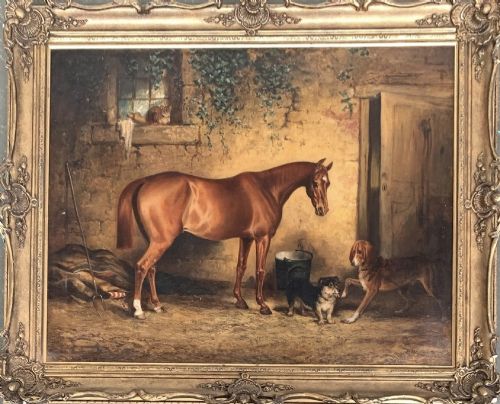
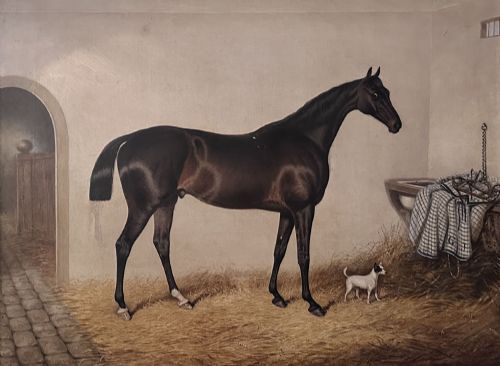
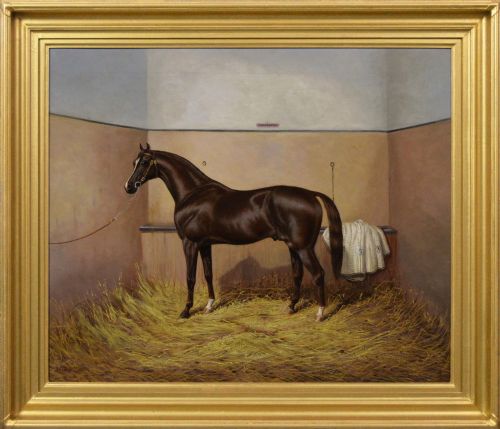
A stable interior oil painting depicts horses, grooms, and animals within nineteenth-century architectural settings, frequently aligning with Victorian equestrian and sporting art. These works document prize hunters, racehorses, and stable scenes from the Victorian period through to nineteen hundred.
The pieces appearing on this page encompass works from eighteen fifty, eighteen eighty, and nineteen hundred, alongside Georgian and nineteenth-century examples. Buyers frequently encounter portraits of named horses such as Balmoral or Worcester, painted by established animal artists.
How they were made
Painters applied oil paint onto canvas or board substrates, utilising wood panels or stretched canvas supported by wooden frames. Many of these historical works retain their original gold leaf and gilt wooden frames.
Artists built up the composition through layered brushwork to render the sheen of horse coats, architectural stable details, and accompanying terriers or grooms with precise anatomical observation.
Stable Interior Oil Painting Retail Price Guide 2026
Typical asking prices for stable interior oil painting among the pieces listed under this phrase on Sellingantiques today, from the lower quarter to the upper quarter. They describe what is for sale here now, not the wider market.
Listings span the nineteenth century, incorporating Victorian sporting art, oak frames, and oil on canvas or board.
What varies in quality
Quality rests upon the artist's ability to render equine anatomy, muscle structure, and light within the enclosed space of the stable. Attributed works or pieces signed by notable sporting artists display superior handling of texture and depth compared to anonymous studio output.
The preservation of the original paint surface and the craftsmanship of the accompanying gilt and gold leaf frame contribute significantly to the standing of an individual piece.
Albert Clark·Benjamin Cam Norton·Edwin Frederic Holt·Charles Bilger Spalding RA·John Nost Sartorius·John Ferneley Jnr·William Shayer Snr
The Stable Interior Oil Painting Glossary
- Oil on Canvas
- Pigment suspended in a drying oil applied to a woven fabric support. This remains the primary medium for nineteenth-century animal portraits.
- Gilt
- A thin layer of gold leaf applied to wood to decorate the picture frame. It adds warmth and historical context to Victorian artworks.
- Sporting Art
- Depictions of rural sports, hunting, and animals such as horses and dogs. This genre flourished during the Victorian period.
- Oil on Board
- Pigment applied to a rigid wooden board rather than fabric. It offers a stable surface favoured by some nineteenth-century painters.
Stable Interior Oil Painting: Frequently Asked Questions
What subjects appear in these paintings?
These works primarily feature horses, hunters, and stallions posed inside nineteenth-century stables. Grooms and terriers frequently accompany the main animal subjects.
Artists focused heavily on recording specific named horses and prize animals for their owners during the Victorian era.
How do I date a stable interior painting?
Dating relies on costume details of any human figures, the style of the gilt frame, and recorded artist working periods. Nineteenth-century and Victorian clothing styles offer reliable chronological markers.
Inscriptions on the reverse of the canvas or board often record the horse's name and the year of execution.
Are these works painted on canvas?
Many examples utilise oil on canvas stretched over a wooden frame, whilst others employ oil on board. Both formats were standard practice for nineteenth-century painters.
Wooden panels and canvas supports both survive from the eighteen fifties through to nineteen hundred.
How should I hang and light these paintings?
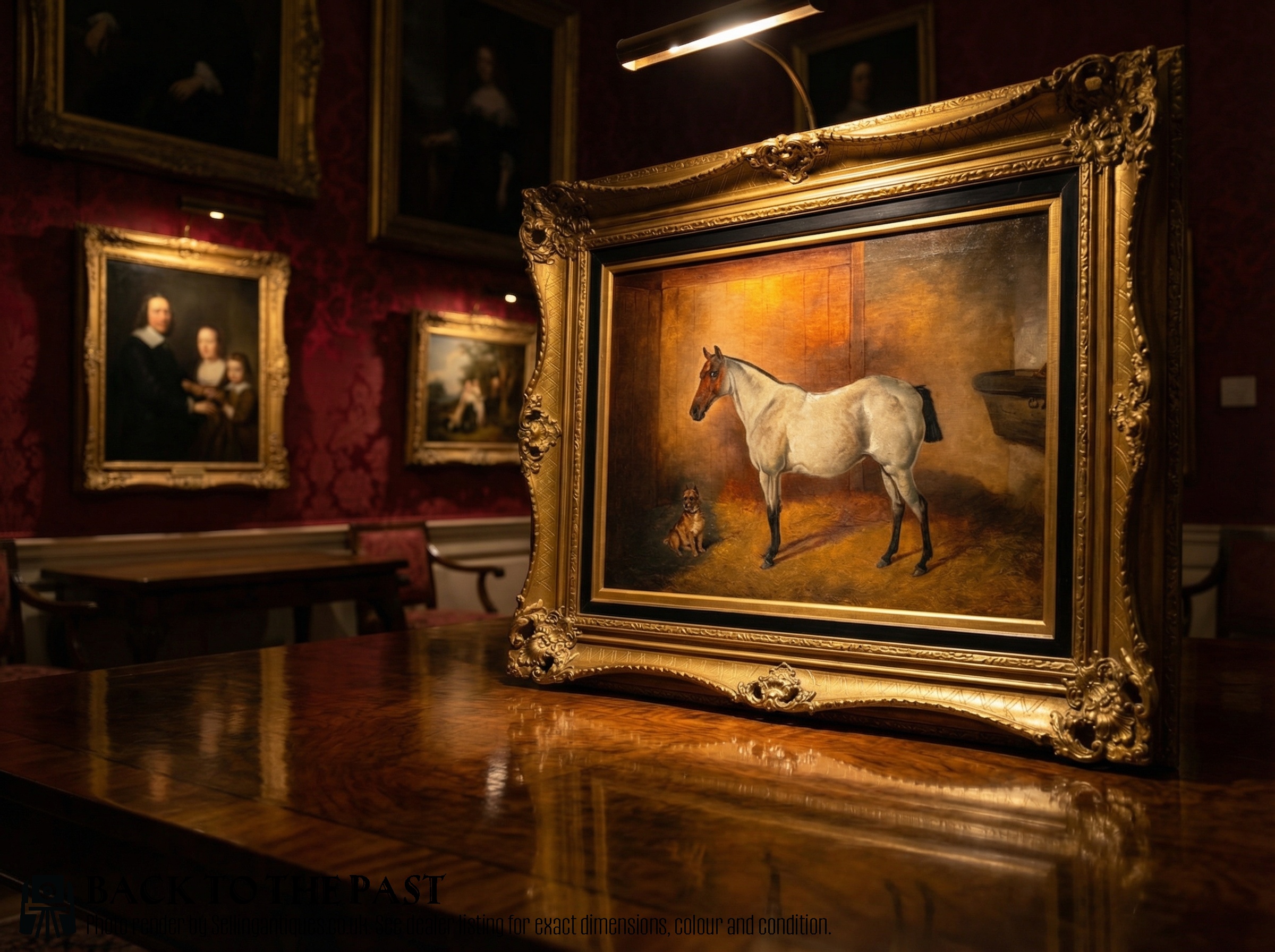
Display these works away from direct sunlight to protect the oil pigments and gold leaf frames from fading. Stable interior scenes benefit from warm, controlled picture lights that highlight dark architectural backgrounds.
Ensure interior humidity remains stable to protect both the wooden stretchers and the historic canvas.