
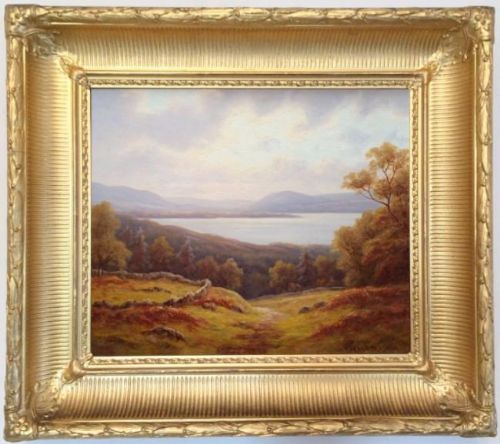


Scottish Loch Oil Painting
A Scottish loch oil painting captures the atmospheric light and dramatic topography of northern waters through nineteenth and early twentieth-century brushwork.
Scottish Loch Oil Painting
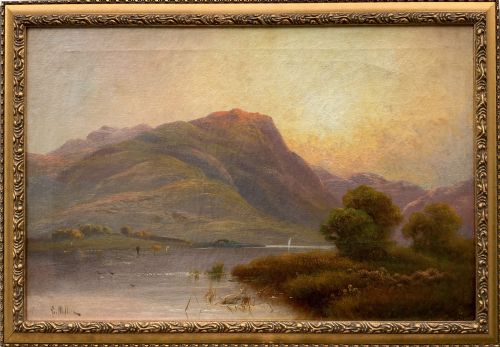
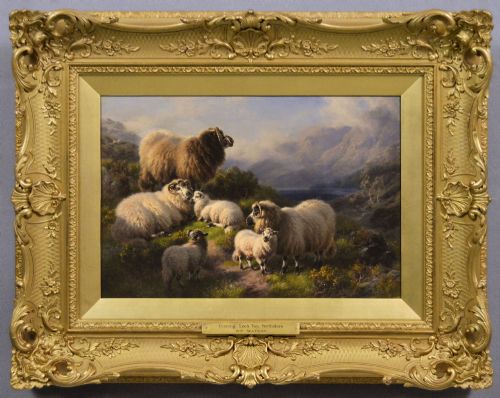
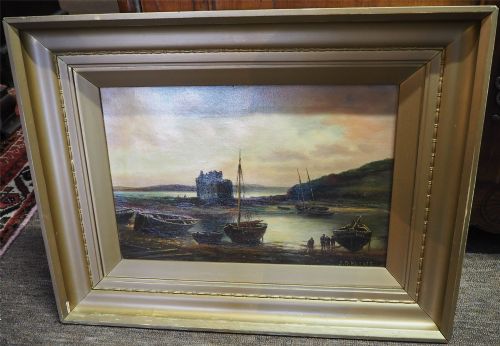
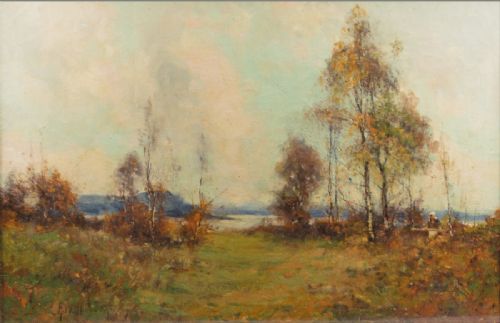
A scottish loch oil painting depicts the water, mountains and glens of the Scottish landscape, often populated by Highland cattle, sheep or traditional bothies. The pieces available here span the Victorian era, the nineteenth century and the early decades of the twentieth century, created within schools of regional realism and romanticism.
Buyers will encounter works attributed to known nineteenth and early twentieth-century artists alongside atmospheric pieces by regional painters. The prevalent forms are framed oils on canvas or board, capturing specific locations such as Loch Lomond, Loch Tay and Loch Lubnaig at sunrise, sunset or under moonlight.
How they were made
Artists applied oil paint to stretched canvas or wooden panels, utilising the pigment's slow drying time to blend atmospheric mists and deep water reflections. Many works employ layered brushwork to build the texture of craggy mountain terrain and the smooth surface of inland lochs.
Finished canvases were housed in heavy timber frames, frequently enhanced with applied gesso ornaments and deep gilt or gold leaf finishes to complement the romantic subject matter.
The inventory documents atmospheric studies ranging from moonlit waters and sunrise mountain views to tranquil evening scenes.
What varies in quality
Quality rests in the handling of light and the fidelity of the atmosphere, where a skilled hand renders the characteristic grey-blues and amber tones of northern skies rather than relying on formulaic palettes. The precision in depicting anatomical details of Highland cattle or the geological structure of mountain ranges distinguishes ambitious canvases from standard studio output.
The integrity of the original frame and the stability of the paint layer dictate the desirability of a piece. Works retaining their period gilt frames and untouched canvas surfaces hold greater visual harmony than those altered by later restorations.
William Watson Jnr·Alexander Wellwood Rattray·Everett Watson Mellor·Henry Robinson Hall·Henry Hillier Parker·Frank Hider·James Bell Anderson·William Miller Frazer·Daniel Sherrin·Alfred de Breanski Snr·George Cole·Gustave De Breanski·George Melvin Rennie·E. M. Seaton·Alexander Nasmyth·F. E. Jamieson·Robert Finlay McIntyre·J Gibb·David Cox·John Patrick Downie·R. G. Fraser·F W Bartholomew·C Lyons Aiken·Clarence Henry Roe·William Bell
The Scottish Loch Oil Painting Glossary
- Gesso
- A plaster-like mixture applied to wooden frames as a base for moulding ornamental details before gilding. It provides a smooth surface for gold leaf application.
- Canvas
- A heavy woven fabric stretched across a wooden stretcher frame to serve as the primary support for oil paintings. It responds to atmospheric changes by tightening or loosening.
- Gilt
- A thin layer of gold or gold-coloured material applied to the surface of picture frames. This finish catches candlelight and natural illumination in Victorian interiors.
- Bothy
- A small stone shelter built in remote highland locations for travellers and agricultural workers. These structures frequently appear as picturesque focal points in regional landscapes.
- Highland School
- A nineteenth-century artistic movement focused on recording the dramatic topography and animal life of Scotland. Practitioners concentrated on naturalistic lighting and weather effects.
Scottish Loch Oil Painting: Frequently Asked Questions
How do I identify the loch in an unsigned painting?
Examine the composition for distinctive geographical markers such as ruined castles, specific mountain profiles or nearby islands. Contemporary inscriptions on the reverse canvas or stretcher bars often record the exact waterway.
Artists frequently painted well-known bodies of water like Loch Lomond or Loch Katrine from established vantage points popularised by Victorian tourism and literature.
What is the significance of cattle in these paintings?
Highland cattle were introduced to rural landscape scenes to provide a sense of scale and domesticity against wild mountain backdrops. Their shaggy coats and prominent horns added rich russet colour notes to otherwise muted moorland palettes.
Victorian buyers favoured pastoral additions that reminded them of agricultural wealth and traditional Scottish rural life.
How should I care for an antique oil painting?
Keep the artwork away from direct sunlight, heating vents and damp environments to prevent canvas degradation and pigment cracking. Maintain a stable room temperature to protect both the stretched linen and the wooden frame.
Dust the surface gently with a dry, soft brush and avoid using water or chemical cleaning solutions on the paint layer.
Can I determine the date from the frame?
Period frames often share the stylistic characteristics of the era in which the canvas was painted, such as heavy Victorian gesso mouldings or deep gilt cavetto profiles. Original housing usually matches the wear patterns and age of the artwork it encloses.
Framemakers occasionally stamped their details onto the reverse wood, offering clues to the geographic origin and timeframe of the piece.