
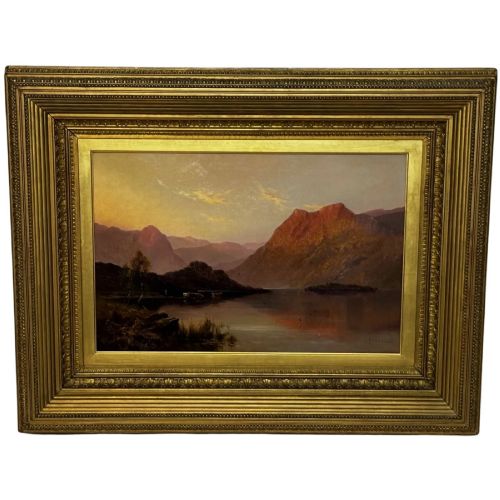


Alfred De Breanski Painting
These alfred de breanski painting works capture nineteenth-century British scenery through naturalistic brushwork.
What these paintings are
An alfred de breanski painting brings nineteenth-century British realism into domestic spaces through framed oil paintings. These works depict rural landscapes, rivers, and Scottish Highland scenes.
The selections span Victorian periods through to nineteen-twenty, showcasing views of lakes, rivers, and mountain terrain. Common subjects include Lake Windermere, Loch Lubnaig, and Welsh river landscapes near Betws-y-coed.
Works appear from both Alfred de Breanski Senior and Alfred Fontville de Breanski Junior, alongside circle pieces. Canvases and boards form the primary formats for these pastoral views.
How they were made
These works utilise oil paint applied to canvas or wood boards. Pigments capture atmospheric lighting effects across Highland and river topography.
Frames incorporate gilded wood, gesso, and gold leaf. Mouldings provide traditional presentation for the nineteenth-century fine art panels.
Retail Price Guide 2026
Typical UK retail prices for alfred de breanski painting, calculated from the Sellingantiques database of over a million retail prices indexed since 2003. This retail price guide relies exclusively on Sellingantiques data; no external sources or auction records are used, so the figures do not describe the wider market.
Some cows occasionally wander into these Highland vistas.
What varies in quality
Compositional scale and subject complexity separate standard landscapes from major topographical statements. Larger canvases command attention through expansive mountain and water vistas.
Frame craftsmanship alters the visual weight of each piece. Elaborate gilt wood and gesso mouldings contrast with simpler period surrounds.
Alfred de Breanski Sr·Alfred Fontville de Breanski Jnr
The Alfred De Breanski Painting Glossary
- Oil on Canvas
- A traditional painting medium where pigments suspended in oil are applied to woven fabric stretched across a wooden frame. This surface allows for blended tonal gradations in landscape skies.
- Gilt Wood
- Timber surfaces covered with a thin layer of gold leaf or metallic powder. It provides a reflective border that isolates the painting from its surroundings.
- Gesso
- A plaster-like mixture applied to wood frames as a base for gilding. It enables intricate moulded relief details along the frame edges.
- Victorian Fine Art
- Creative works produced during the reign of Queen Victoria that emphasise naturalism and detailed observation. This category captures atmospheric changes in British topography.
Frequently Asked Questions
What subjects do these paintings show?
These works focus on British topography, featuring Scottish Highland landscapes, lochs, and Welsh river scenes. Views capture specific locations such as Lake Windermere, Loch Lubnaig, and Dartmoor.
Artists record evening light, sunset conditions, and cattle within pastoral settings. Water and mountainous terrain dominate the compositions.
How do I date a painting?
Dates appear through period attributions such as Victorian, alongside specific years like eighteen-eighty, eighteen-ninety, and nineteen-twenty. Signatures and style markers help establish the timeline.
Senior and Junior family members worked across overlapping decades during the nineteenth and early twentieth centuries. Frame materials also reflect Victorian manufacturing methods.
Are these works on canvas or board?
Surfaces include both stretched canvas and wooden boards. Oil paint is the primary medium used across all formats.
Supports vary from standard canvas stretched over wood frames to rigid boards suited for smaller outdoor studies.
How should I frame these works?
Original presentations frequently employ gilded wood and gesso frames finished with gold leaf. These period surrounds complement the naturalistic palette of the paintings.
Matching the frame style to the Victorian or early twentieth-century origin preserves the historical context of the fine art.