


Framed Mountain Wall Art
Framed mountain wall art brings rugged peaks and tranquil valleys indoors, offering the timeless appeal of natural vistas captured on canvas or paper.
Framed Mountain Wall Art
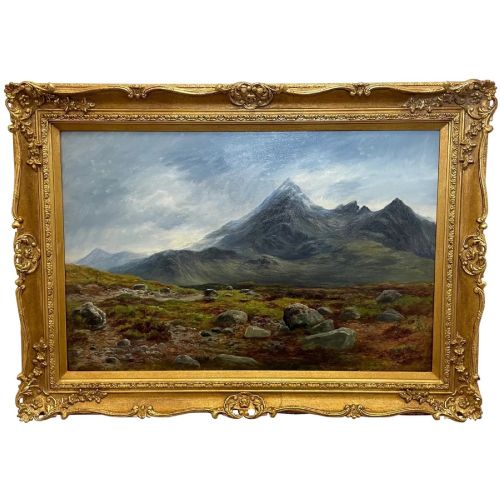
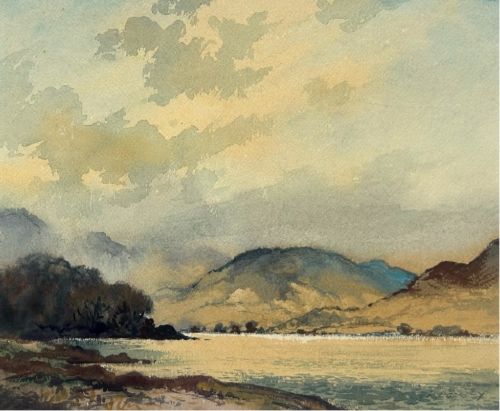
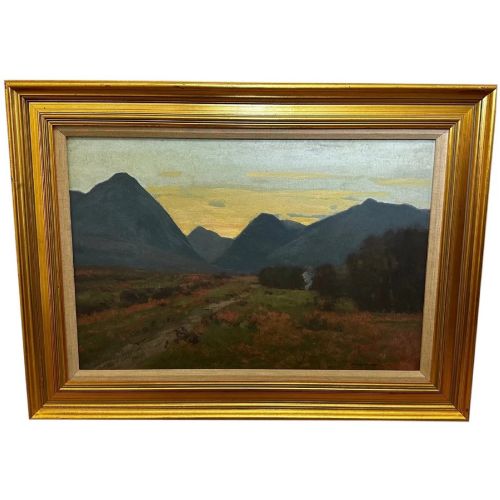
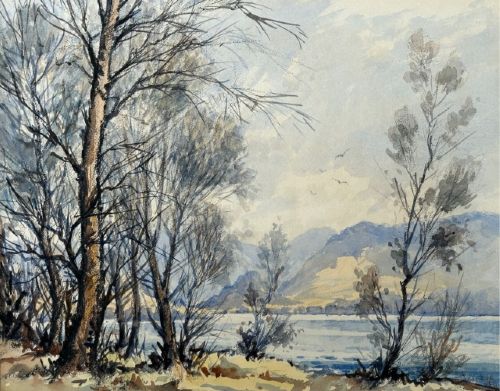
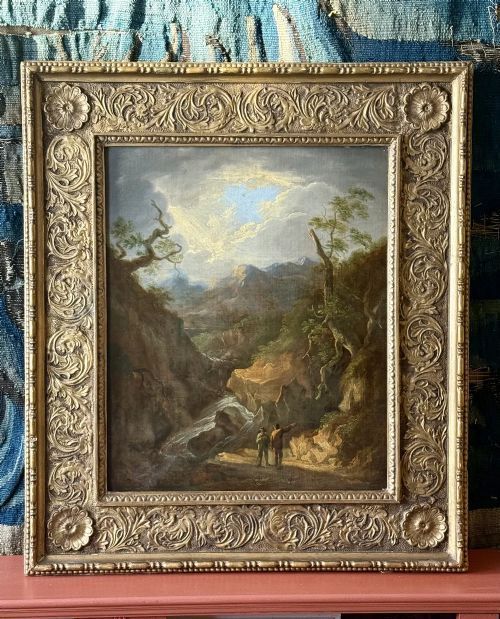
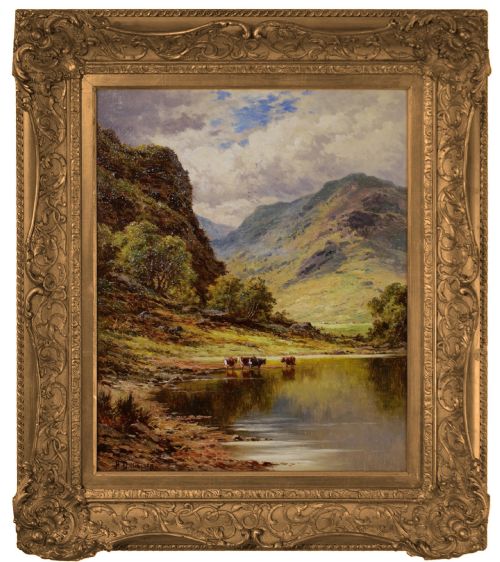
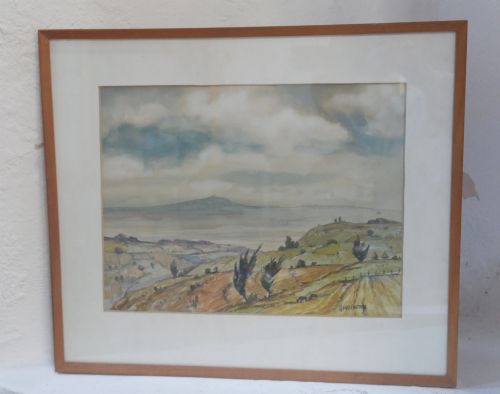
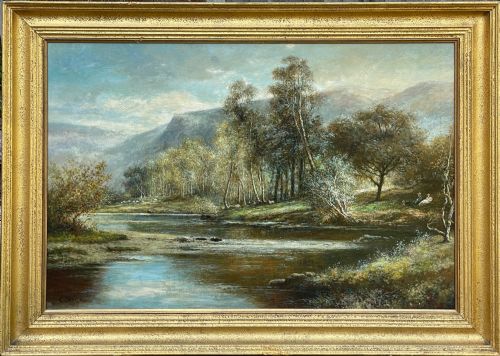
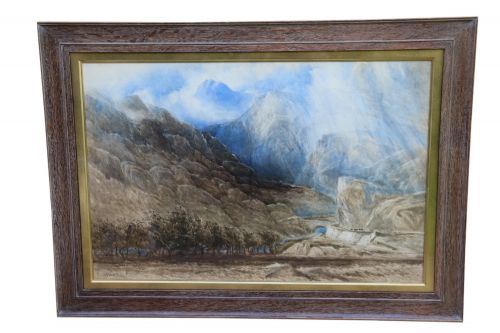
When you search for framed mountain wall art, you are looking at historical depictions of peaks, valleys, and lakes rendered in oil, watercolour, and silk. These pieces span several centuries, capturing topographical views from Scotland, Wales, the Lake District, and the Alps.
The selections on this page are most frequently nineteenth-century and mid-twentieth-century works. You will encounter Victorian oils in original gilt frames alongside mid-century watercolours and pen-and-ink drawings.
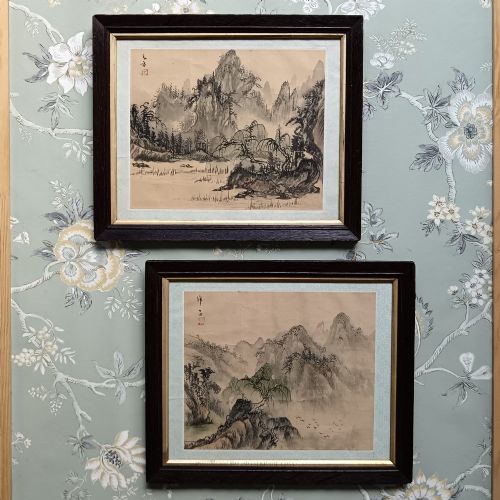
Subjects range from Scottish Highland lochs and Welsh mountain passes to Alpine peaks and Chinese silk paintings. Each piece presents a distinct regional interpretation of mountainous terrain.
How they were made
Artists painted primarily in oil on canvas, wood panels, or board, utilising rich pigments to build depth in sky and rock. Others worked in watercolour and ink on paper, capturing lighter atmospheric effects across lakes and hillsides.
Many works retain their original housing, which commonly includes carved wood and gesso frames finished with gilt or paint. These surrounds are integral to the presentation, showing the craftsmanship of period framers.
Framed Mountain Wall Art Retail Price Guide 2026
Typical asking prices for framed mountain wall art among the pieces listed under this phrase on Sellingantiques today, from the lower quarter to the upper quarter. They describe what is for sale here now, not the wider market.
Listings feature works from the seventeenth century through to the mid-twentieth century, utilising oil, watercolour, pen-and-ink, and silk.
What varies in quality
Quality rests on the handling of light and atmosphere by the artist, distinguishing skilled topographical observation from generic composition. Stronger works convey the genuine weight of crag and water through confident brushwork or precise pen-and-ink lines.
The condition and authenticity of the original frame affect the overall integrity of the piece. Surviving period giltwood and gesso frames that match the age of the painting elevate the visual impact of the work.
William Beattie Brown·Robert Leslie Howey·George Houston·Benjamin Barker of Bath·Henry H Parker·William Henry Mander·Sidney Richard Percy·Alfred de Breanski
The Framed Mountain Wall Art Glossary
- Giltwood
- Wood carved and covered with a thin layer of gold leaf or gold paint. This finish provides a reflective border that was popular for nineteenth-century landscape paintings.
- Gesso
- A plaster-like mixture applied to wood frames to create a smooth surface for gilding or moulding. It allows for intricate decorative relief work around the edge of the artwork.
- Watercolour
- A paint consisting of water-soluble pigments used on paper. It produces translucent washes that suit delicate depictions of mountain mists and lakes.
- Oil on canvas
- Pigment suspended in drying oil applied to a woven fabric support. This medium allows for deep colour saturation and textured impasto on large landscapes.
- Shan Shui
- A traditional Chinese style of painting featuring natural scenery such as mountains and rivers. These works are often executed on silk within traditional mountings.
Framed Mountain Wall Art: Frequently Asked Questions
How do I date a mountain painting?
Examine the materials of the canvas, stretcher bars, and the construction of the frame behind the piece. Stylistic clues in the brushwork and artist signatures also help narrow down the decade.
Paper backings, old gallery labels, and handwritten inscriptions on the reverse often provide direct evidence of the creation date and location.
Where should I hang mountain art?
These landscapes suit traditional living rooms, studies, or hallways where natural light complements the earthy tones of oil and watercolour. Pairing them with wooden furniture enhances the rustic character of the subject matter.
Keep them away from direct sunlight and damp walls to preserve the integrity of the canvas, paper, and gilt framing.
Are original frames important?
Original period frames contribute significantly to the historical context and visual harmony of antique paintings. They show the specific framing styles preferred during the Victorian or mid-century eras.
Replacing a period frame can diminish the overall character, so preserving the original housing is standard practice among collectors.