


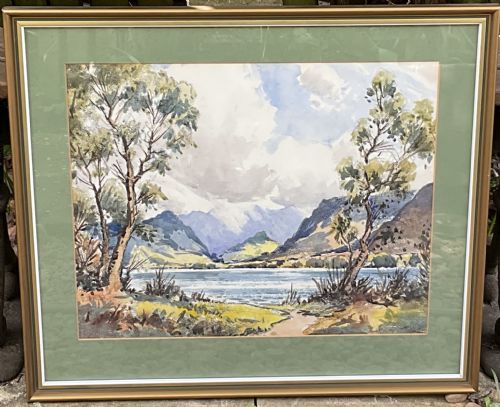


Lake District Watercolour
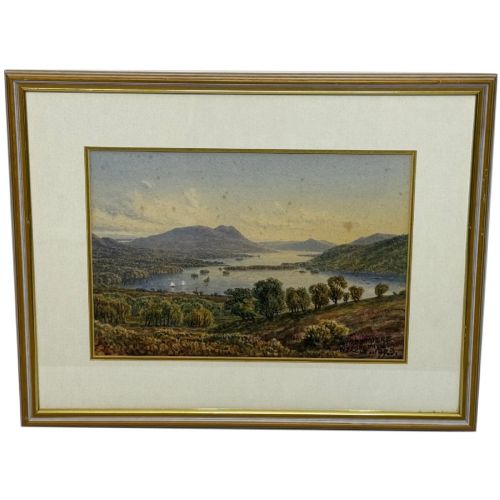
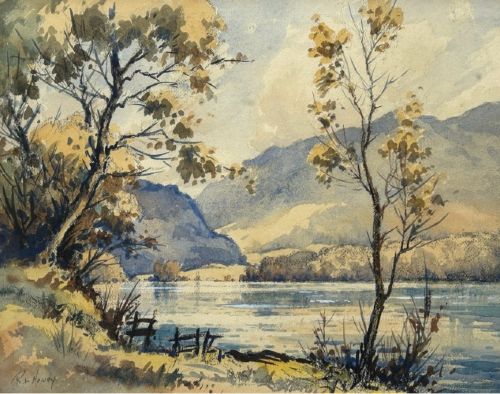
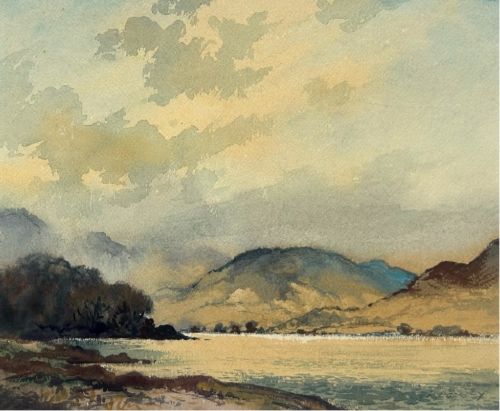
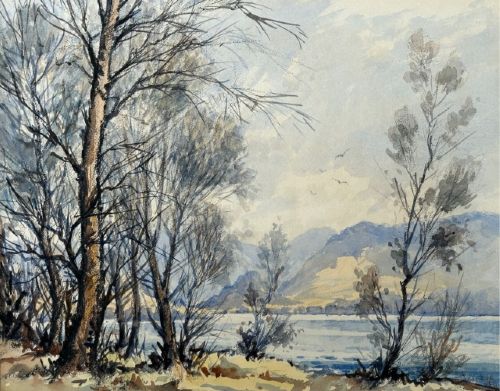
A lake district watercolour brings the fells, waters and valleys of the north directly onto your wall with enduring topographical clarity.
Lake District Watercolour
When you examine a lake district watercolour, you are looking at topographical and landscape painting dedicated to the scenery of Cumbria, spanning from the eighteenth century into the mid-twentieth century.
The pieces on this page range from early topographical ink and wash studies to mid-century post-war impressionist interpretations of familiar fells and waters.
You will encounter specific local scenes such as Windermere, Derwentwater, Grasmere and Coniston rendered across several artistic movements.
How they were made
Artists applied watercolour pigment and ink onto paper, often employing a preliminary pencil or ink sketch to map out topographical details like mountain ridges and lake shores.
Framed examples typically utilise glass to protect the paper surface alongside wood and gilt wood frames that complement the period of the artwork.
Several artists clearly preferred getting damp feet, returning repeatedly to paint the exact same Cumbrian waterfall from slightly different mossy rocks.
What varies in quality
The strength of the composition and the ability of the artist to capture the atmospheric light and changeable weather of the Cumbrian landscape set individual pieces apart.
Handling of pigment wash and precision in topographical draughtsmanship distinguish accomplished professional works from simpler sketches.
William Taylor Longmire·Robert Leslie Howey·Edward Dayes·Edward Horace Thompson·Claude Muncaster·Frederick Tucker·Cornelius Pearson·Tom Dudley·William Green·Cuthbert Rigby·James William Whittaker·Bernard Eyre Walker·John Arthur Dees
The Lake District Watercolour Glossary
- Topographical
- A style of painting or drawing that accurately records specific real-world locations and landmarks. In these works, named places like Windermere or Skiddaw form the primary subject.
- Wash
- A thin, semi-transparent layer of diluted watercolour pigment applied to paper. Artists use washes to create expansive skies, still lake surfaces and distant mountain gradients.
- Gilt Wood
- Wood treated with gold leaf or a gold-coloured metallic finish. Many framed watercolours feature these decorative mouldings.
- Impressionist
- A style focusing on overall visual effects and atmospheric light rather than fine detail. Post-war British examples apply this approach to traditional Cumbrian views.
Lake District Watercolour: Frequently Asked Questions
How do I identify the location in a lake district watercolour?
Many pieces include contemporary inscriptions or artist signatures on the front or reverse naming specific spots like Rydal Water or Lodore Falls.
Comparing the depicted fells, lakes and old buildings against historical maps of Cumbria often confirms the exact viewpoint.
How should I frame and hang a lake district watercolour?
Watercolour pigments on paper are sensitive to direct sunlight and moisture, requiring conservation framing behind glass with neutral mounts.
Keep them away from direct heat sources and bright south-facing windows to preserve the delicate washes of pigment.
How do 18th-century watercolours differ from mid-century ones?
Early pieces from the Georgian period frequently rely on careful ink linework combined with restrained monochromatic or muted washes for topographical recording.
Mid-century examples adopt looser brushwork and bolder post-war impressionist palettes to interpret the landscape.
What subjects feature most often in these paintings?
Artists repeatedly returned to major bodies of water such as Windermere, Derwentwater and Coniston alongside surrounding valleys and fells.
Local architectural landmarks, old cottages, bridges and waterfalls also appear frequently across the centuries.