



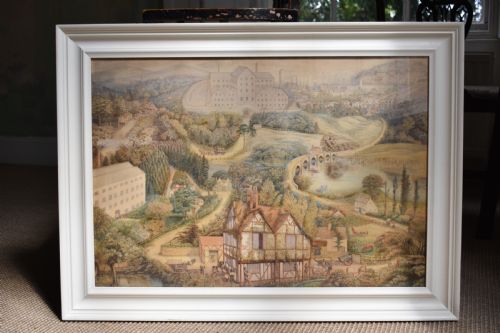
English Landscape Watercolour
An english landscape watercolour brings the quiet corners of the countryside, from Berkshire rivers to Yorkshire dales, directly onto paper.
What an English Landscape Watercolour Is
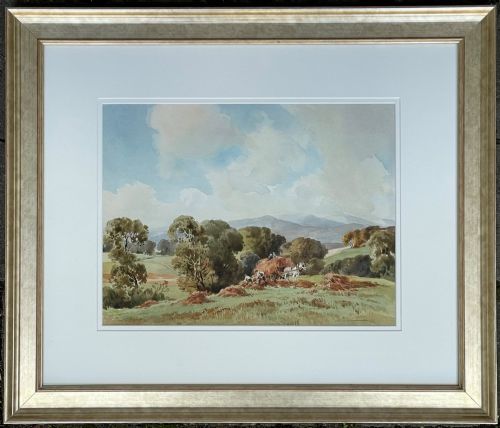
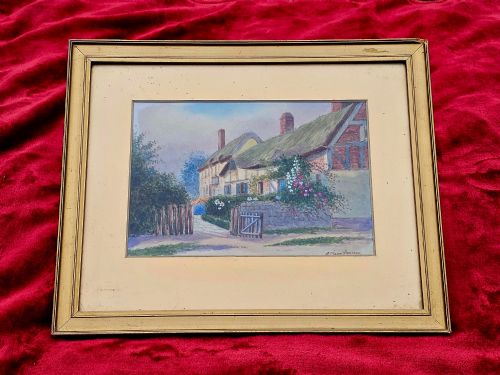
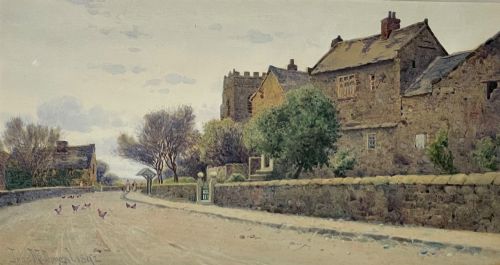
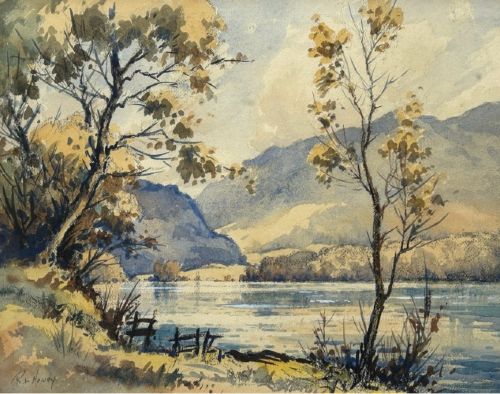
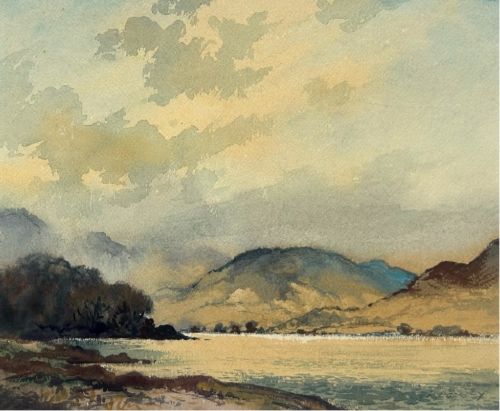
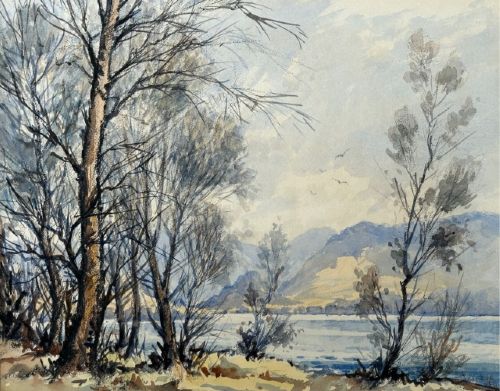
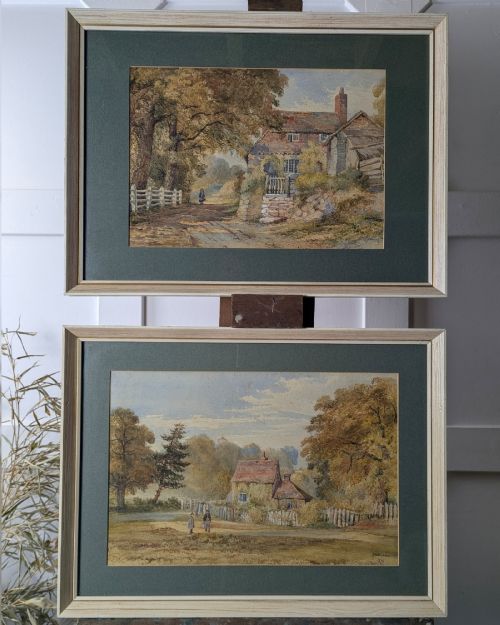
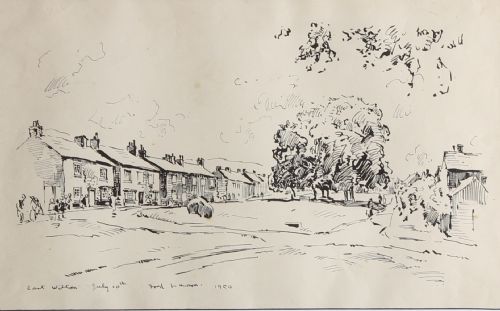
An english landscape watercolour captures scenery across Britain, from pastoral river valleys and coastal harbours to village streets and woodland paths. These works document the changing countryside through distinct regional views, capturing specific locations in Buckinghamshire, Yorkshire, Cornwall and Kent.
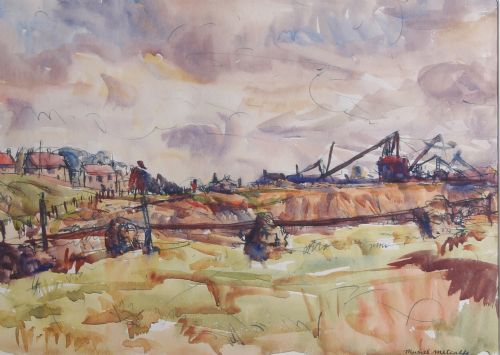
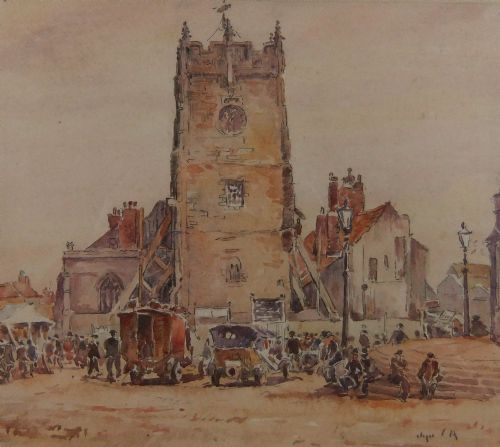
The pieces available span from the nineteenth century into the mid-twentieth century, shifting in style from British Romanticism and Victorian landscape painting to British Impressionism and Mid-Century Modern Art. Collectors encounter both finished studio paintings and direct plein-air sketches signed by regional artists.
Most examples depict recognisable local landmarks, including historic castles, rural watermills, country inns and quiet locks along the Thames. This tradition preserves historical views of villages and waterways as they appeared decades or centuries ago.
Materials and Technique
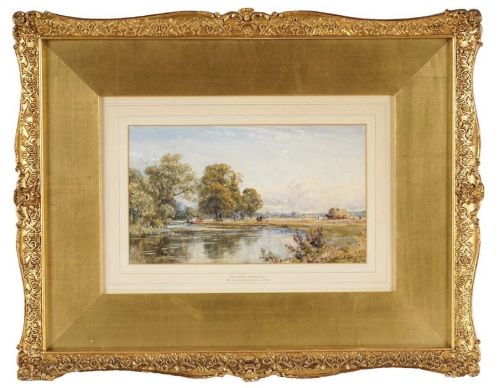
Artists painted primarily with watercolour pigment suspended in water, applied directly to paper sheets that sometimes served as preliminary sketches or finished works. Many surviving pieces retain their period framing of gilded wood and glass, which protected the delicate paper surfaces from moisture and handling.
The application ranges from fluid, translucent washes that suggest atmospheric skies and moving water to opaque bodycolour highlights that define architectural details and foreground foliage. Hand-mixed pigments capture the specific tonal qualities of changing light across British fields and coastal scenes.
Retail Price Guide 2026
Typical UK retail prices for english landscape watercolour, calculated from the Sellingantiques database of over a million retail prices indexed since 2003. This retail price guide relies exclusively on Sellingantiques data; no external sources or auction records are used, so the figures do not describe the wider market.
Listings feature works created on paper using watercolour pigment, spanning from the early nineteenth century through the mid-twentieth century.
What Varies in Quality
The success of a work depends on the artist's handling of light and atmosphere, where skilled brushwork captures the damp air of a river valley or the heavy shadows of an autumn woodland. Superior pieces demonstrate confident draftsmanship beneath the pigment, giving architectural structures and natural forms a convincing weight.
Condition plays a central role, distinguishing works that retain their original pigment vibrancy from those affected by fading or paper acidification. The depth of composition and the specific topographical interest of the named location further separate standard topographical records from masterly landscape interpretations.
Robert Leslie Howey·Samuel Palmer·Frederick Mayor·Tom Dudley·George Graham·Alexander Jamieson·Walter Emsley·David Cox Senior·John Syer·Claude Hayes·Fred Lawson·Robert Thorne Waite·Thomas Miles Richardson
The English Landscape Watercolour Glossary
- Watercolour pigment
- Finely ground colour particles mixed with a binder and diluted with water to create transparent or opaque washes on paper.
- Bodycolour
- Watercolour mixed with white pigment to make it opaque, often utilised for highlights and dense details.
- Plein air
- The practice of painting outdoors directly from the landscape to capture immediate light and weather conditions.
- Topographical art
- Works that accurately record specific geographical locations, buildings and natural landmarks.
Frequently Asked Questions
How do I date an english landscape watercolour?
Dating relies primarily on artist signatures, period framing styles, and inscriptions identifying specific topographical locations written on the paper or mount. Many works include dated signatures or exhibition notes that place them precisely within the nineteenth or twentieth century.
stylistic shifts also help determine the period, moving from the detailed formality of Victorian landscape painting toward the looser brushwork of British Impressionism and Mid-Century Modern Art.
Where were these watercolours painted?
Artists travelled extensively across the British Isles, recording rural scenes, coastal villages, and river views in counties such as Yorkshire, Kent, Buckinghamshire, and Cornwall. Specific locations like Windsor Castle, the River Thames, and local country mills appear frequently in the titles.
These watercolours served both as records for travellers and as studio compositions developed from initial outdoor sketches made directly in front of the subject.
How should I frame and display paper watercolours?
Watercolours require conservation framing behind glass with acid-free mounts to prevent the paper from yellowing and to protect the water-soluble pigments from atmospheric damage. Archival materials ensure the delicate paper remains stable over time.
Because direct sunlight causes pigment fading, these works need placement away from bright south-facing windows and excessive humidity to preserve their original tones.
What is the difference between a sketch and a finished painting?
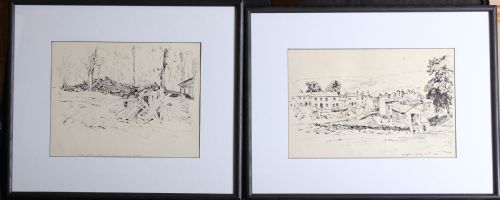
A preliminary sketch often captures rapid observations made outdoors on location, showing visible pencil underdrawings and spontaneous brush marks without full tonal development. These studies record immediate atmospheric effects.
Finished paintings typically display more deliberate layering, controlled washes, and detailed foreground elements intended for exhibition or collection.