


Scottish Highland Cattle Art
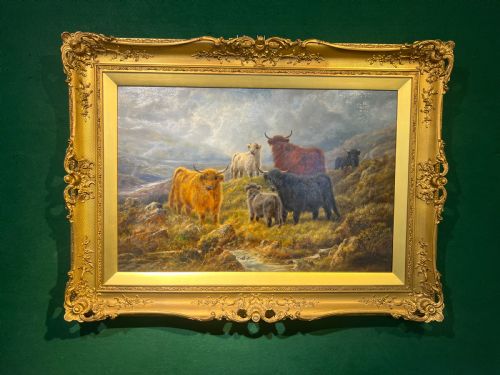
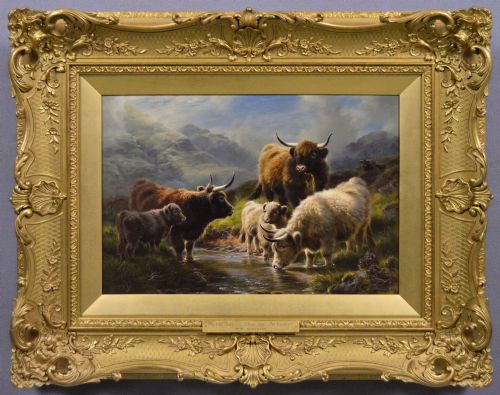
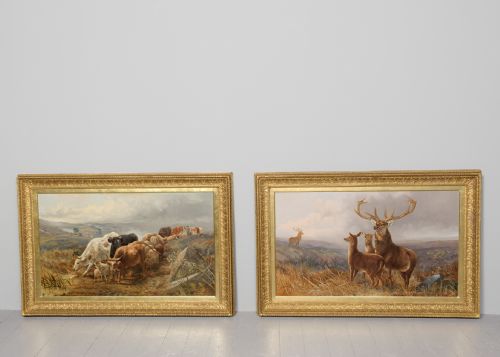
These scottish highland cattle art pieces bring the dramatic character of rugged northern landscapes and shaggy beasts directly into your interior.
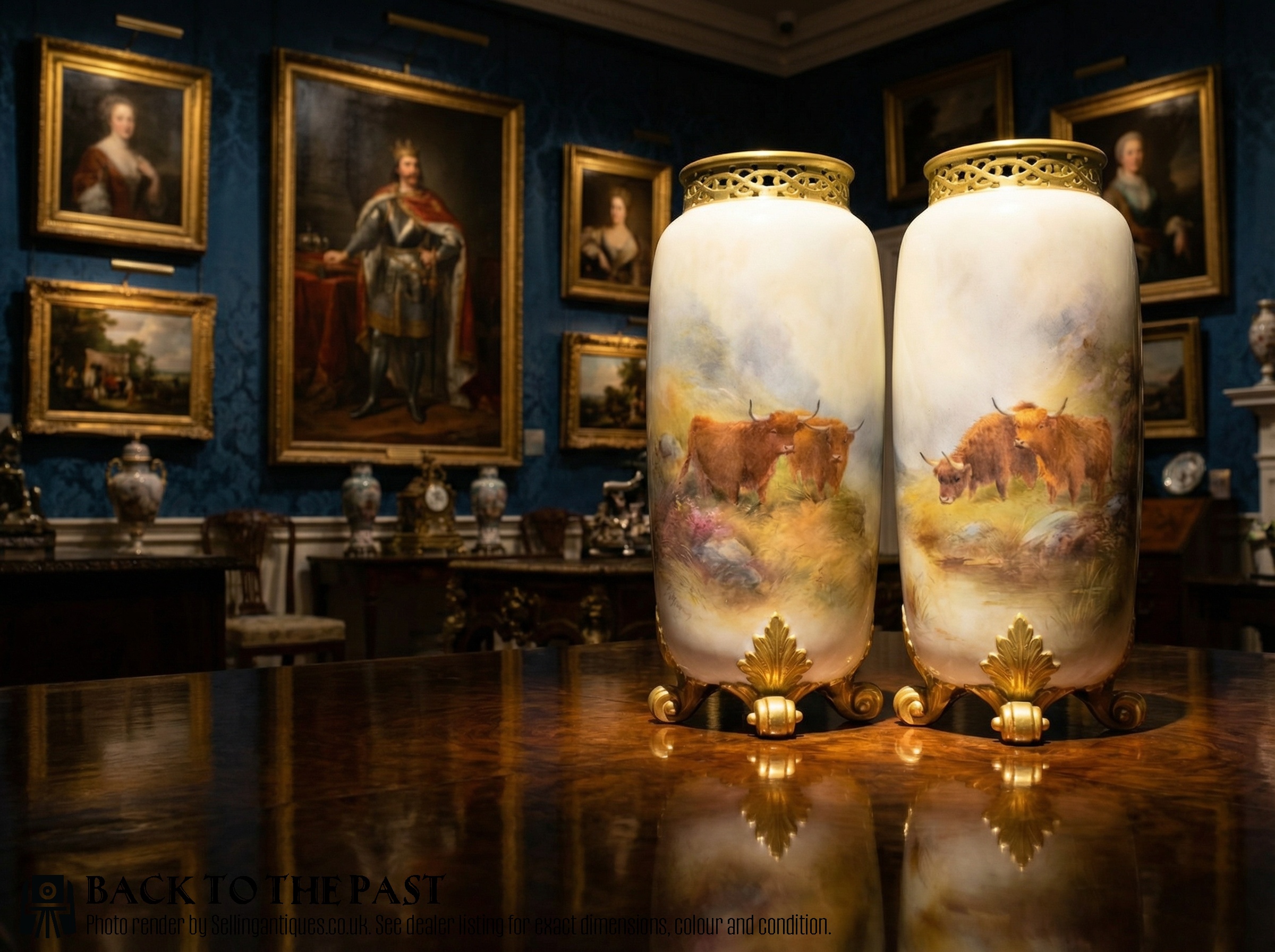
What these pieces are
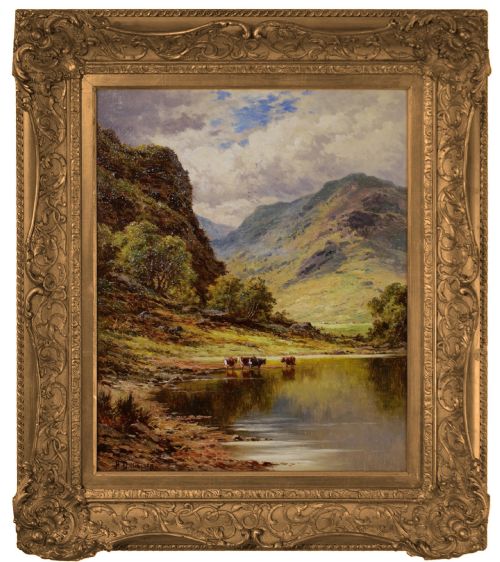
When you search for scottish highland cattle art, you find works spanning the Victorian and Edwardian periods, stretching from eighteen eighty up to nineteen twenty.
Beyond paintings, the category includes decorative spill vases and silver spoons, offering diverse ways to collect this distinct pastoral theme.
How they were made
Artists painted primarily in oil on canvas or board, using rich pigments to render the texture of longhorn cattle and atmospheric skies over water.
Works on paper utilise watercolour paint, capturing delicate light in landscape settings with fine brushwork.
Many paintings are housed in giltwood and gold leaf frames, while ceramics such as porcelain spill vases feature painted cattle decoration.
Retail Price Guide 2026
Typical UK retail prices for scottish highland cattle art, calculated from the Sellingantiques database of over a million retail prices indexed since 2003. This retail price guide relies exclusively on Sellingantiques data; no external sources or auction records are used, so the figures do not describe the wider market.
One recorded painting thoughtfully includes an additional artist sketch verso on the reverse of the board.
What varies in quality
Quality rests upon the artist's ability to render the anatomy and heavy coats of the cattle with anatomical precision and atmospheric depth.
The ambition of the surrounding landscape, from simple stream banks to expansive lochs at sunset, influences the overall artistic merit.
Original giltwood and gold leaf frames that complement the scale and period of the canvas elevate the presentation of the artwork.
William Watson Jnr·Robert Watson·Sidney Yates Johnson·Alfred de Breanski Snr·Henry Robinson Hall·Aster Richard Chilton Corbould·Stinton·J Gibb
The Scottish Highland Cattle Art Glossary
- Giltwood
- Wood carved and coated with gold leaf or gold paint to create a reflective, decorative frame finish. It provides a traditional Victorian presentation for oil paintings.
- Spill vase
- A small vertical container designed to hold tapered spills of paper or wood used for lighting fires. These porcelain pieces often feature hand-painted animal subjects.
- Watercolour paint
- A water-soluble medium applied to paper to achieve translucent washes of colour. It requires swift, confident execution.
- Oil on canvas
- Pigment bound in oil applied to a stretched woven fabric support. This medium allows for deep colour saturation and reworked textures.
Frequently Asked Questions
What periods do these pieces date from?
The available works and archive records span the Victorian and Edwardian eras, covering dates from eighteen eighty through to nineteen twenty.
This timeframe captures the height of British landscape painting focusing on pastoral and highland themes.
What materials were used by the artists?
Painters utilised oil on canvas or board, and watercolour paint on paper, to depict cattle within Scottish landscapes.
Secondary items such as porcelain spill vases and silver spoons incorporate decorative painting and metalwork techniques.
How are the paintings usually framed?
Many of the oil paintings are mounted in period giltwood or gold leaf frames that enhance the visual impact of the canvas.
These surrounds are typical of nineteenth and early twentieth century picture framing conventions.
Are there smaller decorative items available?
Alongside large canvas works, the category includes porcelain spill vases and solid sterling silver spoons.
These smaller objects feature detailed cattle motifs suited to cabinet display or functional use.