14,328  PAGES BROWSED TODAY PAGES TODAY 73 ANTIQUES UPLOADED TODAYNEW ARRIVALS
73 ITEMS ADDED TODAY
Sort Order
Items Per Page
Browse Categories
Sort order
Relevant Links
Items per page
ID #SA1223497
FOR SALE
£3,950
Email
Save
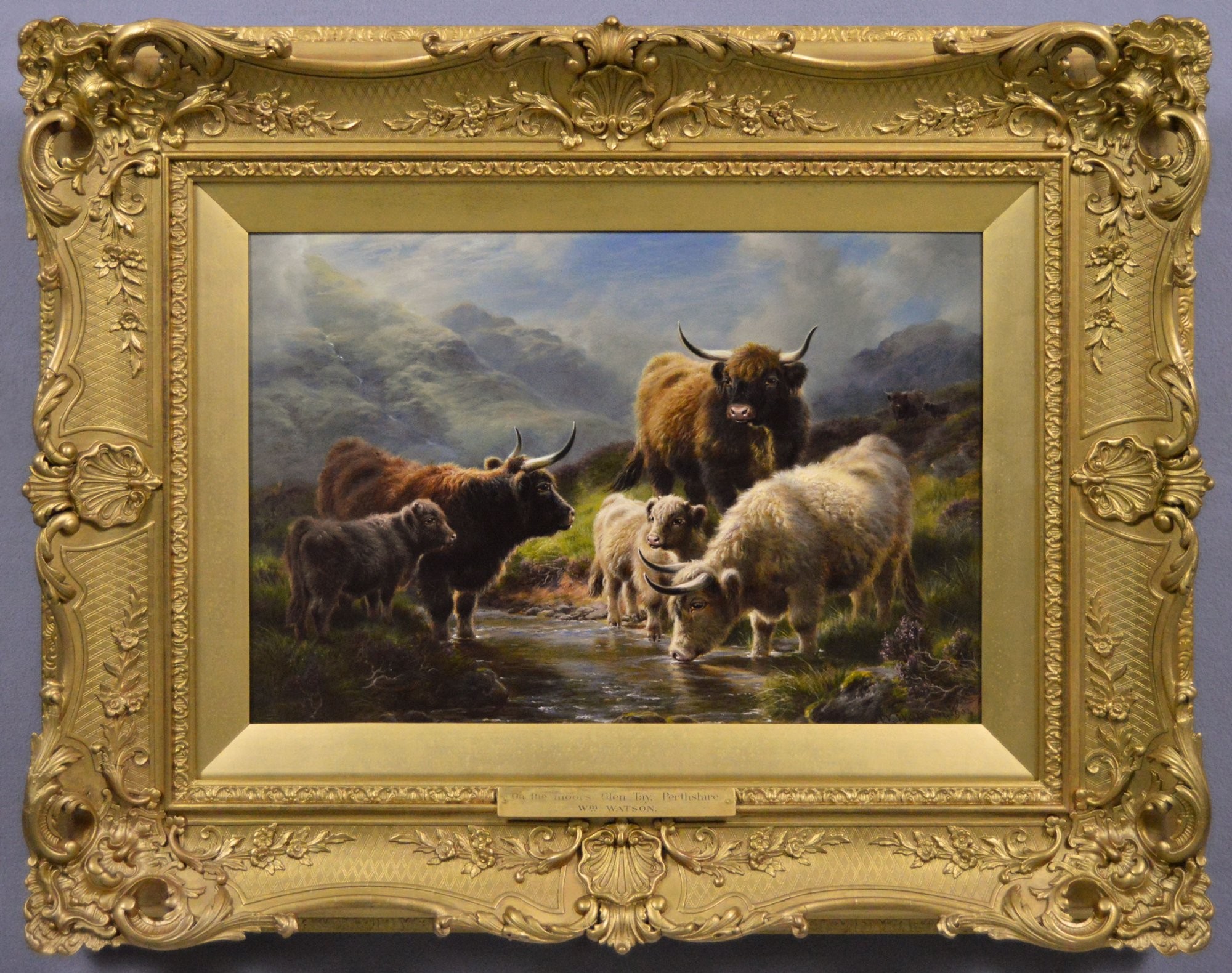
Scottish Landscape Oil Painting of Highland Cattle at Glen Tay by William Watson Jnr
Benton Fine Art
for sale €4,622     $5,017
£3,950
Benton Fine Art

Benton Fine Art

Sellingantiques Verified Since Sep 2012
View Dealers Stock Page
  • About Us
    Specialists in 19th & early 20th century original oil paintings by listed artists
  • Trade Associations
    Benton Fine Art is a registered member of LAPADA  BADA  CINOA
Id #SA1223497
PDF SHARE
SAVE

Scottish Landscape Oil Painting of Highland Cattle at Glen Tay by William Watson Jnr

1900 - 1920
For Sale by Benton Fine Art
Description

William Watson Jnr

British, (1847-1921)

On the Moors, Glen Tay, Perthshire

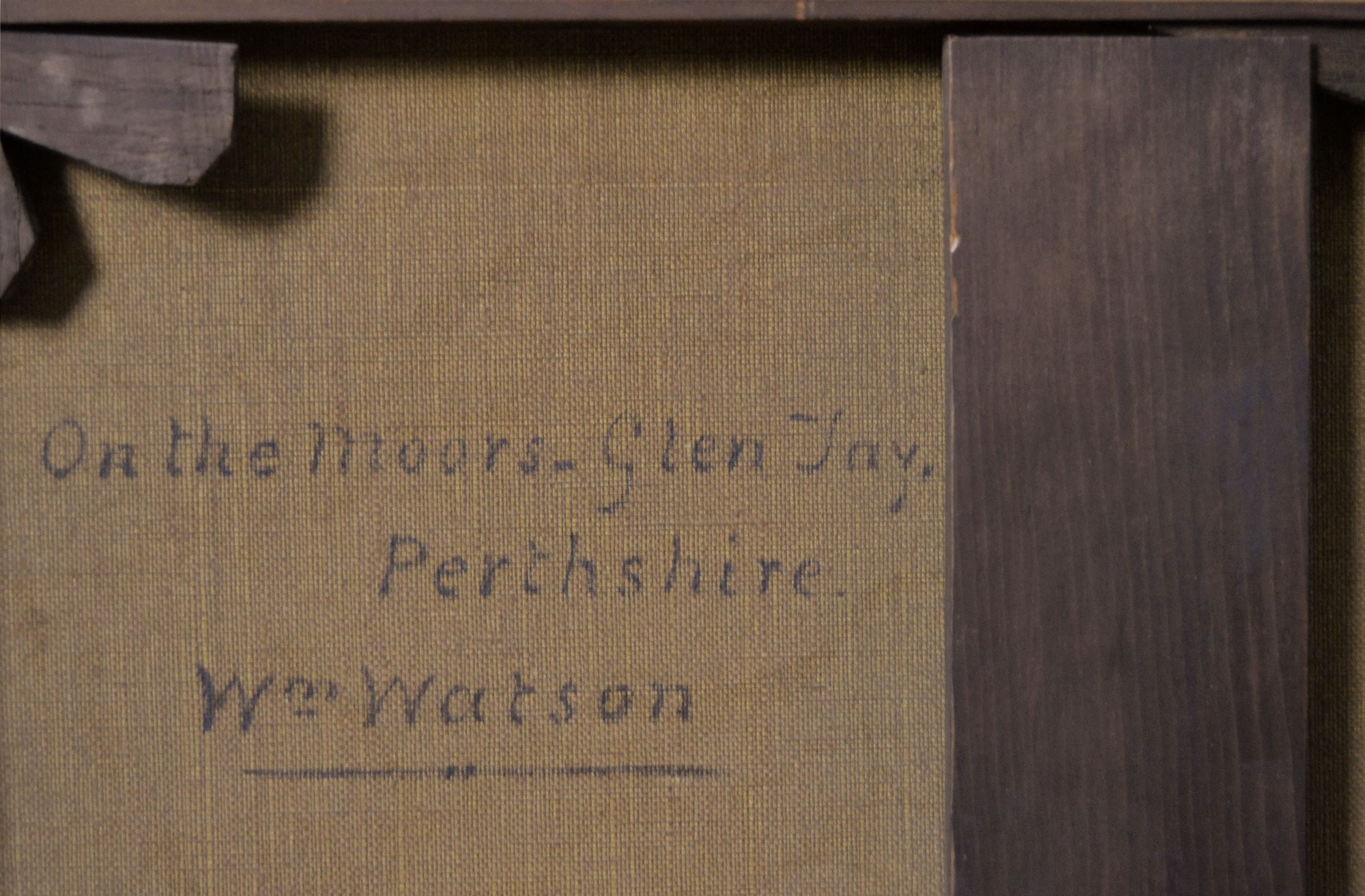
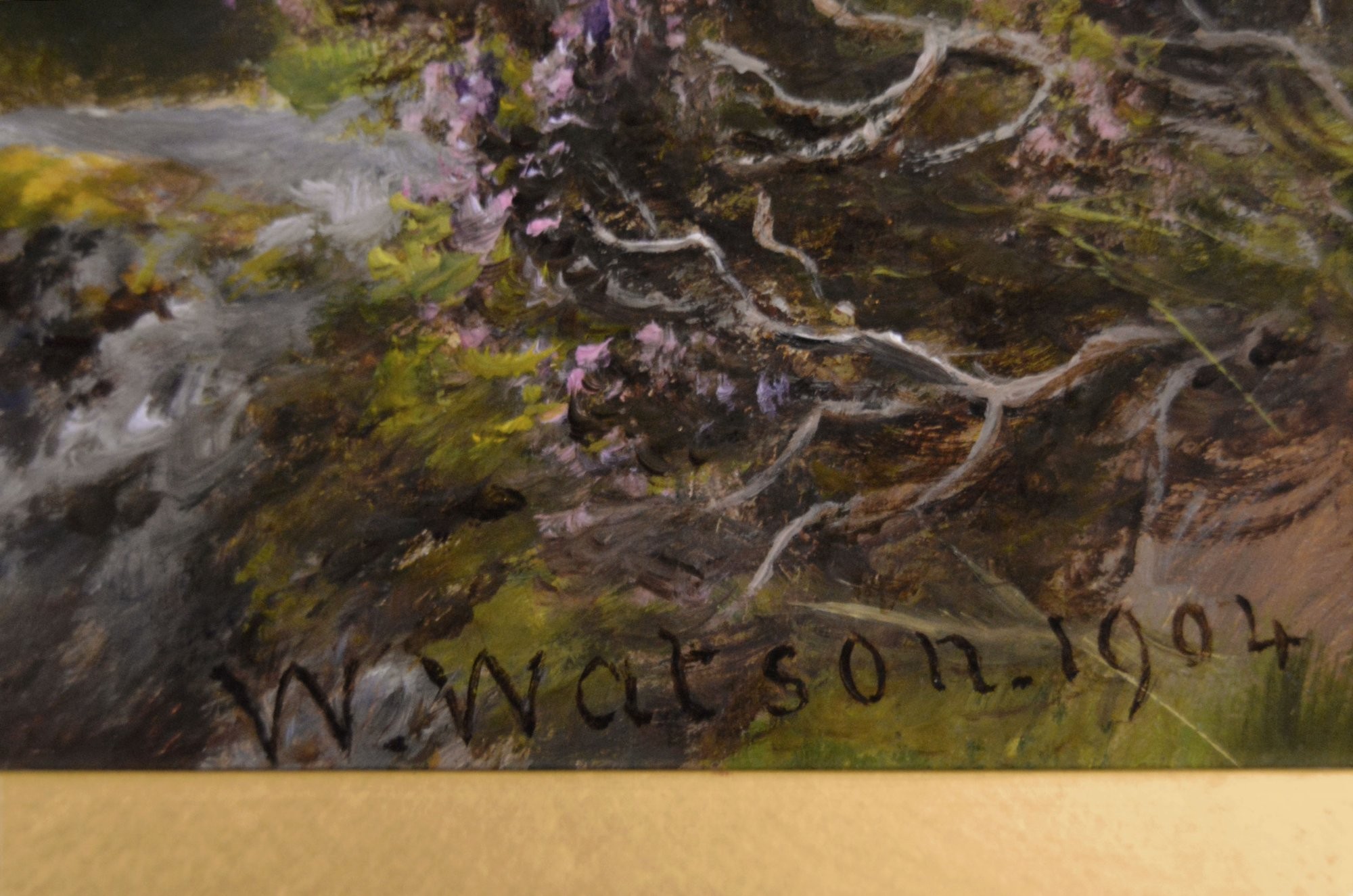
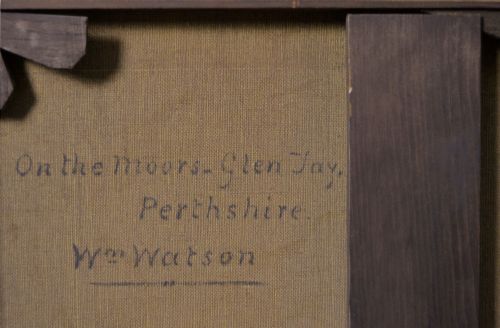
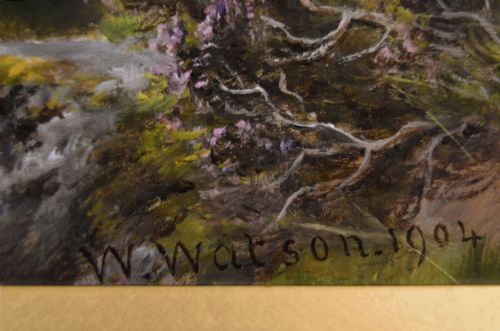
Oil on canvas, signed & dated 1904, further inscribed verso

Image size: 12.5 inches x 18.5 inches

Size including frame: 23.25 inches x 29.25 inches

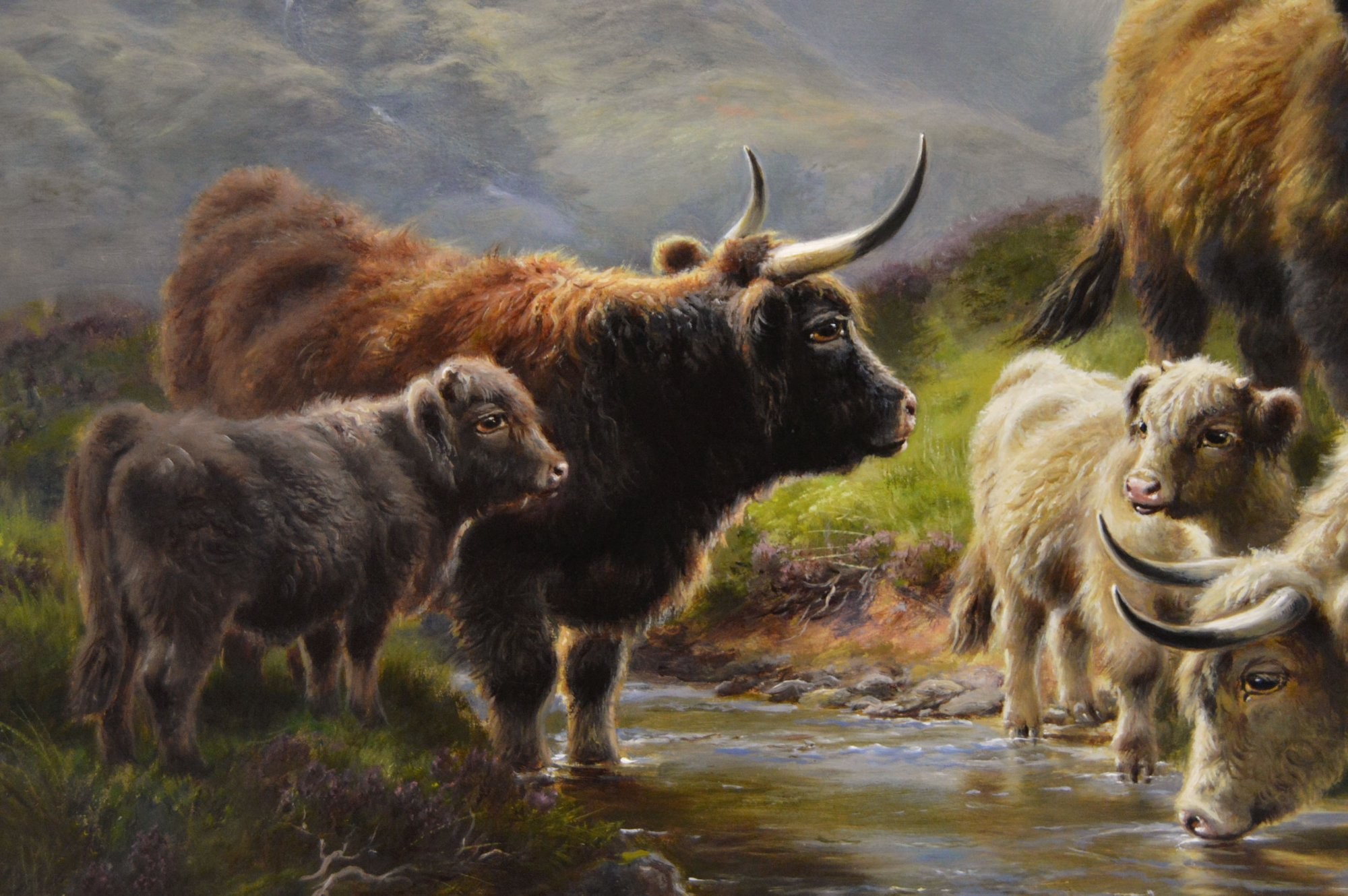
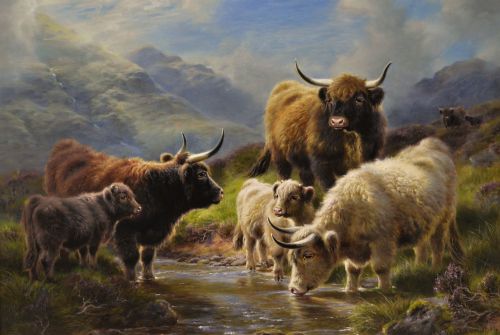
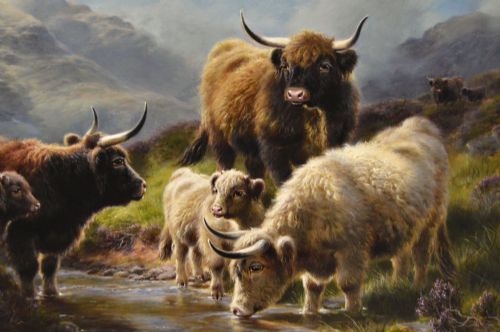
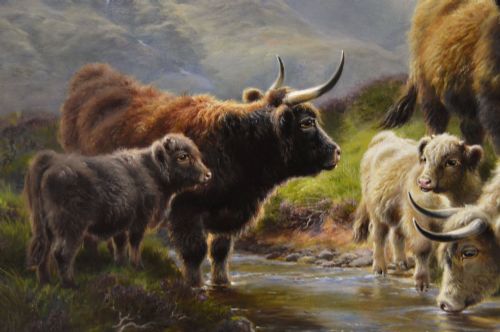
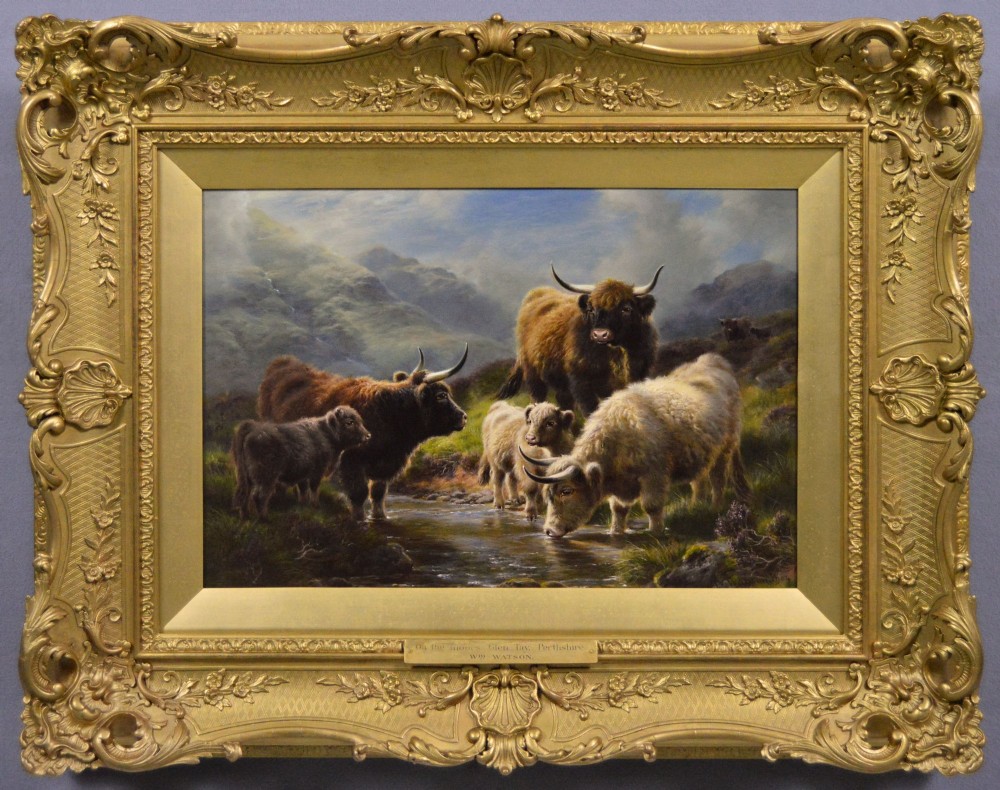
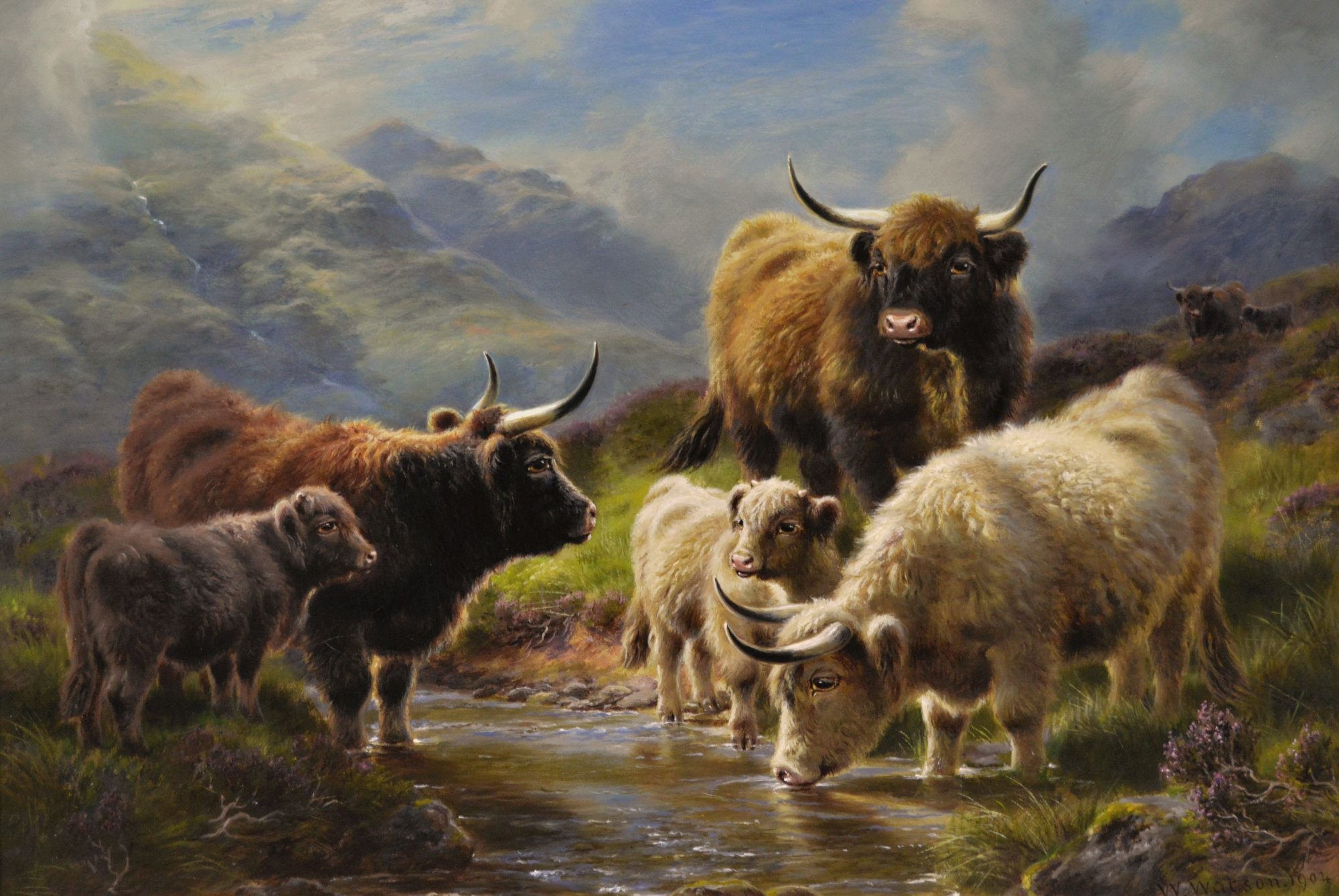
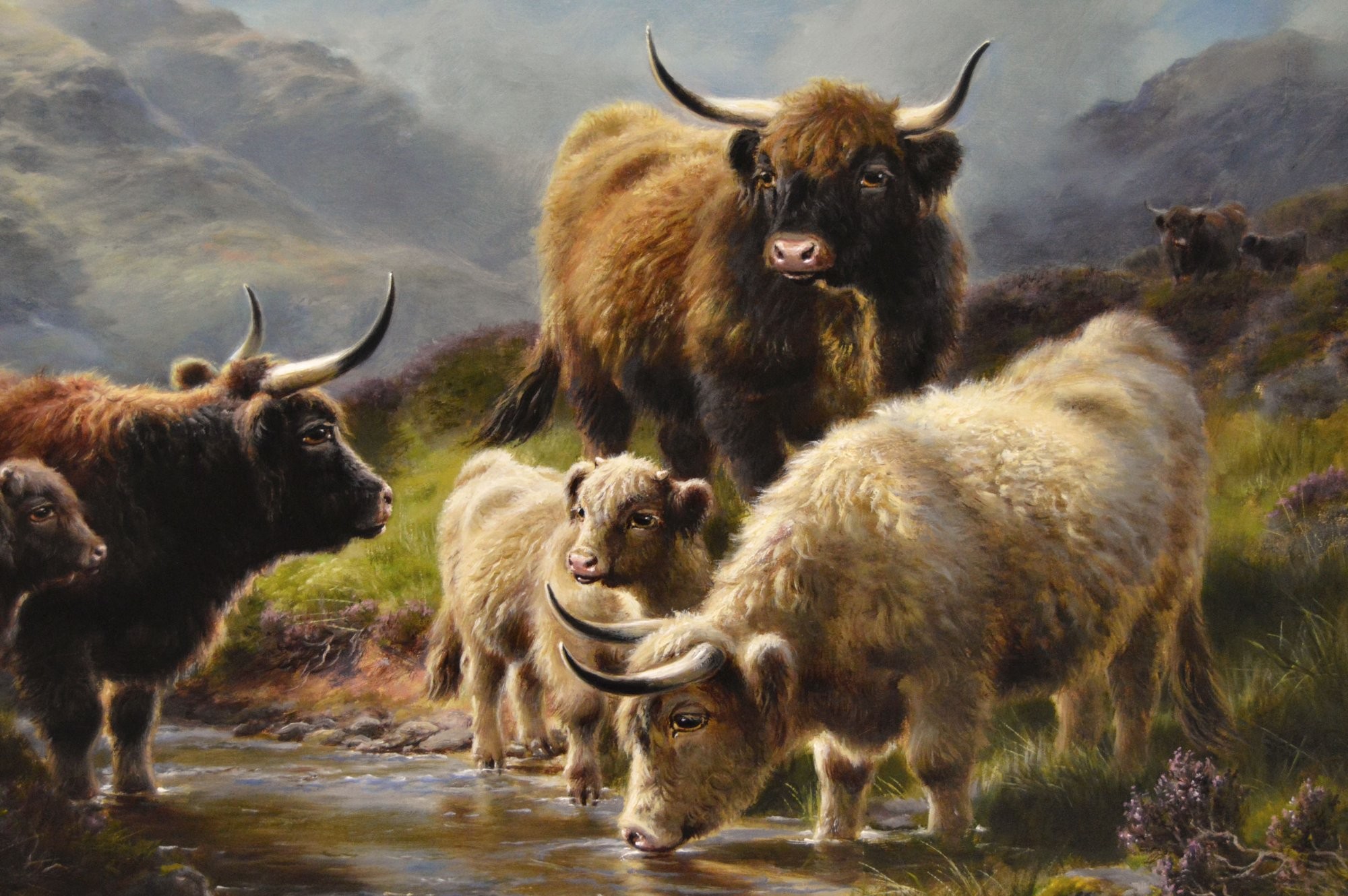
A superb Scottish landscape animal painting of Highland cattle at Glen Tay, Perthshire by William Watson Jnr. Highland cattle and calves are shown gathered at a stream on the open moorland at Glen Tay, their distinctive shaggy coats set against the rugged Perthshire landscape. While most of the herd refresh themselves at the water’s edge, others can be seen making their way down from the surrounding hillside. Glen Tay is a local scenic name for a section of the Tay Valley hills in the central highlands. The Tay valley encompasses the basin of the river Tay which flows from the Ben Lawers mountain range at Loch Tay through the towns of Kenmore, Aberfeldy and Dunkeld before reaching the Firth of Tay near Dundee.
William Watson was born in Islington in 1847, the son of the London miniature painter William John Watson (1810-1871) and his wife Caroline (née Butcher). His brothers Charles Watson (1837-1900) and Robert Watson (1855-1921) were also artists. His father seems to have travelled around and after spending time in Brighton, the family moved to Bransford Road in Worcester during the early part of the 1860’s.
As well as being taught by his father, Watson received his early training in the studio of Sir Francis Grant PRA (1803-1878). He later became a pupil of Sir Edwin Henry Landseer RA (1802-1873) and Rosa Bonheur (1822–1899). Both Landseer and Bonheur had a great influence on his work and he began specialising in scenes of cattle and sheep. By 1866 he had become a full time artist and began exhibiting at the Royal Society of British Artists.
Perhaps to take advantage of the inspiring scenery, Watson moved to Birkenhead, Cheshire where in 1871 he met and married Eleanor Davies who was from Caernarvonshire. Four of their children Sidney Watson (1881-1931), Caroline Ellen Watson (1871-1947), William Robert Charles Watson (1873-1928) and Walter James Watson (1877-1963) also became artists. Shortly after moving to the Birkenhead area, he made his debut at the Royal Academy in 1872.
The family initially lived in Seacombe, Birkenhead where the first of their children were born but by 1879 they had moved to the outskirts of Liverpool to Maghull. They later returned to the Birkenhead area living at 9 Lorne Road, Tranmere. Watson seems to have enjoyed a close relationship with his family as they all lived and worked together until around 1901 when his sons William and Walter moved away and the rest of the family relocated to 5 Slatey Road, Birkenhead. Towards the end of his life Watson moved to Wales where he lived at Hillside, Capel Garmon, Llanrwst in Denbighshire. He died at Capel Garmon on 26 March, 1921.
Watson’s scenes were mainly of the north of England, Wales and the Highlands and often featured cattle or sheep perched along stepped hillsides. He painted with consummate skill and his works are highly collectible. Many of his paintings were sold in America. Examples of his works can be found in the Atkinson Gallery, Sheffield Museum, Walker Art Gallery, Liverpool and the Williamson Art Gallery.
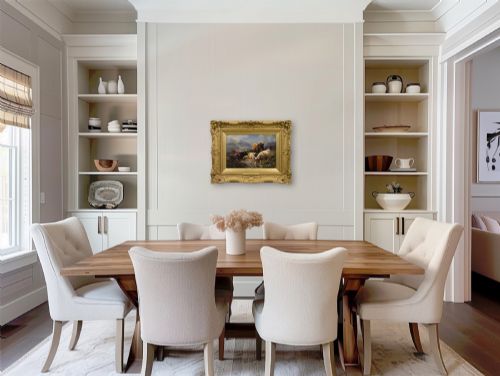
Presentation: The painting is housed in its original gilt frame which is in excellent condition.

Condition: As with all of our original antique oil paintings, this work is offered in ready to hang gallery condition, having been professionally cleaned, restored and revarnished.

© Benton Fine Art

Physical Dimensions
Height
59cm (23.23")
Width
74.5cm (29.33")
Depth
9cm (3.54")
Declaration

Benton Fine Art has dated this Highland Cattle Oil Painting to the 1900s.

Reference Numbers
Sellingantiques Reference
SA1223497
Dealers Notes

Members of the British Antique Dealers Association (BADA) the London and Provincial Antique Dealers Association (LAPADA).

We use a professional, fully insured and tracked door to door service for our UK and international deliveries. Please contact us for further information and shipping quotes.

Viewing is by APPOINTMENT ONLY. However, we can also arrange for you to view the item in your home, depending on the location.

For a wider range of stock please visit www.bentonfineart.com.

If you would like to purchase this item or have any questions, please email us at pictures@bentonfineart.com or call 07710 540549.

© Benton Fine Art

Description
William Watson Jnr

British, (1847-1921)

On the Moors, Glen Tay, Perthshire

Oil on canvas, signed & dated 1904, further inscribed verso

Image size: 12.5 inches x 18.5 inches

Size including frame: 23.25 inches x 29.25 inches

A superb Scottish landscape animal painting of Highland cattle at Glen Tay, Perthshire by William Watson Jnr.
Benton Fine Art

Highland cattle and calves are shown gathered at a stream on the open moorland at Glen Tay, their distinctive shaggy coats set against the rugged Perthshire landscape. While most of the herd refresh themselves at the water’s edge, others can be seen making their way down from the surrounding hillside. Glen Tay is a local scenic name for a section of the Tay Valley hills in the central highlands. The Tay valley encompasses the basin of the river Tay which flows from the Ben Lawers mountain range at Loch Tay through the towns of Kenmore, Aberfeldy and Dunkeld before reaching the Firth of Tay near Dundee.

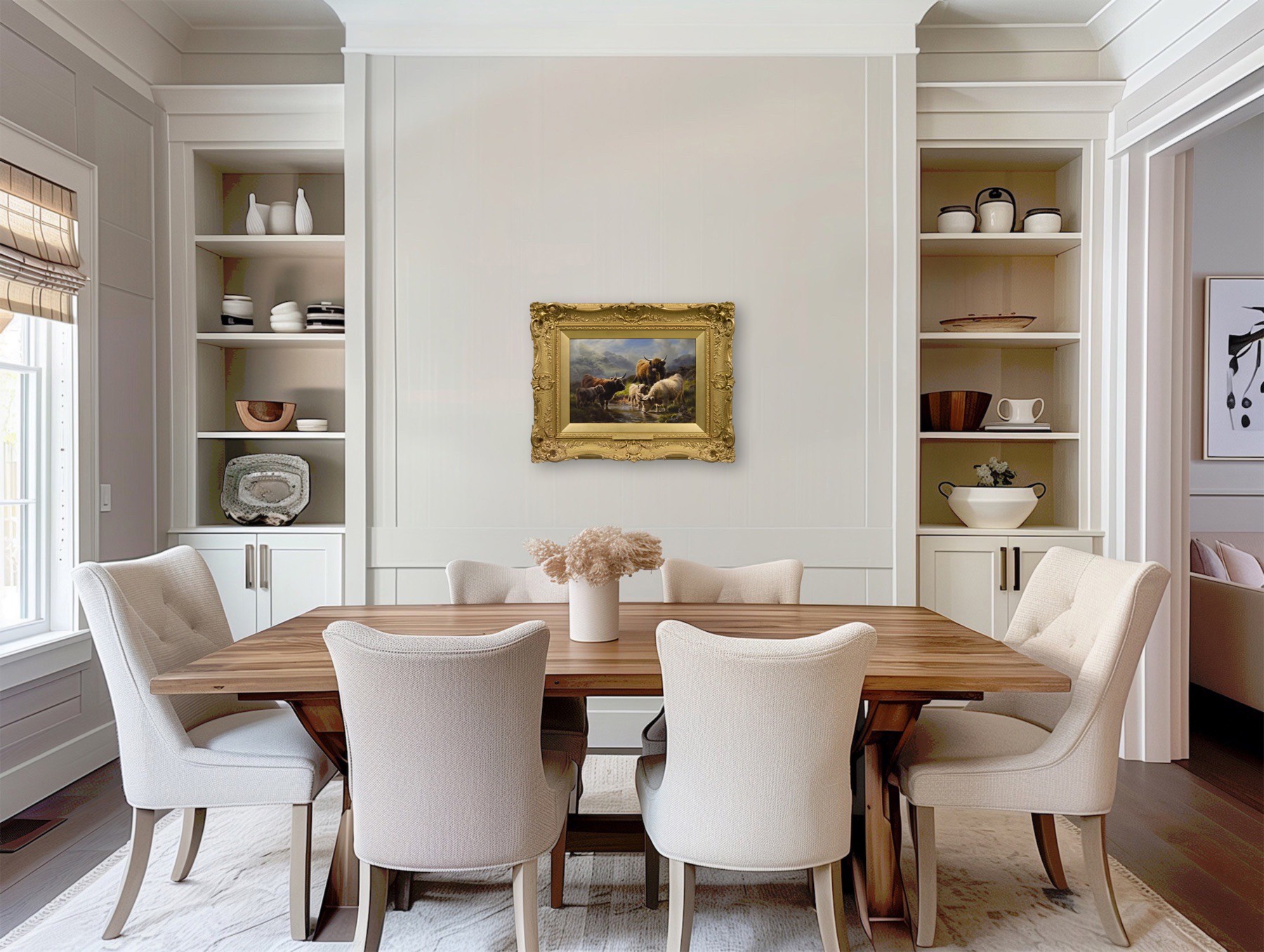
fig 1. A 19th-century oil painting depicting Highland cattle drinking from a stream in a misty mountain landscape, set within an ornate gilded frame.
fig 1. Scottish Landscape Oil Painting of Highland Cattle at Glen Tay by William Watson Jnr

William Watson was born in Islington in 1847, the son of the London miniature painter William John Watson (1810-1871) and his wife Caroline (née Butcher). His brothers Charles Watson (1837-1900) and Robert Watson (1855-1921) were also artists. His father seems to have travelled around and after spending time in Brighton, the family moved to Bransford Road in Worcester during the early part of the 1860’s.

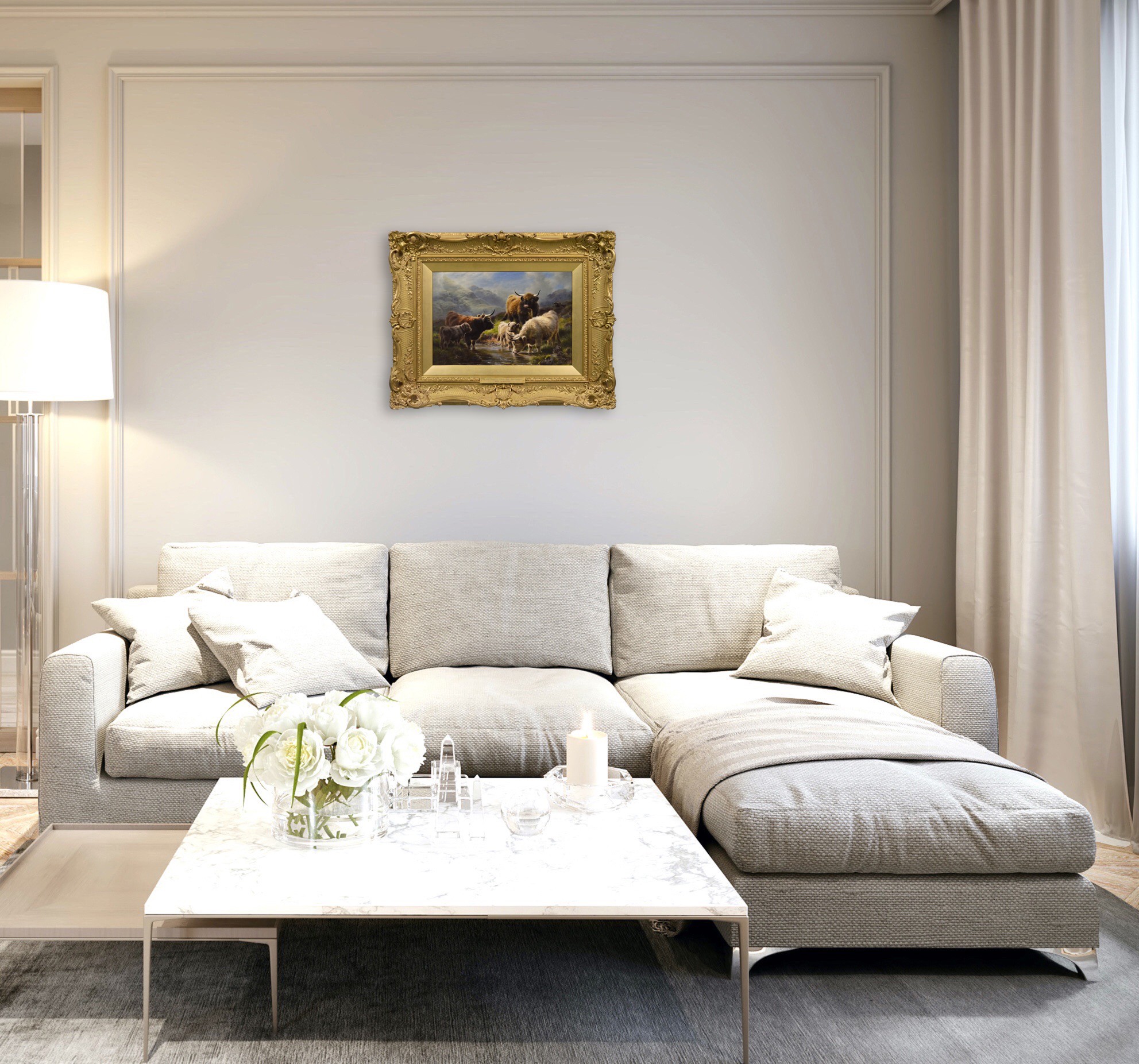
fig 2. A 19th-century oil painting depicting Highland cattle drinking from a stream in a misty mountain landscape, set within an ornate gilded frame.
fig 2. Scottish Landscape Oil Painting of Highland Cattle at Glen Tay by William Watson Jnr

As well as being taught by his father, Watson received his early training in the studio of Sir Francis Grant PRA (1803-1878). He later became a pupil of Sir Edwin Henry Landseer RA (1802-1873) and Rosa Bonheur (1822–1899). Both Landseer and Bonheur had a great influence on his work and he began specialising in scenes of cattle and sheep. By 1866 he had become a full time artist and began exhibiting at the Royal Society of British Artists.

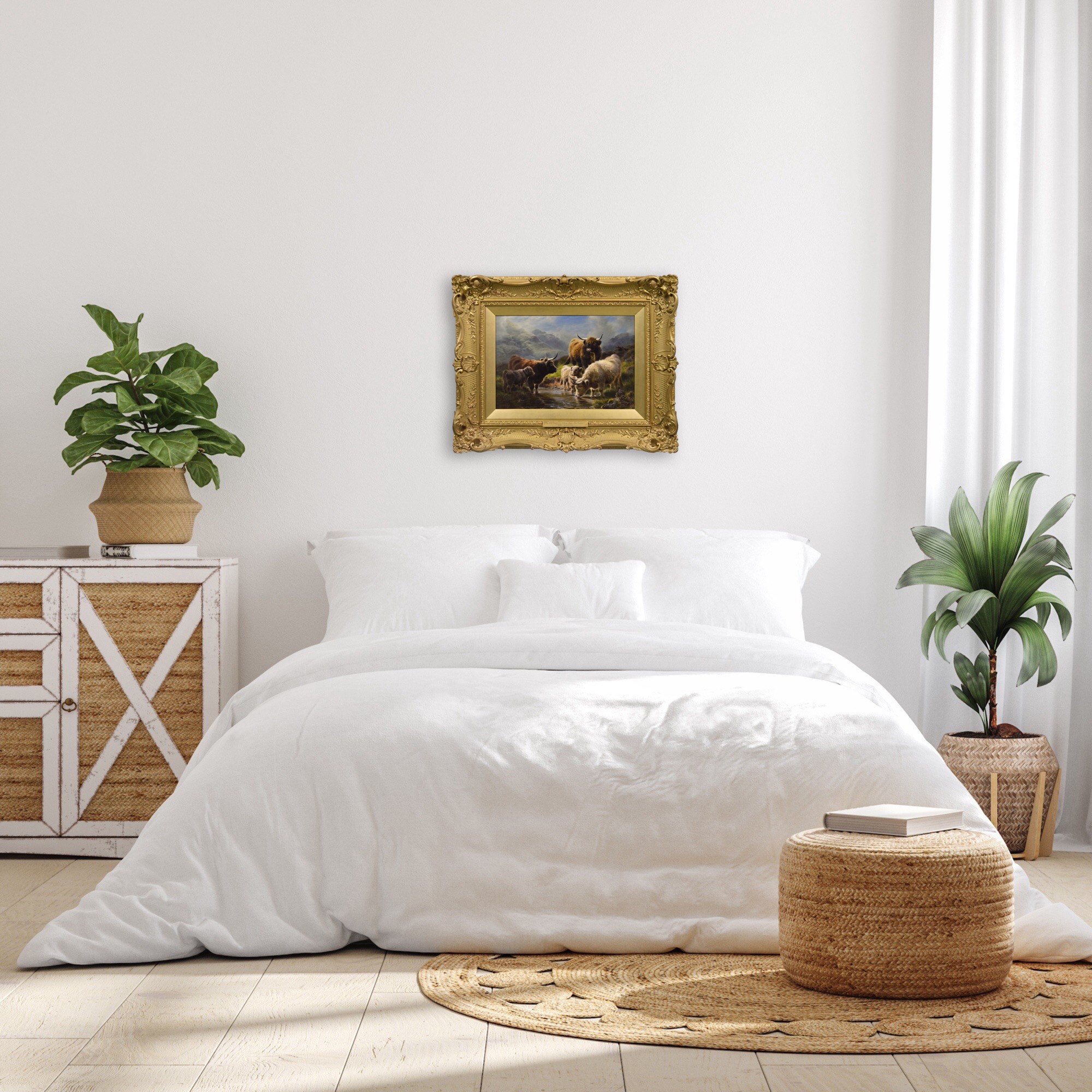
fig 3. A 19th-century oil painting depicting Highland cattle drinking from a stream in a misty mountain landscape, set within an ornate gilded frame.
fig 3. Scottish Landscape Oil Painting of Highland Cattle at Glen Tay by William Watson Jnr

Perhaps to take advantage of the inspiring scenery, Watson moved to Birkenhead, Cheshire where in 1871 he met and married Eleanor Davies who was from Caernarvonshire. Four of their children Sidney Watson (1881-1931), Caroline Ellen Watson (1871-1947), William Robert Charles Watson (1873-1928) and Walter James Watson (1877-1963) also became artists. Shortly after moving to the Birkenhead area, he made his debut at the Royal Academy in 1872.

fig 4. A 19th-century oil painting depicting Highland cattle drinking from a stream in a misty mountain landscape, set within an ornate gilded frame.
fig 4. Scottish Landscape Oil Painting of Highland Cattle at Glen Tay by William Watson Jnr

The family initially lived in Seacombe, Birkenhead where the first of their children were born but by 1879 they had moved to the outskirts of Liverpool to Maghull. They later returned to the Birkenhead area living at 9 Lorne Road, Tranmere. Watson seems to have enjoyed a close relationship with his family as they all lived and worked together until around 1901 when his sons William and Walter moved away and the rest of the family relocated to 5 Slatey Road, Birkenhead. Towards the end of his life Watson moved to Wales where he lived at Hillside, Capel Garmon, Llanrwst in Denbighshire. He died at Capel Garmon on 26 March, 1921.

fig 5. A 19th-century oil painting depicting Highland cattle drinking from a stream in a misty mountain landscape, set within an ornate gilded frame.
fig 5. Scottish Landscape Oil Painting of Highland Cattle at Glen Tay by William Watson Jnr

Watson’s scenes were mainly of the north of England, Wales and the Highlands and often featured cattle or sheep perched along stepped hillsides. He painted with consummate skill and his works are highly collectible. Many of his paintings were sold in America. Examples of his works can be found in the Atkinson Gallery, Sheffield Museum, Walker Art Gallery, Liverpool and the Williamson Art Gallery.

fig 6. A 19th-century oil painting depicting Highland cattle drinking from a stream in a misty mountain landscape, set within an ornate gilded frame.
fig 6. Scottish Landscape Oil Painting of Highland Cattle at Glen Tay by William Watson Jnr

Presentation: The painting is housed in its original gilt frame which is in excellent condition.

Condition: As with all of our original antique oil paintings, this work is offered in ready to hang gallery condition, having been professionally cleaned, restored and revarnished.

© Benton Fine Art

Height
59cm (23.23")
Width
74.5cm (29.33")
Depth
9cm (3.54")
Date of Manufacture

Benton Fine Art has dated this Highland Cattle Oil Painting to the 1900s.

Reference Numbers
Sellingantiques Ref
SA1223497
Benton Fine Art
Benton Fine Art
Sellingantiques verified Since Sep 2012

Specialists in 19th & early 20th century original oil paintings by listed artists

Dealer Profile

You can view the stock and full dealer information on the Benton Fine Art Profile Page

Trade Associations

Benton Fine Art is a registered member of LAPADA  BADA  CINOA
PDF SHARE
SAVE
A 19th-century oil painting depicting Highland cattle drinking from a stream in a misty mountain landscape, set within an ornate gilded frame.
1 / 9
Archive I A 19th-century oil painting depicting Highland cattle drinking from a stream in a misty mountain landscape, set within an ornate gilded frame.

Scottish Landscape Oil Painting of Highland Cattle at Glen Tay by William Watson Jnr
Archive II A 19th-century oil painting depicting Highland cattle drinking from a stream in a misty mountain landscape, set within an ornate gilded frame. View II
Archive III A 19th-century oil painting depicting Highland cattle drinking from a stream in a misty mountain landscape, set within an ornate gilded frame. View III
Archive IV A 19th-century oil painting depicting Highland cattle drinking from a stream in a misty mountain landscape, set within an ornate gilded frame. View IV
Archive V A 19th-century oil painting depicting Highland cattle drinking from a stream in a misty mountain landscape, set within an ornate gilded frame. View V
Archive VI A 19th-century oil painting depicting Highland cattle drinking from a stream in a misty mountain landscape, set within an ornate gilded frame. View VI
Archive VII A 19th-century oil painting depicting Highland cattle drinking from a stream in a misty mountain landscape, set within an ornate gilded frame. View VII
Archive VIII A 19th-century oil painting depicting Highland cattle drinking from a stream in a misty mountain landscape, set within an ornate gilded frame. View VIII
Archive IX A 19th-century oil painting depicting Highland cattle drinking from a stream in a misty mountain landscape, set within an ornate gilded frame. View IX
Enlarged Archival View
Telephone 07710 540 549
Location
Near Broadway
Worcestershire
United Kingdom

By appointment only.
Verified Since Sep 2012
Items For Sale 213
Benton Fine Art
Benton Fine Art
Verified Since Sep 2012
View Dealer Info
Location: Near Broadway, Worcestershire, United Kingdom, , By appointment only.
Verified
Sep 2012
For Sale
213
A 19th-century oil painting depicting Highland cattle drinking from a stream in a misty mountain landscape, set within an ornate gilded frame.
Scottish landscape oil painting of Highland cattle at Glen Tay by William Watson Jnr
Ref: SA1223497
A 19th-century oil painting depicting Highland cattle drinking from a stream in a misty mountain landscape, set within an ornate gilded frame.
Detail View 1
Detail View 2
Detail View 3
Detail View 4
Detail View 5
Detail View 6
Detail View 7
Detail View 8
Archival Detail
Every single antique dealer on our platform is individually approved by our internal team. We verify their professional trade history, ethical standards, and photographic quality to ensure a secure, high-standard buying environment. Upon joining, every dealer agrees to a strict 9-point code of conduct. While issues can occasionally arise, our dealers typically resolve them swiftly and directly with the buyer. In fact, since our founding in 2002, Sellingantiques has only had to step in to help resolve an issue on roughly five occasions—a true testament to the quality of our dealers and their dedication to your happiness.
Our dealers are highly experienced in packing and shipping fragile, high-value antiques. Because you are in direct contact with the dealer, you will be able to easily go through all available shipping and insurance options together to ensure your item arrives safely.
Antiques are the ultimate green purchase. By choosing historical pieces over newly manufactured goods, you completely eliminate the carbon footprint of modern mass production while preserving exceptional, timeless craftsmanship.

Victorian Scottish landscape paintings typically depict rugged mountain terrains, lochs, and native livestock using atmospheric light and naturalistic colour palettes to evoke Highland romanticism.

Artists utilised oil pigments applied to linen canvas, mounted on wooden stretchers and presented within carved wooden frames gilded with gold leaf.

Authentic pieces display age-appropriate canvas tension, natural craquelure patterns across the paint surface, artist signatures, and subtle oxidisation on the wooden stretcher.

Positioning an ornate gilt-framed canvas above a mantelpiece or dark wood sideboard creates an arresting focal point that adds historical depth to contemporary spaces.

Display the canvas away from direct sunlight and fluctuating humidity, cleaning the gilded frame gently with a soft dry brush while avoiding liquid cleaners.
items
Add keywords to the filter
Price
£100
£250000
Era
Movements
Material
Origin
Stock Location
Freshness
Online Payments
Categories