
Victorian Pastoral Landscape Art
Victorian pastoral landscape art captures quiet fields, livestock and rural labour through oil and watercolour.
Victorian Pastoral Landscape Art
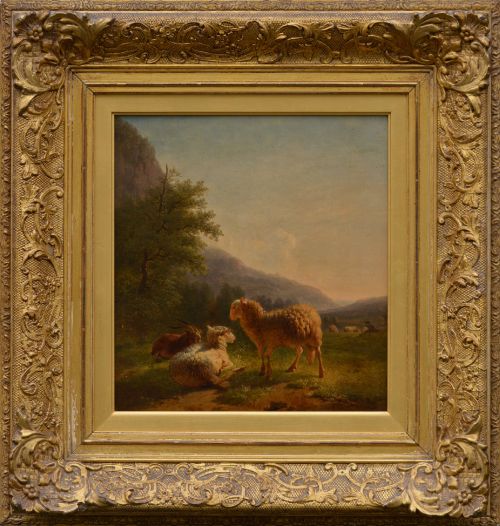
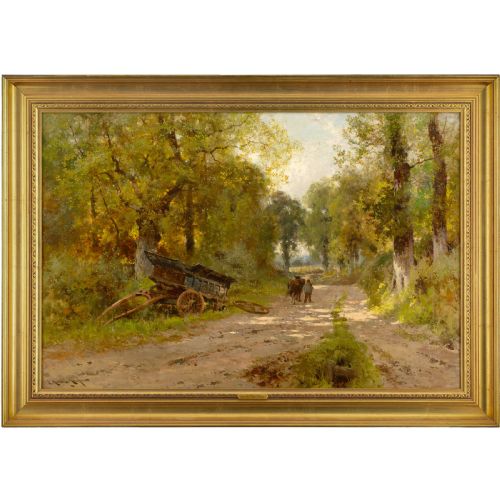
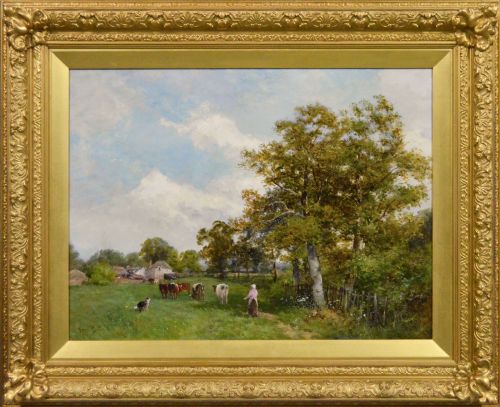
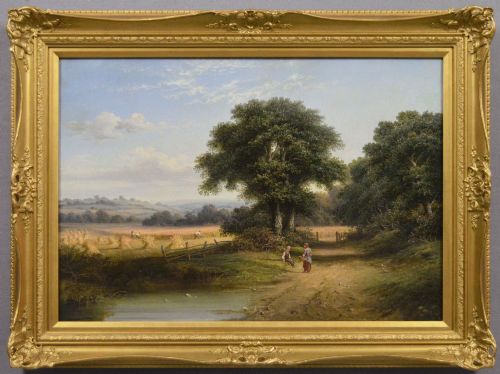
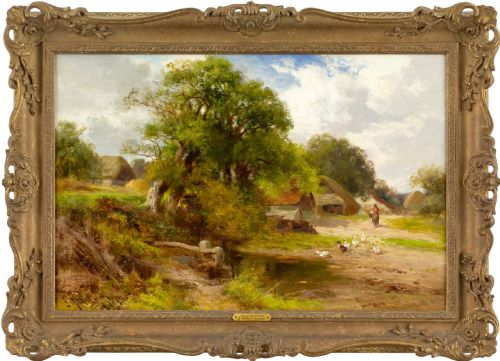
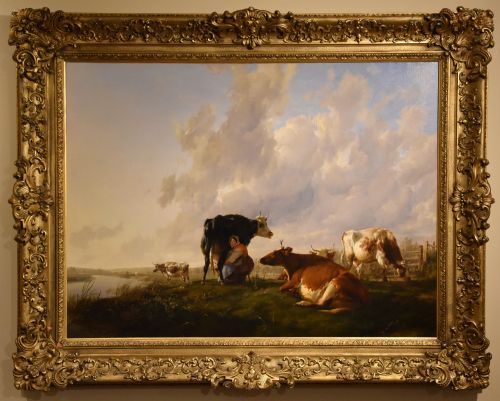
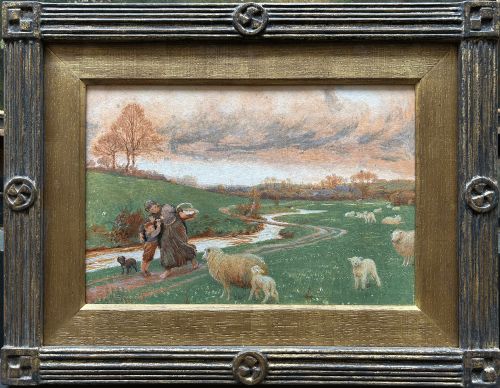
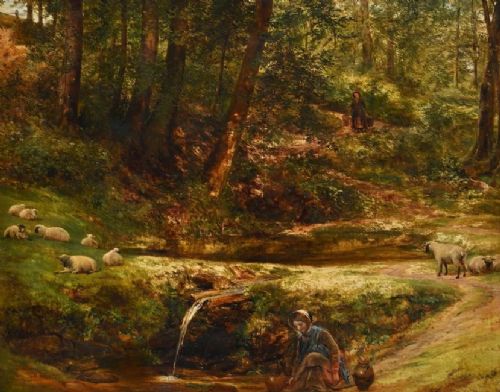
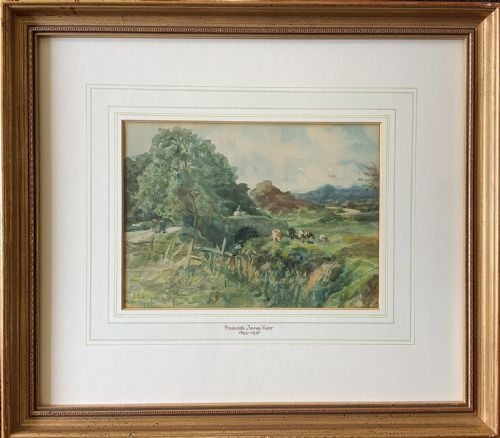
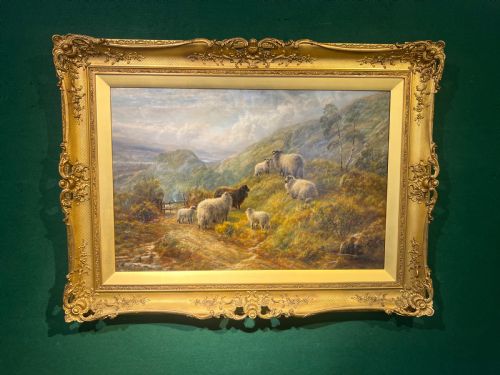
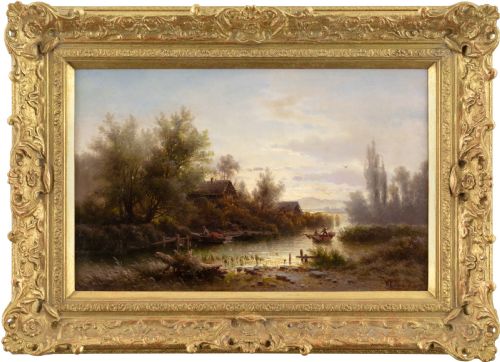
Victorian pastoral landscape art brings the countryside indoors through framed works that focus on agrarian scenes, riversides and grazing animals. These pieces reflect a nineteenth-century fascination with rural life, balancing topographical detail with atmospheric charm.
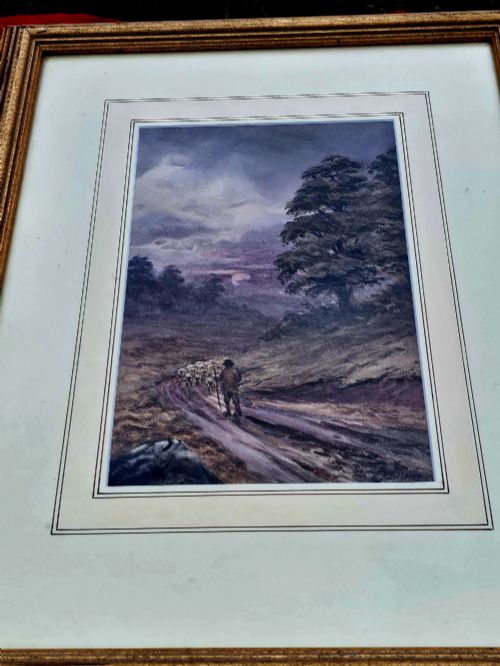
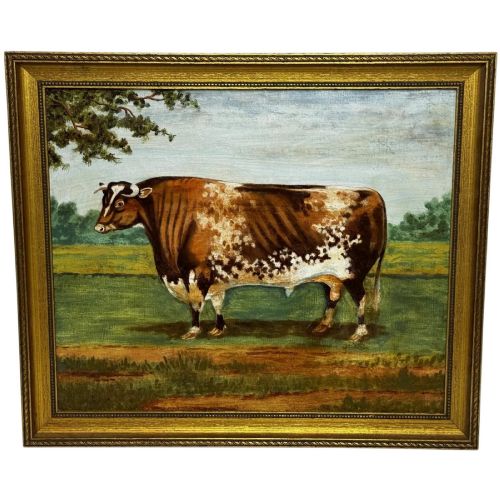
Buyers meet paintings and watercolours on this page spanning the mid-nineteenth century through to the Edwardian era. The selection draws heavily upon the British School alongside continental European influences, featuring herdsmen, sheep, cattle and harvest fields.
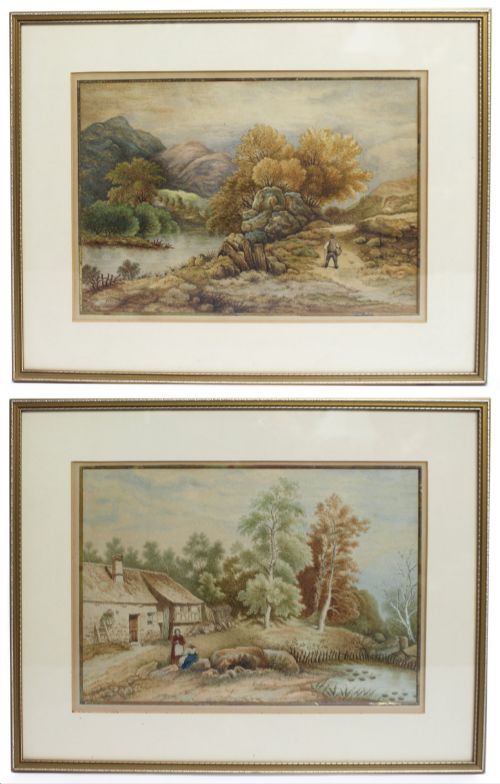
Common formats include oil on canvas and delicate watercolours on paper, often preserved in original giltwood and gesso frames. The imagery ranges from quiet Welsh estuaries to Scottish highland vistas and Berkshire lanes.
How They Were Made
Artists built these compositions using oil paint on canvas or board, alongside watercolour applied to paper. Canvases were typically stretched over wood frames and occasionally finished with protective varnishes.
Many works found here sit within elaborate giltwood and gesso frames that complement the tonal depth of the paintings. Draftsmanship relies on precise linework for watercolours and layered impasto for oil mediums.
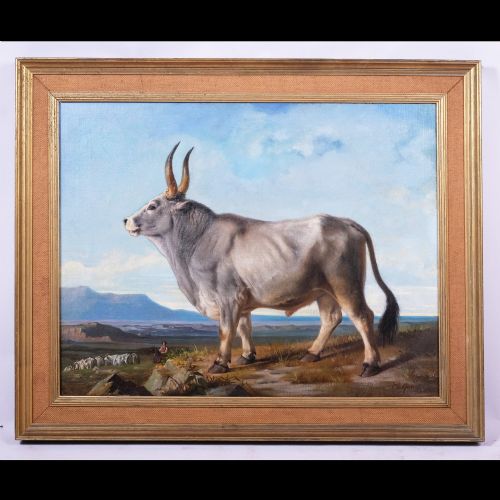
Cattle and sheep populate these fields so frequently that wool and horns outnumber human faces across the entire collection.
What Varies in Quality
The strength of a piece rests in the handling of light, shadow and anatomical accuracy within animal and human figures. Master hands capture the texture of wool and the atmosphere of morning or sunset moods with distinct clarity.
The preservation of the original paint layer and the condition of the accompanying giltwood and gesso frame influence the overall integrity of the artwork. Subtle brushwork and firm provenance distinguish standard topographical records from finer examples of period realism.
Eugène Verboeckhoven·John Horace Hooper·David Bates·Walter Heath Williams·Robert W. Macbeth·Thomas Sidney Cooper·Frederick Walker·Richard Redgrave·Albert Rieger·William Watson Jnr·Douglas Cameron·Johann Friedrich Voltz·Robert Watson·Henry H Parker·Miles Birkett Foster·Henry Schouten·Charles Edward Wilson·Frederick Hines·Johannes de Haas·John Emms·Philip Richard Morris·Cornelius Pearson·William Henry Mander·Thomas Baker of Leamington·Franz van Severdonck
The Victorian Pastoral Landscape Art Glossary
- Giltwood
- Wood carved and covered with a thin layer of gold leaf. It forms the decorative surface of many period picture frames.
- Gesso
- A plaster-like mixture applied to wood frames to create smooth surfaces for gilding. It allows intricate moulded ornamentation.
- Impasto
- Paint applied thickly to a canvas, standing out in relief from the plane. This technique adds tactile weight to highlights and foliage.
- Watercolour
- Pigments suspended in a water-based solution applied to paper. It creates transparent washes and delicate atmospheric effects.
- British School
- A loose grouping of artists working in Britain sharing stylistic traits. It defines much of the domestic output found in nineteenth-century painting.
Victorian Pastoral Landscape Art: Frequently Asked Questions
What subjects appear in these pastoral scenes?
These artworks focus heavily on agricultural life, featuring herds of cattle, flocks of sheep and figures working in harvest fields. Riversides, ponds and rural pathways form the primary settings across the collection.
Animals are frequently rendered with careful attention to breed and anatomy, reflecting the period interest in livestock and agrarian output.
Are these works original period pieces?
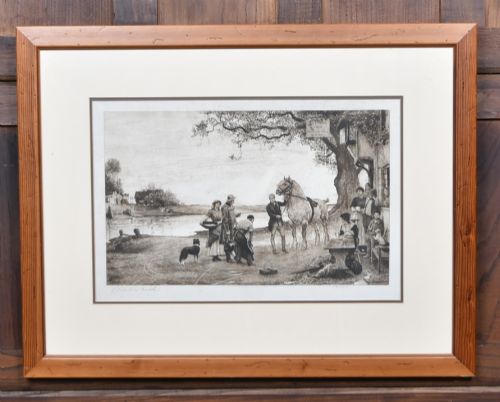
The selections date primarily from the nineteenth century and the Edwardian period, executed as original paintings, watercolours or etchings. Signatures and dates appear on many examples to confirm their origins.
Certain items represent period copies or lithographs after original paintings by notable artists of the era.
How should I frame and hang these paintings?
Many pieces retain their original giltwood and gesso frames, which require gentle handling and stable indoor environments away from direct sunlight. Avoid humid spaces to protect both the canvas and the delicate gold leaf on the mouldings.
Proper wall fixings suited to the weight of wood frames will ensure secure placement without straining the structure.
How do oil paintings differ from watercolours here?
Oil paintings utilise pigment bound in drying oils on canvas or board, offering rich textures and deep colour layering. Watercolours employ water-soluble pigments on paper, resulting in lighter, transparent tones.
Watercolours require glass protection within the frame, whereas oil paintings on canvas remain open to the air beneath a protective varnish.