





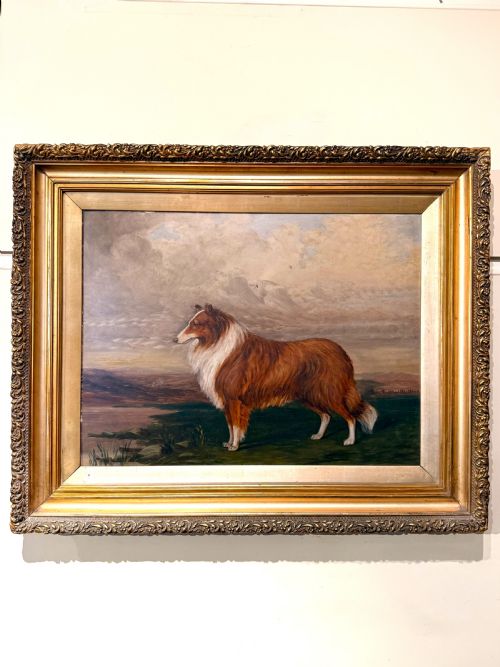

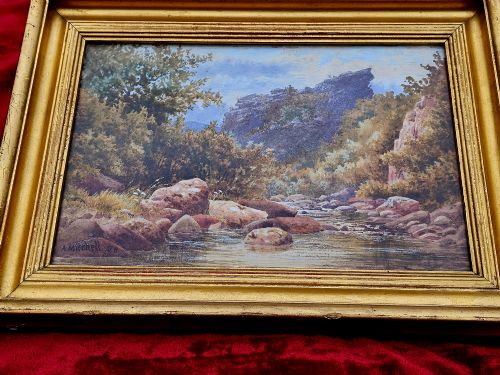
Gilt Frame Landscape Painting
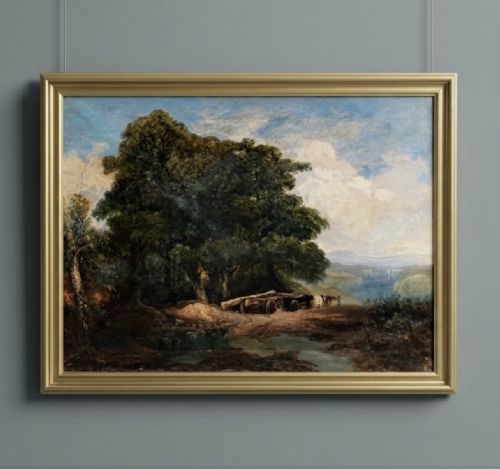
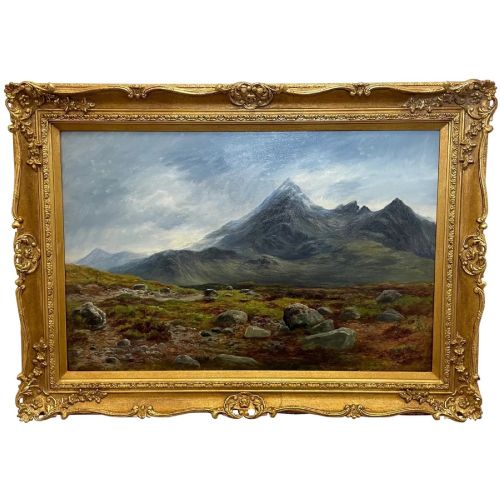
A gilt frame landscape painting brings the depth of the countryside or coast directly into a room, finished with the reflective warmth of period gilding.
Gilt Frame Landscape Painting
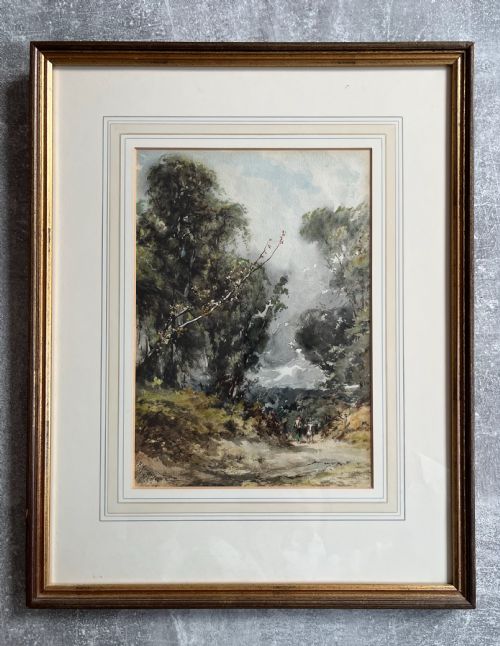
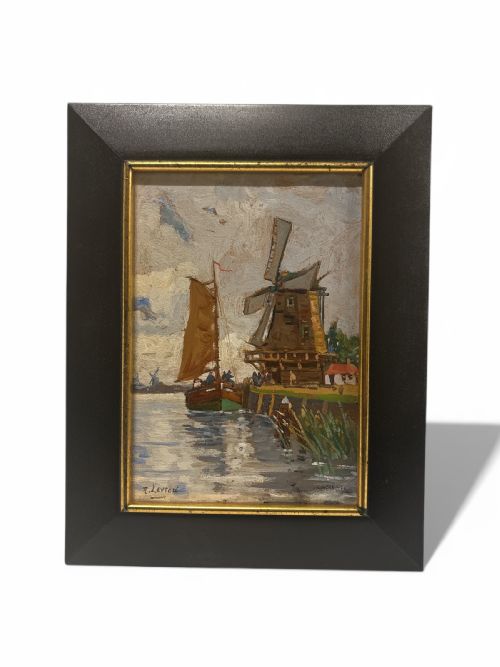
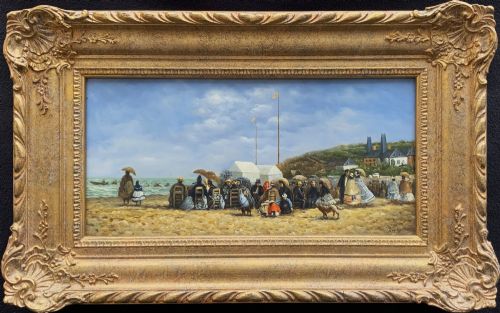
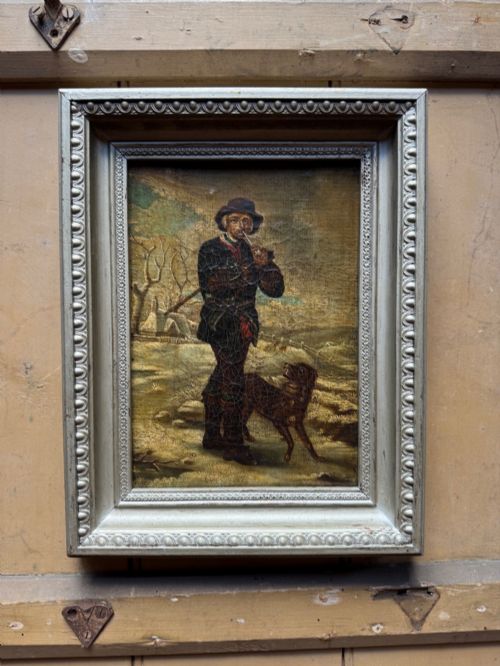
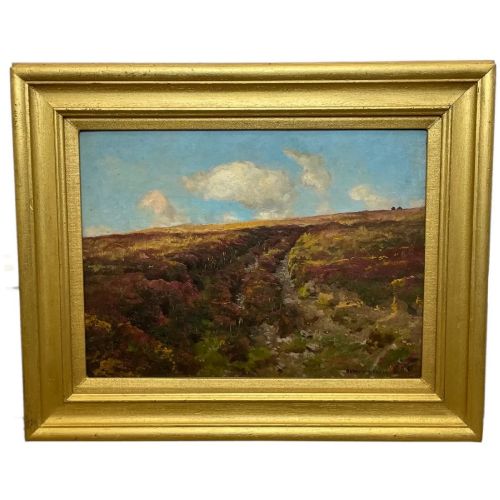
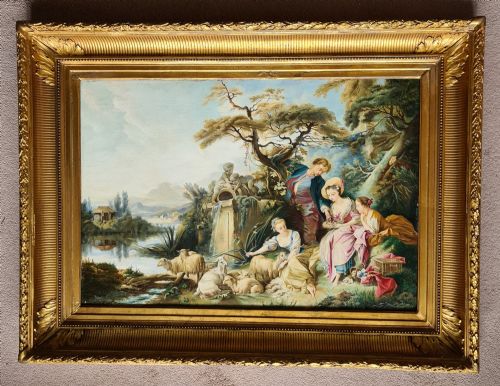
A gilt frame landscape painting captures rural vistas, marine views, and pastoral settings created across the nineteenth and twentieth centuries. These artworks encompass traditional British and European scenery, rendered with oil paint or watercolour.
The selection ranges from large Victorian canvases depicting cattle and mountains to smaller Edwardian board studies and coastal views. Many retain their original wooden, gesso, or decorative swept gilt frames that complement the composition.
How They Were Made
Artists worked primarily with oil paint on stretched canvas or wooden panels, whilst others utilised watercolour or pastel on paper. Canvases and panels provided a durable surface for building rich textures and atmospheric light.
Surrounding the artwork, makers constructed frames from wood and applied layers of gesso before gilding the surface. Decorative details were often moulded in plaster cast relief to create ornate, reflective borders.
Gilt Frame Landscape Painting Retail Price Guide 2026
Typical asking prices for gilt frame landscape painting among the pieces listed under this phrase on Sellingantiques today, from the lower quarter to the upper quarter. They describe what is for sale here now, not the wider market.
Listings feature works spanning the 19th Century, Edwardian, and 1960 periods, utilising oil, watercolour, pastel, and gesso.
What Varies in Quality
The finesse of the brushwork and the naturalism of the lighting separate standard decorative works from accomplished artistic achievements. Strong compositions demonstrate a confident handling of perspective, tone, and atmosphere.
The craftsmanship of the housing itself influences the overall merit, with hand-carved or intricately moulded plaster gilt frames showing superior depth compared to simpler mouldings. Original pairings of artwork and period frame add considerable integrity.
Richard Sebastian Bond·William Beattie-Brown·George Fotherly Hargitt·Arthur Wardle·William Joseph Shayer Senior·George Houston·Thomas Sidney Cooper
The Gilt Frame Landscape Painting Glossary
- Gesso
- A plaster mixture applied to wooden frame bases to create a smooth surface for gilding. This foundational layer allowed craftsmen to carve or mould intricate decorative details.
- Gilt Wood
- Timber coated with gold leaf or a metallic substitute to give a brilliant, reflective finish. It forms the primary visual structure surrounding many period paintings.
- Oil on Canvas
- Pigment mixed with drying oils applied to a woven fabric support. This medium allowed artists to blend rich colours and rework passages over time.
- Pastel
- Pigment bound in stick form and applied to paper to create soft, velvety textures. These delicate works required protective glazing to preserve the fine powder surface.
Gilt Frame Landscape Painting: Frequently Asked Questions
What periods do these paintings come from?
The available artworks span the nineteenth century through the mid-twentieth century, encompassing Victorian, Edwardian, and later modernist eras.
Each period brings distinct stylistic approaches to natural scenery, ranging from romantic pastoral views to impressionist coastal scenes.
How do I know if the frame is original?
Original frames generally show consistent signs of age, wear, and construction methods that match the era of the canvas inside.
Rebate sizes, corner construction, and the specific style of gesso moulding often provide clues to whether the painting and its border have remained together.
Are these works painted on canvas or panel?
The listings include both stretched canvas and solid wood panels, alongside works created on board or paper supports.
Painters selected their surfaces based on the scale of the scene and the desired texture for their brushwork.
Where were most of these landscapes painted?
Many scenes depict British and Scottish countryside, riverbanks, and coastal harbours, alongside continental European locations.
Artists frequently travelled to rural regions, coastal towns, and foreign cities to capture en plein air studies of local topography.