


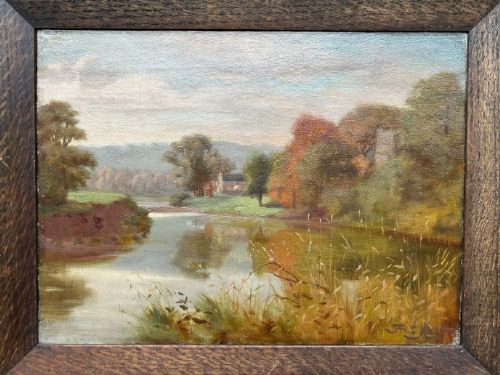
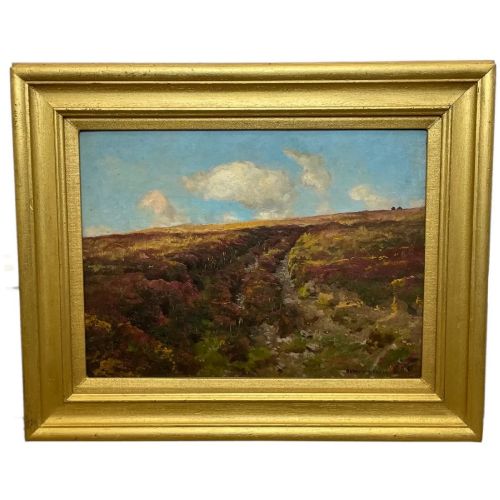
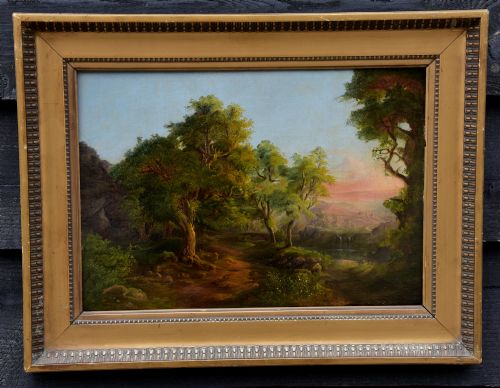
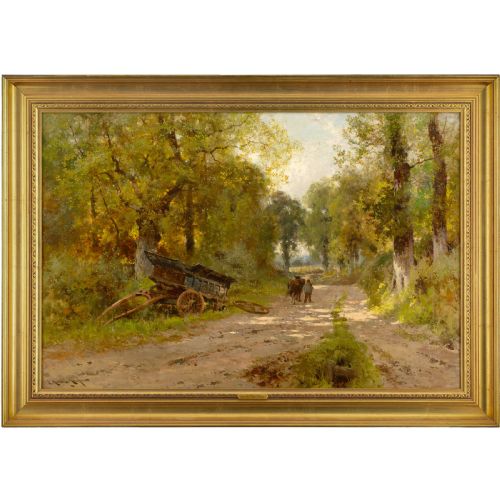
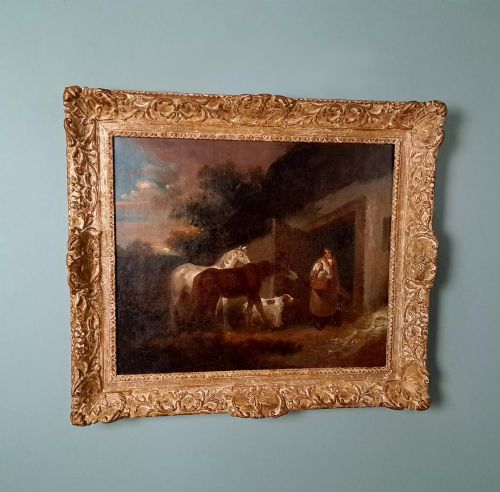
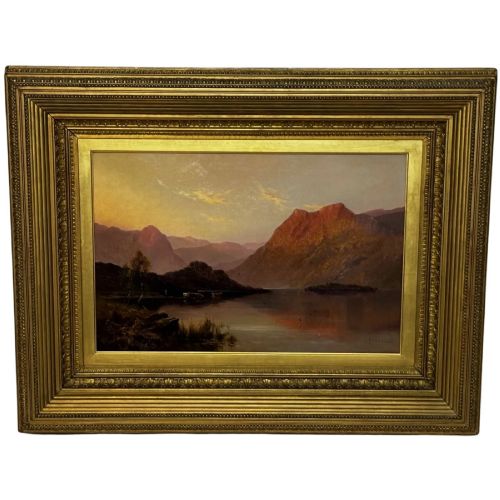
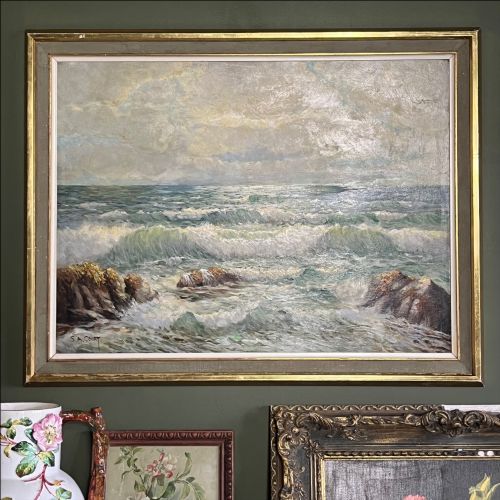
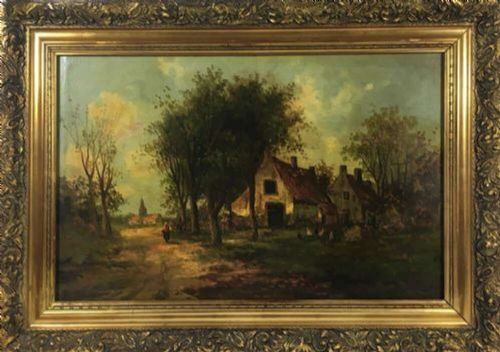
Framed Original Oil Landscape
A framed original oil landscape brings the varied light of the nineteenth and twentieth centuries directly into a room through pigment and canvas.
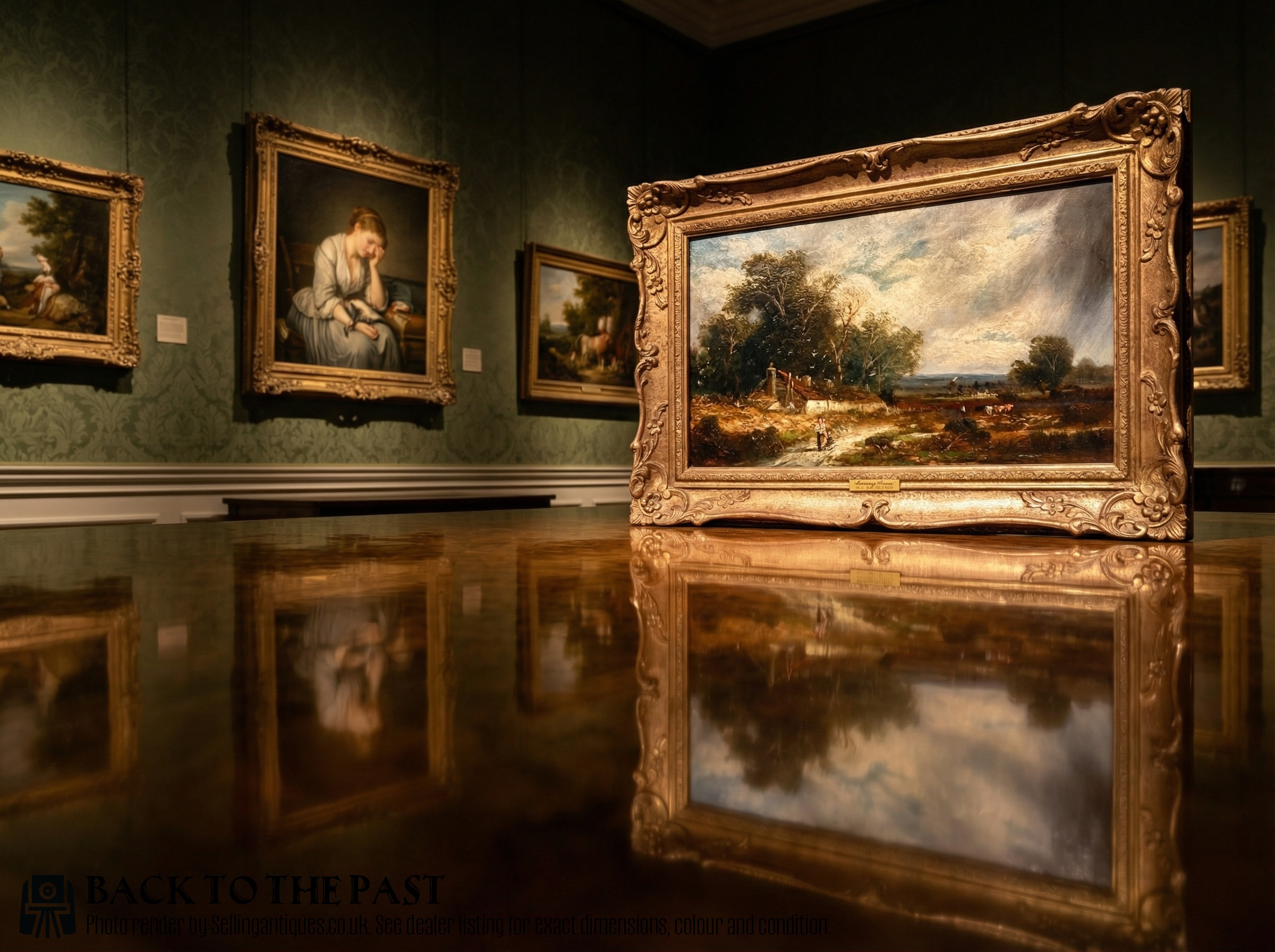
The Nature of the Work
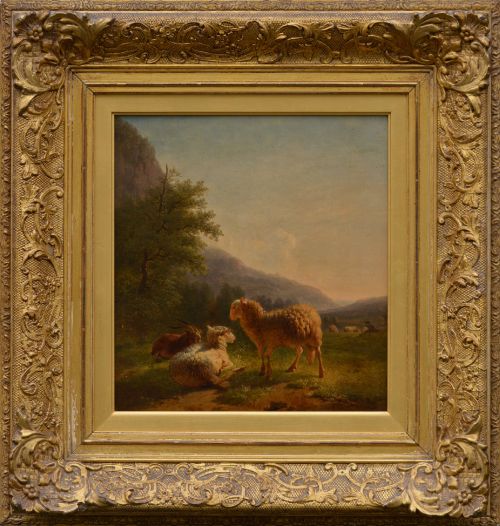
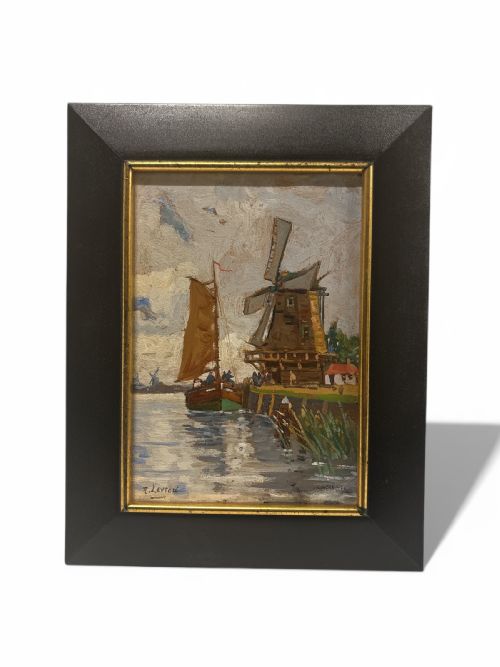
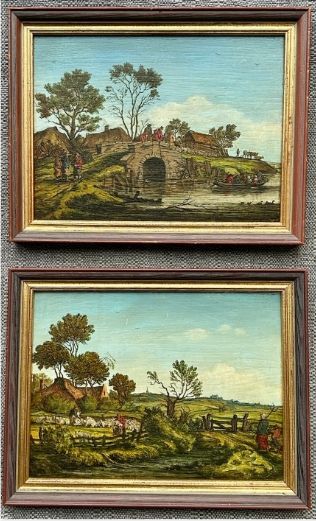
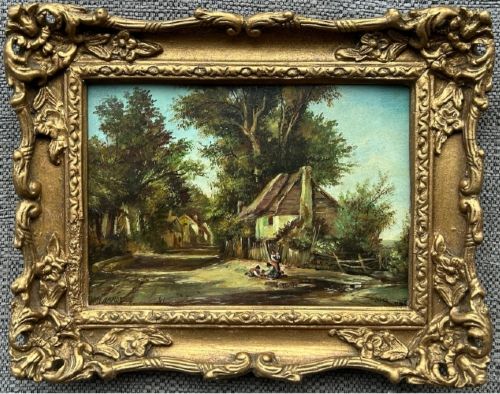
A framed original oil landscape captures rural vistas, coastal scenes, and agricultural valleys executed by hand during the nineteenth and twentieth centuries. These works record pastoral life, northern industrial towns, and French coastal views through direct observation and studio composition.
Most examples found here date from the nineteenth century up to nineteen sixty, representing British Impressionism, Northern School subjects, and French Expressionism. The subjects range from Yorkshire dales and river cottages to continental châteaux and Mediterranean islands.
Compositions appear on stretched canvas, wooden board, or card, enclosed in period wooden or gilded frames that complement the palette of the paint. The presence of artist signatures and inscribed versos frequently anchors these paintings to specific regions and creators.
Materials and Method
Artists applied oil paint using brushes and palette knives onto prepared supports of canvas, wood panel, millboard, or card. The medium allowed for thick impasto textures in modernist works and smooth, blended transitions in traditional nineteenth-century pastoral scenes.
Frames utilise timber such as wood, giltwood, and gilded wood, often moulded and finished with gesso or gold leaf to isolate and enhance the visual depth of the painted surface.
Retail Price Guide 2026
Typical UK retail prices for framed original oil landscape, calculated from the Sellingantiques database of over a million retail prices indexed since 2003. This retail price guide relies exclusively on Sellingantiques data; no external sources or auction records are used, so the figures do not describe the wider market.
Supports recorded across these paintings include stretched canvas, wooden panels, millboard, and card.
Distinctions in Execution
The strength of a framed original oil landscape rests upon the handling of light, atmospheric perspective, and pigment density across the composition. Skilled painters achieve spatial depth through confident brushwork rather than rigid adherence to outline.
The integrity of the relationship between the painting and its original or period frame defines the visual harmony of the piece. Subtleties in tonal variation and the preservation of the unlined canvas or untouched board elevate the standing of an individual work.
Kershaw Schofield·Eric Brown·Gabriel Dauchot·Robert Finley McIntyre·Jean-Baptiste Olive·Fred Lawson·Mary Lord·Kevin Platt
The Framed Original Oil Landscape Glossary
- Impasto
- Paint applied thickly to a canvas or board, standing out in relief from the surface so that the marks of the brush or palette knife remain visible. This technique adds tactile depth and catches ambient light.
- Giltwood
- Timber carved and coated with gold leaf or metallic powder, frequently utilised for nineteenth-century picture frames. It provides a reflective border that isolates the painted scene.
- Oil paint
- Pigment particles suspended in a drying oil such as linseed, offering slow drying times and rich colour saturation. It permits artists to work wet-in-wet or build up translucent glazes.
- Board
- A rigid flat substrate made from wood pulp or compressed material, serving as a sturdy support for plein air painting during the nineteenth and twentieth centuries.
- Verso
- The back of a painting's canvas, board, or panel, which often holds artist signatures, exhibition labels, titles, or stamps providing provenance.
Frequently Asked Questions
How do I date a framed original oil landscape?
Dating relies upon stylistic markers, stretcher construction, framing conventions, and inscriptions found on the verso of the board or canvas. Victorian works typically display tighter academic control, whereas mid-century examples embrace looser brushwork and modernist palettes.
Material evidence such as the type of canvas weave, board stamp, or gilt composition on the frame also assists in narrowing the period of production.
Where were these landscape paintings created?
These works originate from British, French, and Italian studios and plein air sites, recording specific regional topographies from Yorkshire and the Lake District to Marseille and Longchamp. Artists travelled widely to capture local architecture, agricultural labour, and coastal geography.
Many pieces document recognizable locations such as Whitby, Worcester, or Lake Geneva, often inscribed by the artist on the reverse.
How should I hang an oil painting?
Hang paintings away from direct sunlight and fluctuating heat sources to protect the oil paint and wooden support from cracking or warping. Secure picture hooks directly into wall studs or utilise appropriate masonry fixings matched to the weight of the frame.
Ensure the piece hangs at eye level where ambient room lighting can illuminate the texture of the brushwork without creating excessive glare on the varnish.
What is the difference between canvas and board?
Canvas consists of woven fabric stretched over a wooden frame, offering slight give under the brush and a textured ground for oil pigments. Board provides a completely rigid, unyielding surface made from wood or compressed pulp, favoured by artists painting outdoors.
Both supports have been used concurrently for centuries, though board frequently indicates smaller, portable plein air studies.