




Antique Landscape Canvas
These antique landscape canvas works bring the open air, rivers and hills of the nineteenth and early twentieth centuries directly into a room.
The Nature of the Works
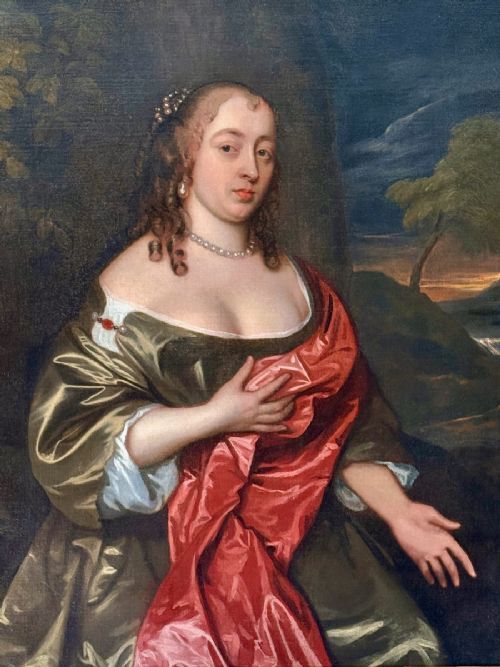
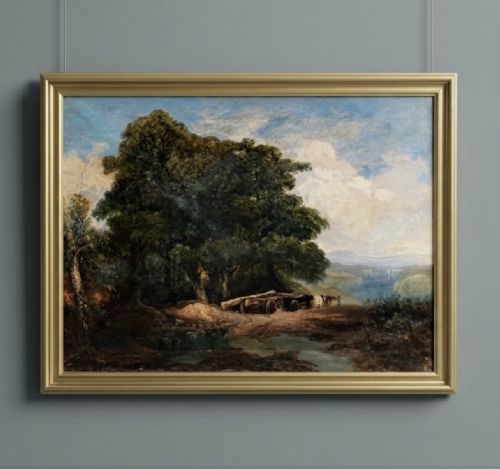
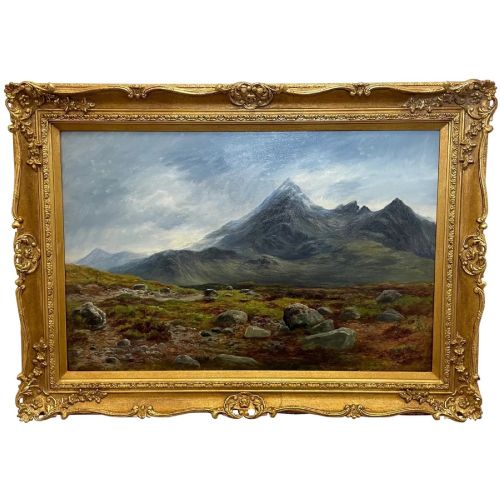
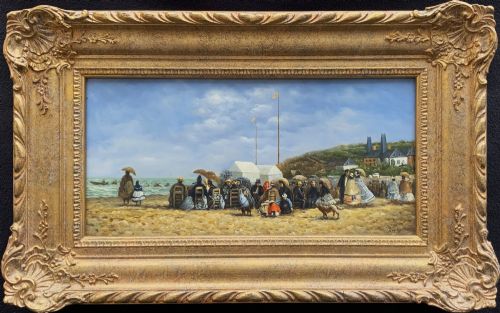
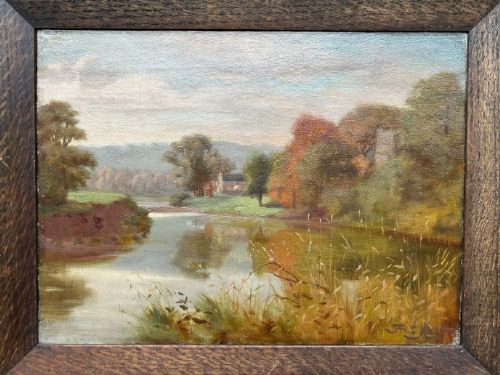
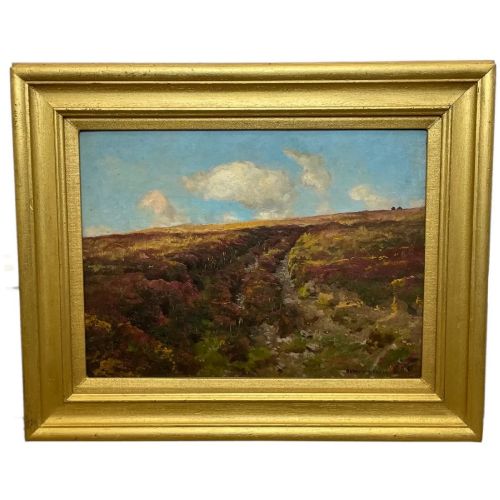
An antique landscape canvas captures pastoral scenes, river views, mountain passes and rural life created during the Victorian and Edwardian eras. These paintings record specific locations across Britain, continental Europe and America through the brush of regional and academic painters.
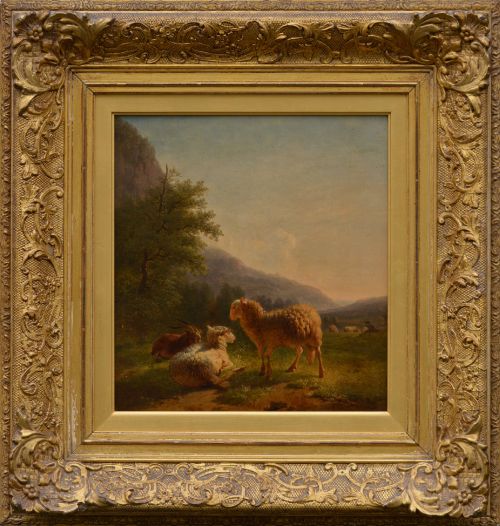
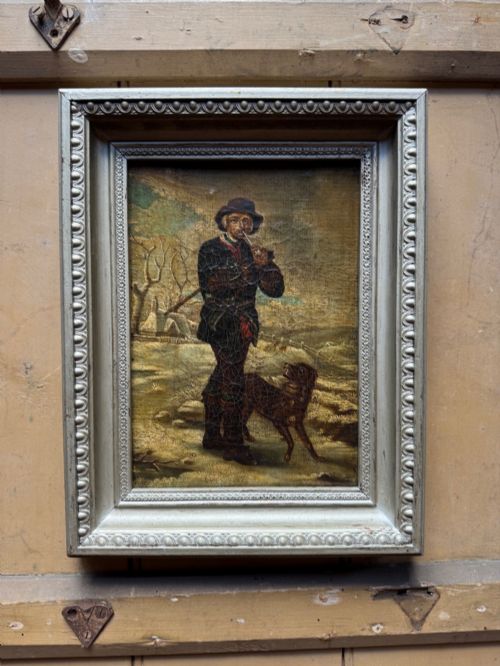
The works seen here range from intimate sketches on canvas laid onto board to large framed exhibition pieces. Pastoral settings with cattle, sheep on moorland hillsides and quiet river banks dominate the subjects preserved from this period.
Materials and Construction
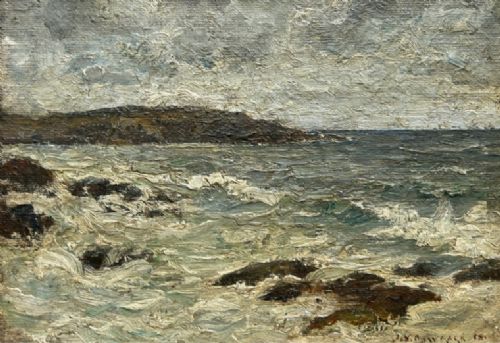
Artists built these scenes using oil paint applied to a woven fabric support stretched over a wooden frame, sometimes later laid onto board for added stability. The pigments were mixed with oils to achieve depth, allowing both thin washes and heavy impasto texture.
Retail Price Guide 2026
Typical UK retail prices for landscape canvas, calculated from the Sellingantiques database of over a million retail prices indexed since 2003. This retail price guide relies exclusively on Sellingantiques data; no external sources or auction records are used, so the figures do not describe the wider market.
The listings combine nineteenth and early twentieth century works, featuring oil paint on canvas alongside canvas laid onto board.
Distinctions in Quality
The distinction between standard works and exceptional examples lies in the confidence of the brushwork and the management of light across the canvas. A master painter renders atmosphere, weather and distance with economy and precision rather than literal detail.
The integrity of the original surface and the harmony of the surrounding gilded frame contribute significantly to the standing of a piece. Works that preserve their untouched paint layers and period frames carry greater visual coherence.
Albert Bierstadt·Eric Brown·John Holland·George Cole·Owen Bowen·George Parson-Norman·Stuart Lloyd·Ferdinand E Gröne·Oscar Perlasca·T H McKay·David Cox Senior·E. Harrison·John Morison·William Ashton·J. Lawrence Hart·Robert Watson·James Aumonier·Oliver Hall·James Arthur O'Connor·Henry Cheadle·AF de Breanski·Robert Weir Allan·Charles Williams·Charles Greville Morris·Georgina Lara
The Antique Landscape Canvas Glossary
- Oil on Canvas
- A painting medium where pigment particles are suspended in a drying oil, applied to a stretched woven fabric support. This combination allows for rich colour blending and varied surface textures.
- Giltwood
- Timber that has been coated with a thin layer of gold leaf or metallic powder. It provides a luminous border that isolates the painted scene from its surroundings.
- Gesso
- A paint mixture consisting of a neutral binder mixed with chalk, gypsum, or pigment. It is applied to wooden frames as a smooth base before gilding.
- Canvas Laid Onto Board
- A conservation or studio method where a fabric painting is adhered to a rigid backing panel. This technique prevents sagging and stabilises fragile supports.
- Impasto
- Paint applied thickly to a canvas, standing out in relief from the surface. This technique allows brush marks and knife strokes to catch the light.
Frequently Asked Questions
How do I hang a heavy framed canvas safely?
Heavy antique canvases require secure wall anchors fixed directly into masonry or wooden studs. Utilising two brass picture hooks distributes the weight evenly and keeps the frame level.
Ensure the hanging wire or cord attached to the original wooden frame is robust and securely fastened. Position the painting at eye level away from direct heat sources to protect both the canvas and the gilt frame.
What subjects are most common in these landscapes?
Rural farmsteads, highland sheep pastures, and river scenes with boats dominate the surviving works from this period. Painters frequently recorded cottage life, livestock grazing, and pastoral valleys under changing skies.
Regional views of Scottish hills, Welsh mountains, and English rivers reflect the nineteenth century fascination with local topography. These compositions offer a direct record of rural trades and environments before industrial expansion.
How do I identify a Victorian oil painting?
Victorian oil paintings often feature dense narrative details, rich earth tones, and academic compositions focused on realism or romanticism. The style frequently emphasises atmospheric lighting, such as dramatic sunsets or misty morning mists over water.
Examination of the stretcher bars, canvas weave, and handwritten inscriptions on the reverse often provide clues to the era. Many works also retain period giltwood frames characteristic of nineteenth century framing workshops.
Should I clean an old oil painting?
Surface dust can be removed gently with a soft, dry brush, but deeper cleaning requires professional conservation. Old varnish layers discolour over time, turning yellow or amber and obscuring the original pigment tones.
Solvents used improperly can strip the delicate oil glazes applied by the artist. Leaving aged varnish intact is often preferred to preserve the historic character and integrity of the paint layer.