


Victorian Rural Scene Painting
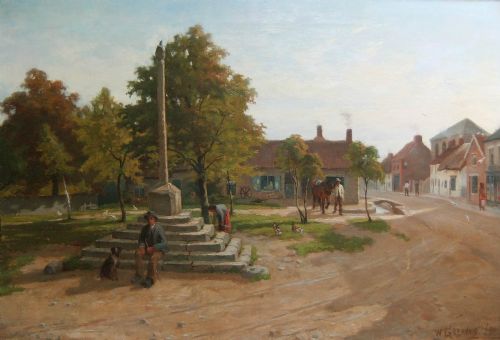
When you search for a victorian rural scene painting, you encounter pastoral landscapes, agricultural labour, and village life rendered in oils and watercolours.
Victorian Rural Scene Painting
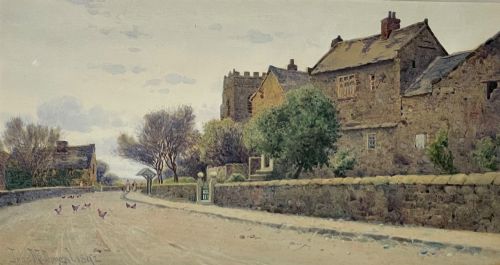
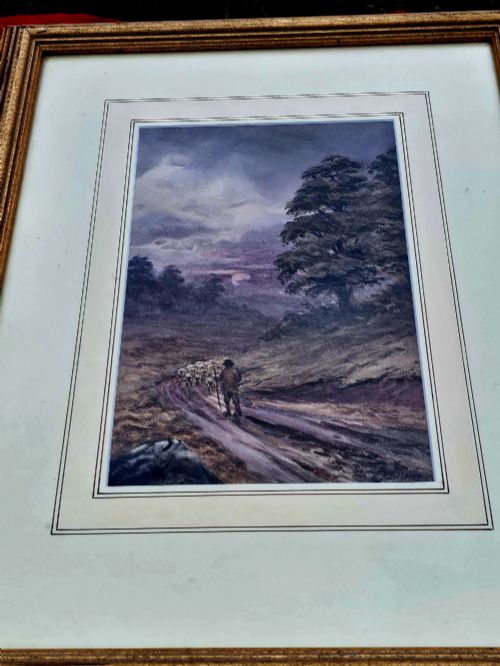
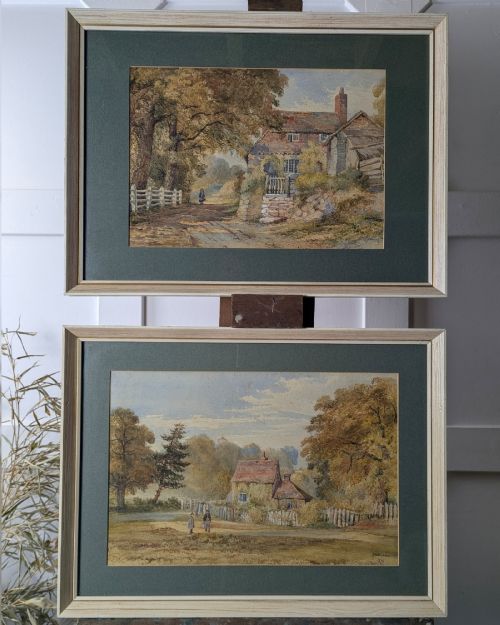
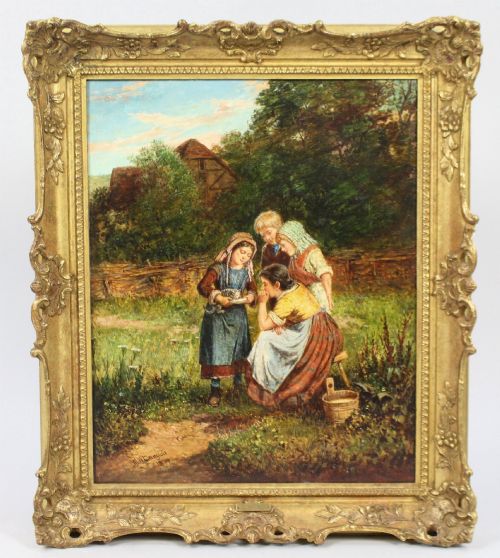
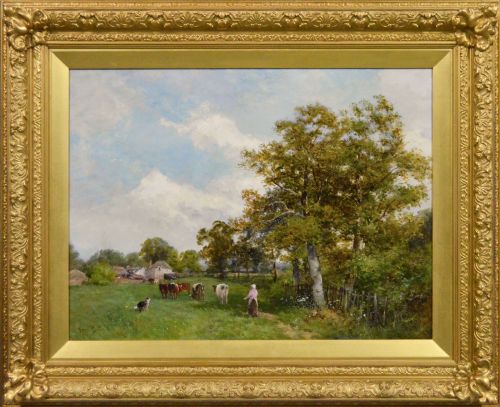
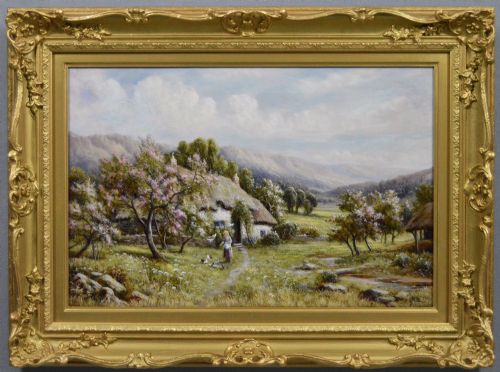
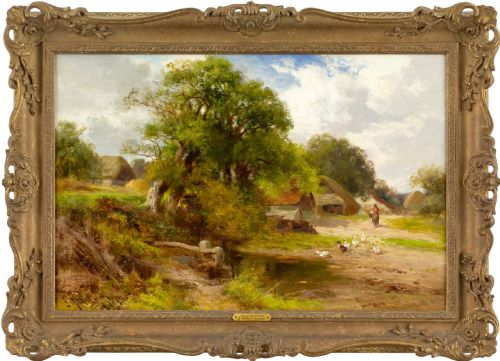
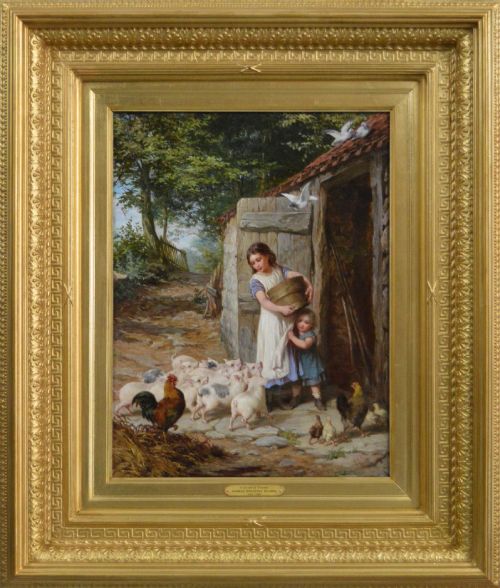
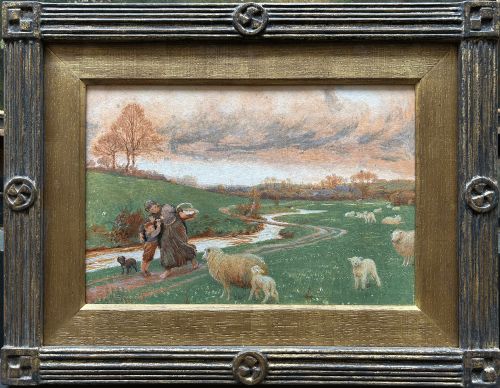
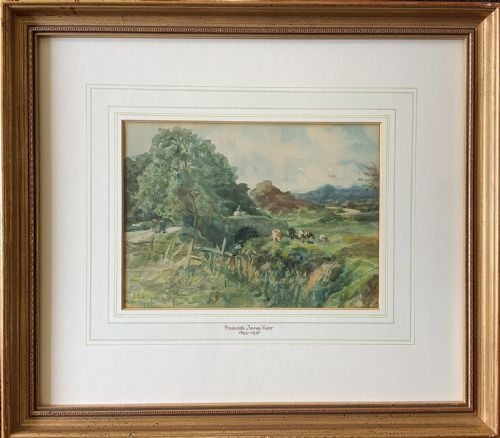
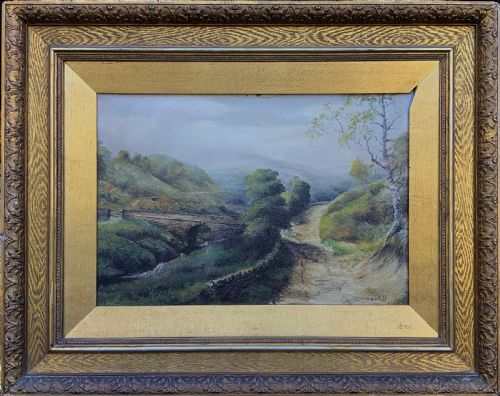
A victorian rural scene painting depicts countryside life, farming, and landscapes across the nineteenth and early twentieth centuries. These works record agricultural work, farmyard animals, cottages, and riversides in rural Britain.
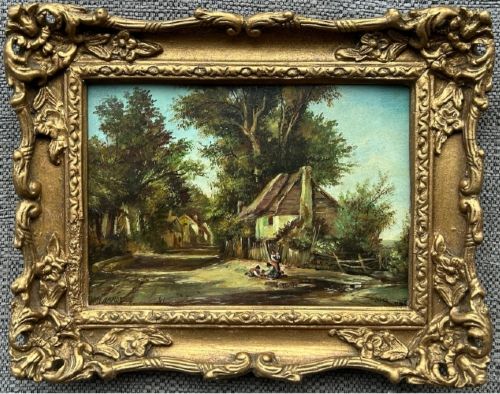
The pieces on this page span styles such as Victorian Pastoral, Victorian Realism, and the Victorian Idyllic School. You will find oil on canvas, oil on panel, oil on board, and watercolour paintings, often presented in gilt frames with gesso detail.
How they were made
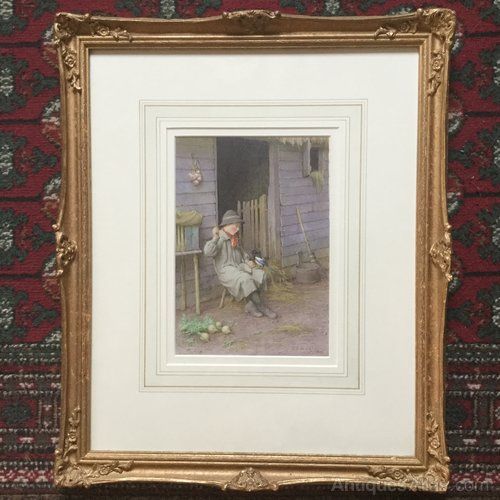
Artists worked primarily with oil on canvas or panel, or applied watercolour pigments onto paper. Support materials included wood panels and stretched canvas, framed under glass for watercolours or within ornate gesso and gold leaf frames for oils.
Techniques range from detailed realist brushwork to looser impressionistic washes, capturing natural light in agricultural settings, woodlands, and village streets.
Victorian Rural Scene Painting Retail Price Guide 2026
Typical asking prices for victorian rural scene painting among the pieces listed under this phrase on Sellingantiques today, from the lower quarter to the upper quarter. They describe what is for sale here now, not the wider market.
Several paintings record livestock sneaking an unauthorized snack, including piglets investigating poultry feed and a foal stealing fruit from a basket.
What varies in quality
Quality rests upon the artist's command of light, composition, and anatomical accuracy in figures and animals. Finer works display confident handling of brush or wash, creating depth and atmosphere in the landscape rather than flat or formulaic scenery.
The preservation of the original surface, pigment stability, and the condition of the accompanying period frame also contribute to the standing of an individual painting.
William Howard Hardy·John McDougal·Mark William Langlois·David Bates·Robert John Hammond·George Augustus Holmes·Frederick Walker·William Greaves·Miles Birkett Foster·Charles Edward Wilson·Frederick Hines·Sydney Yates Johnson·Thomas Sidney Cooper·James Kyd·James William Booth·Henry John Yeend King·Samuel Joseph Clark·Henry John Boddington·Charles Vickers·John Linnell·Arthur Longley Vernon·Edward Brice Stanley Montefiore·Robert Winchester Fraser
The Victorian Rural Scene Painting Glossary
- Gesso
- A plaster-like mixture applied to wood frames before gilding. It provides a smooth base for intricate mouldings and gold leaf application.
- Genre painting
- Artwork depicting scenes from ordinary life, such as farm work, market days, or domestic tasks. These pieces focus on human activity within rural settings.
- Watercolour
- A painting method in which the paints are made of pigments suspended in a water-based solution. Works on paper require protection behind glass.
- Panel
- A flat piece of wood used as a rigid support for oil painting before canvas became dominant. Wooden panels offer a stable surface for detailed brushwork.
- Victorian Pastoral
- An artistic style celebrating the idealized beauty of the countryside and agricultural pursuits. It emphasises harmonious relationships between labourers, animals, and nature.
Victorian Rural Scene Painting: Frequently Asked Questions
What subjects appear in these paintings?
These works depict agricultural tasks, farmyard animals, shepherds, cottages, and river landscapes. Common motifs include haymaking, cattle herding, and figures outside rural dwellings.
Artists drew inspiration from the British countryside, documenting traditional farming practices and village life across various counties.
How do I care for antique watercolours?
Watercolours on paper are sensitive to direct sunlight and high humidity. Keep them away from bright windows to prevent fading of the pigments.
Ensure they remain framed behind glass with proper mount boards to prevent the paper from touching the glazing.
Are these works signed by the artists?
Many pieces carry the original signature or monogram of the painter, often found in a lower corner of the canvas or paper. Some works include contemporary inscriptions or labels on the reverse.
Unsigned pieces are frequently attributed to specific British schools or periods based on technique and subject matter.
How should I display framed oil paintings?
Oil paintings on canvas or panel benefit from stable indoor environments away from excessive heat sources and damp walls. The traditional gilt gesso frames complement the heavy pigments of nineteenth-century oils.
Dust the surface gently with a soft, dry brush and avoid liquid cleaners on the canvas or the gilded frame.