



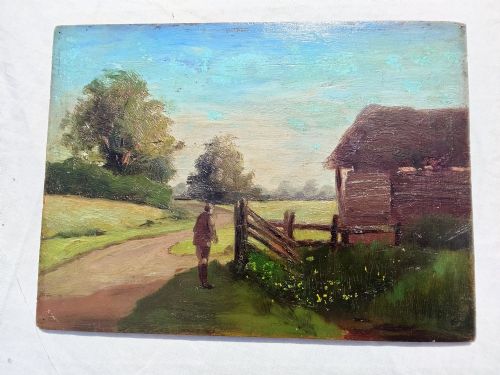
Antique Pastoral Scene Art
Antique pastoral scene art captures rural life, offering quiet views of shepherds, livestock, and rivers that bring calm to a room.
Antique Pastoral Scene Art
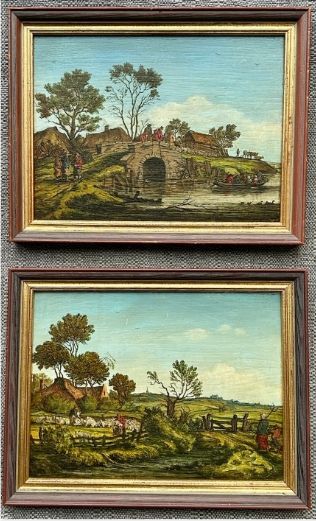
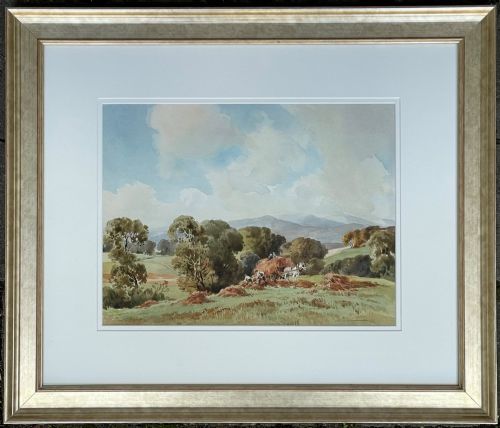
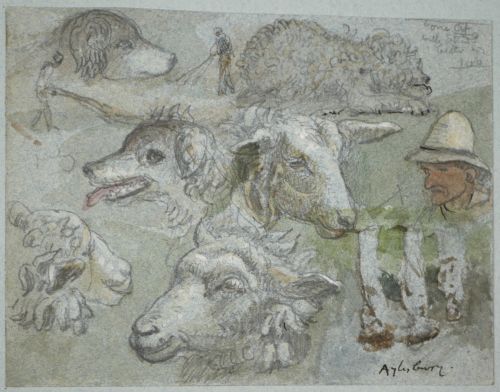
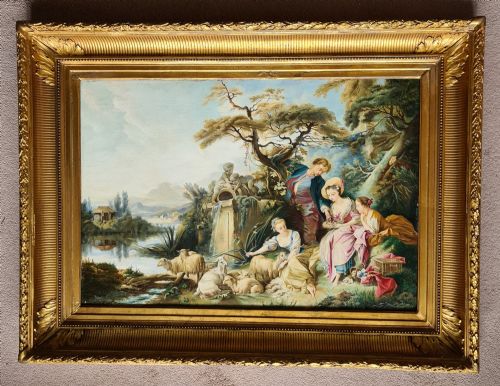
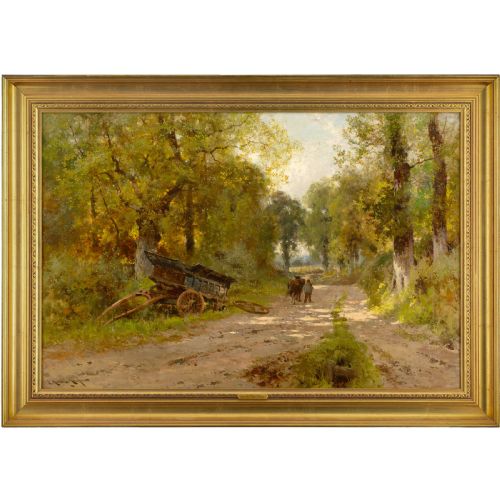
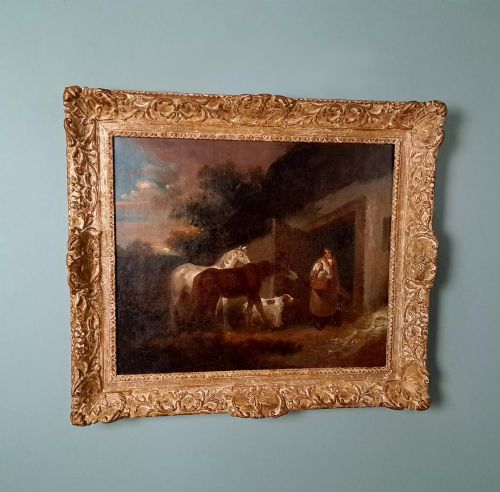
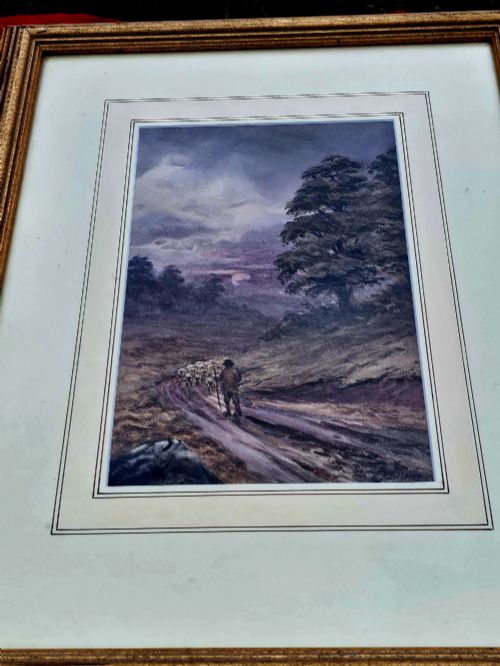
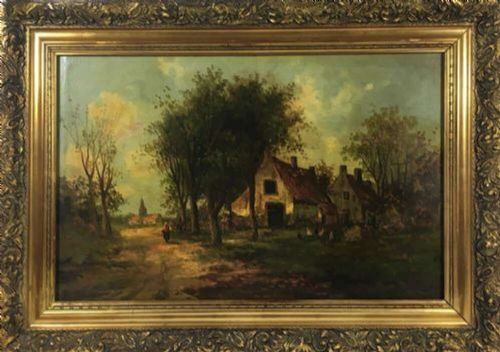
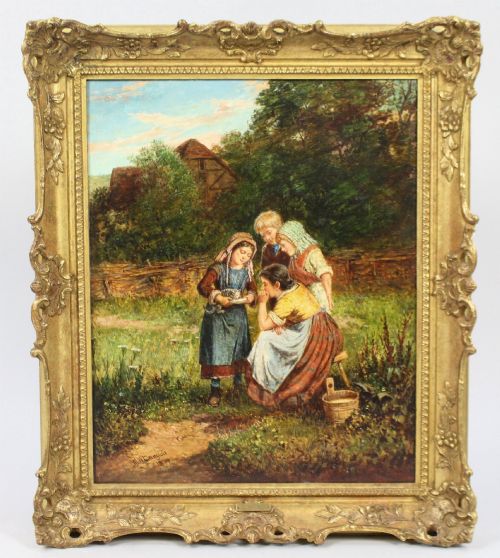
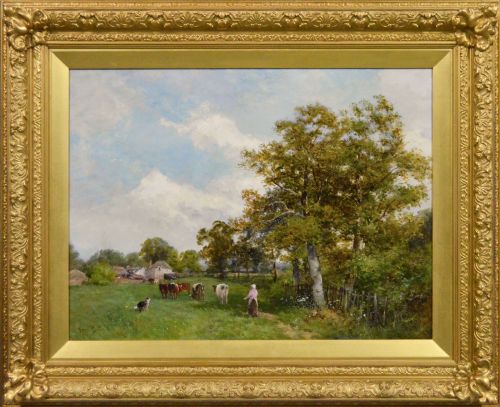
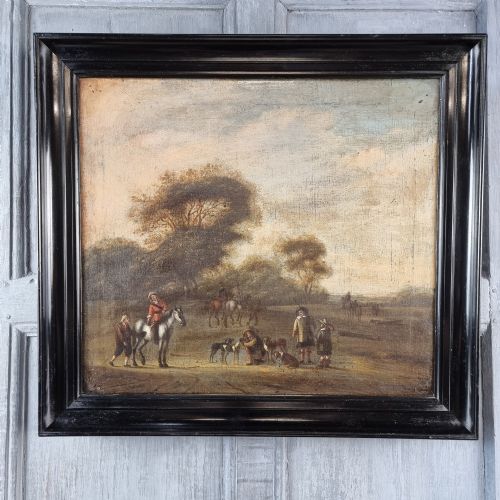
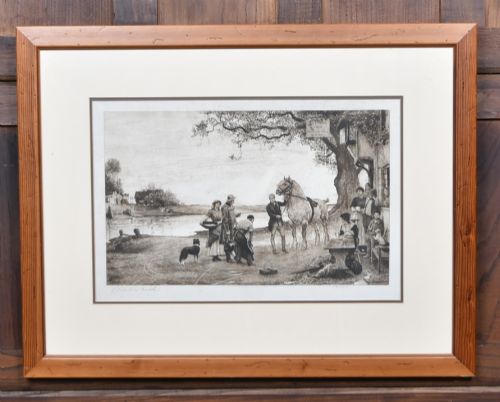
When you search for antique pastoral scene art, you are looking at visual representations of countryside life, agricultural labour, and rural landscapes. These works focus on shepherds, herdsmen, cattle, and quiet riversides rather than grand historical narratives. The pieces here span several centuries, taking the form of oil paintings, watercolours, etchings, engravings, drawings, and wall tapestries.
On this page, you are most likely to meet nineteenth-century oil paintings and watercolours on canvas, wood, or paper. British and French artists dominate the selection, portraying rural scenes from the eighteenth, nineteenth, and early twentieth centuries. From naive folk art to academic works in the manner of the Barbizon School, the variety reflects diverse approaches to the countryside.
The subjects range from simple river conversations and fishing spots to sheep herding and farmyard landscapes. Smaller works on paper sit alongside large framed canvas paintings and room-sized verdure tapestries. Together, they form a clear record of how artists across Europe interpreted pastoral themes over three hundred years.
How they were made
Painters built their compositions using oil paint on canvas, wooden boards, or wood panels, often applying gesso as a ground layer to prepare the surface. Watercolours on paper offered a lighter medium for quick landscape studies and finished rural views alike. Draftsmen utilised etching and engraving techniques to reproduce complex pastoral compositions in monochrome or grisaille.
Weavers constructed large wall hangings and tapestries from wool and silk, combining verdure designs with figurative elements in French workshops like Aubusson. Master framers enclosed these works in giltwood frames that enhanced the depth of the paintings and protected the edges of the canvas or paper.
Makers signed their pieces in oil or ink, sometimes leaving works indistinctly signed or attributed to specific regional schools. The physical support - whether stretched canvas, sturdy wooden panel, or heavy tapestry weave - determines how well each piece has survived the decades.
Antique Pastoral Scene Art Retail Price Guide 2026
Typical asking prices for pastoral scene art among the pieces listed under this phrase on Sellingantiques today, from the lower quarter to the upper quarter. They describe what is for sale here now, not the wider market.
Several sheep and cows appear in these scenes looking remarkably relaxed about their impending journey to market.
What varies in quality
The strength of the composition and the confidence of the brushwork separate the finest pastoral art from ordinary production. Master painters handle light and shadow with subtlety, creating believable atmosphere in skies, woodland, and water. Weaker works rely on stiff repetition and muddy colour mixing that flatten the sense of space.
Material longevity and original presentation heavily influence the standing of a piece. Works preserved on stable wood panels or well-stretched canvases retain their integrity better than those damaged by poor past environments. Original giltwood frames and clear signatures by known nineteenth-century painters elevate the status of an artwork above anonymous provincial pieces.
Eugène Verboeckhoven·William H Myers·George Graham·Percy Lancaster·James Smetham·Francois Boucher·John Horace Hooper·William Joseph Shayer Senior·EJ Letheren·Mark William Langlois·David Bates·Robert W Macbeth·Thomas Sidney Cooper·Frederick Walker·Richard Redgrave·George Oyston·Frederick James Kerr·William Watson Jnr·Douglas Cameron·Johann Friedrich Voltz·Royal Doulton·T C Hofland·Henry H Parker·Miles Birkett Foster·Henry Schouten
The Antique Pastoral Scene Art Glossary
- Barbizon School
- A group of French painters who gathered in the village of Barbizon to paint rural landscapes directly from nature. Their work emphasised realistic depictions of farmyards and forest scenes.
- Grisaille
- A painting executed entirely in shades of grey or neutral greyish-brown, often used to create the illusion of relief sculpture or as an underpainting for coloured works.
- Verdure tapestry
- A type of woven wall hanging featuring landscape foliage, trees, and plants as the primary subject, frequently populated by animals or figures in pastoral settings.
- Wood panel
- A flat piece of timber utilised as a rigid support for oil paintings before stretched canvas became standard practice in many workshops.
- Etchings
- Printmaking works created by using acid to cut into unprotected parts of a metal surface to hold the ink that forms the printed image.
Antique Pastoral Scene Art: Frequently Asked Questions
What defines pastoral scene art?
Pastoral scene art depicts rural life, usually focusing on shepherds, cattle, farmyards, and peaceful landscapes. These works romanticise agricultural labour and the quiet rhythms of the countryside.
Artists across the eighteenth and nineteenth centuries turned to these subjects to offer viewers an escape into a simpler, natural world.
How do I care for antique paintings?
Keep antique paintings out of direct sunlight and away from damp walls or rapid temperature changes. Stable indoor environments prevent canvas sagging and wood panel splitting.
Dust surfaces gently with a soft, dry brush and avoid using chemical cleaners on oil paint or delicate watercolours.
Are tapestries different from paintings?
Tapestries are heavy textiles woven from threads like wool and silk to form pictorial wall hangings, whereas paintings apply liquid pigment directly to a solid surface. Both serve similar decorative roles in country houses and period interiors.
Large verdure tapestries provide rich texture and acoustic warmth that flat canvas artworks cannot replicate.
How can I tell the period of a piece?
The style of clothing, framing techniques, and the preparation of the canvas or wood panel offer strong clues to a work's age. Nineteenth-century pieces often feature distinct Barbizon or realist influences, while earlier eighteenth-century works lean towards classical pastoral compositions.
Signatures, artist registry records, and exhibition labels on the reverse provide definitive dates.