



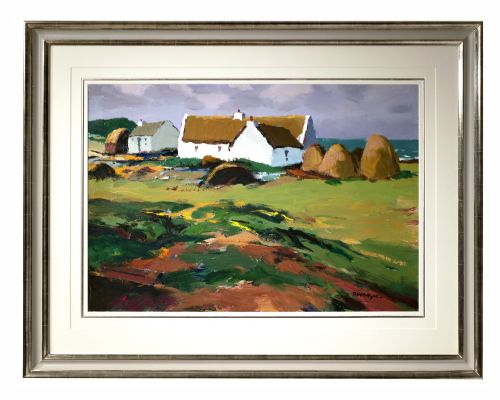
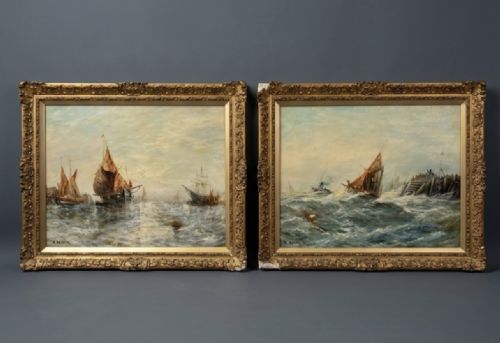

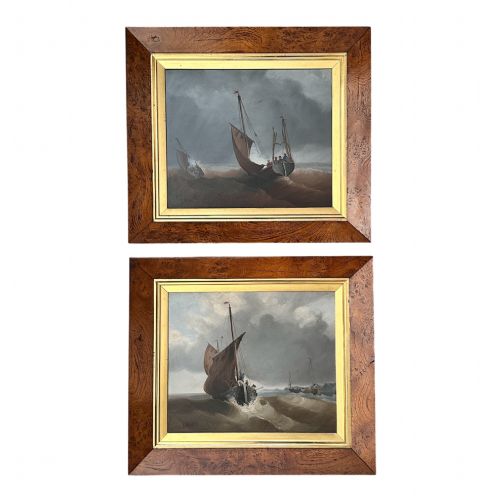
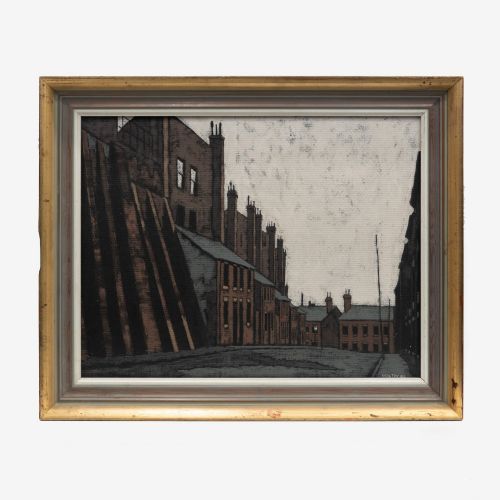
Oil on Board Landscape
An oil on board landscape brings portable studio work and rapid plein air observation into the room, offering an immediate window onto nineteenth-century countryside or mid-century coastal views.
Oil on Board Landscape
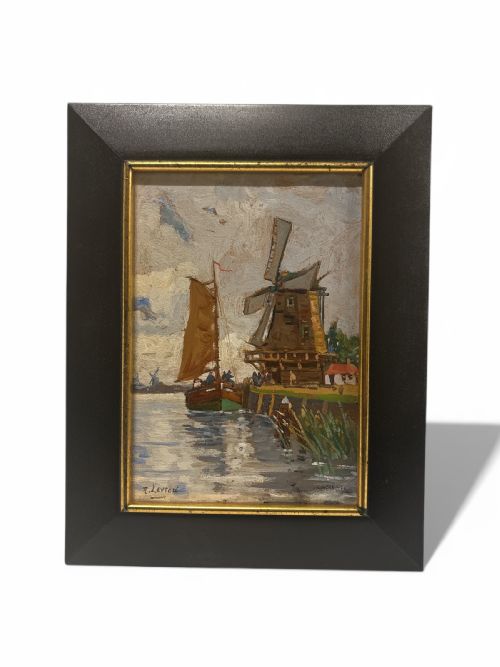
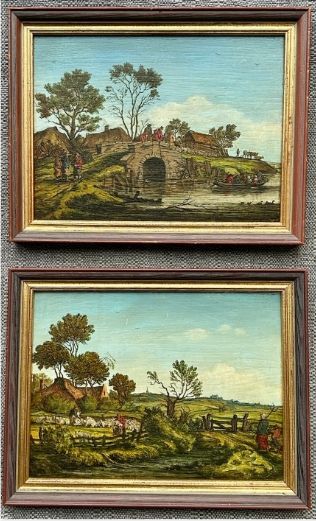
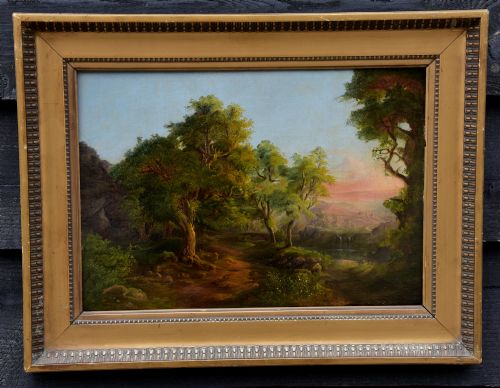
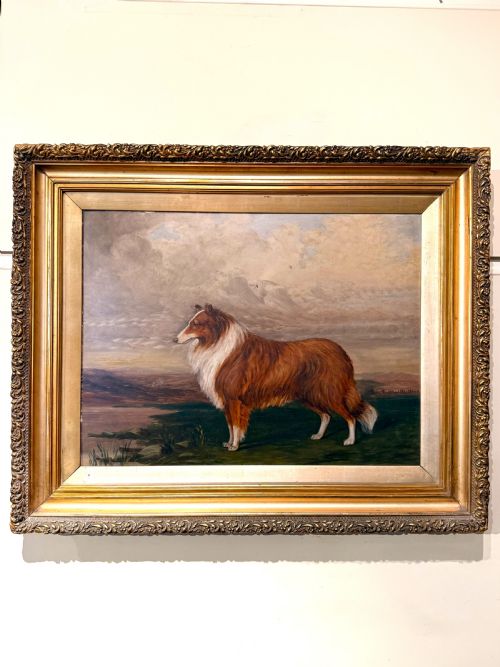
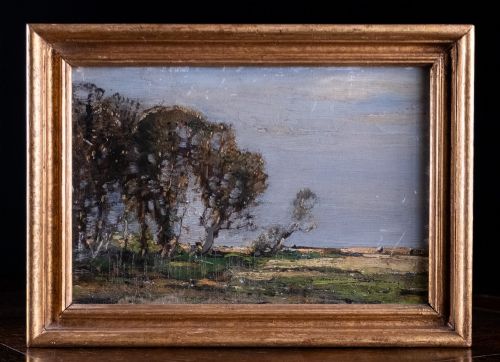
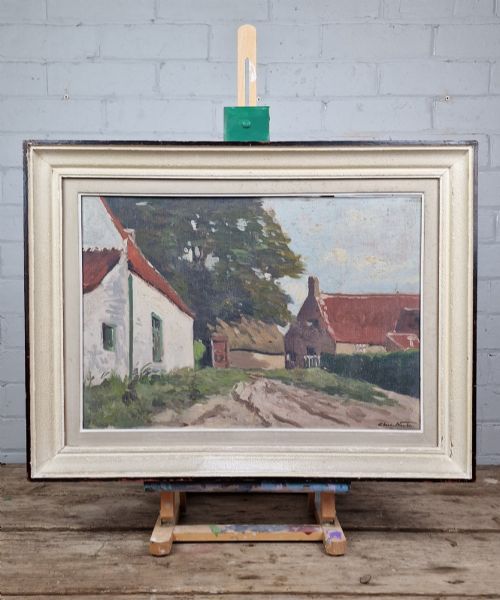
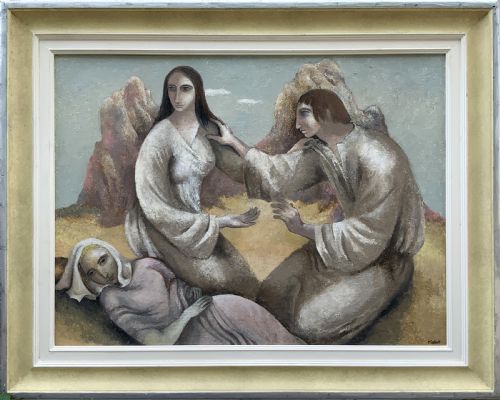
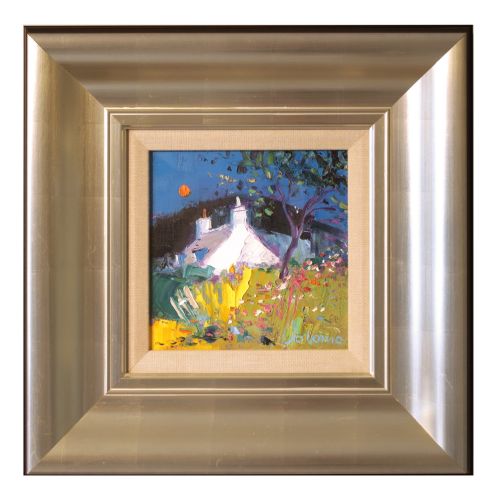
An oil on board landscape is a painted scene executed directly onto a rigid wooden panel or manufactured board rather than stretched fabric. These works range from intimate nineteenth-century pastoral sketches to bold mid-century industrial townscapes and coastal views.
Buyers frequently encounter nineteenth-century rural scenes alongside mid-century British and European impressions. The support provides a stable, flat foundation that artists favoured for both outdoor sketching and finished studio compositions.
How They Were Made
Artists applied oil paint directly to prepared wooden panels, thick card, or masonite boards, often sealing the rigid support with a layer of gesso or priming ground. Some historical works utilise canvas laid onto a wooden board to rescue damaged fabric or provide extra rigidity.
Brushwork varies from thin, blended glazes found in earlier academic pieces to thick, textured impasto strokes characteristic of post-impressionist and mid-century modern interpretations. Many surviving examples are housed within their original gilt wood or moulded frames.
Oil on Board Landscape Retail Price Guide 2026
Typical asking prices for oil on board landscape among the pieces listed under this phrase on Sellingantiques today, from the lower quarter to the upper quarter. They describe what is for sale here now, not the wider market.
Listings feature works spanning from the early nineteenth century through to the late twentieth century, executed on wooden panels, prepared boards, and canvas laid onto board.
What Varies in Quality
The strength of a composition rests on the artist's handling of light, brush economy, and spatial depth within a restricted surface. Masterly works capture transient atmospheric conditions with confidence, whereas lesser pieces rely on rigid formulas and flat colour application.
Condition plays a vital role in valuation, specifically the stability of the paint layer against the rigid substrate. Superior panels show minimal warping, stable priming layers, and well-preserved original framing that complements the period of the artwork.
Kershaw Schofield·Charles Houben·Donald McIntyre·Alexander Jamieson·T C Hofland·Joan Gillchrest·James Fry·William JB Jenkins
The Oil on Board Landscape Glossary
- Impasto
- Paint applied thickly to a surface, standing out in relief from the board. This technique leaves visible brush or palette knife marks that catch the light.
- Gesso
- A plaster-like mixture used as a smooth base coat on wooden panels before painting. It prepares the rigid surface to receive oil pigment.
- Tondo
- A circular painting or relief artwork. This unusual format demands specific compositional balance from the landscape artist.
- Plein air
- Painting outdoors in direct natural light to capture immediate atmospheric effects. Artists often utilised portable boards for these rapid studies.
Oil on Board Landscape: Frequently Asked Questions
Why did artists paint on board?
Wooden panels and stiff boards offered a cheap, rigid alternative to stretched canvas that required no complex preparation.
Their sturdy nature made them ideal for outdoor sketching trips, easily slipping into portable field easels without risk of punctures.
Are these paintings usually signed?
Many examples feature the artist's signature or monogram, frequently placed discreetly in a lower corner alongside a date.
Unsigned works also appear regularly, often attributed to specific regional schools or later followers based on handling and framing style.
How should I frame a panel painting?
Rigid board paintings require a stable housing that allows for minor wood movement without pinching the edges of the support.
Traditional gilt wood frames complement nineteenth and early twentieth-century pieces, while simple shadow boxes suit mid-century modernist works.