

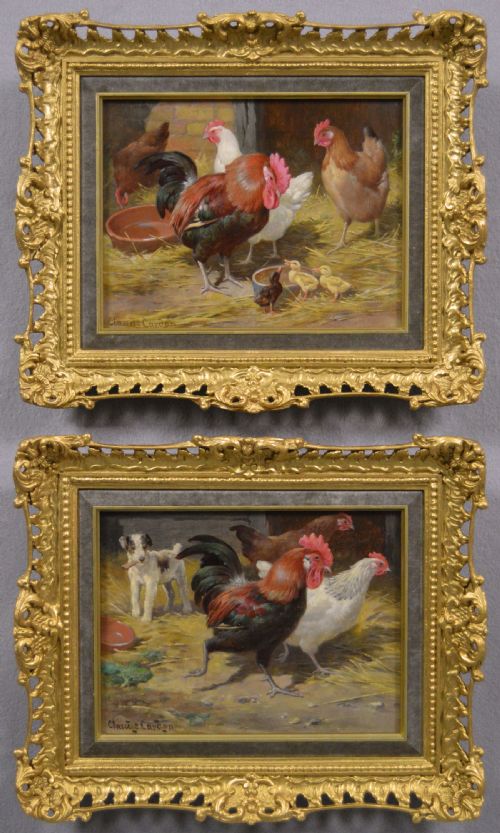


Antique Farm Scene Painting
An antique farm scene painting captures the rustic charm and daily rhythm of rural life through the eyes of past generations.
Antique Farm Scene Painting
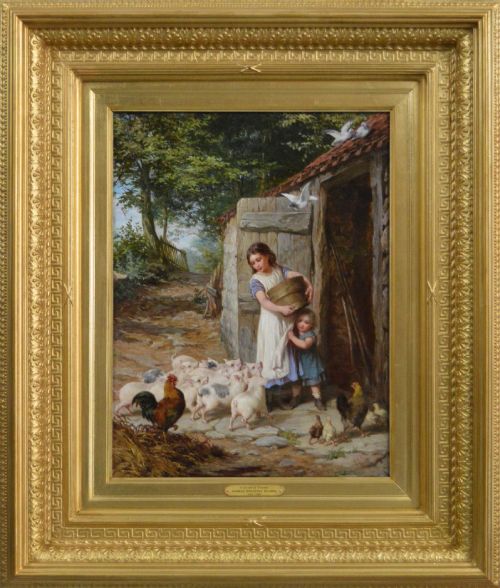
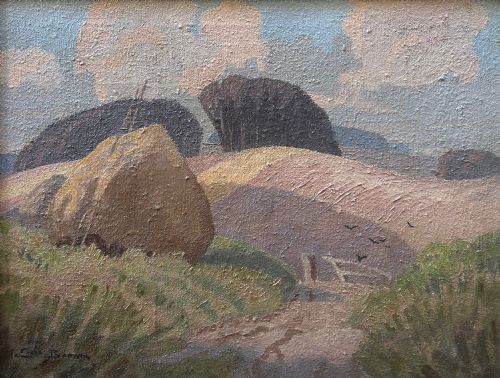
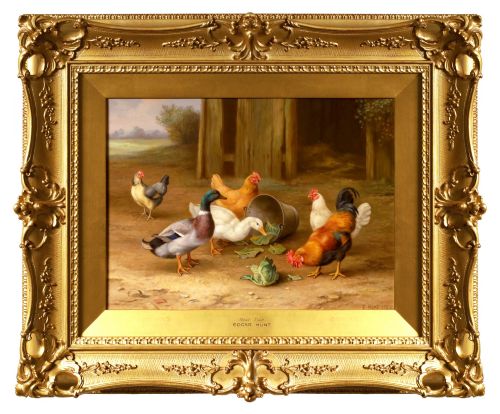
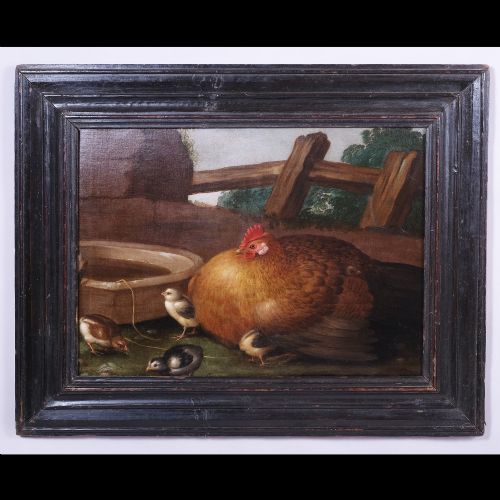
An antique farm scene painting portrays rural life, livestock, and agricultural labour from centuries past. These works bring the tranquil atmosphere of the countryside and the traditional workings of the farmyard directly into an interior setting.
The pieces on this page span from the eighteenth century through to the early decades of the twentieth century. They range from intimate watercolours of farmers and their milking cows to large oil paintings of horses, cattle, pigs, and poultry.
British and continental artists dominate the selection, often working in pastoral, realist, or impressionist styles. Domestic animals and working horses feature heavily alongside harvest fields, farmsteads, and rustic interiors.
Materials and Techniques
Canvas and wood panel serve as the primary supports for the oil paintings in this collection. Artists built up rich textures using oil paint, sometimes applying it thickly to capture the rustic surfaces of barns and the coats of animals.
Watercolour on paper appears frequently for lighter, more luminous rural scenes and preparatory studies. Many of these works retain their original frames, often constructed from wood or gilded gesso.
Listings feature works executed in oil on canvas, oil on panel, and watercolour on paper, spanning the eighteenth, nineteenth, and early twentieth centuries.
Judging Quality and Execution
Quality in an antique farm scene painting rests upon the artist's ability to render anatomy and light with conviction. Stronger examples display a precise handling of animal forms, believable perspective in the landscape, and a naturalistic rendering of light across a farmyard.
The depth of composition and the handling of atmospheric conditions distinguish finer works from simpler decorative pieces. The condition of the pigment and the originality of the mounting also contribute to the overall standing of the artwork.
George Augustus Holmes·Edgar Hunt·Claude Cardon·John Frederick Herring Jnr·Herbert Royle·John Linnell·Owen Bowen
The Antique Farm Scene Painting Glossary
- Pastoral
- Relating to the countryside or the lives of country people, often romanticised. These scenes emphasise peace and simplicity.
- Impressionism
- An art movement focusing on accurate depiction of light in its changing qualities. Painters capture spontaneous moments of rural work and weather.
- Giltwood
- Wood that has been covered with a thin layer of gold leaf or gold paint. Frames of this material often accompany nineteenth-century oil paintings.
- Genre painting
- The pictorial representation of scenes from everyday life. These works depict ordinary people engaged in common activities like feeding poultry or harvesting.
Antique Farm Scene Painting: Frequently Asked Questions
What subjects appear in these paintings?
The works depict a wide variety of rural subjects, including working shire horses, cattle at rest, and poultry in the farmyard. Labourers harvesting crops and farmers tending to livestock also feature prominently.
Domestic scenes within farmhouses and intimate portraits of animals form a significant portion of the selection available.
How do I date a farm scene painting?
Dating relies on stylistic clues, the attire of any human figures, agricultural equipment depicted, and the type of canvas or stretcher used. Signatures and gallery labels on the reverse provide further chronological evidence.
Many works carry specific dates in their titles or have known artist biographical spans that narrow down their creation period.
Are these paintings usually framed?
Many listings include period frames, such as gilded wood mouldings that complement the style of the artwork. Original frames enhance the historic character of the piece.
Some works are sold unframed or mounted behind glass in the case of watercolours, allowing the buyer to select a setting that suits their interior.
How should I care for an antique painting?
Keep the artwork away from direct sunlight and areas prone to significant fluctuations in humidity and temperature. This prevents the canvas from sagging and the paint or paper from degrading.
Dust the surface gently with a soft, dry brush and avoid using any liquid cleaners or chemical agents on the painted areas.