



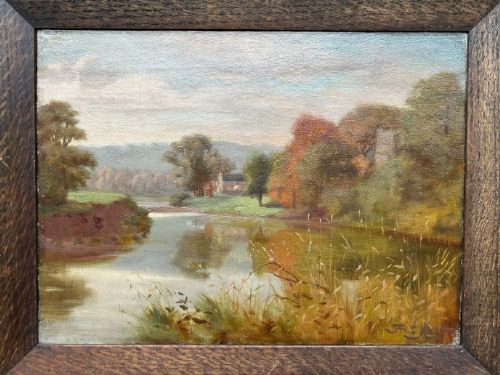
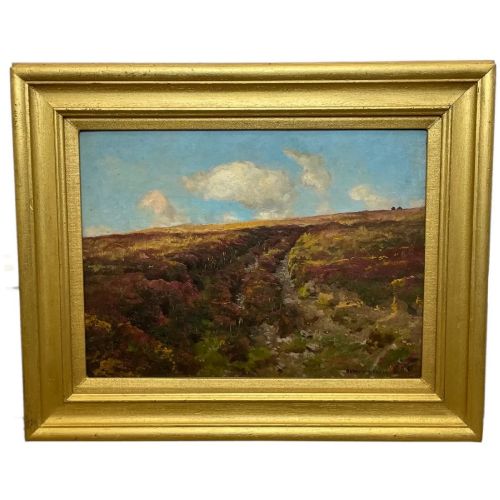
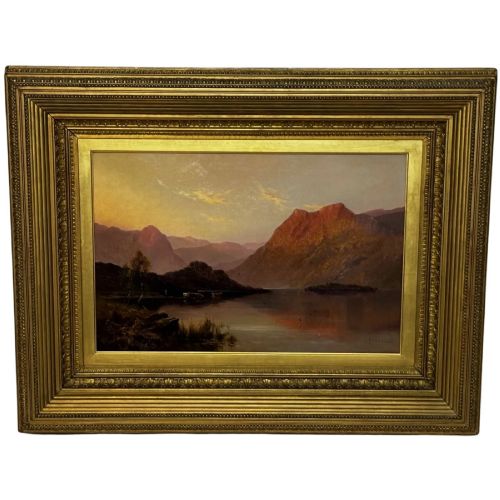
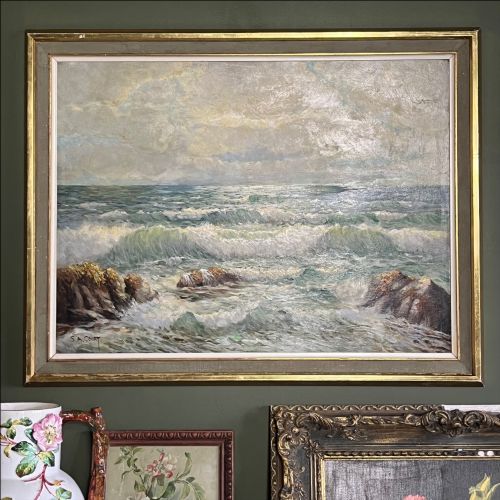
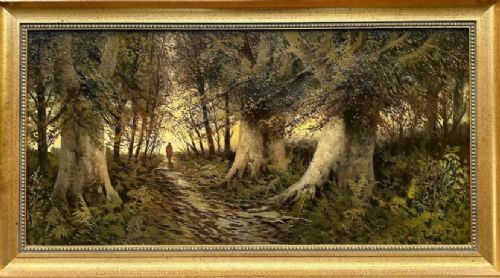
Signed Landscape Oil Painting
A signed landscape oil painting captures the topography of a specific region through the personal touch of an identified hand.
Identifying the signed landscape oil painting
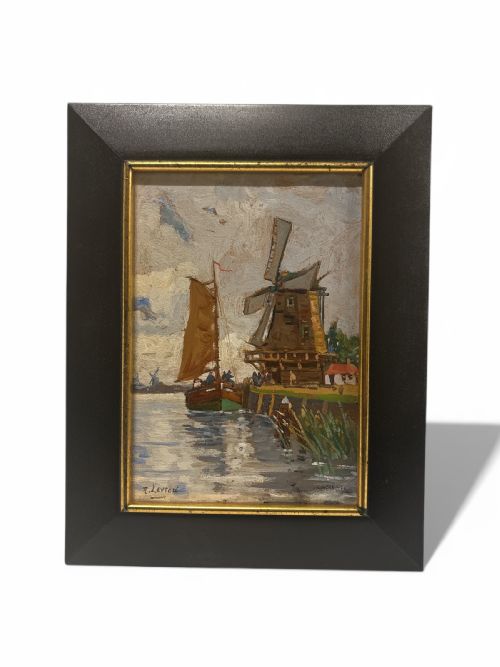
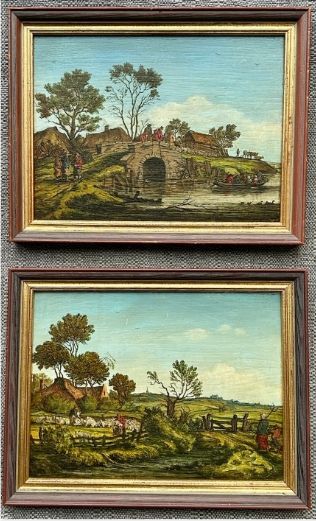
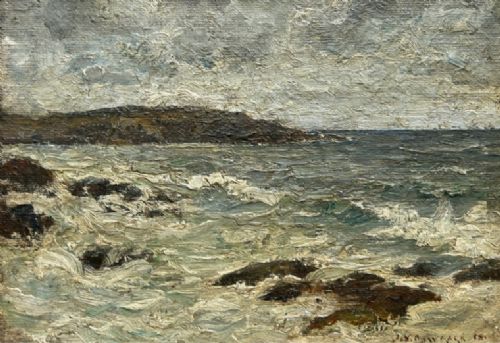
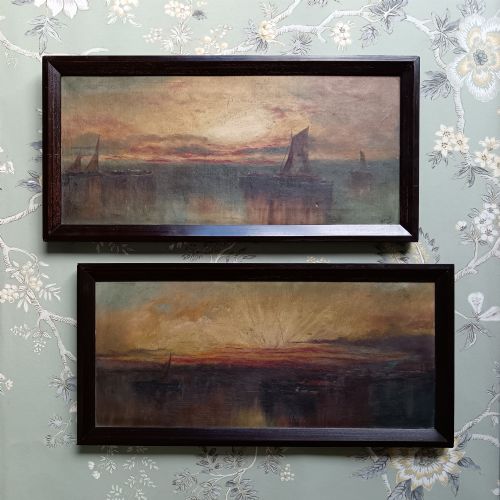
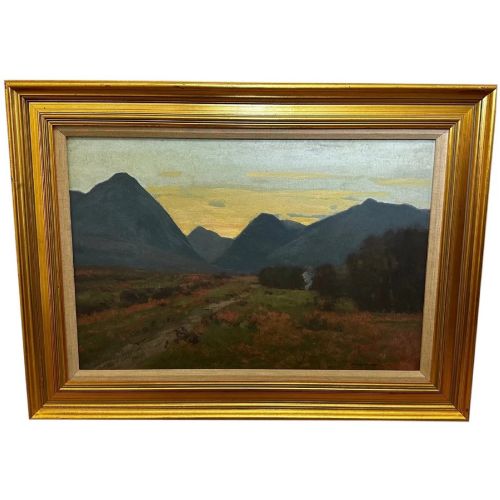
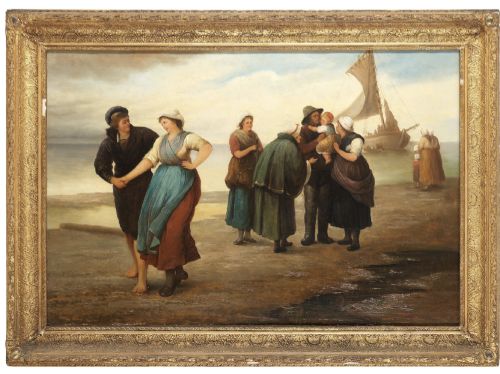
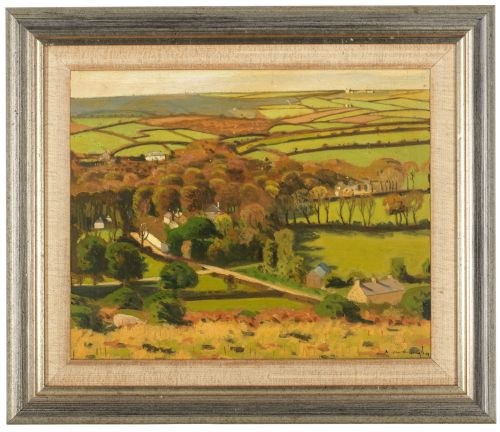
A signed landscape oil painting brings together an artist's signature and a topographical subject, ranging from rural English country views to Dutch windmills and Scottish highlands. When you search for a signed landscape oil painting on this page, you meet works spanning from the nineteenth century through the mid-twentieth century, including pieces tied to British Impressionism and Mid-Century Realism.
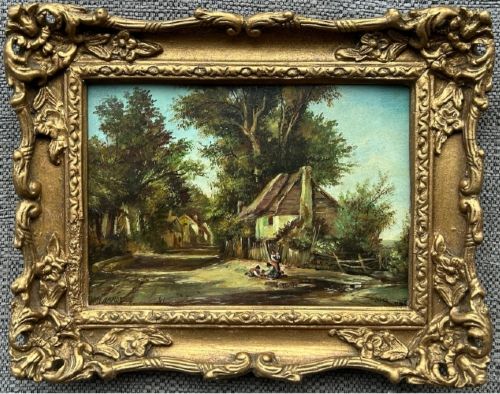
The formats vary from intimate miniature panels to large canvas and board compositions, frequently housed in original gilded wood frames. You are most likely to encounter twentieth-century examples showing rural farms, rivers, and coastal scenes signed by regional artists.
Materials and construction
Artists painted primarily with oil paint applied to stretched canvas, wooden panels, board, card, or milk glass, occasionally laying canvas onto secondary boards for structural support. These supports received priming layers before the application of oil pigments that dried slowly to build up rich textures and varied brushwork.
Framing forms an integral part of the physical object, utilising carved and gilded wood or simpler wooden mouldings designed to complement the palette of the painted surface.
Retail Price Guide 2026
Typical UK retail prices for signed landscape oil painting, calculated from the Sellingantiques database of over a million retail prices indexed since 2003. This retail price guide relies exclusively on Sellingantiques data; no external sources or auction records are used, so the figures do not describe the wider market.
Listings feature works created across several decades, utilising canvas, wood panels, and board supports within traditional frames.
Factors of quality
The distinction between ordinary and superior works lies in the handling of light, atmospheric depth, and spatial coherence within the painted scene. Stronger pieces display confident brushwork and a coherent tonal balance that defines the specific topography without relying on formulaic details.
The integrity of the original support and the preservation of the pigment layer without heavy overpainting dictate the enduring visual strength of an individual work.
Herbert Royle·Edith E Foster·Fred Stead·Arthur W Newsholme·Ferdinand E Gröne·Oscar Perlasca·T H McKay·William Burns·Anthony Graham·A Brown·Fernando Del Basso·Singleton Jowett·Percy Hipkiss·Majorie Hoare·W Matthews·A Wallace·W Parks·Walter C Horsnell·J Bell·E Harrison·W Lewis·H Thomas·John Gilbey Bowles·F Sheppard·C Harrison
The Signed Landscape Oil Painting Glossary
- Oil on Canvas
- A painting technique where pigmented oil paint is applied to a woven fabric support stretched across a wooden frame. This method allows for flexible layering and varied surface textures.
- Wood Panel
- A rigid flat wooden support used as an alternative to canvas for painting. Panels offer a stable surface that prevents the flexing associated with stretched fabrics.
- British Impressionism
- An art movement focusing on light, fleeting moments, and everyday rural or coastal subjects painted with visible brushstrokes. Practitioners adapted French impressionist techniques to local British landscapes.
- Gilded Wood
- Wood frames or decorative elements covered with a thin layer of gold leaf or metallic powder. This finish adds reflective brilliance and frames the artwork.
Frequently Asked Questions
How do I identify the artist?
Signatures typically appear in the lower corners of the painted surface, sometimes accompanied by a title or date inscribed directly onto the canvas or reverse panel.
Comparison with documented signatures from regional art records helps confirm the attribution.
Where were these paintings displayed?
These works hung primarily in domestic interiors, ranging from Victorian parlours to mid-century rural homes, serving as windows to familiar countryside views.
Many remain in their original frames, indicating how they were preserved by successive owners.
How do I care for an oil painting?
Keep the painting away from direct sunlight, damp environments, and extreme temperature fluctuations to protect the wood and canvas supports.
Dust the surface gently with a soft, dry brush without applying moisture or chemical cleaners.
What subjects are most common?
British and European countryside scenes dominate, featuring rivers, windmills, cottages, agricultural fields, and coastal harbours.
Topographical accuracy often marks the specific region, from Yorkshire riverbanks to Scottish highlands.