

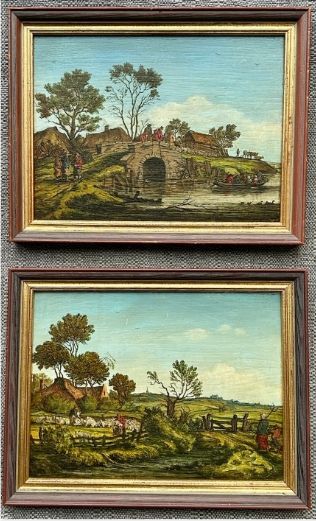
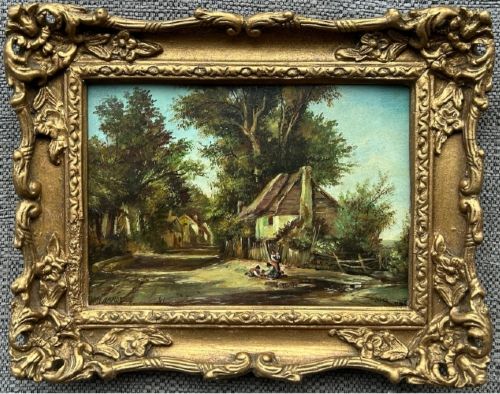
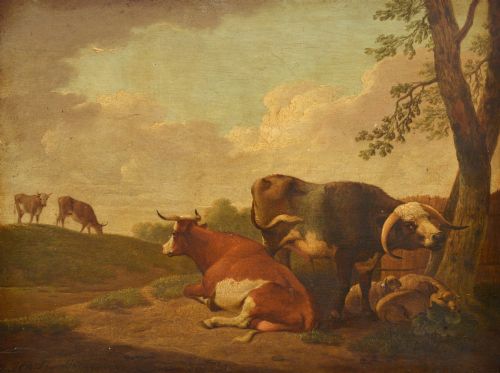
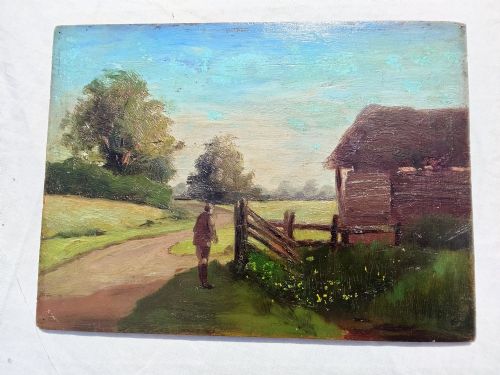
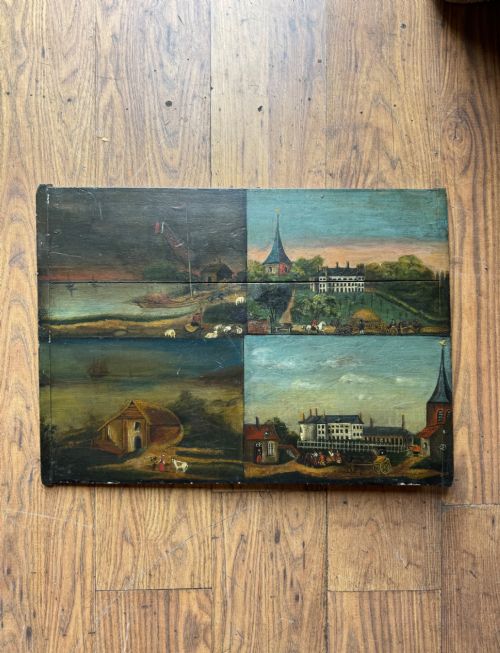
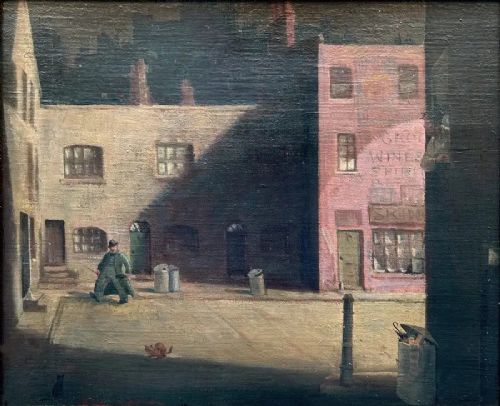
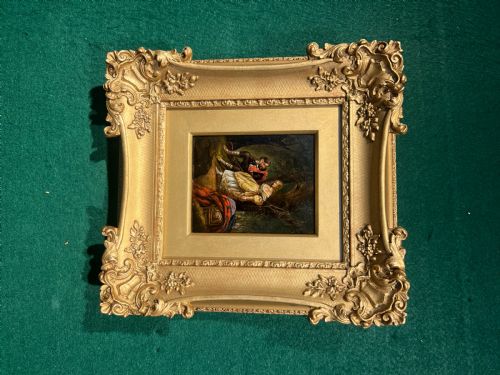
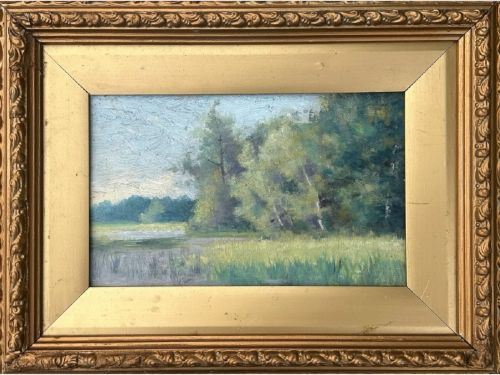
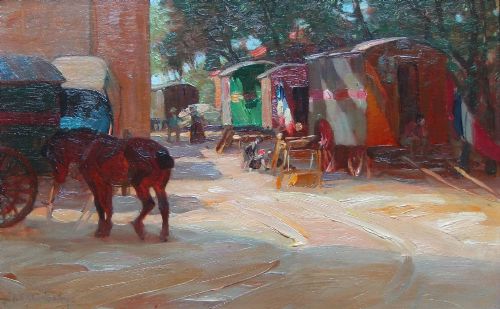


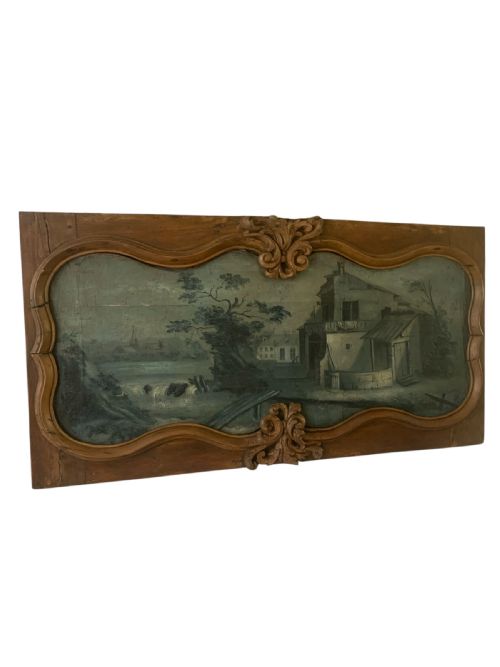
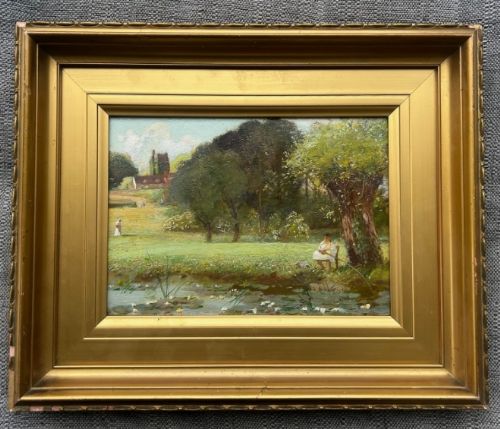
Oil on Panel Landscape
When you look for an oil on panel landscape, you are examining compact works that capture open skies, rural countrysides, and river views.
What They Are
An oil on panel landscape brings together compact works executed on rigid supports rather than flexible fabric. The selection ranges from Georgian and 19th century compositions to early and mid 20th century examples.
The subjects span rural English countryside scenes, coastal views, and foreign vistas including Italy and Egypt. Many pieces focus on agricultural life, featuring windmills, rivers, and solitary figures.
British Impressionism and Romanticism appear frequently alongside pastoral scenes and sporting art. Miniature formats sit alongside broader views, providing a diverse survey of panel painting.
How They Were Made
Artists applied oil paint directly onto wooden panels, mahogany, oak, or sometimes copper supports. The rigid wooden surface provided a stable ground that allowed for precise brushwork and smooth blending.
Frames played a significant role in presentation, with giltwood, gesso, burr walnut style moulding, and baroque rococo floral motif frames enclosing the paintings.
Retail Price Guide 2026
Typical UK retail prices for oil on panel landscape, calculated from the Sellingantiques database of over a million retail prices indexed since 2003. This retail price guide relies exclusively on Sellingantiques data; no external sources or auction records are used, so the figures do not describe the wider market.
Listings feature works executed on wood panels, mahogany, oak, and copper supports.
What Varies in Quality
The handling of light across an expansive sky or water surface distinguishes the more accomplished compositions. Brushwork sensitivity in rendering foliage, architectural details, and figures determines the artistic merit.
The choice of support and the integrity of the wooden panel influence longevity and stability. Original framing, where preserved, adds contextual completeness to the work.
William Burns·Edith E Foster·Florence Hess·John Constable·Arthur W Newsholme·James Arthur O Connor·Fernando Del Basso·J Bell·Felice Auguste Rezia·Salvator Rosa·John Smith Atherton·A Sefton·Lewis Creighton·William Maxwell Reekie·Benjamin Barker of Bath·George Vicat Cole·William E Tindall·Van Gullen·H Wallace·Paul Fordyce Maitland·Thomas Sidney Cooper·William Manners·James D Harding·John Glover·James Peel
The Oil on Panel Landscape Glossary
- Panel
- A rigid support made of wood, such as oak or mahogany, used as a surface for painting.
- Gesso
- A plaster mixture applied to a support to prepare it for painting.
- Giltwood
- Wood that has been coated with gold leaf or a gold coloured finish.
- Impressionism
- A style emphasising loose brushwork and the depiction of light.
- Romanticism
- An artistic movement focusing on emotion, individualism, and awe of nature.
Frequently Asked Questions
What is an oil on panel landscape?
These are paintings executed in oil colours directly onto rigid wooden supports rather than stretched canvas. They frequently depict natural scenery, rural buildings, and pastoral life.
Artists favoured this method for its smooth surface, which allowed for fine detail and durable preservation over centuries.
How do I care for a wood panel painting?
Keep the artwork away from direct heat sources and dramatic humidity fluctuations, which can cause wood to warp or crack. Hang the piece in a stable indoor environment.
Dust the surface gently with a soft, dry brush and avoid using any liquid cleaners or solvents on the paint layer.
How are different periods identified?
Dating relies on stylistic clues, framing techniques, and the type of wood preparation used by the artist. Later 19th and 20th century works often feature lighter palettes and looser brushwork.
Earlier Georgian and 19th century examples frequently display darker varnishes, traditional Romantic compositions, and heavier giltwood or gesso frames.
Where were these landscapes painted?
Subjects range widely across British locations such as Yorkshire, the Thames, and Devon, as well as European destinations including Italy and Egypt. Many artists worked en plein air to capture natural lighting.
Studio finishes often combined these direct field sketches with composed elements like figures, livestock, or architectural landmarks.