




Blue Landscape Painting
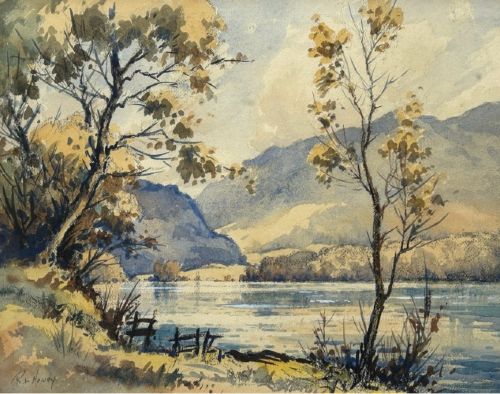
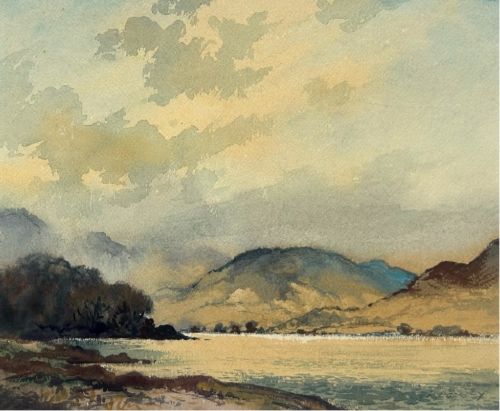
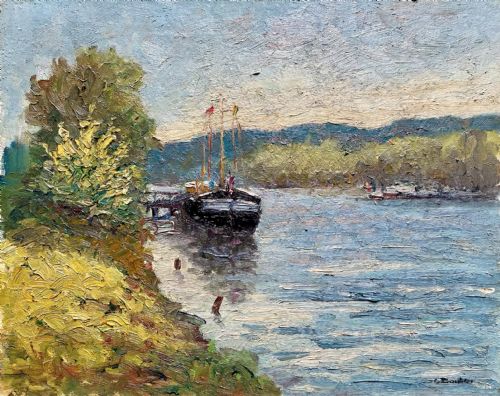
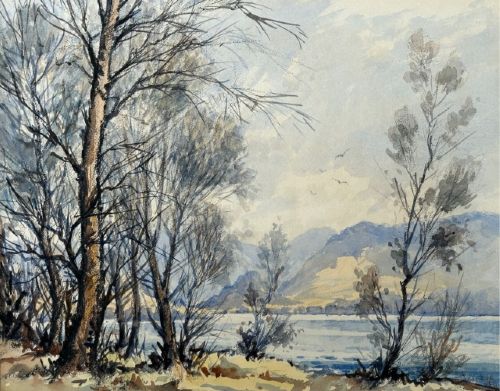
These blue landscape painting examples capture serene expanses in watercolor and oil, offering collectors atmospheric windows into British scenery.
What a blue landscape painting is
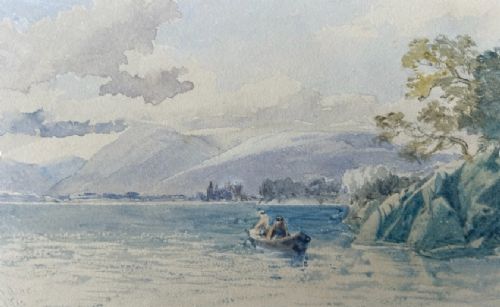
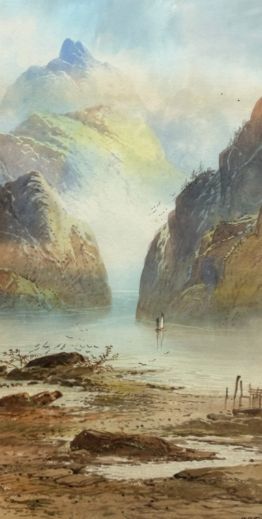
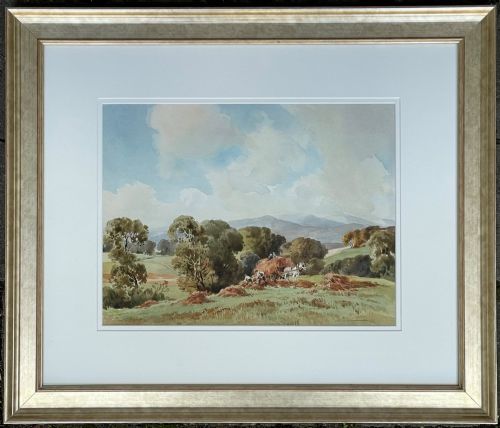
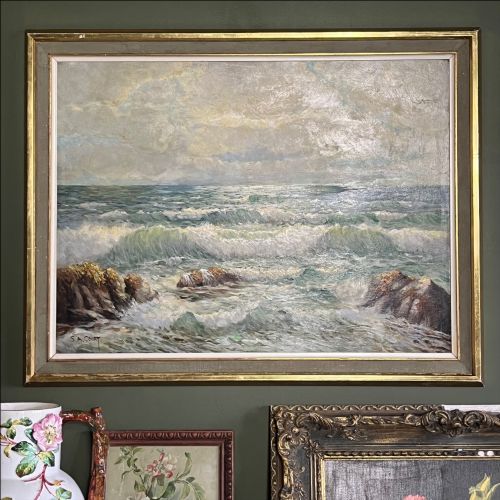
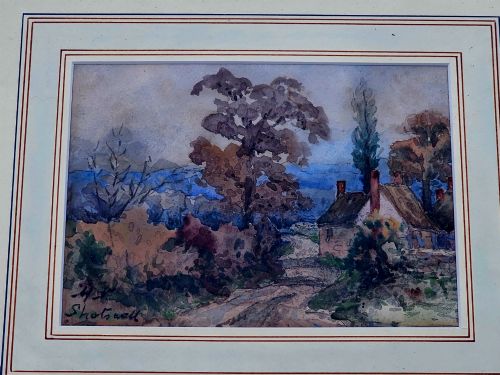
A blue landscape painting presents scenes dominated by cooler palettes, taking form primarily as watercolors on paper and oil paintings on canvas. These works range across several periods, capturing views from Scottish lochs to Yorkshire dales.
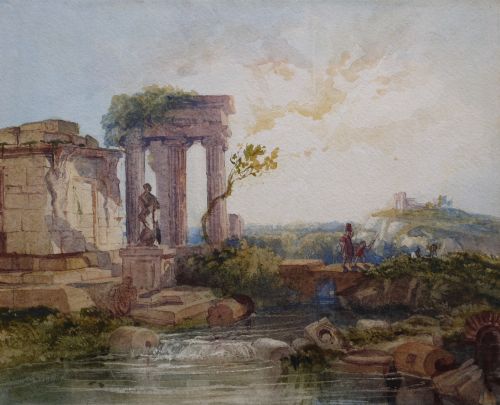
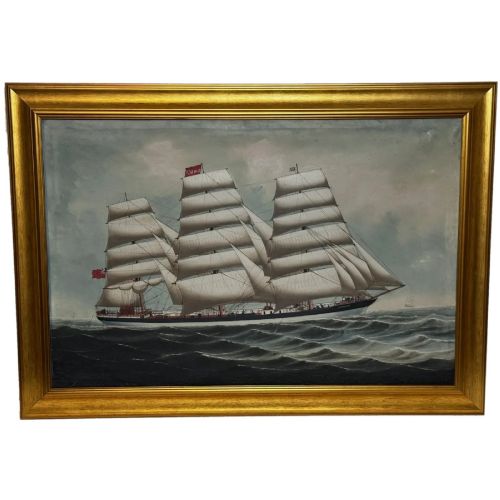
The pieces on this page lean heavily into nineteenth-century romanticism, Edwardian studies, and mid-century realism. Buyers encounter intimate framed watercolours alongside larger oil compositions set in wood frames.
Subject matter often includes lakes, woodlands, and coastal sunsets rendered with specific regional focus. Each piece reflects the particular atmospheric conditions observed by the artist during its creation.
How they were made
Artists utilise watercolour on paper for delicate washes or build rich textures using oil on canvas. Many works are preserved behind glass within protective wooden frames, occasionally accented with gilt mouldings.
Pigments are applied with varying brushwork to capture the light of different eras, from Victorian precision to twentieth-century broad strokes. The physical support ranges from simple paper sheets to stretched canvas.
Retail Price Guide 2026
Typical UK retail prices for blue landscape painting, calculated from the Sellingantiques database of over a million retail prices indexed since 2003. This retail price guide relies exclusively on Sellingantiques data; no external sources or auction records are used, so the figures do not describe the wider market.
Wood and glass feature prominently as framing materials across the collection, protecting works on paper and canvas alike.
What varies in quality
Distinction across the range rests on the surety of the brushwork and the artist's command of atmospheric depth. Stronger works capture the specific light of a location with economy and confidence.
Condition of the paper and canvas, alongside the originality of the frame, influences the standing of a piece. Works bearing clear signatures and documented provenance hold particular distinction.
Thomas Miles Richardson Jnr RWS·Charles Edward Wilson·Hirst Walker·Owen Bowen
The Blue Landscape Painting Glossary
- Watercolour
- A paint consisting of a pigment suspended in a water-based solution, typically applied to paper. It creates luminous, translucent washes ideal for capturing atmospheric sky and water.
- Oil on canvas
- A painting technique using pigments mixed with a drying oil, applied to a stretched cloth support. This medium allows for rich texture and deep colour saturation.
- Gilt wood
- Wood that has been treated with a thin layer of gold leaf or metallic gilt paint. It is commonly found on traditional frames enclosing nineteenth-century artworks.
- Monogram
- A motif made by overlapping or combining two or more letters to form a single symbol. Artists often use these in place of a full signature on works on paper.
Frequently Asked Questions
How should I display watercolour landscape paintings?
Watercolours are sensitive to direct sunlight, so position them away from bright windows to prevent the pigments from fading over time.
Ensure they remain behind glass in stable indoor conditions to protect the paper from moisture and humidity.
What periods do these paintings represent?
The available selection spans from the mid-nineteenth century through the Edwardian era and into mid-century modernism.
Each era brings distinct framing styles and handling of colour, reflecting the prevailing artistic movements of its time.
Are these paintings original works?
The listings consist of original hand-painted works rather than mass-produced prints or mechanical reproductions.
Signatures, monograms, and brush texture confirm the individual execution of each piece by the artist.
What framing is typically used?
Many pieces retain their original wooden frames, some featuring gilt detailing that complements the artwork.
Works on paper are generally mounted under glass to preserve the delicate medium against environmental wear.