
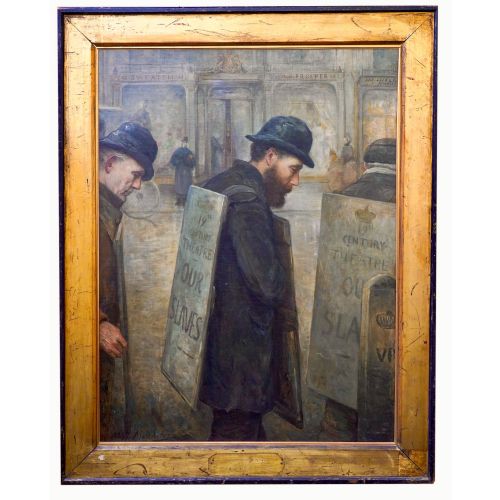
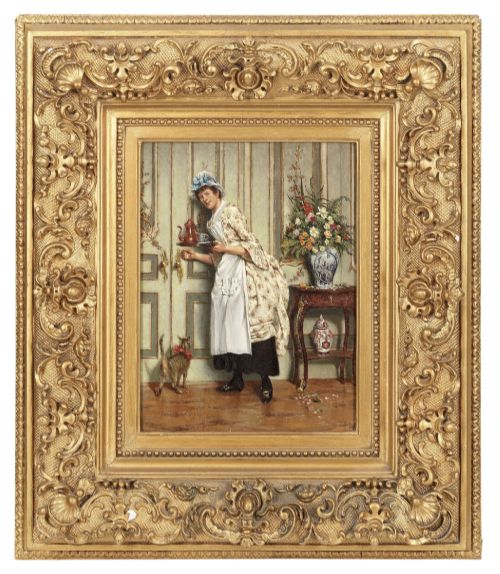
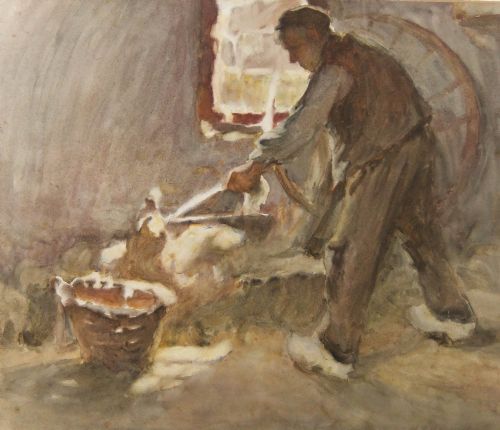
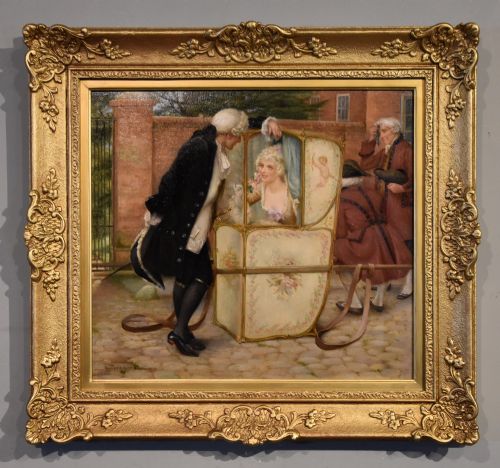





Edwardian Genre Painting
Edwardian genre painting captures the quiet, domestic and rural moments of everyday life that collectors prize for their narrative charm.
Understanding Edwardian genre painting
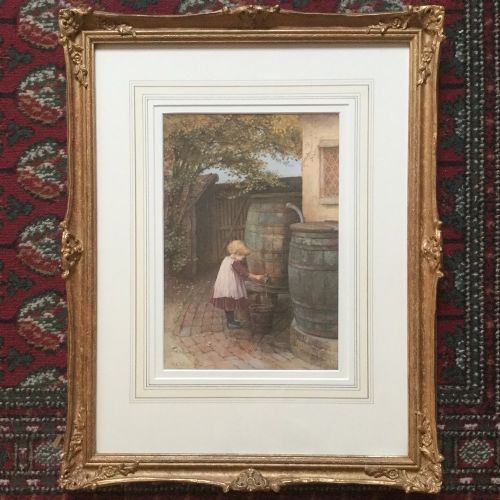
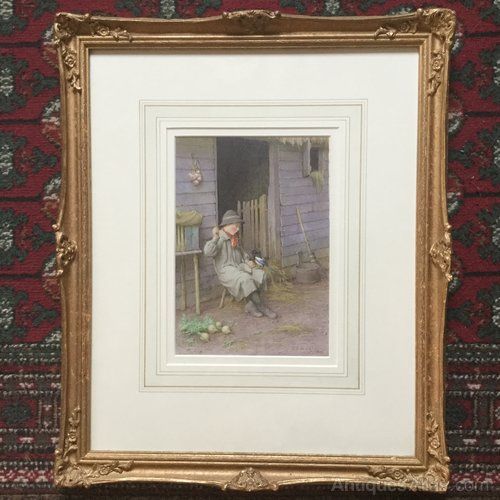
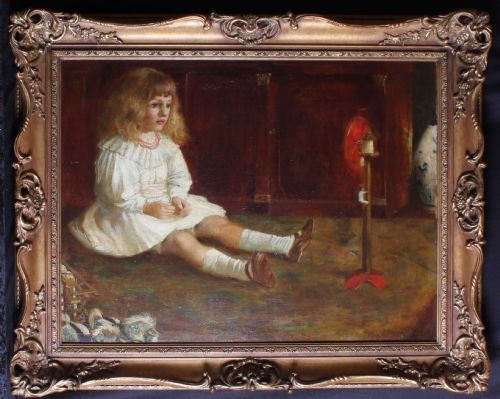
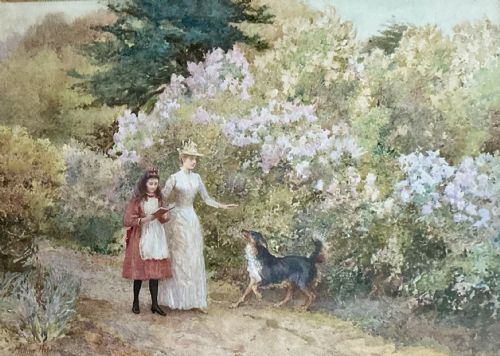
An edwardian genre painting depicts scenes of daily life, often focusing on children playing, country pastimes and cottage interiors. These works bring a narrative warmth to a wall that formal portraiture or stark landscapes rarely achieve.
The selections encountered here typically span from the Victorian transition into the early twentieth century, reflecting the lingering rural realism of the nineteenth century alongside lighter Edwardian palettes. Pieces range from intimate watercolours on paper to substantial oil paintings on canvas.
Subjects frequently centre on simple pleasures, such as children sailing toy boats or gathering wildflowers in English country meadows. This focus on domestic tranquility and innocent outdoor activities defines the core appeal of the genre.
Materials and techniques
Artists utilised traditional mediums, primarily applying oil paint to canvas or watercolour pigments onto paper. These were often housed in decorative giltwood frames that complemented the domestic interiors for which the works were intended.
The execution relies on confident brushwork and careful draughtsmanship, capturing natural light outdoors or soft illumination within cottage rooms. Pigments were worked to achieve atmospheric depth, whether through the transparent washes of watercolour or the richer texture of oils.
Retail Price Guide 2026
Typical UK retail prices for edwardian genre painting, calculated from the Sellingantiques database of over a million retail prices indexed since 2003. This retail price guide relies exclusively on Sellingantiques data; no external sources or auction records are used, so the figures do not describe the wider market.
Minnows captured in Maidstone meadows and toy boats sailed by children remain safely immortalised in pigment.
Assessing quality
Quality rests on the artist's ability to render human figures with expressive posture and convincing interaction rather than stiff formality. The finest examples demonstrate a sure command of composition that guides the viewer's eye naturally through the narrative scene.
The handling of light and background detail distinguishes superior works from lesser decorative pieces. Stronger paintings offer subtle tonal shifts and atmospheric depth that elevate a simple domestic subject into a compelling historical record.
Edwin Thomas Roberts·Andrew Young·Charles Edward Wilson·John Pedder·Arthur H Buckland
The Edwardian Genre Painting Glossary
- Genre painting
- Representation of scenes from everyday life, typically involving figures going about ordinary activities. It gained immense popularity in Britain throughout the nineteenth and early twentieth centuries.
- Watercolour
- A painting method in which the paints are made of pigments suspended in a water-based solution. Paper serves as the primary support, allowing for luminous and transparent washes.
- Giltwood
- Wood that has been treated with gold leaf or a gold-coloured metallic finish. Frames of this material are commonly found protecting fine art paintings from the period.
- Oil on canvas
- A traditional painting technique utilising pigments bound in a drying oil, applied to a stretched fabric support. This medium allows for rich colour blending and textured brushwork.
Frequently Asked Questions
What is an edwardian genre painting?
It is an artwork depicting everyday human subjects, such as children playing or rural pastimes, created during the early twentieth century.
These pieces capture ordinary domestic and outdoor life with a narrative focus that tells a gentle story about the period.
How do I care for a watercolour painting?
Watercolour works on paper require protection from direct sunlight to prevent the pigments from fading over time.
Displaying them away from moisture and behind conservation-grade glass ensures the delicate paper and pigments remain stable.
How do I distinguish oil paintings from watercolours?
Oil paintings feature a textured surface with heavier paint layers applied to canvas or wood panels.
Watercolours present a smoother, flatter appearance on paper, often showing transparent washes where the paper ground remains visible.
Where were these paintings originally displayed?
They were typically hung in the parlours, drawing rooms and studies of British homes during the nineteenth and early twentieth centuries.
Their intimate scale and relatable domestic themes made them ideal for comfortable residential spaces rather than grand public galleries.