
Victorian Highland Landscape
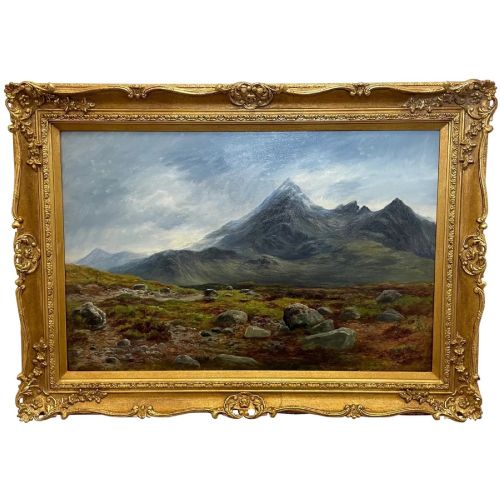
A victorian highland landscape captures the rugged terrain and moody waters of northern hills through traditional nineteenth-century painting techniques.
Victorian Highland Landscape
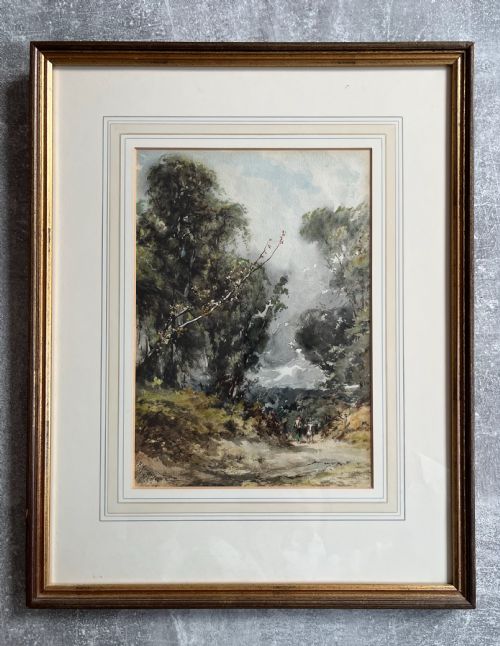
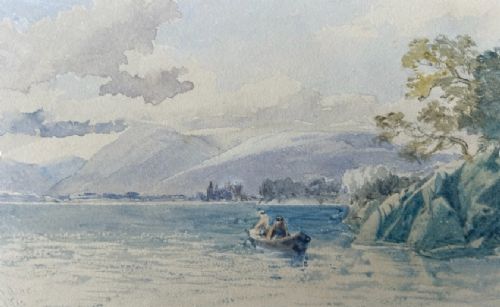
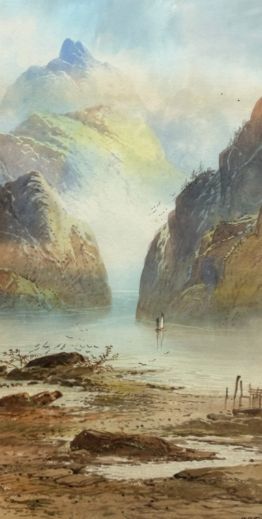
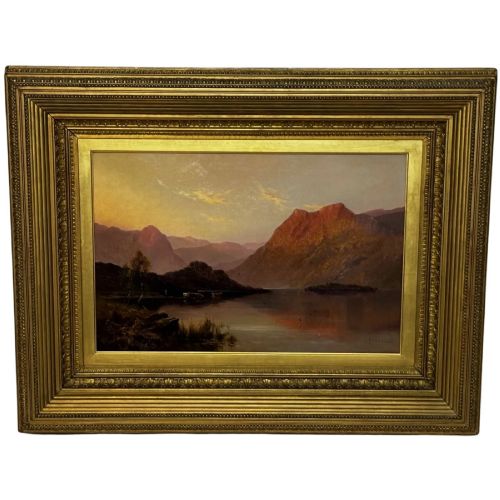
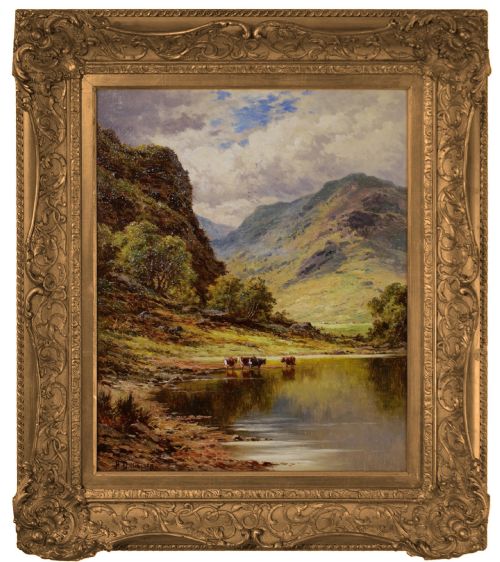
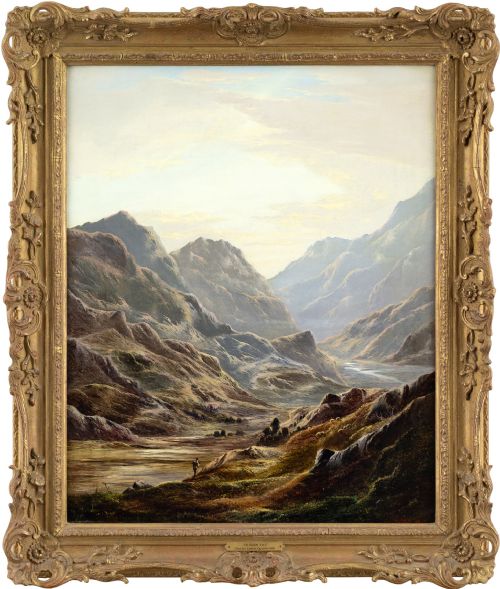
A victorian highland landscape typically portrays the dramatic vistas of Scotland, Wales, and northern England through oil on canvas, oil on panel, watercolour, or pastel. These works frequently incorporate specific regional landmarks such as Loch Lomond, Loch Tay, Ben Lawers, and the Isle of Arran.
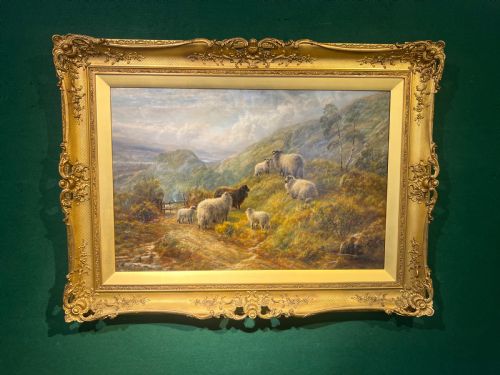
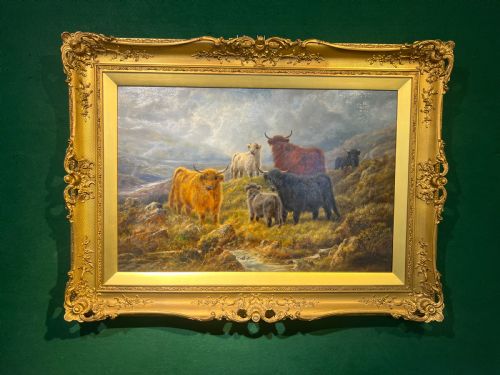
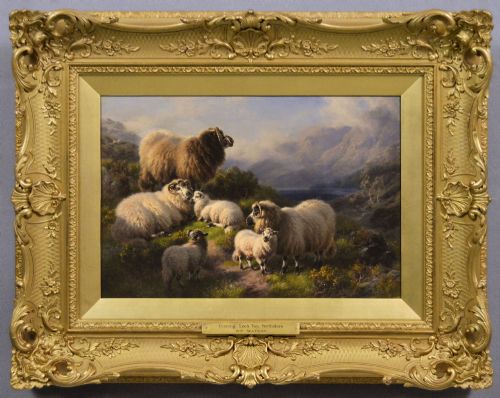
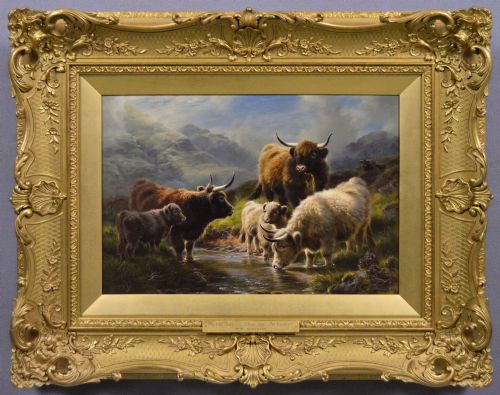
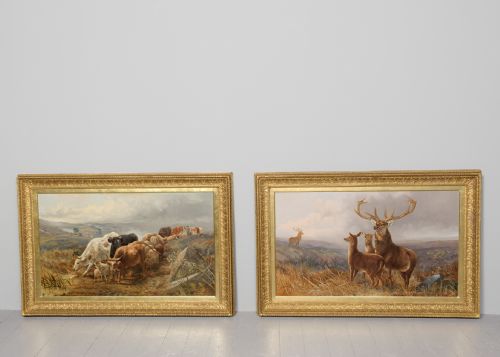
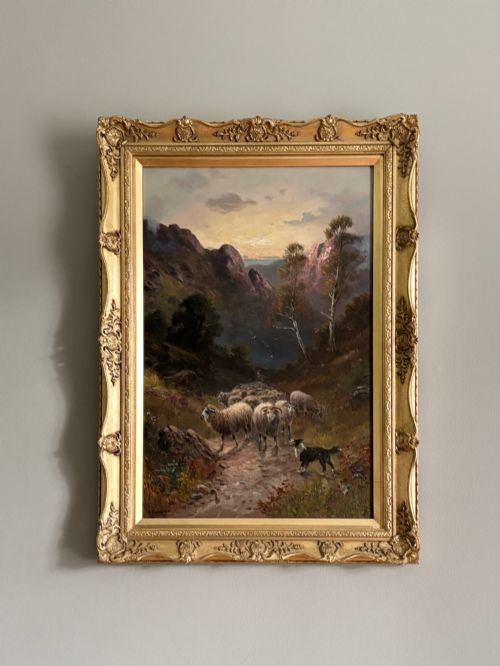
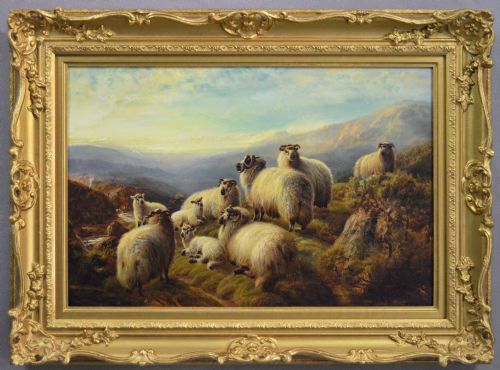
The compositions commonly centre on pastoral elements like Highland cattle, sheep, stags, and local crofts set against expansive mountain ranges and still lochs. Buyers meeting this genre here will find framed artwork spanning the nineteenth century into the early twentieth century.
Framed paintings dominate the selection, often housed in heavy giltwood or gesso frames decorated with gold leaf. The physical scale ranges from intimate watercolours to large gallery canvases depicting morning mists, summer showers, or twilight scenes.
How They Were Made
Artists built these scenes using oil paint or watercolour applied to stretched canvas, wooden panels, or heavy paper supports. The handling of the medium allowed painters to capture atmospheric weather effects, from bright Highland sunlight to heavy mists over water.
The framing was an integral part of the presentation, utilising moulded wood finished with gesso and gilded with gold leaf to enhance the depth of the painted scene. Many surviving examples retain their original decorative frames.
Victorian Highland Landscape Retail Price Guide 2026
Typical asking prices for victorian highland landscape among the pieces listed under this phrase on Sellingantiques today, from the lower quarter to the upper quarter. They describe what is for sale here now, not the wider market.
Giltwood frames with gesso moulding appear across the majority of framed artworks in this category.
What Varies in Quality
The distinction between standard works and finer pieces rests upon the artist's ability to render light, texture, and anatomical detail in both the landscape and any animal or human figures present. Master painters handled the passage of atmospheric mist and water reflections with notable subtlety.
Condition of the canvas and the preservation of the original giltwood and gesso frame influence the integrity of the piece. Works that retain their original untouched surfaces and signed attributions command stronger interest among collectors.
William Beattie-Brown·George Fotherly Hargitt·Thomas Miles Richardson Jnr·William Henry Earp·Alfred Fontville de Breanski Jr·Henry H. Parker·Robert Watson·William Watson Jnr·Robert Cleminson·Douglas Cameron·Charles Leslie·Everett Watson Mellor·Joseph Knight·William George Tennick·Henry Robinson Hall·William Henry Mander·W.E. Evans·Henry Hillier Parker·Charles Jones·Sir David Murray·George Turner·Alfred de Breanski·Clarence Roe·F. E. Jamieson
The Victorian Highland Landscape Glossary
- Oil on Canvas
- A traditional painting medium where pigments suspended in drying oils are applied to a woven fabric support. This combination allowed artists to build rich textures and deep colour tones.
- Giltwood
- Wood carved and coated with gold leaf or metallic powder. It provides a reflective, ornate border common in nineteenth-century picture frames.
- Gesso
- A paint mixture consisting of a binder mixed with chalk, gypsum, or pigment. It served as a smooth preparation base for wooden panels and decorative frame moulding.
- Watercolour Painting
- A method where water-soluble pigments are applied to paper. This medium was frequently utilised for lighter, more translucent mountain studies.
- Pastel and Gouache
- Dry pigment sticks and opaque water-based paint used together on paper or canvas. This pairing produces velvety textures and dense colour blocks.
Victorian Highland Landscape: Frequently Asked Questions
What subjects appear in these paintings?
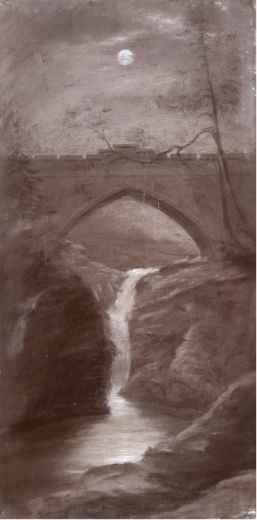
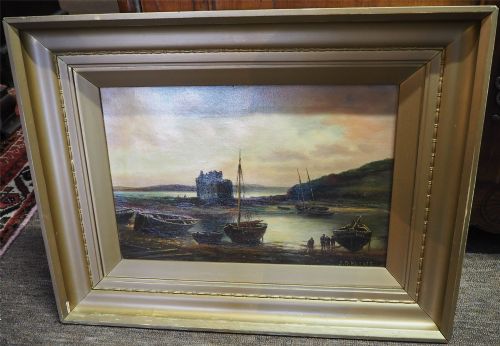
These works focus on the topography of northern terrain, featuring mountains, lochs, glens, and coastal inlets. Wildlife and livestock, including Highland cattle, stags, and sheep, frequently populate the foreground alongside rural figures or stone bridges.
Compositions often capture specific atmospheric conditions, such as morning mists, passing summer showers, and twilight over the water.
How do I identify the period of a painting?
Dating relies upon stylistic markers, framing techniques, and artist signatures or documentation recorded on the reverse of the canvas. Nineteenth-century works often show specific academic painting conventions and use heavy gesso frames.
Many pieces bear inscriptions or signatures directly on the front or back, allowing buyers to cross-reference the active dates of painters such as Robert Watson or Charles Leslie.
Are original frames important?
Original giltwood and gesso frames contribute significantly to the historical integrity and visual impact of nineteenth-century art. They were designed specifically to complement the depth and palette of the artwork within.
Matching frames with the correct period ensures the piece presents as intended by the artist or contemporary dealers.
Where were these scenes painted?
Artists travelled extensively through the Scottish Highlands, the Lake District, Snowdonia, and Dartmoor to record direct observations of rural terrain. Locations such as Loch Lomond, Loch Tay, and Glen Tilt served as recurring subjects.
These regions offered the dramatic topography and changing weather patterns prized by nineteenth-century landscape artists.