



Victorian Cattle Painting
Victorian cattle painting captures pastoral life through skilled brushwork, offering buyers a glimpse into 19th-century rural landscapes and prized livestock.
Victorian Cattle Painting
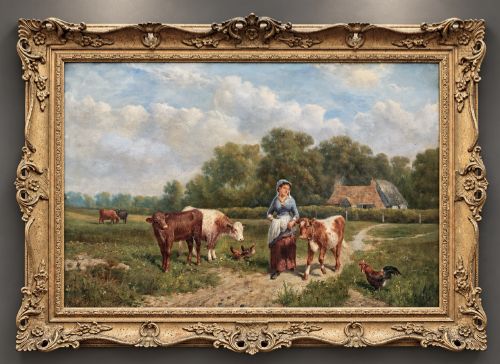
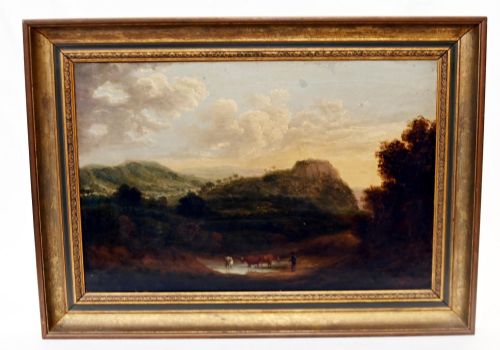
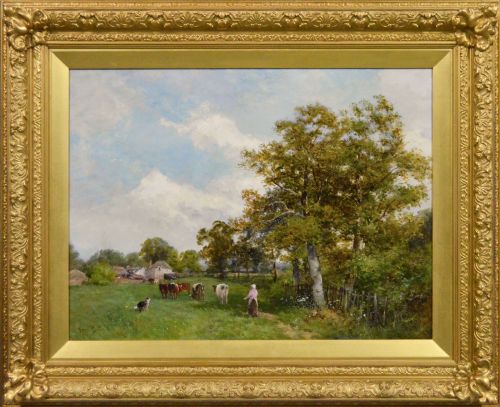
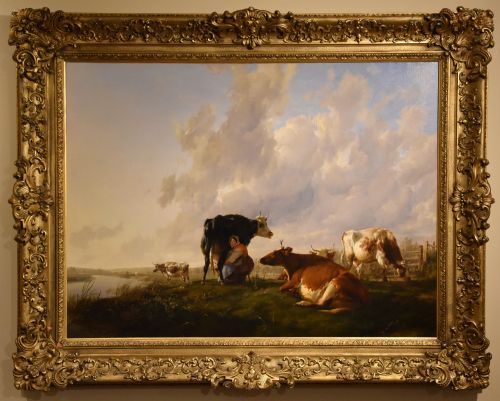
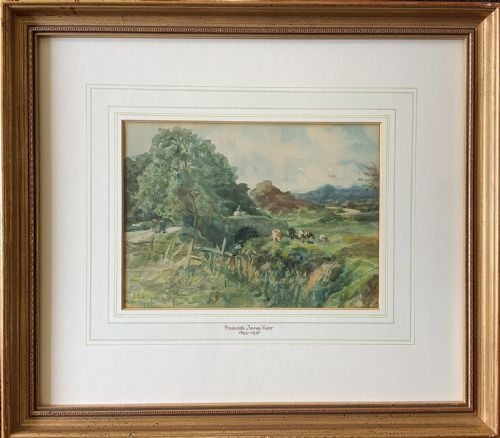
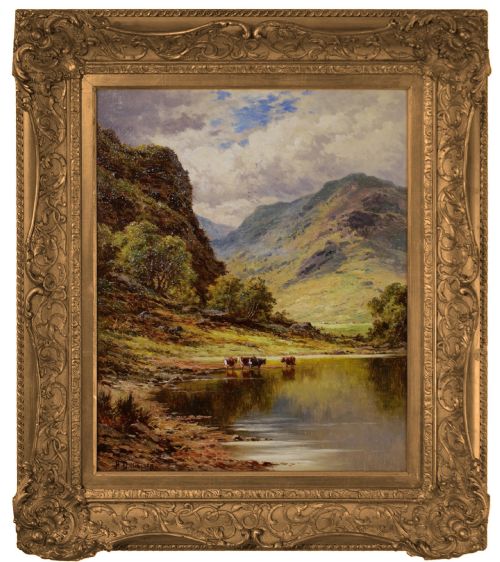
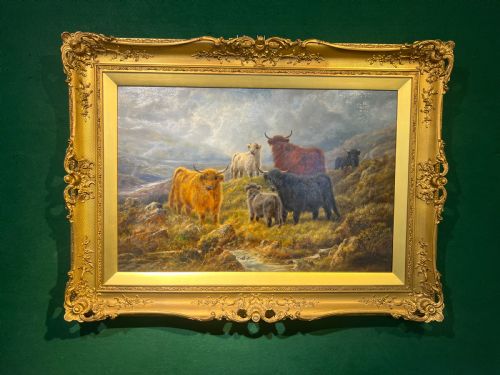
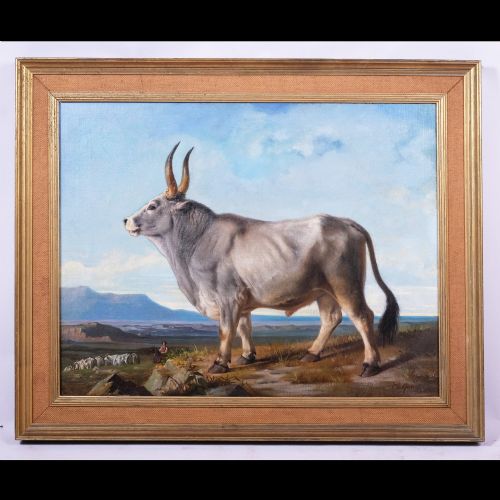
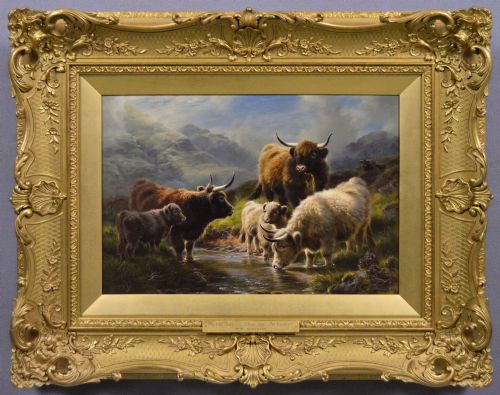
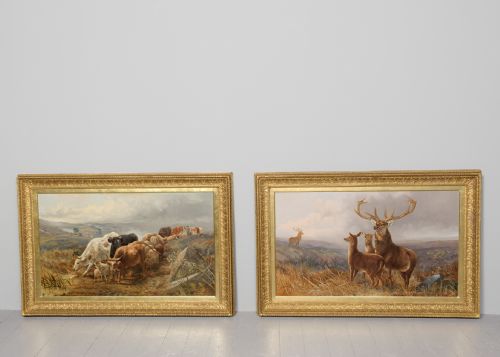
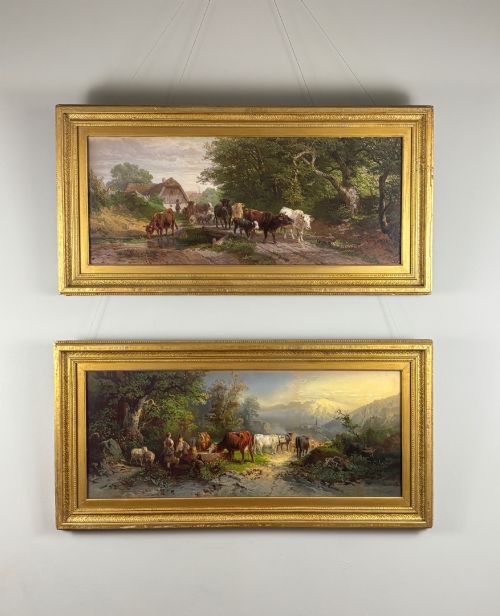
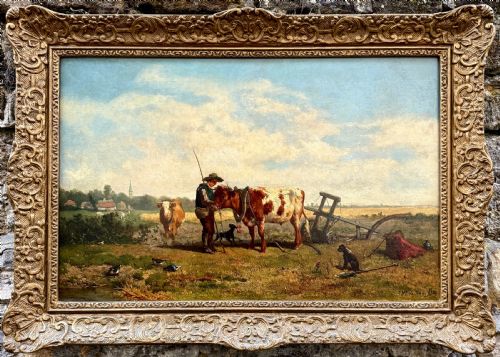
A victorian cattle painting portrays domesticated livestock within pastoral, agricultural, or dramatic highland landscapes. These artworks often focus on prized shorthorns, dairy cows, or long-haired Highland cattle resting by lochs and rivers.
Most examples found here date from the mid-19th century to the early 20th century, encompassing traditional oil on canvas as well as delicate watercolour paintings on paper.
The dominant styles include Victorian realism, pastoral scenes, and works attributed to the British and Scottish schools of art.
How They Were Made
Artists built these compositions using oil paint on stretched canvas or wooden panels, applying layers of pigment to capture the texture of animal coats and atmospheric weather conditions.
Many works incorporate watercolours on paper for lighter, more luminous rural views.
Finished canvases were traditionally housed in heavy giltwood and gesso frames, often elaborately carved to complement the scale of the landscape.
Paper mache cows occasionally join the heavy oil paintings, proving that even rural portraiture had a lightweight, whimsical side.
What Varies in Quality
The anatomical accuracy of the cattle and the naturalism of the surrounding landscape determine the artistic merit of each piece.
Works by listed painters with established exhibition records demonstrate superior handling of light, shadow, and animal posture compared to anonymous student copies.
David Bates·Thomas Sidney Cooper·Frederick James Kerr·Henry H. Parker·Robert Watson·Johann Friedrich Voltz·Johannes de Haas·A M Gauci·Henry Robinson Hall·William Sydney Cooper·Thomas Hunn·George Vicat Cole·Andre de Moller·Sidney Richard Percy·Frederick James Knowles·Robert Thorne Waite·Alfred Grey·Pierre Emmanuel Dielmans·Harold Lawes·George Cole·Thomas Baker·Sidney Yates Johnson·Bernard Walter Evans·Basil Bradley·Sidney Pike
The Victorian Cattle Painting Glossary
- Oil on Canvas
- A traditional painting medium where pigments suspended in oil are applied to a woven fabric support. This combination allows for rich colour depth and blended textures.
- Giltwood
- Wood that has been coated with a thin layer of gold leaf or gilt powder. It provides a bright, reflective border for framing historical canvases.
- Gesso
- A paint mixture consisting of a binder mixed with chalk, gypsum, or pigment. It is applied to wooden panels or frames to create a smooth surface for gilding.
- Pastoral Scene
- An artistic genre depicting rural life, shepherds, and livestock in idealized, peaceful countryside settings. These compositions emphasise harmony between animals and nature.
- Watercolour
- A painting method in which the paints are made of pigments suspended in a water-based solution. It yields translucent washes on paper supports.
Victorian Cattle Painting: Frequently Asked Questions
What subjects appear in these paintings?
These artworks primarily depict cows, bulls, and calves grazing in pastures, wading in rivers, or sheltering during winter snows. Many feature Highland cattle set against dramatic Scottish lochs and mountain ranges.
Alongside the animals, compositions frequently include milkmaids, herders, rustic farm buildings, and expansive rural skies.
How do I identify the period?
The period is often indicated by the attire of any human figures, the framing style, and the framing materials such as heavy gesso and giltwood. Examining the stretcher bars and canvas backing can also reveal clues about the age of the materials.
Signatures, dates inscribed on the reverse, and labels from nineteenth-century art suppliers help narrow down the exact decade of production.
Where were these artists active?
The painters working in this genre operated across Britain and Ireland, with strong concentrations in the Scottish Highlands, Welsh river valleys, and English pastoral counties.
Many exhibited their landscapes at major institutions in London and Edinburgh throughout the nineteenth century.
How should I display a canvas?
Display oil paintings away from direct sunlight and steady sources of artificial heat to protect the pigments and the underlying canvas from warping. Maintaining stable indoor humidity prevents cracking in both the oil paint and the gesso frame.
Ensure the piece is hung securely using hardware rated for the combined weight of the canvas and its heavy wooden frame.